Chinese
 Spanish
 French
 Russian
 German
 Portuguese
 Indonesian
 Thai
Thai Vietnamese
 Arabic

If you need to decide how to test water quality for a plant, monitoring station or engineering contract, begin with the operating decision the data must support. This industrial project guide is not about household test kits: the correct solution may be an online sensor, portable meter, mobile workstation, laboratory analyzer or a controlled combination of all four.
Why “How to Test Water Quality” Is a Procurement Question
A buyer is rarely asking only how to obtain a number. A wastewater contractor may need early warning before discharge, a food or chemical plant may need evidence before reuse, and an environmental team may need comparable data from several sites. The result may trigger dosing, aeration, production release, maintenance, resampling or a formal report. Each consequence changes the appropriate method and quality controls.
The largest procurement risk is buying one instrument and expecting it to satisfy every purpose. Continuous probes observe water in place and expose short events that grab samples can miss. Laboratory methods offer controlled vessels, standards, reagents and records, but the sample may change during transport. Portable instruments reduce transport delay, yet operator technique and site conditions remain part of the measurement. A defensible program assigns a clear role to each layer.
Start with the Decision, Not the Instrument
Write a measurement matrix before requesting quotations. For every parameter, state the water source, normal value, expected minimum and maximum, alarm or acceptance point, required frequency, reporting unit and action after an abnormal result. If the project cannot state what action follows a value, that channel may create maintenance cost without operational value.
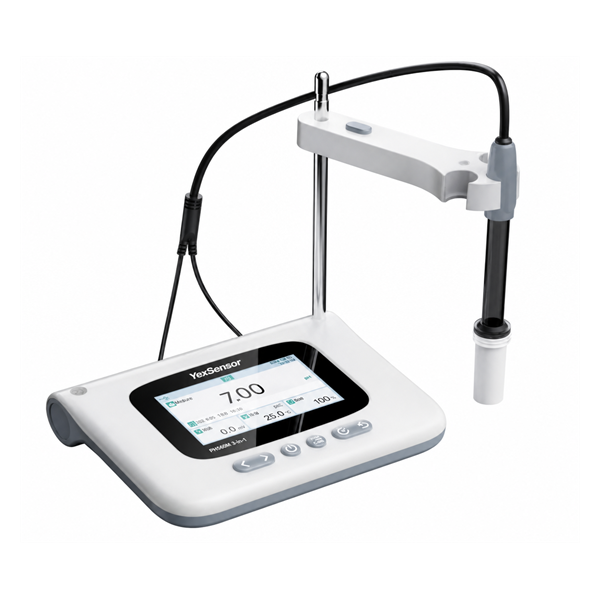
Link common parameters to real decisions. pH can protect neutralization and chemical dosing. Dissolved oxygen supports aeration and aquaculture risk decisions. Conductivity can reveal ionic or source-water change. Turbidity can indicate filter breakthrough, runoff or solids carryover. COD, ammonia, total phosphorus and total nitrogen may require reagent-based methods where the contract identifies a laboratory procedure. Temperature is both a process value and a compensation input.
Compare the Four Testing Architectures
| Architecture | Use it when | Primary value | Main limitation | YexSensor reference |
|---|---|---|---|---|
| Online sensor or sonde | Changes, alarms or control actions must be observed continuously | High-frequency trend data and PLC/SCADA integration | Fouling, mounting and field verification must be managed | YEX-S2-MPS-A or model-specific online probes |
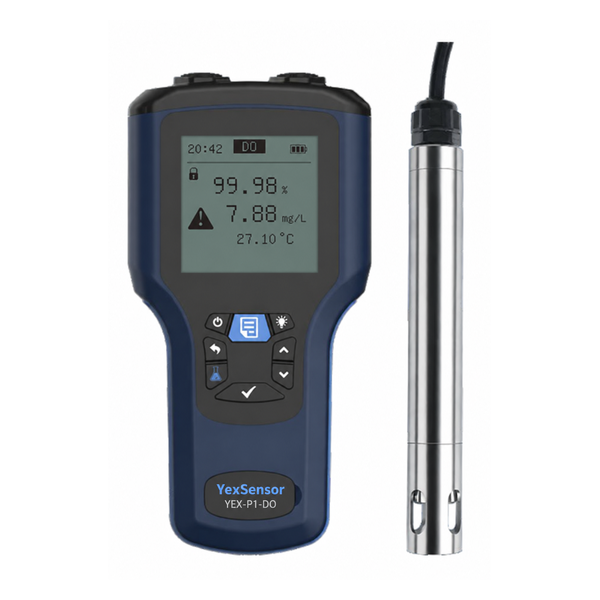
| Portable meter | Technicians need immediate readings at several locations | Fast checks with field context and optional GPS records | Not a permanent control node | YEX-P1-DO for fluorescence DO |
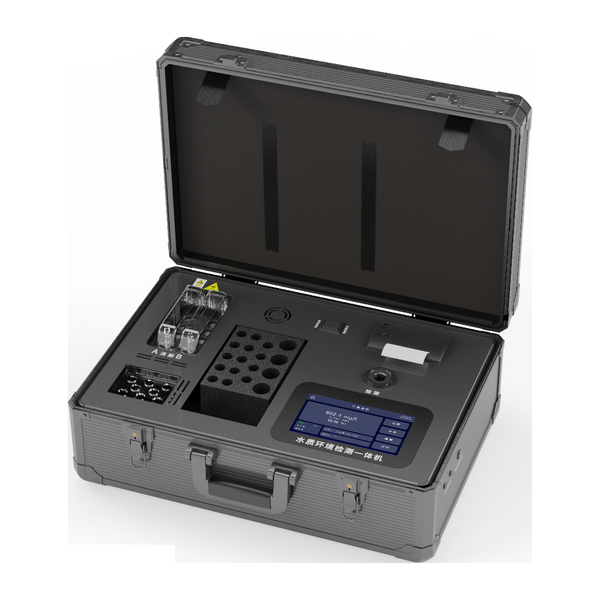
| Mobile workstation | Reagent digestion and photometry are needed near the sample point | Shorter sample transport path and integrated field workflow | Heavier, method- and reagent-dependent | YEX-L1-WS |
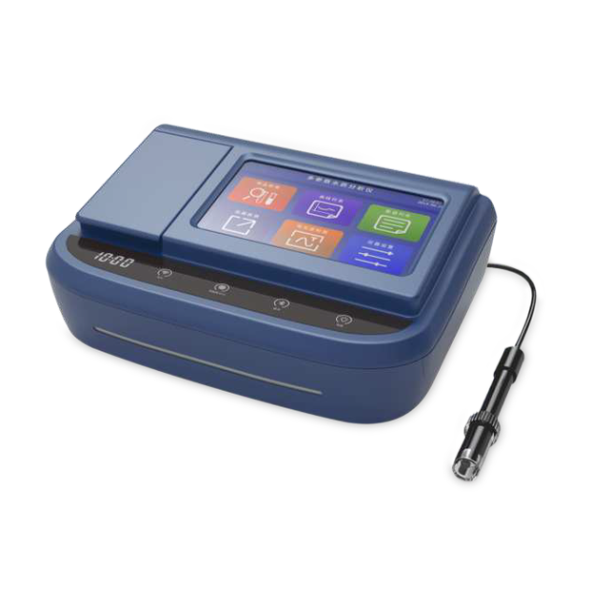
| Benchtop analyzer | Controlled batch methods, QC and retained records are required | Stable laboratory conditions and repeatable procedures | Does not provide continuous process alarms | YEX-L1-MP1 |
A mature project often uses two layers rather than forcing one instrument to perform incompatible jobs. An online probe can identify an event, while a portable or laboratory method verifies the condition. The two readings should not be expected to match blindly: sampling time, location, settling, preservation, temperature, optical principle and calibration traceability may differ. Build the relationship with a documented online sensor and laboratory correlation plan.
Verified Equipment Boundaries That Affect Selection
| Model | Verified capability | Procurement meaning |
|---|---|---|
| YEX-L1-MP1 | 0–3.5 Abs, 0.001 Abs resolution; pH 0–14; temperature 0–80 °C; 10,000 records; USB export | Confirm every ordered photometric curve, range, reagent and external digestion requirement |
| YEX-L1-WS | Eight digestion positions in two temperature groups; 50–180 °C; 12 V / 20 Ah battery; IP65; 10,000 records | Suitable for mobile reagent workflows, but IP65 does not permit immersion |
| YEX-P1-DO | DO 0.00–20.00 mg/L; ≤±0.3 mg/L; 316L IP68 probe; GPS and USB CSV export | Field verification tool; the IP65 handheld meter itself must remain dry and is not a Modbus control instrument |
| YEX-S2-MPS-A | Up to eight selected parameters; RS485 Modbus RTU; 12 VDC ±5%; automatic brush cleaning | Specify every module, range, register and cleaning responsibility; “up to eight” is not a standard eight-channel package |
These values are model-specific. Do not combine the portable meter’s IP rating with its probe, assume an optional communication function is standard, or apply one module’s range to a different sensor. The signed quotation, current manual and delivered protocol document define the purchased configuration.
Specification basis: the values above were checked against the current YexSensor product information available for the named models on October 6, 2026. Final specifications, included accessories, communication options and test methods must be confirmed in the approved quotation and model-specific datasheet.
Application Scenarios and System Value
Wastewater treatment and discharge projects
Challenge: influent, biological treatment and effluent change on different time scales. System: use online pH, DO, conductivity or turbidity for continuous trend and laboratory photometric methods for contractual COD and nutrient checks. Value: operators can respond quickly while retaining method-based confirmation.
Industrial process and reuse water
Challenge: contamination, rinse transitions and batch changes can be short. System: place online sensors at the process decision point and use a benchtop analyzer for release or investigation. Value: the plant separates an immediate process signal from a documented quality result.
Surface water and emergency investigation
Challenge: remote locations, sample transport and changing conditions reduce comparability. System: use a portable meter or mobile workstation with defined coordinates, depth, sample timing and duplicates. Value: the team can expand sampling or repeat questionable results before leaving the site.
Aquaculture and recirculating systems
Challenge: oxygen, temperature, salinity and pH may vary by depth and time. System: use online monitoring for alarms and a portable DO meter for profile and maintenance checks. Value: the operator can distinguish a real oxygen event from a fouled probe or poor placement.
Installation, Integration and Quality-Control Checks
For online systems, freeze the measurement point before finalizing the cabinet. Confirm representative flow, immersion depth, access, debris, bubbles, sediment, cable route and retrieval method. Define 12 VDC power at the load, shielding, grounding, surge protection, Modbus addresses, baud rate, register map, units, decimal scaling, polling, timeout and maintenance-state handling. A communicating sensor can still deliver misleading data if it is installed in stagnant or unrepresentative water.
For field and laboratory work, control sample containers, preservation, holding time, mixing, vessel cleanliness, bubbles, standards and calibration records. Match the calibration range to the decision range. Record as-found checks before adjustment so maintenance does not erase evidence of drift. Use blanks, duplicates and independent check standards according to the method and project risk.
Method boundary: an online optical estimate, electrode result or rapid field method does not automatically replace a prescribed reference method. The project specification must identify which value is used for alarm, control, screening, acceptance and regulatory reporting.
Selection and Purchase Guidance
Choose an integrated platform when parameters share one representative point and the project benefits from one mount, one network node and one maintenance visit. Choose separate probes when measurement locations, materials, ranges, redundancy or service intervals differ. Choose portable equipment for surveys and commissioning. Choose laboratory equipment when the procedure requires reagents, digestion, controlled optics or retained quality records. The online water quality sensor selection guide explains how range, material, installation and maintenance boundaries change that decision.
Price is affected by channels, ranges, electrodes or optical caps, cable length, holder, controller, gateway, reagent packs, digestion, standards, printer, data service, documentation, inspection, training, quantity, destination and shipping restrictions. Ask for an itemized configuration and acceptance test rather than comparing the main instrument price alone.
Build the Acceptance Plan Before the Purchase Order
Factory acceptance should use the ordered equipment, accessories and current software. Check identification, physical condition, supplied documents, power-up, configured methods, calibration functions, storage, export, printing and every optional interface. For an online package, include the real controller or gateway and confirm registers, units, scaling, alarms and fault behavior. For laboratory equipment, use agreed standards and demonstrate the complete blank-to-result workflow.
Site acceptance should then prove installation under representative conditions. Record the measurement point, depth, flow, sample handling, reference result, temperature, time and operator. Test an abnormal condition as well as a normal value, because a system that displays normal data may still have untested alarm and fault logic. Define who signs the report and what happens if a value falls outside the agreed tolerance.
Training should cover routine operation, calibration, cleaning, standards, record export, troubleshooting and the boundary between screening and formal reporting. Retain manuals, protocol maps, certificates supplied with the order, configuration backups and consumable part numbers. These records reduce dependence on one commissioning technician and make future replacement or expansion easier.
Provide the water source and matrix; decisions supported; parameters and ranges; alarm or acceptance values; online, field and laboratory locations; sample frequency; required methods; power and communications; cable and mounting; data platform; standards and consumables; quantity, destination and schedule. Review the YEX-L1-MP1 laboratory platform and Send Your Project Requirements.
FAQ About How to Test Water Quality
Technical questions
1. What is the first step in deciding how to test water quality?
Define the operating decision, water matrix, expected minimum and maximum, required response time and accepted method before selecting equipment. A parameter is useful only when the project states what action follows the result. This prevents a broad instrument list from replacing a measurement plan and gives suppliers enough information to verify ranges, methods and accessories.
2. Can online sensors replace laboratory testing?
Not when a contract or regulation specifies sampling, reagents, digestion or a reference laboratory method. Online sensors are valuable for continuous trends, alarms and control. Use a correlation plan to connect the two layers, controlling time, point, preservation and matrix. Purchase both when the project needs immediate warning and method-based confirmation.
3. How should field and laboratory results be compared?
Collect paired samples at a defined time and location, record online status, control transport and preservation, and apply the correct laboratory method. Evaluate bias and variability over the operating range rather than expecting identical single readings. The acceptance band should come from validation evidence and should be reviewed after maintenance or process changes.
Selection questions
4. When is a mobile workstation more useful than a handheld meter?
Choose a mobile workstation when the field task requires reagent digestion, photometry, printing and multi-analyte records. Choose a handheld probe meter when the priority is an immediate in-situ value such as DO and temperature across several points. Confirm weight, battery, protection, reagents and operator skills before purchase. Also define sample throughput and transport access.
5. Which parameters should an industrial project measure?
Select parameters connected to decisions: pH for dosing, DO for aeration, conductivity for ionic or source change, turbidity for solids breakthrough, and validated COD or nutrient methods for loading and discharge. More channels are not automatically better. Each channel needs a range, maintenance owner, alarm response and acceptance check. Remove channels with no defined operational response.
6. Should one device measure every parameter?
No. One platform reduces equipment, cabling and training when methods share a location and workflow. Separate devices are preferable when parameters need different locations, sample preparation, materials, ranges, redundancy or service intervals. Compare the complete measurement architecture, not the number of values displayed on one screen. Include failure isolation in that comparison.
Procurement and project questions
7. What affects the price of a water quality testing package?
Price depends on parameter modules, ranges, probes, reagents, digestion hardware, cables, mounts, controllers, communications, standards, spares, documentation, inspection, training, quantity and destination. Ask for an itemized bill of supply and life-cycle consumables. A lower main-unit price may create a higher project cost if required accessories are excluded. Compare delivery terms on the same basis.
8. What information should be included in the RFQ?
Provide water matrix, parameters, ranges, methods, locations, sampling frequency, daily workload, data interface, power, installation, cable length, maintenance access, quantity, destination and acceptance plan. Also state which results drive alarms, control or formal reporting. YexSensor can then match product, accessories, documentation and verification scope to the real duty. Attach site drawings when installation is involved.
Summary
For an industrial project, deciding how to test water quality means assigning the correct role to continuous, portable, mobile and laboratory measurements. YEX-S2-MPS-A fits configurable online monitoring at a representative point, YEX-P1-DO supports field oxygen surveys and verification, YEX-L1-WS supports near-site reagent workflows, and YEX-L1-MP1 supports controlled laboratory analysis. None is a universal replacement for the others, and a household-style test-kit approach is not suitable for process control or contractual acceptance.
A reliable purchase defines the operating decision, water matrix, ranges, method, installation, data flow, calibration, correlation and acceptance limits before equipment is ordered. Include measurement locations, sample frequency, power, communications, cable and mounting, consumables, required documents, quantity, destination and schedule in the RFQ. Those inputs allow the supplier to quote a complete measurement architecture rather than an instrument list with unresolved integration and verification gaps.