


 Chinese
 Spanish
 French
 Russian
 German
 Portuguese
 Indonesian
 Thai
Thai Vietnamese
 Arabic

Multi-parameter water quality monitor functions are not defined by the number of values on a screen. For an integrator, the useful functions are simultaneous measurement, automatic cleaning, calibration access, fault diagnosis, and reliable data delivery to a PLC, RTU, SCADA system, or IoT platform. An online sonde provides continuous trend data, a portable meter supports surveys, and a laboratory analyzer handles controlled sample methods; these functions are not interchangeable.

Why Buyers Search for Multi-Parameter Water Quality Monitor Functions
The buyer is usually trying to control five project risks:
- Wrong measurement architecture: selecting a field meter when the project requires continuous alarms, or selecting an online trend sensor when the contract requires a laboratory reference method.
- Unverified parameter combination: assuming that every listed sensor is included in one standard configuration.
- Integration failure: ordering a Modbus device without confirming addresses, registers, units, baud rate, polling, and cable topology.
- High maintenance workload: overlooking fouling, sediment, biofilm, access, calibration standards, and consumables.
- Unclear acceptance criteria: comparing two technologies without accounting for sample location, response time, temperature, matrix effects, and method differences.
Link every parameter to an operating decision: DO for aeration, pH for neutralization, conductivity for ionic change, turbidity for solids breakthrough, ammonium for biological load, and validated UV-COD for organic-load trends. More channels add value only when the project defines a response to each value.
What Functions Does an Online Multi-Parameter Water Quality Monitor Provide?
1. Simultaneous Measurement from One Integrated Platform
The YexSensor YEX-S2-MPS-A can be configured for up to eight parameters including temperature, with optional DO, COD, pH, ORP, conductivity or salinity, ammonium nitrogen, and turbidity modules. Integration reduces mounts, cables, and network nodes, but the order must identify every module, range, calibration method, consumable, and response to a channel outage.
2. Continuous Data for Alarm, Trend, and Process Decisions
Repeated measurements support alarms, trends, process comparison, and event detection, but do not automatically prove regulatory compliance. Related values add diagnostic context: falling DO with rising ammonium may indicate aeration or loading problems, while a simultaneous pH and conductivity shift may signal abnormal discharge. Contractual reporting still requires an approved method, quality checks, comparison samples, record retention, and acceptance limits.
3. Automatic Cleaning for Long-Term Deployment
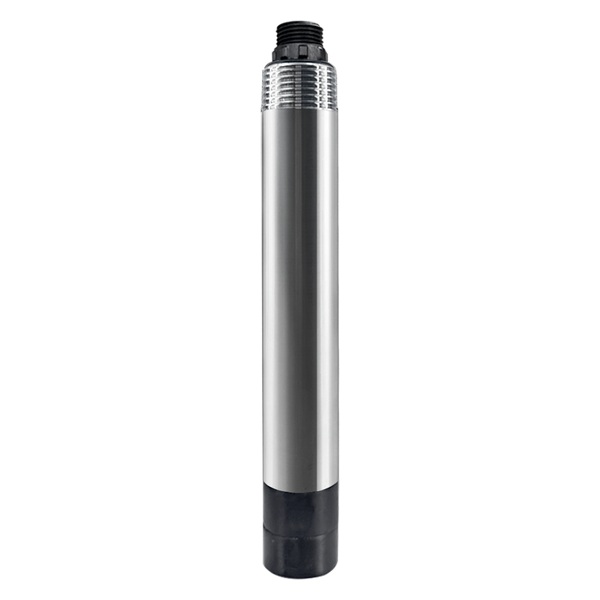
YEX-S2-MPS-A includes an automatic brush with a documented 6–6000 minute interval range and 0–10 rotations; defaults are 30 minutes and three rotations. Cleaning reduces surface buildup but cannot correct scale, oily coatings, damaged optics, exhausted electrodes, or blocked guards. Begin with frequent inspection and extend service intervals only from recorded field evidence.
4. RS485 Modbus RTU Communication
RS485 Modbus RTU connects the probe to a PLC, RTU, data logger, SCADA system, or IoT gateway. The default is 9600 bps, no parity, eight data bits, one stop bit, and address 6; addresses 1–255 are configurable. Verify A/B polarity, shielding, termination, unique addresses, registers, decimal handling, units, polling, timeout, and exception behavior in a bench test.
5. Modular Calibration and Maintenance
Each module needs its own verification procedure: fresh buffers for pH, a certified standard near duty for conductivity, saturation calibration for DO, clean optics and standards for turbidity, matrix-aware standards for ammonium, and an agreed comparison for UV-COD. Modbus exposes calibration commands, so restrict write access and retain as-found, standard, operator, date, action, and as-left records.
Verified YEX-S2-MPS-A Technical Parameters and Their Project Meaning
The following specifications are taken from the current YEX-S2-MPS-A user manual. They apply to this model and its selected modules; the purchase specification, module certificate, nameplate, and delivered protocol document must identify the final configuration.
| Selection item | Verified specification | Meaning for procurement and integration |
|---|---|---|
| Simultaneous channels | Up to 8 parameters, including temperature | List every required module in the quotation; “up to 8” does not mean all modules are standard |
| Communication | RS485 Modbus RTU | Obtain the register map and test it with the actual PLC, RTU, logger, or gateway |
| Default serial format | 9600 bps, no parity, 8 data bits, 1 stop bit | Match host settings and document any customized baud-rate configuration |
| Device address | Default 6; configurable 1–255 | Assign a unique address before building a multidrop network |
| Power supply | 12 VDC ±5% | Check voltage at the probe under load, cable voltage drop, polarity, surge protection, and solar/battery budget |
| Power consumption | 5 W at 12 V | Include cleaning cycles, controller, telemetry, enclosure equipment, and cold-weather loads in the station power calculation |
| Cable | 5 m standard; other lengths customizable; 4-core shielded twisted pair | State the installed route and required length before ordering; waterproof every junction and provide strain relief |
| Cleaning control | Interval 6–6000 min, default 30 min; 0–10 rotations, default 3 | Commission settings from actual fouling evidence and record any changes |
| DO module | 0–20 mg/L; ±2%; 0.01 mg/L resolution | Confirm expected minimum DO, aeration zone, bubble conditions, and alarm purpose |
| pH module | 0–14 pH; ±0.1 pH; 0.01 pH resolution | Define process range, chemical compatibility, buffer set, and maintenance access |
| ORP module | −1500 to +1500 mV; ±6 mV; 1 mV resolution | Use a site-specific operating interpretation; ORP is not a direct concentration reading |
| Conductivity/salinity module | 0–5000 µS/cm or 0–200 mS/cm; 0–70 PSU; ±1.5% F.S. | Select the correct range and reporting unit from real water data rather than choosing the widest option automatically |
| Turbidity module | 0–100 NTU or 0–1000 NTU; accuracy depends on range | Confirm normal and event turbidity, bubbles, particle conditions, cleaning load, and required resolution |
| UV-COD module | 0–200 or 0–500 mg/L equivalent KHP; ±5% F.S. | Treat it as a continuous optical COD trend and validate it against the project reference method and matrix |
| Ammonium module | 0–100 or 0–1000 mg/L; ±10% or ±2 mg/L; 0.1 mg/L resolution | Confirm concentration range, pH, temperature, interfering ions, standards, and replacement planning |
| Temperature | 0–50 °C; ±0.3 °C; 0.1 °C resolution | Verify both water temperature and each selected module's operating boundary |
Functions That Must Not Be Confused Across Instrument Types
| Architecture | Primary function | Typical strengths | Important limitation |
|---|---|---|---|
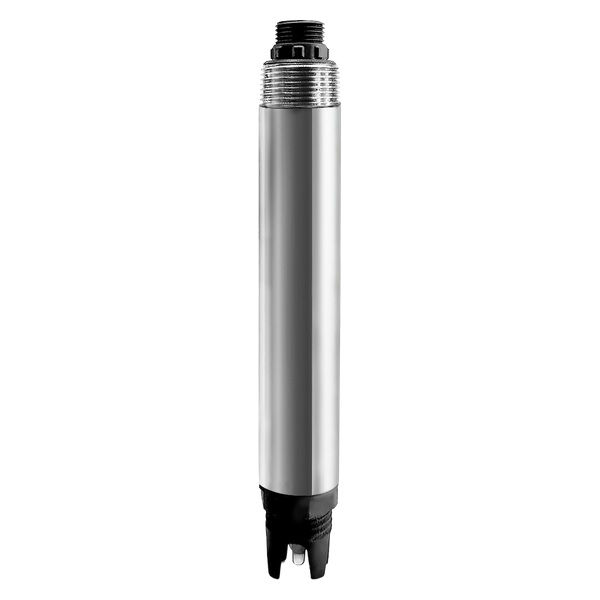
| Online multi-parameter sonde | Continuous in-situ or flow-cell monitoring | RS485 data, alarms, trends, automatic cleaning, unattended operation | Selected channels and optical/ISE results require field validation; it is not a laboratory digestion system |
| Separate online probes | Dedicated continuous measurement for each parameter | Independent replacement, wider placement flexibility, parameter-specific materials | More cables, mounts, addresses, power points, and maintenance tasks |
| Portable multi-parameter meter | Attended surveys, commissioning, troubleshooting, and verification | Mobility, GPS-linked records, multiple sample locations, temporary deployment | Not a substitute for continuous PLC/SCADA monitoring unless the exact model provides that interface |
| Benchtop or colorimetric analyzer | Controlled sample analysis using electrodes, optics, reagents, or digestion | Stored methods, wavelength functions, digestion programs, printing, laboratory workflow | Requires sample handling, reagents, trained operators, and defined reference methods; not continuous immersion monitoring |
Tungsten or deuterium lamps, wavelength selection, stored colorimetric curves, vials, and dual-temperature digestion belong to specific photometric platforms, not automatically to YEX-S2-MPS-A. Its optical UV-COD channel is also different from reagent digestion COD: it supports continuous trends after matrix correlation, while formal reporting may still require the specified reference method.
Where the Monitor Sits in an Integrated Water Quality System
The probe is the field layer; RS485 carries data to a PLC, RTU, logger, or gateway, while SCADA or cloud software applies tags, scaling, alarms, timestamps, and quality flags. Provide representative immersion, cable and surge protection, retrieval access, and maintenance space. For multidrop networks, retain an address-and-register schedule with units, decimal scaling, polling, timeout, and alarm tags.
Systematic Application Scenarios for Integrators
Municipal Wastewater Treatment
Field challenge: Influent load, aeration demand, nitrification performance, chemical dosing, solids carryover, and final effluent conditions change across the plant. High solids and biological growth create fouling risk.
Integration approach: Select by process point: DO, ammonium, pH, and temperature for aeration; ORP for anoxic zones; turbidity, pH, conductivity, and validated UV-COD trends at the outlet. Connect by Modbus and suppress false alarms during cleaning.
User value: Operators receive related measurements at the same location, allowing faster diagnosis of aeration, loading, dosing, and solids events. The value depends on maintenance access and comparison checks, not on channel count alone.
Aquaculture and Recirculating Aquaculture Systems
Field challenge: Dissolved oxygen, ammonia, pH, salinity, turbidity, and temperature can change with feeding, biomass, aeration, weather, and circulation. Biofouling and marine growth can shorten service intervals.
Integration approach: Prioritize DO and temperature, then add ammonium, pH, salinity or conductivity, and turbidity by species and system design. Install away from aerator bubbles and dosing points, connect to the controller or gateway, and assign alarm ownership.
User value: The system provides continuous evidence for aeration response, water exchange, feeding review, and early investigation. Critical life-support measurements may still require redundancy and an independent portable check.
River, Lake, Reservoir, and Remote Surface-Water Stations
Field challenge: Remote sites have limited power, seasonal level changes, algae, sediment, debris, vandalism risk, and difficult maintenance access.
Integration approach: Use a retrievable guard in representative flow and combine Modbus with an RTU, solar supply, telemetry, and local storage. Set cleaning from seasonal evidence and alarm on stale data, communication loss, and implausible change.
User value: The owner gains a multi-parameter time series from one remote point while reducing routine manual cleaning. The site still needs scheduled inspection, reference sampling, and storm-event protection.
Industrial Process Water, Effluent, and Reuse
Field challenge: Batch discharge, cleaning chemicals, salts, oils, color, temperature changes, and suspended solids can produce rapid shifts and sensor interference.
Integration approach: Define each channel as diversion alarm, equalization control, reuse release, optimization, or discharge warning. Review material compatibility, use a bypass flow cell when safe isolation is needed, and correlate optical or ion-selective results with the plant method.
User value: Related values help the plant identify abnormal batches and protect downstream treatment or reuse equipment. The monitoring package becomes actionable when the PLC response, verification process, and operator responsibility are written into the project scope.
Multi-Parameter Water Quality Monitor Selection Guide
Choose an integrated self-cleaning sonde when several parameters share one continuous measurement point and the project benefits from one mount, cable, cleaning mechanism, and Modbus node. Choose separate probes when locations, materials, ranges, service intervals, or redundancy needs differ.
Choose a portable platform for surveys, commissioning, profiles, and checks. Choose a benchtop or colorimetric analyzer when the method requires reagents, digestion, wavelength control, or a formal sample procedure. Compare real ranges, matrix interference, accuracy, installation, power, cleaning, calibration, consumables, replacement time, and acceptance—not the largest parameter list.
RS485 Modbus Integration and Commissioning Checks
- Freeze the register schedule. Record the delivered firmware, address, baud rate, function codes, registers, units, decimal places, byte order, and writable functions.
- Bench-test the complete loop. Connect the delivered probe, cable, controller, PLC or gateway, and engineering software before shipping the cabinet.
- Protect the bus. Use the specified shielded twisted pair, correct polarity, suitable topology, termination where required, waterproof junctions, grounding, and surge protection.
- Control write access. Restrict calibration, address, and cleaning-register writes to authorized commissioning and maintenance roles.
- Handle data quality. Configure communication-loss alarms, stale-value timers, out-of-range flags, maintenance mode, and cleaning-cycle suppression.
- Validate on site. Compare values under stable and representative conditions, test alarms, verify timestamps, and record the initial cleaning and calibration plan.
Commercial and Project Questions Before Ordering
Price depends on modules, ranges, cable, controller or gateway, mounting, telemetry, standards, spares, documents, quantity, packing, destination, and acceptance scope. The sensor combination is selectable and cable lengths beyond the standard 5 m can be customized; other requests require written feasibility, revision, price, lead-time, and acceptance confirmation.
The manual lists one sensor, manual, certificate, and standards according to the selected module. The quotation must confirm warranty, MOQ, lead time, shipping, export packing, certifications, inspection, returns, and destination charges for the actual order.
Frequently Asked Questions About Multi-Parameter Water Quality Monitor Functions
1. How many parameters can the YEX-S2-MPS-A measure at the same time?
The YEX-S2-MPS-A can be configured for up to eight parameters including temperature. Available module families include dissolved oxygen, COD, pH, ORP, conductivity or salinity, ammonium nitrogen, and turbidity. The exact delivered functions depend on the ordered combination. A buyer should list each channel, range, accuracy, unit, calibration method, and PLC register in the purchase specification instead of ordering only by the family name.
2. Does an online multi-parameter monitor measure laboratory COD directly?
Not necessarily. The YEX-S2-MPS-A optional COD module uses an optical UV method and reports a range expressed as equivalent KHP. It is not the same procedure as reagent digestion followed by laboratory photometry. Use it for continuous trend, alarm, or process control only after matrix correlation. If the contract requires a specified reference COD method, retain the required sampling, digestion, quality control, and laboratory analysis.
3. Can the monitor connect directly to a PLC or IoT gateway?
Yes, when the host supports RS485 Modbus RTU and is configured to the delivered protocol. The documented default is 9600 bps, no parity, eight data bits, one stop bit, and device address 6. The integrator must still confirm A/B polarity, unique address, register map, units, decimal-place handling, polling, timeout, shielding, termination, grounding, and surge protection before site commissioning.
4. When should an integrator choose a multi-parameter sonde instead of separate sensors?
Choose the integrated sonde when several parameters share one representative location and the project benefits from one mounting assembly, one cable, automatic cleaning, and one Modbus node. Choose separate sensors when measurement points differ, materials or ranges require different designs, critical channels need redundancy, or maintenance must be independent. Compare lifecycle service access and failure consequences, not only initial hardware price.
5. Which parameters are suitable for a wastewater treatment plant?
The selection depends on the process point. Aeration monitoring may use DO, ammonium, pH, and temperature; anoxic control may add ORP; final effluent may use turbidity, pH, conductivity, and a validated UV-COD trend. Do not duplicate the same package at every location. Define the operating decision, normal and upset ranges, fouling condition, alarm response, and reference check for each installed channel.
6. Is automatic cleaning enough for unattended operation?
No. Automatic brushing can reduce biofilm and loose deposits, but it cannot correct damaged sensors, mineral scale, oily coatings, blocked guards, exhausted electrodes, poor calibration, or a non-representative installation point. Begin with frequent inspection, review sensor condition and verification results, then adjust the cleaning interval and service schedule. Remote stations also need communication-loss, stale-data, power, and retrieval plans.
7. What determines the price of a multi-parameter water quality monitoring system?
Price is driven by module count and type, ranges, cable length, cleaning assembly, controller or gateway, mounting hardware, power and surge protection, telemetry, standards, spares, documentation, quantity, testing, packing, destination, and commissioning scope. Request a line-item quotation showing included modules and exclusions. This prevents a sensor-only offer from being compared with a complete PLC- or cloud-connected station.
8. What should a distributor or EPC contractor request with the quotation?
Request the exact model and module list, verified specifications, wetted materials, cable and connector details, power, Modbus document, cleaning settings, installation accessories, calibration materials, spare and consumable list, inspection certificate, warranty terms, packing, lead time, and after-sales process. Also provide the water matrix, ranges, installation drawing, host system, quantity, destination, and acceptance test so YexSensor can state fit and exclusions clearly.
Summary
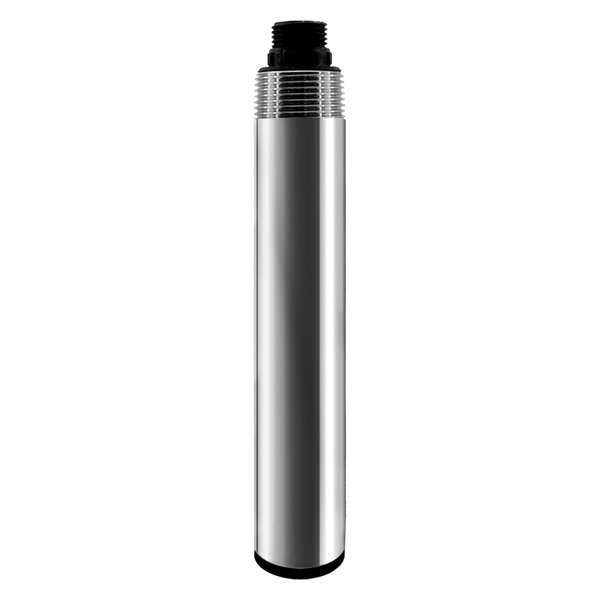
YEX-S2-MPS-A fits continuous projects needing selectable channels at one representative point, automatic brush cleaning, 12 VDC power, and RS485 Modbus RTU integration. Use separate probes when locations or service requirements differ, a portable meter for surveys, and a laboratory analyzer when the method requires reagents, digestion, or reference testing.
Before procurement, define modules, verified ranges, water matrix, installation, fouling, cable, power, Modbus settings, alarm ownership, cleaning, calibration, validation, accessories, spares, documents, quantity, destination, and schedule. This gives YexSensor and the integrator a defensible configuration boundary.



