Chinese
 Spanish
 French
 Russian
 German
 Portuguese
 Indonesian
 Thai
Thai Vietnamese
 Arabic

For laboratory turbidity meter selection, you should start with the lowest and highest decision points, accepted optical method, particle behavior, calibration plan and data workflow—not maximum NTU range alone. In drinking-water, wastewater and industrial laboratories, cells, bubbles and settling often create more uncertainty than the display.
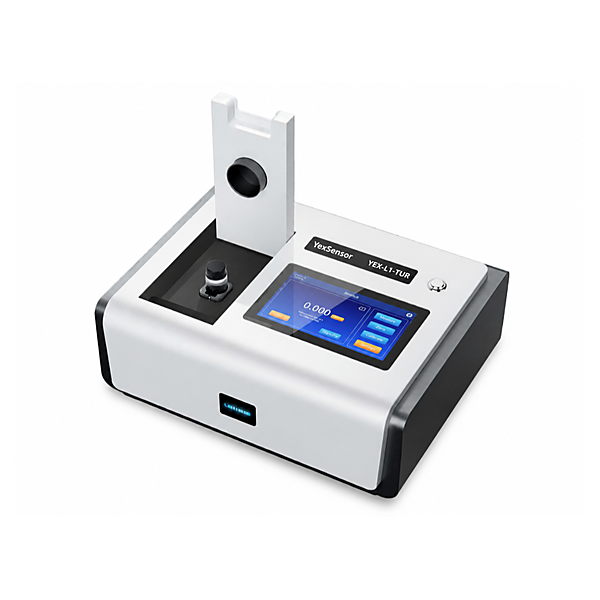
The YEX-L1-TUR benchtop turbidity analyzer is the YexSensor laboratory configuration evaluated in this guide. It should be compared with field and online options according to the measurement decision, not treated as a universal replacement for every turbidity instrument.
Laboratory Turbidity Meter Selection Starts with the Decision
Laboratories rarely buy a turbidity analyzer simply to display NTU. A waterworks laboratory may need to verify filter performance at low values, a wastewater plant may compare clarification stages, and an industrial laboratory may use turbidity as a rapid indicator of filtration or batch consistency. Each task creates a different working range, acceptance criterion and sample-handling risk.
The buyer therefore has to define what happens after the result. Will the value release finished water, trigger a filter inspection, compare treatment stages, support an internal process specification or provide a screening result before another method? A result used for release or regulatory reporting needs stronger calibration, QC and record controls than a trend used for operational comparison.
Why Turbidity Range Alone Is a Weak Selection Method
A specification of 0–4000 NTU looks simple, but one instrument may be used for finished drinking water below 1 NTU and primary wastewater hundreds or thousands of NTU higher. Those samples do not create the same uncertainty. At low turbidity, fingerprints, scratches, dust, bubbles, cell mismatch and stray light can be comparable with the measured signal. At high turbidity, particle settling, nonuniform sampling and optical nonlinearity become more important.
Resolution must not be treated as accuracy. The YEX-L1-TUR resolves 0.001 NTU at its lowest range, but its documented accuracy is ±2% + 0.01 NTU from 0 to 1000 NTU and ±5% from 1000 to 4000 NTU. Procurement tolerances and acceptance tests should use the accuracy statement plus standard and sample uncertainty, not the last digit shown on the display.
The analyzer uses a tungsten-light, multi-angle optical design developed with reference to USEPA Method 180.1 and HJ 1075-2019. Referencing a method does not make every result automatically compliant. The complete laboratory procedure—including standards, sample preparation, cell control, QC frequency, reporting unit and local acceptance rules—determines whether the reported result is defensible.
Verified YEX-L1-TUR Specifications and Their Procurement Meaning
Specification basis: the values below were checked against the official YexSensor YEX-L1-TUR product information on October 6, 2026. The signed quotation and order-specific documents control the delivered configuration.
| Parameter | Verified specification | Meaning for laboratory selection |
|---|---|---|
| Model | YEX-L1-TUR | Use the complete model on the quotation and packing list to separate it from online probes and portable meters. |
| Optical design | Tungsten lamp, multi-angle measurement | Confirm that the chosen method and destination market accept the optical configuration. |
| Referenced methods | USEPA Method 180.1; HJ 1075-2019 | State the governing laboratory method separately; the complete procedure remains the buyer's responsibility. |
| Display units | NTU, FNU and EBC | Lock the reporting unit in the SOP so exported results are not mixed across departments or sites. |
| Measuring range | 0–4000 NTU | Check low, routine and upset values; do not approve the instrument only because the highest value is covered. |
| Accuracy | 0–1000 NTU: ±2% + 0.01 NTU; 1000–4000 NTU: ±5% | Use the applicable band when writing FAT limits and interlaboratory comparison criteria. |
| Resolution | 0.001 NTU at the lowest range | Useful for observing small changes, but not a substitute for accuracy or method detection capability. |
| Repeatability | ±1% + 0.01 NTU | Define replicate-reading limits and investigate cells, bubbles or settling before blaming the optics. |
| Reading modes | Single, continuous and Rapid Settling Turbidity | Select the mode by particle stability instead of using one setting for every matrix. |
| Averaging time | Adjustable 8–60 seconds | Longer averaging can stabilize noise but cannot correct a sample that is settling or changing. |
| Calibration points | 0, 2, 20, 100, 200, 400, 1000 and 4000 NTU | Use points that cover the working range and verify the saved curve with an independent check standard. |
| Sample cell | Round borosilicate glass, 95 × 25 mm; rubber-lined cap | Cells are part of the optical system; include matched spares and a replacement criterion. |
| Minimum sample | 25 mL | Confirm sample availability and allow enough additional volume for rinsing and repeat tests. |
| Data storage | 40,000 records | Define export frequency and record ownership before the internal memory becomes the only archive. |
| Standard data interface | USB | Suitable for controlled local export; remote integration needs a separately ordered configuration. |
| Optional connectivity | Bluetooth printer; selected 4G/DTU, TCP socket or MQTT options | Specify hardware, service, server, account and acceptance test in the order. |
| RS-485 | Reserved connector on selected configurations; no standard protocol assigned | Do not assume Modbus. Obtain a written protocol and prove communications before project acceptance. |
| Operating temperature | 5–40 °C | Install in a controlled, dry laboratory and allow a cold instrument to equilibrate before power-up. |
| Power | 24 V DC, 2.5 A adapter | Confirm destination plug and stable supply in the shipment specification. |
| Size and weight | 387 × 300 × 150 mm; 6.2 kg | Allocate a stable bench with ventilation clearance and enough room to handle cells without spills. |
Single, Continuous and RST Modes: Match the Mode to the Sample
Single mode suits routine, prepared samples that remain reasonably stable during the reading. The technician mixes according to the method, fills the cell, removes bubbles, aligns the mark, closes the chamber and records one result after stabilization.
Continuous mode repeatedly observes the same sample. It helps determine whether the reading is stable, whether bubbles are moving through the optical path or whether particles are changing position. It is useful during method development, but it should not become a way to select whichever reading looks convenient.
Rapid Settling Turbidity mode is intended for samples whose particles settle during measurement. This is relevant to wastewater, raw water, mineral suspensions and some industrial matrices. RST reduces the mismatch between the sampling moment and the reported value, but it does not correct poor homogenization or an unrepresentative sample container.
Benchtop Analyzer vs Multi-Parameter Bench, Field Workstation and Online Sensor
| Solution | Appropriate use | Boundary | Purchase recommendation |
|---|---|---|---|
| YEX-L1-TUR benchtop turbidity analyzer | Controlled laboratory turbidity testing over a broad range, with dedicated modes and calibration points. | Samples must be collected and brought to the bench; it does not provide continuous process alarms. | Select when turbidity is a primary QC result and cell control, RST and 40,000-record storage add value. |
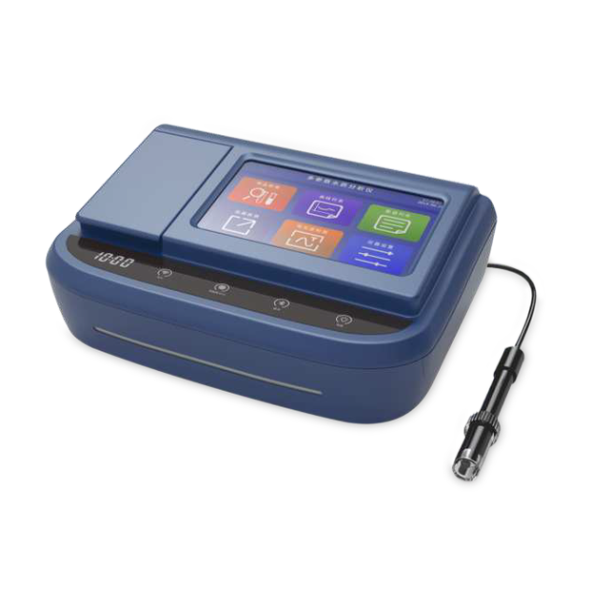
| YEX-L1-MP1 multi-parameter analyzer | Laboratories consolidating COD, nutrients, pH, temperature and configured photometric methods. | A multi-parameter platform is not automatically a substitute for dedicated turbidity optics. | Choose it for a broader chemistry bench; keep YEX-L1-TUR when dedicated turbidity workflow is required. |
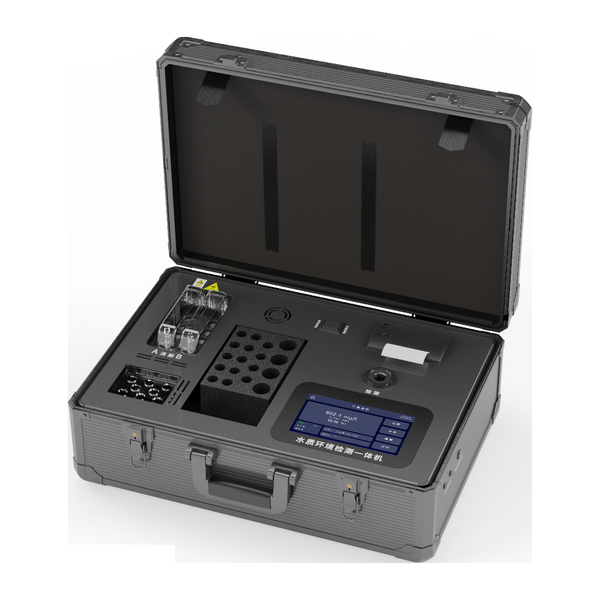
| YEX-L1-WS mobile workstation | Commissioning, emergency response and site testing where transporting samples changes their condition. | Heavier field package with battery, enclosure and a different logistics requirement. | Select when results must be generated at the sampling point and field power or protection matters. |
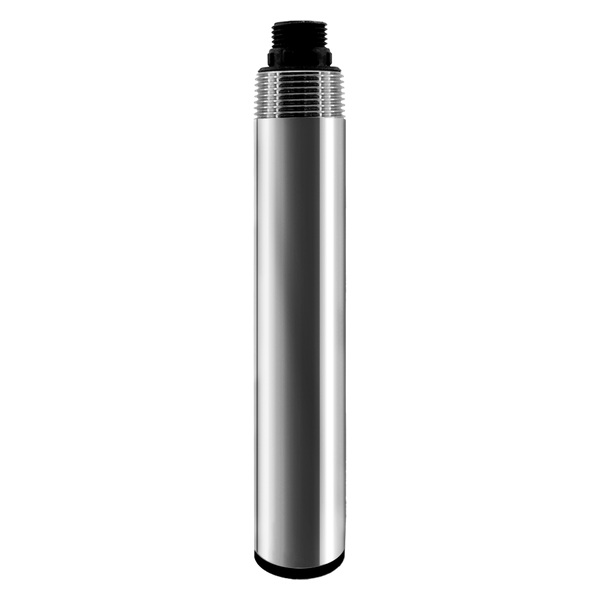
| YEX-S1PRO-TS online turbidity sensor | Continuous monitoring, alarms and PLC/SCADA integration in tanks, channels or treatment processes. | Fouling, installation position and online calibration create different uncertainty from a laboratory cell. | Use for process trends and alarms, then define how laboratory checks will verify the online point. |
A laboratory result represents a collected static sample, while an online sensor observes changing water under dynamic field conditions. The values should not be expected to match unless sampling time, location, particle settling and transport effects are controlled. For a more detailed verification plan, see the online sensor and laboratory correlation guide.
Application Scenarios from the Buyer and Integrator Perspective
Drinking-water treatment laboratory
Challenge: finished-water and filter-effluent values may be low enough for cell marks, dust and bubbles to influence the result. Configuration: use clean matched cells, low-range standards, a fixed orientation, defined stabilization and routine check standards. Value: the plant can distinguish a real filtration change from handling variation and retain a searchable result record.
Municipal and industrial wastewater laboratory
Challenge: influent, clarification and effluent samples may span a wide range and contain rapidly settling particles. Configuration: define mixing, sampling time, RST use, dilution rules and replicate acceptance for each sample class. Value: results become comparable across shifts and treatment stages instead of depending on how quickly each technician reads the cell.
Food, beverage and pharmaceutical utility water
Challenge: turbidity may be used as a rapid internal indicator for raw water, rinse water, filtration or batch consistency, while colored products can affect optical behavior. Configuration: validate the matrix, reporting unit and limits against the applicable internal or customer method. Value: a rapid screen supports release or investigation without pretending that turbidity identifies the specific contaminant.
Environmental and multi-site laboratory networks
Challenge: instruments at different locations can use different calibration points, units or operator practices. Configuration: standardize curves, standards, cell replacement, operator permissions and USB export naming. Value: site-to-site data can be reviewed as one program rather than unrelated instrument files.
Quality Control: The Cell Is Part of the Measurement System
The round borosilicate cell is not disposable packaging. Light passes through it, so scratches, chips, stains, fingerprints and orientation influence the measurement. A laboratory should identify cells, inspect them under consistent light, hold them by the cap and replace any cell that cannot be cleaned to the defined acceptance condition.
Use at least 25 mL of representative sample and allow visible bubbles to dissipate without allowing settling to invalidate the result. Wipe the outside with a lint-free cloth and align the triangular mark toward the front. For low-level work, use the same cell or a verified matched set for standards and samples. For settling samples, define the mixing-to-reading time or use the RST method as validated.
Calibration should cover the actual working range. The available points are 0, 2, 20, 100, 200, 400, 1000 and 4000 NTU, with reminders configurable from 15 to 365 days or off. A reminder is not a QC program. Laboratories still need standard validity checks, independent verification, acceptance criteria, corrective action and an exportable calibration record.
Data Integration Without Assuming Every Port Is Standard
USB is the documented standard interface for exporting stored data and authorized software updates. A Bluetooth printer is optional. Remote 4G/DTU hardware, cloud access, TCP socket or MQTT functions depend on the selected configuration and service. If the laboratory needs results in a LIMS, cloud platform or client database, define file format, fields, user permissions, timestamps and acceptance tests before ordering.
The product page states that an RS-485 connector is reserved for selected configurations but does not assign a standard protocol. Therefore an integrator should not write “RS485 Modbus” into the design by assumption. The quotation must identify the active interface, protocol, register or message document, cable, hardware module and FAT demonstration. Where USB export is operationally sufficient, it may be simpler and easier to validate.
Projects that require continuous alarms should review the separate online turbidity sensor selection guide. Laboratories building a wider chemistry bench can also compare the COD, ammonia and nutrient testing workflow before deciding whether dedicated and multi-parameter instruments belong in the same quotation.
Selection and Purchase Checks Before Ordering
- Define the decision. State whether results support release, compliance, process comparison, research or screening.
- Map the real range. Provide minimum, normal, alarm and upset values for each sample type.
- Name the method and unit. Confirm NTU, FNU or EBC and the accepted optical procedure for the destination.
- Describe particle behavior. Identify settling, floating solids, color, bubbles and sample instability.
- Set the QC plan. Define calibration points, check standards, frequency, replicate limits and corrective action.
- Calculate throughput. Provide samples per shift, repeats, cleaning time and reporting deadlines.
- Specify data handling. Decide whether USB is sufficient or optional printing, DTU, MQTT or another documented interface is required.
- Confirm delivery scope. Check cells, standards, adapter and plug, cleaning items, printer, communications hardware, language, packing, training and warranty terms.
Price is influenced by the analyzer configuration, optional printer or communications hardware, quantity of spare cells and standards, destination plug, documentation, training, inspection, packaging and freight. MOQ, lead time, OEM labeling and after-sales arrangements should be confirmed in the quotation rather than stated as universal values. FAT should include the agreed standards, repeatability check, data export and every optional interface in the order.
The official product information lists the analyzer, 24 V / 2.5 A adapter, four cells, cleaning brushes, transfer pipettes, antennas, dust cover, lens cloths, manual, certificate/warranty card and 0, 2, 20 and 100 NTU standards. The printer is optional; communications depend on the order. The signed order and packing slip control delivery. Require cells and standards to be protected for transport, inspect damage or leakage on receipt, and retain the packaging. The published warranty is one year from the factory date unless agreed otherwise. Referenced methods are not third-party certification; list every required certificate or test report in the order.
FAQ About Laboratory Turbidity Meter Selection
Technical questions
1. What range and accuracy does YEX-L1-TUR provide?
The verified range is 0–4000 NTU. Accuracy is ±2% + 0.01 NTU from 0 to 1000 NTU and ±5% from 1000 to 4000 NTU; repeatability is ±1% + 0.01 NTU. The 0.001 NTU lowest-range resolution does not replace the accuracy statement. Buyers should write acceptance limits for the relevant range and include standard uncertainty and sample handling.
2. When should Rapid Settling Turbidity mode be used?
Use RST for samples whose suspended material settles during the normal reading window, after validating the procedure for that matrix. It is useful for raw water, wastewater and mineral suspensions. It does not fix unrepresentative sampling or inconsistent mixing. State which sample types use RST, the preparation method and the acceptance rule so operators do not change modes simply to obtain a preferred result.
3. Are RS-485, Modbus, Bluetooth printing and cloud upload standard?
USB is the documented data interface. The Bluetooth printer is optional, while 4G/DTU, cloud, TCP socket and MQTT depend on the ordered configuration. An RS-485 connector is reserved on selected configurations, but no standard protocol is assigned. If integration is required, request the protocol document, hardware list, account scope and FAT demonstration in writing rather than assuming Modbus compatibility.
Selection questions
4. Can one analyzer test both drinking water and wastewater?
Yes, the range covers low and high turbidity, but laboratory turbidity meter selection must still use matrix-specific procedures. Finished drinking water requires strict cell, bubble and low-level standard control. Wastewater may require homogenization, RST mode, dilution or a defined mixing-to-reading time. Purchase the analyzer for the complete range only if the SOP, calibration points and QC checks also cover both sample groups.
5. Should a buyer choose YEX-L1-TUR or an online turbidity sensor?
Choose YEX-L1-TUR for controlled batch testing, calibration records and laboratory verification. Choose an online sensor such as YEX-S1PRO-TS for continuous alarms, trends and PLC/SCADA integration. Many plants need both: the online sensor detects change while the laboratory analyzer verifies the process under controlled conditions. Define comparison timing and sample location because the two instruments may observe different samples.
6. Is a multi-parameter analyzer a replacement for a dedicated turbidity analyzer?
Not automatically. A multi-parameter analyzer is valuable when the laboratory needs COD, nutrients, pH, temperature and configured photometric methods on one platform. YEX-L1-TUR provides dedicated tungsten-light multi-angle turbidity optics, RST mode and turbidity calibration points. Select by the accepted method and QC requirement, not by the number of parameters listed in a brochure.
Procurement and project questions
7. What consumables and accessories should be included in the quotation?
Confirm round borosilicate cells, traceable turbidity standards for the working range, cleaning brushes, lint-free cloths, transfer tools, the 24 V adapter and destination plug. Add spare cells, optional printer, DTU or communication service only where required. The official packing list is a starting point, but the signed sales order and packing slip define what will actually be delivered.
8. What information should distributors or laboratories provide for pricing?
Provide sample matrices, minimum and maximum turbidity, reporting unit, applicable method, target accuracy, daily sample count, reading modes, calibration points, standards policy, data export, printing or remote communication requirement, quantity, destination and acceptance test. Distributors should also state target industries, plug and language needs, local method acceptance and whether OEM labeling or bundled standards are required.
Summary
Laboratory turbidity meter selection should be based on the decision, matrix and quality-control procedure. YEX-L1-TUR provides a verified 0–4000 NTU range, range-dependent accuracy, 0.001 NTU low-range resolution, single/continuous/RST modes, eight available calibration points, 40,000-record storage and USB export. Optional printing and remote functions must be identified in the order; RS-485 should not be assumed to use Modbus without a confirmed protocol.
The model fits drinking-water, wastewater, industrial and environmental laboratories that need controlled batch results. It is not a continuous process monitor or a waterproof field instrument. Reliable deployment requires clean and verified cells, representative samples, matrix-specific reading modes, traceable standards, defined export responsibility and measurable FAT criteria. If you are comparing laboratory, field and online turbidity configurations, send YexSensor your sample range, method, throughput and data requirements so the quotation can match the actual workflow.