Chinese
 Spanish
 French
 Russian
 German
 Portuguese
 Indonesian
 Thai
Thai Vietnamese
 Arabic

The short answer
A wastewater treatment plant laboratory usually has to report COD, ammonia nitrogen, total phosphorus, and total nitrogen on a routine basis. The instrument that covers that parameter set on one bench is the YEX-L1-MP1 Benchtop Multi-parameter Analyzer — a photometric platform with configured curves for COD, ammonia nitrogen, total phosphorus and total nitrogen, plus an integrated pH and temperature channel, absorbance scanning at 420/470/520/620 nm, and 10,000-record storage.
One boundary is worth stating up front: the analyzer ships without the reagent methods. It provides the optical platform and the configured curves, after which each parameter needs the matching reagent method, vessel, range, blank, reaction condition and QC procedure. A supported parameter list is not a promise that every reagent and curve arrives in the standard package.
How this plays out in real quotations — and how to configure around it — is what follows.
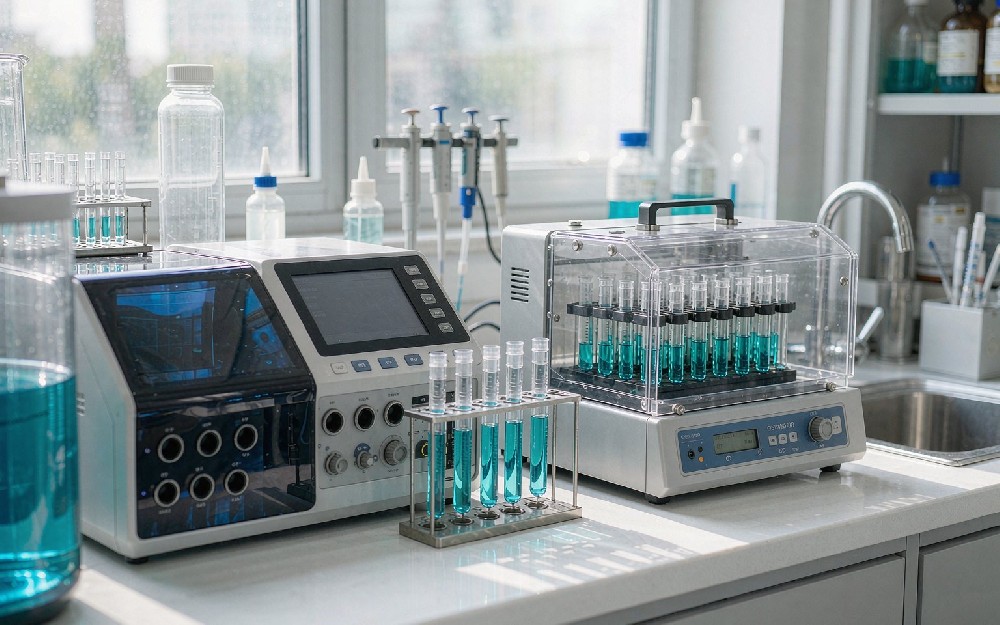
For plants that also run BOD₅, the paired bench is the MP1 plus the YEX-L1-BOD. The MP1 gives fast process feedback on COD and nutrients; the BOD analyzer gives the 5-day biodegradable load figure that discharge permits usually name. See the companion BOD workflow article for that side.
1. What problem a multi-parameter bench solves
A wastewater laboratory that measures four nutrient parameters on separate single-purpose instruments is running four calibration routines, four reagent supply chains, four data records, and four failure modes. The daily workload becomes a scheduling problem rather than a measurement problem.
What this looks like on a normal working day:
The morning shift cannot get COD results out before the process decision is needed. COD with rapid digestion is a 20-minute reaction, but that assumes the instrument is calibrated, the reagents are in stock, and the digestion device is free.
Ammonia, total phosphorus and total nitrogen each need their own curve and their own reagent set. Managing that across separate instruments means managing separate consumable inventories.
pH and temperature are measured on a different instrument from the photometric parameters, so the record is fragmented between two devices.
Export and reporting are manual. Someone transcribes readings from a display into a spreadsheet.
A multi-parameter benchtop platform consolidates the photometric work onto one optical system, adds pH and temperature on the same unit, and stores results in one place. The workload does not shrink — the same number of samples still has to be run — but the coordination overhead and the record fragmentation do.
2. Core specifications and what they mean for your laboratory
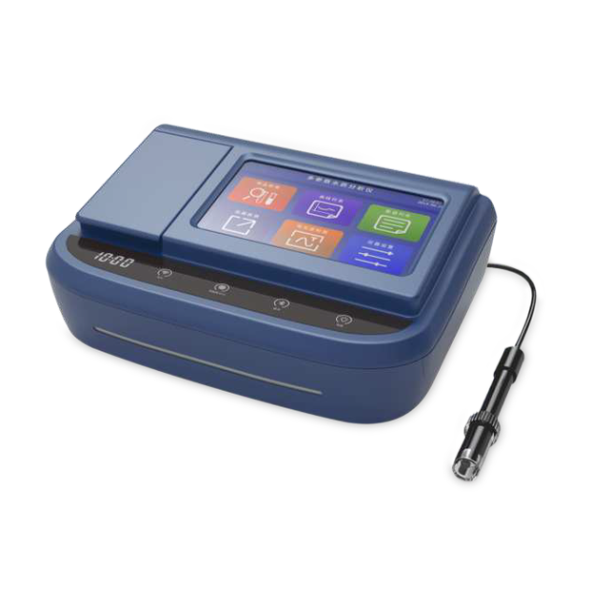
Absorbance range and the resolution that decides your reporting limit
0–3.5 Abs range with 0.001 Abs resolution and ≤ ±5% measurement accuracy.
Absorbance resolution is the specification that determines whether you can measure a low-concentration sample at all. Many wastewater nutrient methods run at low absorbance, and a platform with coarse resolution produces a result that is inside the calibration curve but outside the meaningful measurement range. The 0.001 Abs step is what supports low-range work.
Accuracy ≤ ±5% and repeatability ≤ ±3% are the numbers your QA procedure will reference. If you run the same sample twice and get results more than 3% apart, the source is usually sample handling or reagent addition, not the optics.
Optical stability — why it is specified over 30 minutes
≤ 0.002 Abs / 30 min.
The 30-minute window is worth reading carefully, because it explains a recognizable symptom. A photometer that drifts during a measurement cycle produces results that depend on when they are read rather than what is in the tube, and a 30-minute window covers a normal cycle with margin. When results trend across a batch — early samples low, later samples high — optical or thermal drift is the likelier cause.
Light source and filter life — a consumable-planning number
Light-source life 100,000 hours. Optical-filter life 5 years.
At 8 hours of daily use, 100,000 hours is over 30 years. In practice the light source will not drive your maintenance schedule — the flow cell, the electrode, and the reagents will. For distributors planning spare-parts stock, that shifts the recurring revenue toward the electrode and the vessels rather than lamp replacement.
The optical filter is the item with a real calendar limit: 5 years. It is worth reflecting in service contracts and in long-shelf distributor stock.
The pH and temperature channel — and the calibration order
pH 0–14, accuracy ≤ ±0.05 pH. Temperature 0–80 °C, accuracy ≤ ±0.5 °C.
The integration matters operationally. Many photometric nutrient methods are temperature-sensitive in their reaction step, and having temperature on the same instrument means the reaction condition is recorded alongside the result rather than assumed.
A procedure detail worth building into training: temperature is calibrated before pH. pH measurement depends on temperature compensation, so a pH calibration performed against an uncalibrated temperature channel carries that error into the pH result. It is a training item rather than a hardware limitation, and one that otherwise surfaces as an unexplained bias.
Data storage and export
10,000 records stored on the instrument. Export is via USB using the included data cable.
Connectivity, standard and optional:
| Function | Status |
|---|---|
| USB record export | Standard — USB cable in packing list |
| Wi-Fi | For authorized online software upgrades, not general data transfer |
| Printing | Requires a compatible Bluetooth printer — optional |
| DTU hardware | Optional, configuration-dependent |
| Cloud upload via TCP or MQTT | Optional, configuration-dependent |
If your project expects the analyzer to push data to a central system, specify the DTU and the cloud deployment on the RFQ. Neither ships unless it is specified. For a single laboratory, USB export covers most reporting needs, and the connectivity budget often goes further elsewhere.
Physical and environmental limits
Dimensions: 412 × 253 × 164 mm, 3.25 kg
Power: DC 12 V / 5 A
Operating environment: 0–50 °C, 0–90% RH non-condensing
Storage: 10,000 records
The 0–50 °C operating range is wider than most benchtop instruments and covers a non-air-conditioned laboratory in a warm climate. It does not make this a field instrument; the YEX-L1-WS below covers that role.
3. Who this bench is for — and who it is not for
It is for you if
You report COD, ammonia nitrogen, total phosphorus and total nitrogen on a routine basis — municipal and industrial wastewater treatment plants, environmental monitoring and project laboratories, industrial water and discharge control.
You want pH and temperature on the same bench as the photometric work, so the reaction condition and the result live in one record.
You need to run custom or non-standard curves. The MP1 supports 1st-, 2nd-, and 3rd-order fitting with selectable reading averages, so a laboratory can create its own calibration curves and validate the fitted range against the intended method. This is what makes it usable for research institutes and method development, not just routine compliance work.
You are a system integrator building distributed laboratory networks. Standardizing on one platform across sites means common method packages, common reagents, and common training. A network with mixed instruments cannot share reagent ordering or calibration procedures.
You are a distributor building a wastewater laboratory catalog. This is a product with a defined method boundary and consumables attached — both reduce support burden.
It is not for you if
You expect reagent kits in the box. They are quoted separately, which is the point most often misread on this model.
You need COD results without a digestion step. The MP1 supports 16 mm tubes usable for both digestion and colorimetry, which cuts sample-transfer steps. But the analyzer does not have a built-in digestion block. COD and any method requiring heating must use a compatible external digestion device at the temperature and time stated in the applicable reagent method.
You need BOD₅. Different parameter, different instrument, 5-day method — see the companion BOD workflow article.
You measure turbidity as a regulated reporting parameter. Turbidity has its own optical geometry and its own reference methods. Running it on a general photometer is acceptable for internal trends, weaker for regulatory reporting. The dedicated YEX-L1-TUR is the correct instrument for that.
You need field measurement. The MP1 is a bench instrument at 3.25 kg requiring a DC adapter. The field counterpart is the YEX-L1-WS.
4. How to configure it — the decisions that matter
Step 1 — Fix the parameter list and the reference methods
List every parameter you will report along with the method your regulator or client accepts — the actual parameter, range and reference method rather than a general heading such as "nitrogen".
This is the input that drives everything downstream: which curves are configured, which reagents you need, which vessels you need, and what your digestion requirement is.
Step 2 — Confirm every curve, range, reagent kit and vessel before ordering
The MP1's configured photometric parameters cover COD, ammonia nitrogen, total phosphorus, total nitrogen, and other ordered methods. The word that carries the weight is ordered.
Before the order is finalized, confirm for each parameter:
The calibration curve
The measurement range
The reagent kit
The vessel format
A parameter in a supported list whose curve or reagent kit did not make it into the order is not measurable on delivery day.
Step 3 — Decide on the digestion device
COD requires one. The same question applies to any other method — total phosphorus and total nitrogen commonly do — that needs a heating step at a defined temperature and time.
The MP1 supports 16 mm tubes that can be used for both digestion and colorimetry, which is a genuine workflow advantage: it removes the sample transfer between a digestion vessel and a colorimetric cell, and that transfer is where contamination and volume error enter.
But the digestion device itself is external and separate. Ask yourself where it sits on your bench, whether it has capacity for your daily sample load, and who is responsible for it. Deferring that decision tends to cost the first week after delivery.
Step 4 — Plan the reagent consumption period
State your reagent consumption period when configuring. Reagent kits have shelf lives, and the wrong assumption goes both ways:
Under-ordering means a stockout mid-quarter, which stops the parameter until a shipment arrives.
Over-ordering means reagent expiring on the shelf, which is a direct write-off.
Size the reagent order against your actual daily sample count per parameter, not against the instrument's capability. This is also a customs question — reagent kits may carry a different transport classification from the instrument, so they may not be shippable in the same consolidated shipment.
Step 5 — Decide what else goes in the order
The standard packing list for the MP1 contains 14 items: main instrument, USB data cable, 4 × 16 mm colorimetric tubes, 4 × 24 mm colorimetric bottles, pH/temperature electrode, power adapter, disposable gloves, pH 4.00 buffer, pH 6.86 buffer, pH 9.18 buffer, 2 × lens cloth, product user manual, certificate/warranty card, reagent operating manual.
Not in the standard packing list — specify explicitly if you need them:
Compatible Bluetooth printer
External digestion device
Optional DTU
SIM card or service account
Project-specific reagent kits
The trade-off on bundling. Buying reagent kits and consumables together with the instrument gives you one shipment and one customs entry, but commits budget up front and risks expiry on slow-moving reagents. Buying separately keeps cash flexible but adds freight and lead time to every reorder.
For a first order, bundling the reagents you will definitely consume within their shelf life is usually the better call — because the alternative is a week of downtime between instrument delivery and the first valid result. On reorders, switch to a consumption-matched schedule.
Step 6 — Confirm the acceptance test before handover
For international projects, agree in advance what test will be run to accept delivery. The MP1's configuration checklist asks for the acceptance test explicitly, along with local method acceptance, chemical shipping restrictions, plug type, and language requirements.
Two of them hold up deliveries most often:
Plug type. The adapter is DC 12 V / 5 A, but the mains end varies by destination. State the destination country.
Local method acceptance. A method that is standard in one market may not be the accepted reference in another. Confirm this before the curves are configured, because changing the accepted method after production means a new configuration.
5. How this compares to other options
Compared to four separate single-parameter instruments
Four instruments means four calibrations, four reagent inventories, four data records, and four points of failure. The MP1 consolidates the photometric work onto one optical system and one record.
What you give up: if one instrument fails, the whole photometric capability goes down rather than one parameter. For a plant with a compliance deadline, that concentration risk is real. Where it matters, a service agreement with a defined response time addresses it more economically than a second analyzer, provided the decision is made deliberately.
Compared to a general-purpose spectrophotometer
A generic spectrophotometer gives absorbance and nothing else. You supply the wavelength, the method, the curve, and the calibration. It is cheaper on the invoice and more expensive in labor, and it produces results that are hard to defend unless your laboratory has method-development capability in-house.
The MP1 trades that openness for pre-configured curves, an integrated pH/temperature channel, and 10,000-record storage — while still allowing custom 1st/2nd/3rd-order curve fitting for laboratories that need it. That combination is what makes it fit both routine compliance laboratories and research groups.
Compared to the previous approach (separate meters and manual records)
A laboratory running COD on a manual photometer, ammonia on a bench meter, pH on a pen, and temperatures on an infrared gun is managing four record streams. Consolidating onto the MP1 puts the result, the temperature, and the pH in one record with a USB export path.
The gain is not speed on a single sample. It is the ability to answer "what were the conditions when this number was produced" without reconstructing it from a bench sheet.
Compared to the YEX-L1-WS for field work
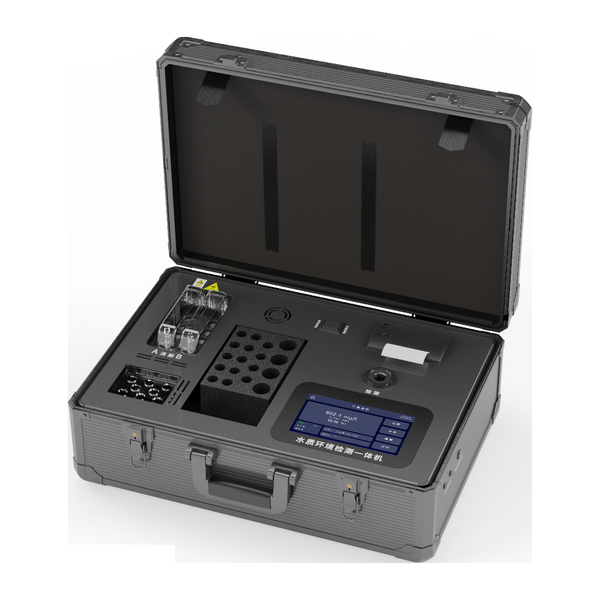
The WS carries the same optical platform — 0–3.5 Abs, ≤ ±5% accuracy, ≤ ±3% repeatability, 10,000 records — in an IP65 enclosure with a 12 V / 20 Ah lithium battery, at 13.3 kg, 150 W rated, 10 h charge time.
That shared optical specification is the point. A result taken in the field on the WS and a result taken in the laboratory on the MP1 are directly comparable, because the measurement platform is the same. Two instruments with different optical architectures produce numbers that cannot be reconciled without cross-calibration work.
Choose the WS when measurements happen at a site, at a commissioning, or in a wet environment. Choose the MP1 when every measurement happens in a fixed, climate-controlled room. Choose both when you run a fixed laboratory and a field verification program — and standardize on one method package and one reagent set across the two.
Compared to materials and vessel formats
The MP1 accepts 16 mm tubes and 24 mm bottles. These are not interchangeable, and the choice is driven by the reagent method, not by preference.
The practical advantage of the 16 mm format is that it serves both digestion and colorimetry, which removes a transfer step. Where a method specifies the 24 mm bottle, you use the 24 mm bottle. Confirm the vessel format alongside the curve and the reagent kit, because a reagent kit designed for one vessel will not run correctly in the other.
6. What buyers ask before ordering
How is the price determined? Configuration, not volume, is the dominant factor on this line. The price is driven by the instrument platform, the number of configured parameter curves, the reagent kits and vessels included, the electrode and optional accessories, and whether the order carries the digestion device and connectivity modules. A unit configured for one parameter and a unit configured for a full nutrient panel are not the same product, so their prices differ structurally rather than by discount. Order quantity matters, but it is a secondary factor. The accurate way to get a number is to send the parameter list, the reference methods, the expected ranges, and the daily sample count — not to ask for a catalog price.
What is the minimum order quantity? Standard configured units ship in small quantities. Distributor orders with OEM packing, market-specific labeling, or bundled reagent kits carry higher minimums because they trigger separate production and packing setup. Confirm the MOQ against your actual configuration.
What is the lead time? Lead time follows the configuration. Standard configurations ship on a short cycle. Custom method packages, structural changes, and OEM packing add time. The variable that most often surprises buyers is not production — it is the reagent and consumable content of the order, which has its own supply chain and its own shelf life. State the required delivery date with the RFQ so it can be checked against the actual configuration rather than quoted as a generic number.
Can it be customized? Yes, at two levels.
Configuration level — method packages, reagent selection, vessel formats, connectivity modules (DTU, cloud via TCP/MQTT), interface language, packing and labeling for distributor orders. This is routine.
Analytical level — custom calibration curves with 1st-, 2nd-, or 3rd-order fitting and selectable reading averages, validated against the intended method. This is a normal capability of the instrument, not a special order.
Structural level — changing the optical architecture or the fluidic path is an engineering project with a separate lead time and tooling cost. Most requirements can be met at the configuration or curve level, which is the faster route. Structural customization that adds months seldom wins against adjusting the workflow.
How is it installed and commissioned? Installation is unpacking, connecting the DC 12 V adapter, and setting up the pH/temperature electrode. Commissioning should include: temperature calibration before pH calibration, the pH buffer calibration (4.00 / 6.86 / 9.18 buffers are supplied), establishment of the reagent blanks for each parameter, and the agreed acceptance test.
What about after-sales? YexSensor provides a one-year limited warranty from the purchase date, subject to the sales agreement and warranty card, with continuing maintenance support. Accessories and consumables are excluded unless agreed in writing. The warranty does not cover operation contrary to the manual or reagent instructions, unauthorized disassembly or repair, force-majeure damage, corrosive or chemical exposure, abnormal power, or products without valid purchase and warranty information.
In practice, for a wastewater laboratory: the pH electrode, the vessels, and the reagents are the parts most exposed to chemistry and the parts most likely to sit outside the warranty as consumables. Price your spare-part stocking — and your service contract — around the electrode and the vessels, not around the light source.
What about packaging and shipping? The main unit is 3.25 kg at 412 × 253 × 164 mm — a compact export shipment. The fragile items are the 16 mm tubes and the 24 mm bottles. If you are consolidating an order, note that reagent kits may carry a different transport classification and a shelf-life constraint that the instrument does not, so a single consolidated shipment may not be possible.
What certifications and documentation are available? A certificate and warranty card ship in the packing list, along with the product user manual and the reagent operating manual. If your market or tender requires specific certification documents, list them on the RFQ — certification scope is configuration- and market-dependent, and resolving it before production is far cheaper than after shipment.
What is the difference between the lower-cost and higher-specification paths? Not brand tier — scope. The lower-cost path is the analyzer with a limited parameter configuration, standard accessories, and self-sourced reagents and digestion device. The higher-specification path adds a full nutrient curve set, matched reagent kits and vessels, the Bluetooth printer, the DTU and cloud deployment, and market-specific certification.
The budget is best spent on parameters you will actually report. Unused connectivity and unrun curves are where spend tends to drift on this platform.
7. What a working multi-parameter bench looks like
A municipal or industrial wastewater plant laboratory running COD and nutrients routinely typically ends up with:
| Item | Role |
|---|---|
| YEX-L1-MP1 | COD, ammonia nitrogen, total phosphorus, total nitrogen via configured curves; pH and temperature channel; 10,000 records |
| External digestion device | Required for COD and any method needing heating — not included with the analyzer |
| Reagent kits and standards | Per parameter; sized to the reagent consumption period, with shelf life in mind |
| 16 mm tubes and 24 mm bottles | Consumables; the 16 mm format serves both digestion and colorimetry |
| pH electrode | Supplied with the unit; the consumable most exposed to samples |
| YEX-L1-WS (if you do field work) | Same optical platform, IP65, battery-powered — for comparable field verification |
| YEX-L1-BOD (if BOD₅ is on your permit) | The 5-day biodegradable load figure that discharge reporting usually names |
Three items determine whether the bench is productive from day one:
The digestion device. External, separate, and required for COD. Order it alongside the analyzer, or plan around the gap.
The reagent kits matched to your parameters. The analyzer ships with pH buffers, not with your nutrient reagents.
The acceptance test agreed in advance. Agreeing beforehand what test proves the installation keeps handover a signature rather than a negotiation.
8. Getting the right configuration
Wastewater laboratories that are happy with their bench usually settled four questions first:
Which parameters, against which reference methods? This decides the curves, the reagents, and the vessels.
How many samples per day, per parameter? This decides the reagent consumption period and whether one bench has the throughput you need.
What heating steps do your methods require? This decides the digestion device specification and capacity.
Does anything leave the laboratory? If field verification or commissioning testing is part of the program, the WS shares the measurement platform and makes field and laboratory results comparable.
If you are not sure which configuration fits your plant — or which curves, reagent kits and digestion setup match your parameters — send your parameter list, your reference methods, your daily sample count, and your sample matrix to sales@yexsensor.com. We will come back with a specific configuration and the reasoning behind it, which makes it straightforward to weigh against your shortlist.
For distributors, include the markets you serve, your local method acceptance requirements, and whether you need OEM packing or bundled reagent kits. Those answers change the quotation structure more than order quantity does.
Frequently asked questions
1. Can the YEX-L1-MP1 measure COD, ammonia nitrogen, total phosphorus and total nitrogen on one instrument?
Yes, as configured photometric parameters. The analyzer provides the optical platform and the configured curves for COD, ammonia nitrogen, total phosphorus, total nitrogen and other ordered methods. Each parameter still requires the correct reagent method, vessel, range, blank, reaction condition and QC procedure — a supported parameter list is not a promise that every curve and reagent kit ships in the standard package.
2. Does the analyzer have a built-in digestion block?
No. COD and any other method requiring heating must use a compatible external digestion device at the temperature and time stated in the applicable reagent method. The MP1 does support 16 mm tubes that serve for both digestion and colorimetry, which removes a sample-transfer step, but the heating itself is external.
3. What COD range is available?
Rapid 20-minute digestion and a 10–15000 mg/L range apply when the corresponding reagent and calibration curve are selected. Confirm the curve and the reagent kit for your target range before ordering.
4. How are pH and temperature measured, and in what order should they be calibrated?
Through the supplied pH/temperature electrode: pH 0–14 at ≤ ±0.05 pH accuracy, temperature 0–80 °C at ≤ ±0.5 °C accuracy. When calibration is required, calibrate temperature before pH, because pH measurement depends on temperature compensation and an uncalibrated temperature channel propagates its error into the pH result.
5. Are Wi-Fi, DTU, TCP, MQTT and cloud upload standard?
No. USB record export is standard and the USB cable is in the packing list. Wi-Fi is used for authorized online software upgrades. Printing requires a compatible Bluetooth printer. DTU hardware and cloud upload via TCP or MQTT are optional and configuration-dependent — specify them separately on the RFQ.
6. Can the laboratory create its own calibration curves?
Yes. The MP1 supports 1st-, 2nd- and 3rd-order fitting with selectable reading averages, so a laboratory can build custom curves and validate the fitted range against the intended method. This is a standard capability, not a special order.
7. What is the difference between the MP1 and the YEX-L1-WS?
The same optical platform — 0–3.5 Abs, ≤ ±5% accuracy, ≤ ±3% repeatability, 10,000 records. The difference is the enclosure and the power: the MP1 is a bench unit at 3.25 kg on a DC 12 V adapter, while the WS is IP65 with a 12 V / 20 Ah lithium battery at 13.3 kg. Because the optical platform is shared, a field result and a laboratory result are directly comparable.
8. What information should be supplied for a quotation?
The sample matrix, required parameters, expected ranges, reference methods, number of samples per day, required vessel format, digestion needs, reagent consumption period, data-retention procedure, printing requirement and destination. Also state whether USB export is sufficient or whether a Bluetooth printer or optional DTU/cloud deployment is required.
Summary
A wastewater laboratory reporting COD, ammonia nitrogen, total phosphorus and total nitrogen needs a photometric platform with the right curves, the right reagents, and a working digestion device. Only the first of those is the analyzer.
The YEX-L1-MP1 provides 0–3.5 Abs absorbance at 0.001 Abs resolution and ≤ ±5% accuracy, configurable curves for COD, ammonia nitrogen, total phosphorus and total nitrogen, scanning at 420/470/520/620 nm, custom 1st/2nd/3rd-order curve fitting, an integrated pH and temperature channel, and 10,000-record storage with USB export.
The digestion device, reagent kits, and printing or connectivity modules are configured separately. With those matched to the order and the acceptance test agreed beforehand, the bench is producing valid results on day one rather than a week later.
Related products
YEX-L1-MP1 Benchtop Multi-parameter Analyzer — COD, ammonia nitrogen, total phosphorus, total nitrogen, pH and temperature on one bench
YEX-L1-BOD Digital BOD Analyzer — the companion for BOD₅ discharge reporting
YEX-L1-WS Mobile Water Quality Workstation — same optical platform, IP65, for field verification
YEX-L1-TUR Benchtop Turbidity Analyzer — dedicated turbidity with USEPA 180.1 / HJ 1075-2019 reference
YEX-L1-PH-ORP Benchtop pH/ORP Analyzer — high-throughput pH and ORP with multi-point calibration