


 Chinese
 Spanish
 French
 Russian
 German
 Portuguese
 Indonesian
 Thai
Thai Vietnamese
 Arabic

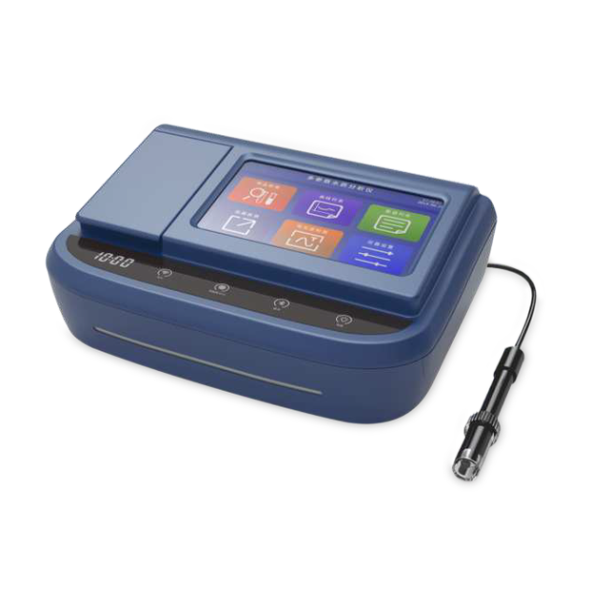

Products Description
YEX-L1-MP1 Benchtop Multi-parameter Water Quality Analyzer: consolidate photometric testing, pH, temperature, and suspended-solids measurement on one laboratory platform
- Multiple measurement modes: photometric methods, pH and temperature electrode measurement, suspended-solids measurement, single-wavelength absorbance, time scan, and user-created calibration curves.
- Stable optical performance: a high-brightness quasi-parallel LED cool-light source, 0–3.5 Abs range, 0.001 Abs resolution, and optical stability of ≤ 0.002 Abs / 30 min.
- Practical laboratory workflow: a 10-inch touchscreen, support for 16 mm tubes and 24 mm bottles, storage for 10,000 records, USB export, compatible Bluetooth printing, and configuration-dependent connectivity.
Product Overview
The YexSensor YEX-L1-MP1 is a benchtop multi-parameter water quality analyzer for laboratories that need to run several routine water tests without maintaining a separate photometer, pH meter, temperature meter, and suspended-solids instrument for every workflow. Its configured photometric menu can cover COD, ammonia nitrogen, total phosphorus, total nitrogen, and other ordered parameters, while the extended measurement functions support the supplied pH/temperature electrode and the integrated suspended-solids module.
The instrument combines a 10-inch color touchscreen, high-brightness quasi-parallel LED light source, protected system curves, user-created calibration curves, two vessel formats, and on-instrument record management. Results are displayed directly and can be saved, printed through a compatible Bluetooth printer, or exported to a computer. The available methods, ranges, reagents, and communications hardware must be confirmed against the ordered configuration.
Procurement Risks and Decision Boundaries
Photometric capability depends on the selected method package
The analyzer provides the optical platform and configured curves, but each parameter still requires the correct reagent method, vessel, range, blank, reaction condition, and quality-control procedure. A list of supported parameters is not the same as a promise that every reagent and curve is included in the standard package. Buyers should identify the sample matrix, target parameters, expected ranges, reference methods, daily workload, and required consumables before the order is finalized.
Rapid COD testing still requires the specified digestion step
The YEX-L1-MP1 supports 16 mm tubes that can be used for both digestion and colorimetry, reducing sample-transfer steps. The analyzer itself is not described as having a built-in digestion block. COD and other methods that require heating must use a compatible external digestion device and the temperature and time stated in the applicable reagent method. For COD, the manual identifies rapid 20-minute digestion and an available range of 10–15000 mg/L when the corresponding reagent and calibration curve are selected.
Connectivity functions have different supply boundaries
The packing list includes a USB data cable for record export. Wi-Fi is used for authorized online software upgrades. Printing requires a compatible Bluetooth printer. DTU hardware and cloud data upload through TCP or MQTT are optional and configuration-dependent. These functions should be specified separately in the request for quotation so that the delivered hardware, account permissions, server settings, and acceptance test match the project.
Core Engineering Advantages
Stable optical architecture for routine photometry
The optical system uses a quasi-parallel LED cool-light source with low heat output, fast response, and a stated service life of 100,000 h. Four selectable wavelengths—420, 470, 520, and 620 nm—support supplied and user-created methods. The analyzer provides a 0–3.5 Abs range, 0.001 Abs resolution, measurement accuracy of ≤ ±5%, repeatability of ≤ ±3%, and operational repeatability of ≤ ±0.005 Abs.
Two vessel formats reduce method constraints
The measurement wells accept 16 mm colorimetric tubes and 24 mm colorimetric bottles. Narrow tubes support common reagent-vial workflows, while the wider bottle format accommodates methods that require a larger optical vessel. The vessel type, orientation, cleanliness, and absence of bubbles remain critical because scratches, fingerprints, residue, and liquid-level differences can bias the result.
Integrated electrochemical and suspended-solids functions
The supplied pH/temperature electrode provides real-time pH and temperature readings, with a pH range of 0–14, temperature range of 0–80 °C, pH accuracy of ≤ ±0.05 pH, and temperature accuracy of ≤ ±0.5 °C. Three-point pH calibration at 4.00, 6.86, and 9.18 is recommended during initial commissioning. A dedicated well and measurement function support rapid suspended-solids readings and calibration with the appropriate standards.
Flexible calibration and traceable data handling
Operators can create calibration curves at the available wavelengths, average 1, 3, 5, or 10 readings per level, and select first-, second-, or third-order polynomial fitting. System curves are protected, while user-created curves can be edited or deleted. The instrument stores up to 10,000 records; the interface shows the most recent 480 for faster browsing, and the complete data file can be exported through USB.
Technical Specifications
| Parameter | Specification |
|---|---|
| Model | YEX-L1-MP1 |
| Absorbance range | 0–3.5 Abs |
| Measurement accuracy | ≤ ±5% |
| Repeatability | ≤ ±3% |
| Optical stability | ≤ 0.002 Abs / 30 min |
| Absorbance resolution | 0.001 Abs |
| Operational repeatability | ≤ ±0.005 Abs |
| pH range | 0–14 pH |
| Temperature range | 0–80 °C |
| pH accuracy | ≤ ±0.05 pH |
| Temperature accuracy | ≤ ±0.5 °C |
| Data storage | 10,000 records |
| Light-source life | 100,000 h |
| Optical-filter life | 5 years |
| Power supply | DC 12 V / 5 A |
| Operating environment | 0–50 °C; 0–90% RH, non-condensing |
| Dimensions | 412 × 253 × 164 mm |
| Weight | 3.25 kg |
Measurement and Method Functions
| Function | Available capability | Selection note |
|---|---|---|
| Configured photometric parameters | COD, ammonia nitrogen, total phosphorus, total nitrogen, and other ordered methods | Confirm every curve, range, reagent kit, and vessel before ordering |
| Absorbance measurement | Single wavelength and time scan at 420, 470, 520, or 620 nm | Time scan records absorbance change at a defined interval |
| User calibration curves | 1st-, 2nd-, or 3rd-order fitting with selectable reading averages | Validate the fitted range and coefficient against the intended method |
| pH and temperature | Real-time measurement with the supplied pH/temperature electrode | Calibrate temperature before pH when calibration is required |
| Suspended solids | Dedicated measurement well and calibration function | Use the specified bottle and appropriate standards |
Data, Printing, and Connectivity
| Function | Supply status | Use |
|---|---|---|
| Internal memory | Standard | Stores up to 10,000 measurement records |
| USB data cable | Included in the packing list | Exports the stored table file to a computer without a dedicated driver |
| Compatible Bluetooth printer | Printer not listed in the standard packing list | Prints current or selected results after a successful connection |
| Wi-Fi | Instrument function | Supports authorized online software upgrades on a stable network |
| DTU with TCP or MQTT | Optional, configuration-dependent | Uploads configured results to an authorized platform when hardware and service details are supplied |
Application Scenarios
Wastewater-treatment laboratories
Run routine COD, ammonia nitrogen, total phosphorus, total nitrogen, pH, temperature, suspended solids, and other configured tests for influent, process stages, and final effluent. Multiple measurement modes help operators compare treatment performance while keeping data in one instrument.
Environmental monitoring and project laboratories
Use configured photometric methods and user-created curves for repeat laboratory screening, project investigations, and method development. Regulatory reporting still requires the buyer to confirm the current reference method, reagent procedure, calibration, and quality-control requirements in the destination jurisdiction.
Industrial water and discharge control
Support petrochemical, papermaking, pharmaceutical, printing and dyeing, textile, leather, brewing, electronics, and municipal water projects with a parameter package selected for the actual matrix. Dilution or pretreatment may be necessary for high color, turbidity, salinity, chloride, or other interferences.
Research institutes and universities
Use single-wavelength absorbance, time scan, and custom calibration-curve functions for teaching and controlled method work. System curves remain protected, while user curves can be created, reviewed, edited, and deleted under laboratory control.
System integrators and distributed laboratory networks
Standardize a common benchtop workflow across several sites. USB export supports local archiving; compatible Bluetooth printing supports immediate paper records; optional DTU connectivity can be specified when a project requires authorized remote data collection.
Installation and Operating Guidance
Place the analyzer on a stable, level, dry, and ventilated laboratory bench. Connect only the specified DC 12 V / 5 A adapter. Keep optical wells, electrode connectors, the enclosure, and ventilation areas free of liquid and foreign material. Disconnect the USB data cable during startup, because a connected cable can place the instrument in upgrade mode and prevent normal startup.
Use the vessel format and curve specified by the method. Hold optical vessels by the upper end, clean away water, fingerprints, and dust, orient 24 mm bottles correctly, and remove bubbles from the optical path. Where digestion is required, follow the reagent procedure and use a compatible external digestion device with suitable heat and chemical protection. Verify critical results with blanks, standards, duplicates, and an applicable reference method.
Configuration and RFQ Checklist
To configure the YEX-L1-MP1 correctly, provide the sample matrix, required parameters, expected ranges, reference methods, number of samples per day, required vessel format, digestion needs, reagent consumption period, data-retention procedure, printing requirement, and destination. State whether USB export is sufficient or whether a compatible Bluetooth printer or optional DTU/cloud deployment is required.
The final order should identify every supplied calibration curve, reagent kit, standard, vessel, electrode, communications module, accessory, and consumable. For international projects, also confirm local method acceptance, chemical shipping restrictions, plug type, language requirements, and the acceptance test to be completed before handover.
Standard Packing List
| No. | Item | Quantity |
|---|---|---|
| 1 | Main instrument | 1 unit |
| 2 | USB data cable | 1 pc |
| 3 | 16 mm colorimetric tubes | 4 pcs |
| 4 | 24 mm colorimetric bottles | 4 pcs |
| 5 | pH / temperature electrode | 1 pc |
| 6 | Power adapter | 1 pc |
| 7 | Disposable gloves | 1 pair |
| 8 | pH 4.00 buffer reagent | 1 pack |
| 9 | pH 6.86 buffer reagent | 1 pack |
| 10 | pH 9.18 buffer reagent | 1 pack |
| 11 | Lens cloth | 2 pcs |
| 12 | Product user manual | 1 copy |
| 13 | Certificate / warranty card | 1 copy |
| 14 | Reagent operating manual | 1 copy |
The actual supplied accessories and reagents follow the confirmed order and packing slip. A Bluetooth printer, external digestion device, optional DTU, SIM/service account, and project-specific reagent kits should not be assumed to be included unless listed in the order.
Quality Assurance and After-Sales Information
YexSensor provides a one-year limited warranty from the purchase date, subject to the sales agreement and warranty card, together with continuing maintenance support. Accessories and consumables are excluded unless otherwise agreed in writing. The warranty does not cover operation contrary to the manual or reagent instructions, unauthorized disassembly or repair, force-majeure damage, corrosive or chemical exposure, abnormal power, or products without valid purchase and warranty information.
Frequently Asked Questions
1. Which parameters can the YEX-L1-MP1 measure?
The configured photometric menu can include COD, ammonia nitrogen, total phosphorus, total nitrogen, and other ordered parameters. The instrument also supports pH, temperature, suspended solids, single-wavelength absorbance, time scan, and user-created calibration curves. Confirm the exact curves, ranges, and reagents in the quotation.
2. Does the analyzer contain a built-in digestion block?
The manual does not specify a built-in digestion block. It supports 16 mm tubes that can be used for digestion and subsequent colorimetry, but methods requiring heat need a compatible external digestion device. Follow the reagent-specific time and temperature; the manual identifies rapid COD digestion of 20 minutes.
3. What COD range is available?
The stated available COD range is 10–15000 mg/L with the applicable reagent and calibration curve. Select the curve that covers the expected sample concentration. Samples above a curve range require suitable dilution or another configured range, and complex matrices may require pretreatment or confirmation by a reference method.
4. How are pH and temperature measured and calibrated?
The supplied combined electrode measures pH from 0 to 14 and temperature from 0 to 80 °C. The specified accuracies are ≤ ±0.05 pH and ≤ ±0.5 °C. Initial commissioning should use pH 4.00, 6.86, and 9.18 buffers; temperature should be calibrated first when calibration is required.
5. How are results stored, printed, and exported?
The analyzer stores up to 10,000 records. The interface displays the most recent 480 records for faster browsing, while the complete table file can be exported to a computer with the included USB cable. Immediate printing requires a compatible Bluetooth printer, which is not listed in the standard packing list.
6. Are Wi-Fi, DTU, TCP, MQTT, and cloud functions standard?
Wi-Fi is an instrument function used for authorized online software upgrades. DTU hardware and data upload through TCP or MQTT are optional and depend on the ordered configuration. Cloud service details, SIM hardware, server endpoints, and account permissions must be confirmed for the purchased instrument.
7. Can laboratories create their own calibration curves?
Yes. Users can select 420, 470, 520, or 620 nm, average 1, 3, 5, or 10 readings at each level, and fit first-, second-, or third-order curves. The graph, equation, and coefficient of determination should be reviewed before saving. System curves remain protected, while user-created curves can be edited or deleted.
8. What information should be supplied for a quotation?
Provide the sample matrix, target parameters, expected ranges, reference methods, daily sample count, digestion needs, reagent and consumable period, printing and data requirements, communications option, quantity, plug type, destination, and acceptance criteria. YexSensor can then verify curves, reagents, accessories, connectivity, and the final packing list.
Summary
The YEX-L1-MP1 is suited to laboratories that need one benchtop platform for configured photometric parameters, pH, temperature, suspended solids, absorbance work, and custom calibration curves. Its decision boundaries are equally important: digestion is external where required, a compatible Bluetooth printer is separate from the listed packing contents, and DTU/cloud communication is optional.
For a configuration aligned with the actual project, send YexSensor the sample matrix, parameter list, ranges, methods, daily workload, digestion plan, data and printing requirements, and destination. These inputs allow the optical methods, electrodes, reagents, vessels, accessories, communications hardware, delivery contents, and acceptance checks to be confirmed before purchase.

