


 Chinese
 Spanish
 French
 Russian
 German
 Portuguese
 Indonesian
 Thai
Thai Vietnamese
 Arabic

Water quality sensor material selection should start with the actual water, cleaning chemicals, installation forces and required service life—not with a belief that the heaviest or most expensive housing is automatically more suitable. Engineering plastics can be practical in freshwater and many treatment processes, 316L stainless steel adds mechanical strength for demanding municipal and industrial installations, and titanium alloy may be considered for selected high-chloride or corrosive duties. The correct YexSensor configuration must still be confirmed model by model because housing, wetted parts, electrodes, seals and fasteners may use different materials.

Why Water Quality Sensor Material Selection Changes by Environment
Buyers search this topic after seeing premature staining, pitting, cracked polymer parts, seized threads or unstable readings at a site that looked acceptable during a short trial. Their real concern is whether the complete measuring point will survive continuous immersion, chemical cleaning, sunlight, abrasion, impact and repeated removal. A material name alone cannot answer that question.
The selection process begins with a fluid inventory. Record normal and upset pH, conductivity or salinity, chloride, oxidants, solvents, oil, suspended solids, temperature and cleaning agents. Then document pressure, depth, flow velocity, aeration, debris impact, UV exposure, mounting loads and retrieval method. These conditions determine whether the project needs a polymer wetted body, a 316L structure, a specially confirmed titanium option or a protected bypass arrangement.
Plastic Sensor Bodies: Where POM and Other Engineering Polymers Fit
Engineering plastics are useful when low mass, electrical isolation and resistance to many ordinary water-treatment chemicals are valuable. They can suit rivers, lakes, reservoirs, aquaculture, drinking-water processes and municipal wastewater points when the exact polymer is compatible with the water and cleaning method. “Plastic,” however, is not one specification. POM, ABS, PVC, PTFE and blended engineering plastics have different chemical, temperature, UV and mechanical behavior.
The official YEX-S1-ORP page identifies POM as its wetted material. It lists a −1500 to +1500 mV range, 1 mV resolution, ±6 mV ORP accuracy, temperature accuracy of ±0.5°C, RS485 Modbus RTU, 12–24 VDC power, pressure below 0.2 MPa and IP68 protection. This is a product-specific example of a polymer wetted structure; it does not prove that every plastic-bodied sensor has the same limits or chemical compatibility.

Choose a polymer configuration only after disclosing concentrated chemicals, solvent exposure, oxidants, cleaning temperature and outdoor sunlight. Protect plastic threads from excessive installation torque and provide a rigid holder when the probe may be struck by floating debris or process equipment. The procurement check is not “Is plastic corrosion-resistant?” but “Is this named polymer compatible with every normal, upset and cleaning condition at the stated temperature and exposure time?”
316L Stainless Steel: Mechanical Strength with Chemical Boundaries
316L stainless steel is widely used where a probe needs a rigid body, durable threads and resistance to routine handling. Typical locations include wastewater tanks, industrial water systems, pumping stations, open channels and optical measurement points that are repeatedly removed for cleaning. It is not universally immune to corrosion. Chloride concentration, temperature, stagnant crevices, oxidizing conditions, deposits and contact with dissimilar metals can change performance.
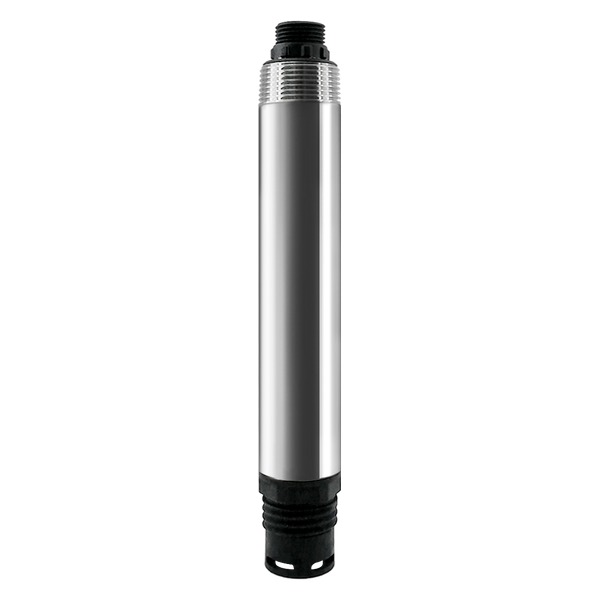
The YEX-S2-TSS-S provides a specific stainless-steel product reference. Its official page states 316L wetted material, IP68 protection, submersible 3/4 NPT installation and a customizable standard 5 m cable. Published measurement specifications include a 0–2000 mg/L suspended-solids range, 0.1 mg/L resolution, ±5% accuracy depending on sludge homogeneity, Pt1000 temperature compensation, RS485 Modbus RTU and 4–20 mA outputs, 12–24 VDC power, 0–50°C operation and pressure below 0.2 MPa.

Titanium Alloy: A Confirmed Option, Not a Default Upgrade
Titanium alloy may be considered when a project has high chloride exposure or another corrosive condition that exceeds the confirmed capability of the standard version. YexSensor’s official integration guidance states that titanium can be an optional housing material and that Teflon coating or titanium-alloy shell options are available for specific industries. This means titanium must be treated as an application-reviewed configuration, not assumed to be the standard construction of every model.
Buyers must distinguish an electrode material from a complete housing material. For example, the YEX-S1Pro-EC conductivity product identifies a titanium electrode while listing 316L stainless steel plus ABS for the housing. That construction may be useful for its intended measurement, but “titanium electrode” must not be rewritten on a purchase order as “full titanium sensor.” Request a wetted-material drawing or bill of materials that identifies every component exposed to the process.
Water Quality Sensor Material Selection Comparison Table
| Selection factor | Engineering meaning | Procurement check |
|---|---|---|
| Named material | POM, 316L or titanium must be identified precisely | Record the exact material grade or product-page designation |
| Wetted scope | Housing, electrode, seal and fastener may differ | Request a drawing that labels every process-contact component |
| Water chemistry | Normal averages can hide damaging upset conditions | Provide pH, chloride, salinity, oxidants, solvents and cleaning agents |
| Temperature | Chemical and polymer behavior changes with temperature | State continuous, peak and cleaning temperatures separately |
| Mechanical duty | Flow, debris, carriers and retrieval create loads | Submit mounting geometry and credible impact or abrasion risks |
| Pressure and depth | IP rating does not define every pressure limit | Confirm model pressure and immersion-depth limits in writing |
| Fouling | No housing material prevents all film and scale | Specify cleaning method, interval, access and replacement parts |
| Dissimilar metals | Brackets and fasteners affect the installed material system | Review the sensor, holder, tank and fasteners as one assembly |
| Configuration status | Standard, optional and custom versions have different risk | Put material scope, lead time and exclusions on the quotation |
| Acceptance evidence | A short clean-water test may not reveal compatibility | Define inspection, trial duration and failure criteria before ordering |
How to Select by Water Monitoring Environment
Freshwater, reservoirs and aquaculture
Start with a model available in POM or another confirmed engineering polymer when chemistry is moderate and low weight simplifies a buoy or retrievable installation. Check UV exposure, biofilm, algae, cable movement and animal contact. A stainless structure may be preferable where the probe requires added rigidity or repeated handling, but cleaning access often matters more than housing mass.
Drinking-water and treated-water processes
Review disinfectant concentration, cleaning chemicals, hygienic requirements and whether installation is in a tank, pipe or flow cell. Do not assume that low turbidity means low material risk; concentrated cleaning or disinfection events may define compatibility. Confirm every wetted part and use a representative, continuously renewed sample.
Municipal wastewater and sludge systems
316L construction can provide useful strength for optical probes in tanks and channels, while POM-bodied electrochemical sensors may suit specific measuring points. Protect probes from rags, grit, mixers, aeration and suspended carriers. Fouling, retrieval safety and automatic cleaning can dominate lifecycle cost regardless of housing material.
Industrial process water and chemical wastewater
Provide the full chemical inventory rather than only a pH range. Batch residues, solvents, oxidants, concentrated cleaning chemicals and temperature excursions can determine the material. A manufacturer-reviewed polymer, coated version, titanium option or bypass may be needed. Site trials should include representative upset and cleaning exposure rather than diluted normal water alone.
Seawater, brackish water and coastal stations
High chloride, salt deposits, splash zones, stagnant crevices and dissimilar fasteners require explicit review. Titanium may be considered as an optional construction for a confirmed model, but the order must state which parts are titanium. Cable, connector, seals, optical window, mounting frame and anti-fouling plan remain separate decisions.
Installation and Integration Conditions Still Affect the Decision
For RS485 Modbus RTU integration, confirm 12–24 VDC requirements where applicable, polarity, A/B convention, address, baud rate, parity, stop bits and register map for the selected model. Material changes do not automatically change the protocol, but custom configurations must be documented under the same model and revision used by the PLC program.
Commissioning should include material verification, leak inspection, reference comparison, alarm simulation and communication-loss testing. Photograph exposed surfaces and fasteners so later inspections can distinguish deposits from material damage.
How to Request a Comparable Material Quotation
Send the parameter, measuring range, water source, full chemistry, minimum and maximum temperature, pressure, immersion depth, flow, suspended solids, cleaning method, mounting drawing, cable length, power, output, controller, quantity and destination. Include safety data sheets for concentrated or unusual process chemicals where available.
Ask YexSensor to identify the exact model, housing material, all wetted components, electrode material, seals, cable jacket, connector, threads, fasteners and bracket compatibility. Require optional or custom titanium parts to be listed separately, with drawings, price, lead time and exclusions. Compare the complete installed and maintainable measurement point, not only the probe price.
Frequently Asked Questions About Water Quality Sensor Material Selection
Q1. Is stainless steel always more durable than plastic?
No. Durability depends on the named polymer or alloy, water chemistry, temperature, loads and cleaning method. POM can be suitable for a confirmed sensor and water matrix, while 316L can face corrosion risks in unfavorable chloride or crevice conditions. Submit the complete exposure profile before choosing.
Q2. When should a buyer request titanium alloy?
Request an application review when high chloride or another corrosive condition may exceed the confirmed standard material limits. Titanium is listed by YexSensor as an optional material for selected configurations, so the quotation must identify the exact alloy, titanium components, non-titanium wetted parts and delivery conditions.
Q3. Does a titanium electrode mean the whole sensor is titanium?
No. YEX-S1Pro-EC is a clear example: the official product information identifies a titanium electrode and a 316L stainless steel plus ABS housing. Procurement documents must distinguish electrode, housing, seals, threads and connector rather than using one material label for the complete probe.
Q4. Which material should be selected for river or lake monitoring?
A confirmed engineering-plastic model can reduce weight for buoys and retrievable stations, while stainless construction can add rigidity for exposed structures. Choose after reviewing water chemistry, sunlight, biofouling, sediment, debris, depth and maintenance access. The measured parameter and correct installation position come first.
Q5. Is 316L suitable for wastewater monitoring?
It can be suitable for many municipal and industrial points; YEX-S2-TSS-S officially uses 316L wetted material for suspended-solids monitoring. The project must still check chloride, temperature, oxidants, deposits, cleaning chemicals, abrasion, dissimilar fasteners and the model’s stated pressure and operating limits.
Q6. Can POM be used in industrial water?
Potentially, but the exact chemicals and temperature must be reviewed. The YEX-S1-ORP officially lists POM wetted material with pressure below 0.2 MPa and IP68 protection. That specification applies to this model and does not establish universal compatibility for all solvents, oxidants or concentrated cleaners.
Q7. Does IP68 confirm corrosion resistance?
No. IP68 addresses enclosure protection under defined conditions; it does not certify that every wetted material is compatible with a particular chemical mixture. Request both the model’s ingress rating and written confirmation of material compatibility for normal, upset and cleaning exposure.
Q8. What other components should be checked besides the housing?
Check the electrode or membrane, optical window, seals, adhesive, cable jacket, connector, thread, bracket and fasteners. Also review possible contact between dissimilar metals. A compatible main body cannot protect a weaker component that is continuously exposed to the water.
Q9. What information is required for a material-selection quotation?
Provide the parameter, range, pH, chloride or salinity, oxidants, solvents, suspended solids, temperature, pressure, depth, flow, cleaning chemicals, mounting, cable, output and expected service conditions. Request exact wetted materials, optional parts, drawings, lead time, exclusions, spares and acceptance criteria in return.

Summary
Water quality sensor material selection is an environment-specific engineering decision. POM and other confirmed plastics can suit many freshwater and treatment applications; 316L provides a rigid construction for numerous municipal and industrial installations; and titanium alloy may be requested for selected corrosive or high-chloride duties. None should be treated as a universal material ranking.
For a useful quotation, send YexSensor the complete water chemistry, upset conditions, temperature, pressure, fouling, cleaning method and installation drawing. Require the quotation to identify every wetted component and to separate standard, optional and custom materials. This gives the project team a verifiable configuration instead of an ambiguous request for a “corrosion-resistant sensor.”
Related PLC, SCADA and Industrial Monitoring Guides
For industrial wastewater and process water projects, these pages connect sensor selection with Modbus RS485 output, PLC wiring, SCADA dashboards, alarm logic, dosing control and maintenance planning.
- RS485 Modbus water quality sensor integration FAQ
- Water quality sensor RFQ checklist for buyers
- Textile dyeing wastewater monitoring and dosing control
- Industrial wastewater treatment monitoring guide
- Heavy metal wastewater monitoring for industrial plants
- Conductivity sensor with Modbus RS485 for PLC systems
Quotation Information for Sensor Selection
To recommend the right online water quality sensor, please share the water source, target parameters, expected measurement range, installation method, cleaning requirement, cable length, power supply and output signal such as 4-20 mA or Modbus RS485.
For PLC or SCADA projects, also provide the communication protocol, cabinet distance, alarm logic, data upload requirement and whether the project needs a single sensor, multi-parameter station or complete online monitoring system.



