Chinese
 Spanish
 French
 Russian
 German
 Portuguese
 Indonesian
 Thai
Thai Vietnamese
 Arabic

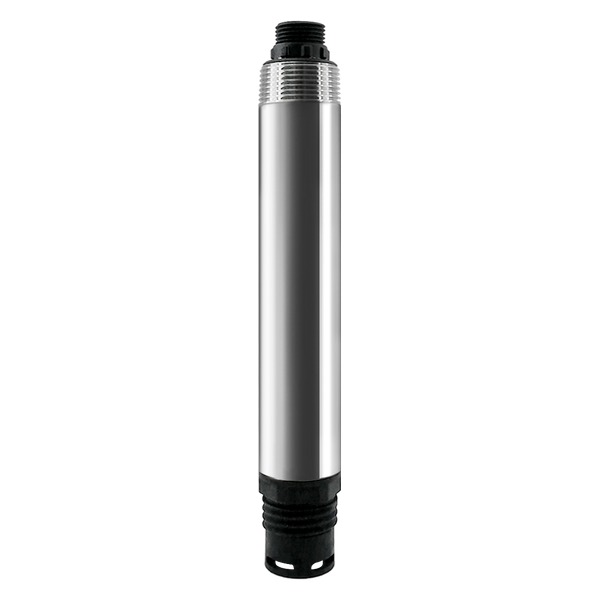
An RS485 Modbus conductivity sensor should do more than place an EC value on a PLC screen. The YexSensor YEX-S1Pro-EC combines conductivity, salinity, TDS and temperature in one online probe, with three selectable measurement levels and automatic temperature compensation. Buyers still need to define the water matrix, required range, digital registers, installation angle, pressure, cable and whether the project requires RS485 or optional 4–20 mA before requesting a quotation.
Why Buyers Search for an RS485 Modbus Conductivity Sensor
System integrators, water-treatment companies and plant engineers usually search this phrase because a handheld meter cannot provide continuous data to a PLC, RTU, SCADA platform or IoT gateway. They want an online instrument that can report changes in ionic load, support an alarm or process decision and remain serviceable in a tank, pipe or immersion installation.
The main purchasing concern is rarely the communication protocol alone. Buyers also worry about selecting the wrong range, confusing conductivity with salinity or TDS, using a sensor outside its temperature or pressure limits, and receiving an analog version when the control system expects Modbus registers. A useful specification therefore connects the measurement, mechanical installation and control-system interface.
What the YEX-S1Pro-EC Measures
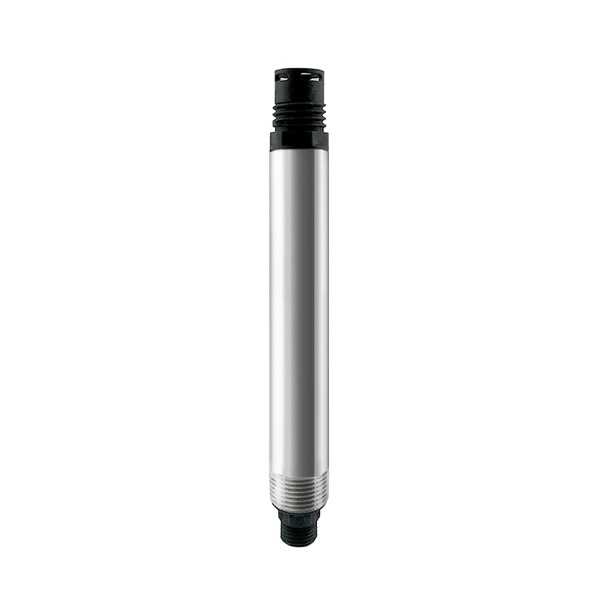
The YEX-S1Pro-EC is a four-parameter online sensor that reports conductivity, salinity, TDS and temperature. Its standard signal is RS485 Modbus RTU, while 4–20 mA is an optional output selected according to project requirements. The product page states that RS485 and 4–20 mA are alternatives, so the RFQ should not assume that both outputs are supplied simultaneously.
Conductivity is the primary electrical measurement used to indicate the combined ionic character of the water. Salinity and TDS are related reporting values, while the temperature channel supports automatic temperature compensation and provides an independent process value. These four readings can reduce probe count and PLC channel use, but they do not identify individual ions, hardness, alkalinity or a specific contaminant.
Technical Parameters and Procurement Checks
| Technical item | Official YEX-S1Pro-EC specification | Procurement check |
|---|---|---|
| Measured parameters | Conductivity, salinity, TDS and temperature | List the four required PLC tags, units and alarm purpose |
| Conductivity range | 0–3000, 0–10,000 or 0–30,000 µS/cm; customizable | Select one level from minimum, normal and credible upset samples |
| Salinity range | 0–3000, 0–10,000 or 0–30,000 ppm; customizable | Confirm the project unit and expected water type |
| TDS range | 0–3000, 0–10,000 or 0–30,000 ppm; customizable | State the reference method and conversion basis required by the project |
| Accuracy | Conductivity ±1.5%; temperature ±0.1°C | Define acceptance points across the selected range |
| Response time | Less than 10 seconds | Compare sensor response with sample transport and process mixing delay |
| Output | RS485 Modbus RTU or optional 4–20 mA; select one | Name the selected signal and required controller input on the quotation |
| Power and consumption | 12–24 VDC; approximately 0.4 W | Check cabinet supply, protection and cable voltage drop |
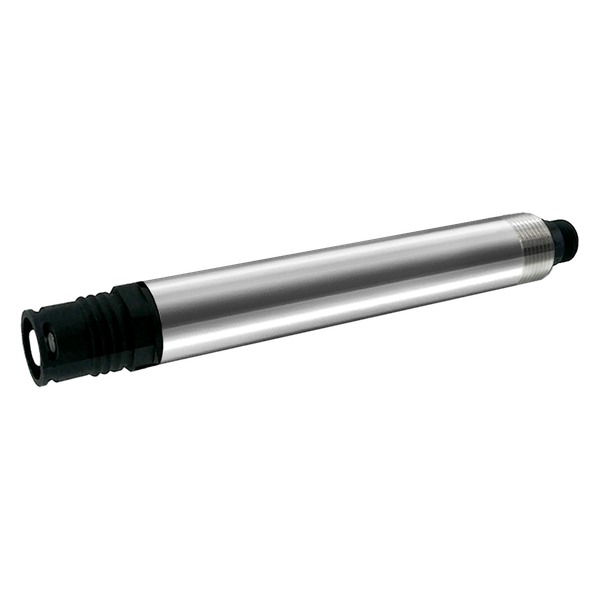
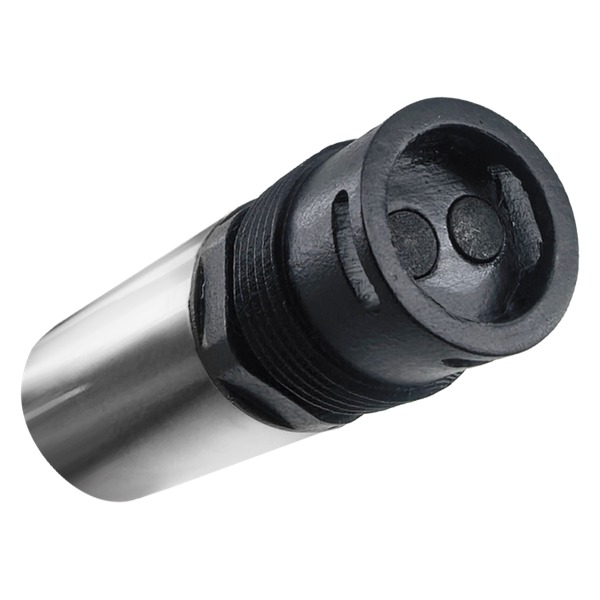
| Materials and protection | Titanium electrode; 316L stainless steel plus ABS housing; IP68 | Disclose salts, chemicals, cleaning agents and abrasion exposure |
| Operating and installation limits | 0–50°C, non-freezing; pressure below 0.2 MPa; 3/4 NPT | Confirm worst-case temperature, pressure, orientation and removal clearance |
How to Select the Conductivity Range
The three published conductivity levels are 0–3000, 0–10,000 and 0–30,000 µS/cm. Select from actual samples at the intended measurement point rather than from a broad application label. The project dataset should include the minimum, normal operating band, alarm level and a credible upset value. A source-water inlet, process tank and final discharge may need different configurations even when they are part of the same plant.
Ordering the widest range for every location can make the purchase look simpler, but it may not provide the most useful operating detail. Conversely, a narrow range that clips during cleaning, salinity change or concentrated discharge can hide the event the station was intended to detect. If standard levels do not cover the required window, provide sample results and request written confirmation of a customized configuration.
Keep units explicit. The official page lists conductivity in µS/cm and salinity and TDS in ppm. The PLC, HMI, historian and acceptance worksheet should use the same engineering units and decimal scaling. Unit assumptions are a common cause of values that appear plausible but are wrong by a factor of ten or one thousand.
RS485 Modbus Integration with PLC, RTU or IoT Gateway
The default communication configuration is 9600 baud, one start bit, eight data bits, no parity and one stop bit. The product page identifies independent register addresses for temperature at 0x0006, conductivity at 0x0008, salinity at 0x000A and TDS at 0x000C. The integrator should still use the protocol document supplied with the ordered batch as the controlling reference.
Before commissioning, record the device address, baud rate, parity, register type, data length, signed or unsigned interpretation, decimal scaling and engineering unit. Confirm the A/B convention at both the sensor and controller because naming practices can differ. Use an appropriate RS485 topology, shield and termination, and avoid running the signal cable beside high-power motor wiring.
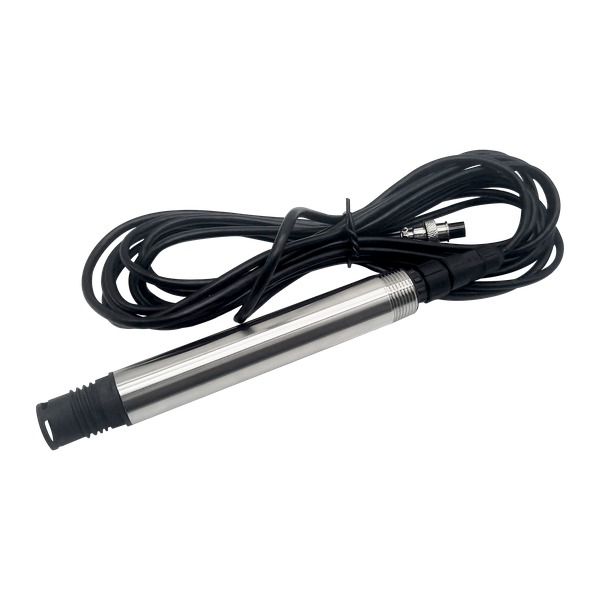
The wiring reference shown on the product page is red for power positive, black for power negative, green for 485B, yellow for 485A and a fifth connection for the optional analog output. Wire colors may vary by batch, so connector markings or pin numbers must take precedence. The standard cable is a 5 m four-core shielded cable; request the required length and connector arrangement before ordering.
RS485 or 4–20 mA: Which Output Should Buyers Choose?
Choose RS485 when the controller needs all four digital values, multiple devices share a bus, or the project wants direct engineering data without using several analog inputs. Modbus also makes it easier to carry status and configuration information, but it requires correct addressing, polling and communication diagnostics.
Choose optional 4–20 mA when the control system is analog-only or the project standard requires a current loop. The RFQ must identify which variable and scaling the analog signal represents. Because the official page says the output options are selected as alternatives, ask YexSensor to state the supplied version clearly on the quotation, nameplate and wiring document.
Installation, Cleaning and Calibration
The 3/4 NPT structure supports immersion, pipe or tank installation. The sensor must not be mounted upside down or horizontally; the official guidance requires an angle greater than 15 degrees. At least one third of the sensor should be immersed so the liquid covers the electrode head and supports representative temperature measurement.
Choose a mixed location away from settled solids, trapped air and direct chemical injection. Provide isolation and safe removal where the probe is installed in a pipe or bypass. Keep the electrode head, terminals and connector clean, and use a soft brush rather than an abrasive tool. IP68 protection does not remove the need for waterproof junctions, strain relief and cable protection.
The sensor is calibrated before delivery, and routine recalibration is not recommended unless verification indicates a need. The product page lists temperature calibration at address 0x0030, conductivity zero calibration at 0x0036 and conductivity slope calibration at 0x0038. Calibration work should follow the supplied protocol, use traceable standards and record as-found and as-left results.
Suitable Applications and Selection Boundaries
Natural and environmental water
Use conductivity, salinity, TDS and temperature trends to detect water-source changes and support sampling. These values do not identify the chemical responsible for a change.
Industrial and process water
Install at a representative tank, pipe or bypass point to supervise ionic-load changes, rinsing, blending or treatment performance. Confirm material compatibility with the complete process matrix.
Wastewater monitoring
Use the 10-second response and Modbus output for continuous trend and alarms where the selected range covers normal and upset conditions. Regulatory decisions may still require an approved laboratory method.
Aquaculture and salinity applications
The four outputs can reduce sensor and wiring count, but species requirements, biofouling and the expected freshwater-to-brackish range must be included in selection.
The YEX-S1Pro-EC is not suitable for an installation that exceeds 50°C, reaches freezing conditions, exceeds 0.2 MPa or exposes the materials to unreviewed chemicals. It also cannot identify individual ions or replace analyte-specific testing.
What to Include in a YEX-S1Pro-EC RFQ
Send the application, water source, minimum, normal and maximum conductivity, salinity and TDS, temperature, pressure, pH, major dissolved chemicals, cleaning agents, mounting drawing, cable length, power supply, output choice, controller model, Modbus settings, quantity and destination. State whether the value is for trend, alarm, control or reporting.
Ask the quotation to identify the exact range, RS485 or 4–20 mA version, cable, connector, wetted materials, installation accessories, protocol document, calibration items, warranty, lead time and exclusions. For Modbus projects, request the register map and scaling for the delivered firmware before PLC programming begins.
Frequently Asked Questions About an RS485 Modbus Conductivity Sensor
What does the YEX-S1Pro-EC measure?
It reports conductivity, salinity, TDS and temperature from one probe. Buyers should define the required range and engineering unit for every PLC tag and retain laboratory tests for individual ions or other analytes.
What conductivity ranges are available?
The official page lists 0–3000, 0–10,000 and 0–30,000 µS/cm, with customization available. Select from samples at the actual point, including normal and credible upset conditions.
Does the sensor provide RS485 and 4–20 mA at the same time?
The product page lists RS485 Modbus RTU or optional 4–20 mA and says to select one. State the required version explicitly and ask the quotation to confirm the supplied output and scaling.
Can an RS485 Modbus conductivity sensor connect directly to a PLC?
Yes, when the PLC has a compatible RS485 port and the address, 9600 baud default, framing, register map, scaling, wiring and termination are configured correctly. Otherwise, use a suitable gateway or communication module.
Which Modbus registers contain the four values?
The product page lists temperature at 0x0006, conductivity at 0x0008, salinity at 0x000A and TDS at 0x000C. Confirm these addresses against the protocol supplied with the delivered batch.
How should the YEX-S1Pro-EC be installed?
Use the 3/4 NPT connection for immersion, pipe or tank installation. Do not mount it upside down or horizontally; maintain an angle greater than 15 degrees and immerse at least one third of the sensor.
What are the operating limits?
The published environment is 0–50°C, non-freezing, with pressure below 0.2 MPa. The RFQ should disclose worst-case temperature, pressure, chemicals and cleaning exposure for compatibility review.
Does the sensor require calibration before use?
It is calibrated before delivery, and calibration is not recommended unless necessary. Verify it with an appropriate reference first, then follow the supplied protocol if zero, slope or temperature adjustment is required.
What information is needed for a quotation?
Provide water chemistry, parameter ranges, temperature, pressure, installation, cable, power, RS485 or 4–20 mA choice, controller, quantity, delivery location and required documents. Request the configured range and output as line items.
Summary
The YEX-S1Pro-EC is an RS485 Modbus conductivity sensor for projects that need conductivity, salinity, TDS and temperature from one industrial probe. Its selectable ranges, 10-second response, automatic temperature compensation, titanium electrode, 316L stainless steel plus ABS housing and IP68 construction support continuous water monitoring when the installation remains within the published limits.
A successful purchase depends on more than the model name. Send YexSensor the actual ranges, water matrix, temperature, pressure, mounting, cable, output choice, controller and quantity. Confirm the exact configuration, Modbus document and accessories on the quotation before PLC programming or mechanical fabrication begins.