Chinese
 Spanish
 French
 Russian
 German
 Portuguese
 Indonesian
 Thai
Thai Vietnamese
 Arabic

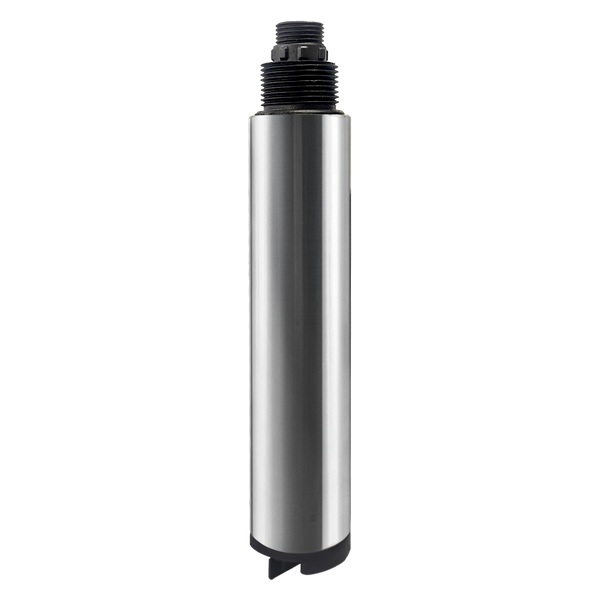
An online MLSS sensor should represent the mixed liquor that operators use for aeration, sludge-return and solids-inventory decisions. YexSensor YEX-S1Pro-MLSS measures sludge concentration and temperature over a 0–20,000 mg/L range using optical scattering. Its RS485 Modbus output, optional 4–20 mA signal and optional self-cleaning can support plant automation, but installation zone, sludge matrix, bubbles and laboratory correlation determine whether the value is operationally useful.
Why Buyers Search for a online MLSS sensor
Wastewater engineers search for continuous MLSS data because grab samples cannot show short solids changes, poor mixing or return-sludge disturbances. They worry about optical fouling, air bubbles, nonrepresentative mounting near tank walls, and whether a factory calibration will match the site sludge. They also need a practical plan for correlating online readings with the plant method without constantly changing calibration coefficients.
The first engineering task is to define the process event, available response time, acceptable uncertainty and action supported by the value. Trend, alarm, automatic control and regulatory reporting have different validation requirements. This decision determines the range, location, maintenance plan and reference method.
YexSensor YEX-S1Pro-MLSS Product Positioning
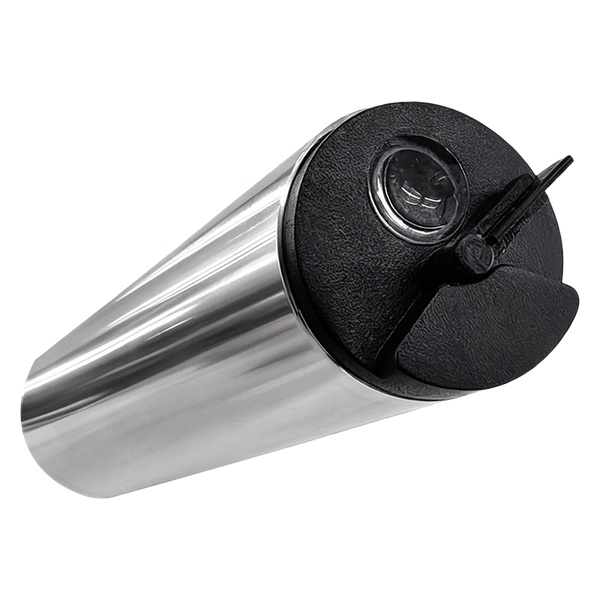
YEX-S1Pro-MLSS covers 0–20,000 mg/L, reports temperature, lists ±5% of reading accuracy, temperature accuracy of ±0.1°C and a 30-second response. The official product page states optical scattering, 316L stainless steel plus ABS housing, IP68 protection, 12–24 VDC power and 3/4 NPT immersion installation. Self-cleaning and 4–20 mA are optional, while RS485 Modbus RTU is the standard interface.
Published specifications are configuration boundaries, not proof that an unknown matrix or installation is suitable. Ask YexSensor to confirm the ordered range, output, wetted materials, cable and application limits on the quotation or attached datasheet.
Technical Parameters and Procurement Checks
| Technical item | Official product specification | Procurement check |
|---|---|---|
| Measured parameters | Sludge concentration and temperature | Create separate PLC tags and maintenance quality flags |
| MLSS range | 0–20,000 mg/L | Confirm aeration, RAS and upset maxima by point |
| Accuracy | ±5% of reading; temperature ±0.1°C | Define laboratory correlation and acceptance tolerance |
| Linearity | 0.999 R² listed on the product page | Request the test basis and validate with site sludge |
| Response time | 30 seconds | Match filtering and alarms to process mixing time |
| Measurement principle | Optical scattering | Review bubbles, color and particle changes |
| Outputs | RS485 Modbus RTU or optional 4–20 mA; select one | State digital settings or analog range on the RFQ |
| Power and cable | 12–24 VDC, about 0.4 W; standard 5 m shielded cable | Confirm cable route, length and cabinet supply |
| Materials and limits | 316L stainless steel plus ABS; IP68; 0–50°C; pressure below 0.2 MPa | Check sludge chemistry, cleaning agents and pressure |
| Installation and cleaning | 3/4 NPT immersion; self-cleaning optional | Specify zone, retrieval bracket and cleaning configuration |
What the Specifications Mean in a Real Project
MLSS is spatially variable in large aeration basins. One convenient mounting point may not represent all zones, especially during low mixing, step feed or equipment outages.
Optical response depends on particle characteristics and sludge composition. Commissioning should include paired samples over normal and high solids, not one single-point comparison.
Aeration bubbles can disturb optical readings. Locate the probe where mixed liquor remains representative but direct diffuser plumes do not dominate the signal.
The 0–20,000 mg/L range can cover mixed liquor and some concentrated sludge duties, but each measurement point needs its own expected envelope and correlation plan.
Self-cleaning is optional and does not eliminate inspection. Fibers, grease and biological growth can still collect around brackets or parts outside the cleaned area.
Separate the probe from the complete measurement point. Brackets, flow cells or bypasses, isolation, drain, power, surge protection, waterproof junctions, controller, gateway, calibration materials and spares can determine whether the delivered system is usable.
Acceptance and Lifecycle Planning
Write the site acceptance test before issuing the order. Define the reference method, comparison range, stabilization period, allowable difference and response when results fail. Include alarm, invalid-data, power-loss and communication-loss tests. If the value starts a pump, valve, diversion or dose, simulate that sequence in a safe test state.
Record range, engineering units, calibration status, cleaning events and protocol version with the time series. Assign who reviews drift, changes setpoints and releases a sensor after maintenance. Hold suitable cleaning tools, standards and critical spares. These details help buyers compare maintainable systems rather than probes with different hidden support needs.
Review sunlight, condensation, electrical noise, vibration, access and cable strain. Confirm retrieval, isolation and drainage so one technician can safely clean or verify the sensor. Where an alarm protects an important process, define a temporary reference check or fallback during maintenance.
Data Quality and Alarm Design
Store the raw value, engineering unit, configured range, quality flag and maintenance state together. A number without context can look valid after a cable fault, dry exposure or range change. Keep enough time resolution to investigate short events, but use persistence or rate-of-change logic where bubbles, cleaning cycles or batch transitions create harmless spikes.
Define warning, action, out-of-range, maintenance and communication-loss states separately. Every automatic response should have a reset condition, maximum operating time and manual override. The controller should reject impossible values and hold a documented safe state when communication is lost instead of treating zero as a genuine water result.
During handover, give operators a short diagnostic sequence: check the process, verify immersion and flow, inspect the measuring surface, compare a reference result, and then review wiring and communication. Record every cleaning, calibration and configuration change. This evidence distinguishes normal process variability from drift and prevents unnecessary recalibration that can make long-term trends harder to interpret.
Recommended Applications
Aeration basin MLSS
Trend solids inventory with zone-specific installation and paired laboratory checks.
Return activated sludge
Monitor changes in concentrated return sludge where flow and bubbles are controlled.
Membrane bioreactor process
Use high-range trend for process supervision while following the membrane system control plan.
Sludge process troubleshooting
Compare points to investigate dilution, settling or return-flow changes.
Mark every point on the process diagram with stream name, depth or sample flow, nearby dosing and return lines, expected range and operating action. A convenient but unrepresentative location can provide less value than a simpler sensor at the correct point.
online MLSS sensor: Selection Recommendations
Provide process type, normal and maximum MLSS, sludge color and floc characteristics, aeration pattern, depth, temperature, pressure, cleaning chemicals, measurement zones, laboratory method, bracket, cable, output and PLC. State whether each sensor supports trend, alarm or closed-loop control and request optional cleaning explicitly.
A suitable configuration stays inside official limits, represents the process and remains safely serviceable. An unsuitable point exposes the sensor to unreviewed chemistry or pressure, confuses one parameter with another, or reports after the available response time has passed.
Installation, Integration and Maintenance
Mount the sensor in well-mixed liquor away from direct diffuser streams, tank walls and settled zones. Keep it fully submerged through level changes and provide a safe retrieval system. Commission with paired samples from the same depth and time. Use stable filtering and maintenance flags rather than recalibrating whenever the process naturally changes.
For RS485 Modbus RTU, confirm supply polarity, A/B convention, device address, baud rate, parity, stop bits and register map. Use appropriate topology, shielding and termination. Store final settings and PLC tag definitions with commissioning records.
Commissioning should include mechanical inspection, stable-value confirmation, reference comparison, alarm simulation and communication-loss testing. Values collected during cleaning, dry exposure or maintenance should be marked invalid rather than stored as process events.
How to Request a Comparable Quotation
Send the process diagram, water sources, measurands, units, minimum, normal and maximum values, temperature, pressure, pH, matrix components, mounting, cable, output, controller, power, quantity and destination. Add required drawings, certificates, packing and delivery terms.
Ask for line-item pricing for the sensor, mounting, cleaning option, controller, gateway, calibration materials, spares and commissioning. Compare cleaning labor, consumables, standards, replacement parts and field visits over the service period instead of comparing probe price alone.
Frequently Asked Questions About a online MLSS sensor
Can one online MLSS sensor represent a large aeration basin?
Only if the selected zone represents the process decision. Multi-zone basins may need a survey or several points because mixing, feed and aeration create spatial differences.
How should YEX-S1Pro-MLSS be correlated?
Collect paired laboratory samples beside the sensor across normal and high solids, record cleaning state and avoid changing coefficients from one isolated result.
Does the sensor include automatic cleaning?
The official page lists self-cleaning as optional. Specify the mechanism, control, parts and inclusion on the quotation.
Can YEX-S1Pro-MLSS measure return sludge?
Its 0–20,000 mg/L range may suit the duty when actual RAS values remain inside the range and the optical matrix is validated. Provide samples and flow conditions before ordering.
Can this online MLSS sensor connect to a PLC or SCADA system?
Yes. The standard output is RS485 Modbus RTU, while 4–20 mA is optional. Confirm address, baud rate, register map, cable, grounding and whether digital or analog output is selected before ordering.
How should the measurement range be selected?
Use minimum, normal, alarm and credible upset data from the actual point. Order by measurement duty rather than choosing the widest range for every location.
What installation limits must be checked?
Confirm 0–50°C non-freezing operation, pressure below 0.2 MPa, full immersion, 3/4 NPT mounting, cable protection and safe access against the project drawing.
Can online data replace laboratory testing?
Online MLSS supports continuous process trend; compliance solids, sludge inventory and SRT calculations still require representative sampling, flow data and the plant reference method. Define paired verification, acceptance tolerance and the action taken when results disagree.
What should the quotation include?
Require the exact model, range, selected output, measured variables, cable, connector, mounting, optional cleaning, protocol, calibration items, spares, warranty, lead time, exclusions and line-item pricing.
Summary
The YEX-S1Pro-MLSS is a online MLSS sensor for continuous industrial and environmental water monitoring when the selected range, matrix, mounting and maintenance plan match the official limits. Its S1 PRO construction, digital integration and optional configurations should be evaluated as a complete measurement point.
For an actionable quotation, send the process drawing, values, chemistry, installation, cable, output, controller, validation method, quantity and destination. YexSensor can then confirm a defined configuration instead of an ambiguous product-family request.