Chinese
 Spanish
 French
 Russian
 German
 Portuguese
 Indonesian
 Thai
 Vietnamese
 Arabic


A low respirometric BOD test result does not, by itself, distinguish a low biodegradable load from a failed test. Review the sample, aliquot, incubation, bottle seal and method controls before replacing the analyzer. A pressure terminal measures the response of a biological test system; it does not identify the reason for a small response. For a laboratory buying equipment, the useful acceptance question is whether the complete procedure produces valid, traceable results under the intended method.
Why a low result can lead to the wrong purchase
Replacing hardware first can leave a sample problem unresolved. Disinfectant carryover or another inhibitory constituent can suppress biological activity; an unsuitable inoculum can also limit the response. Conversely, a leaking closure or an incorrect volume setting can compromise a test even when the sample contains biodegradable material. These possibilities require different checks and cannot be separated from the final number alone.
The commercial consequence is a mismatched package: an analyzer without a suitable incubator, insufficient bottle positions for controls, or records that cannot support the laboratory's reporting procedure. Define the test method and quality-control plan before comparing instrument prices. A COD result may help characterize a sample, but it is not a universal conversion factor for predicting BOD.
Respirometric BOD test: what the YEX-L1-BOD measures
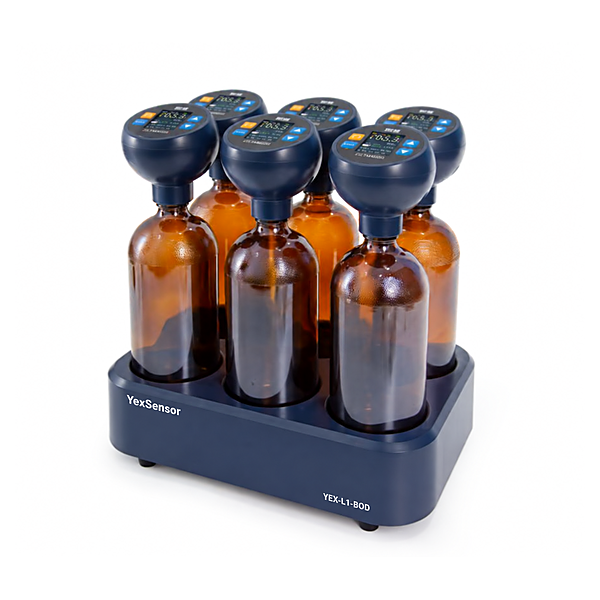
The YEX-L1-BOD digital BOD analyzer uses a sealed-bottle pressure method. Microorganisms consume dissolved oxygen, oxygen transfers from the headspace, and carbon dioxide is absorbed. The resulting pressure change is used to determine oxygen demand. This measurement chain depends on biological activity, controlled incubation and an intact closed system.
| Verified item | YEX-L1-BOD evidence | Purchase or acceptance consequence |
|---|---|---|
| Parallel positions | Up to 6 samples; 580 mL bottles | Allocate positions to controls and replicates before calculating reportable sample capacity. |
| Test duration | Selectable 1–30 days; conventional BOD5 uses 5 days | A selectable duration does not make every result interchangeable with the specified five-day method. |
| Incubation | Dark incubation at 20 ±1°C for the described BOD5 procedure | A suitable incubator is required and is not included in the standard analyzer package. |
| Range and aliquot examples | 0–20 mg/L: 500 mL; 0–320 mg/L: 200 mL; 0–4000 mg/L: 25 mL | Use the matched manual's volume table. Enter the same aliquot volume in the terminal. |
| Record retention | Latest intermediate detail-data group retained; historical final BOD5 results up to 10 years | Do not specify ten years of complete intermediate data or an on-screen curve without a demonstrated function. |
These are instrument and procedure conditions from the matched YEX-L1-BOD documentation, not a promise that every wastewater matrix is suitable. If the response exceeds the selected range, repeat using an appropriate smaller aliquot or a method-approved dilution. Changing the terminal's volume after the run does not repair an incorrectly prepared bottle.
Which check separates the likely causes?
Use a controlled comparison instead of changing several variables in the same repeat. The following matrix is a diagnostic plan, not a claim that a particular fault is common or uniquely identified by one symptom.
| Observation | Check first | Decision supported |
|---|---|---|
| Sample low; method controls acceptable | Sample history, preservation, pH, inhibition, seeding and dilution suitability | Investigate sample validity; acceptable controls do not prove the sample is free from inhibition. |
| Sample and control both unacceptable | Shared preparation, incubation and reagent conditions; closures and terminal setup | Hold the affected batch while investigating the common procedure and equipment. |
| A problem appears confined to one position | Repeat controlled checks of the bottle, seal and terminal with documented identifiers | Localize the assembly involved before deciding which component requires service. |
| Unexpected result after a range change | Actual aliquot, selected volume, dilution calculation and run identification | Correct the preparation and repeat where required; do not reinterpret an invalid run as accepted data. |
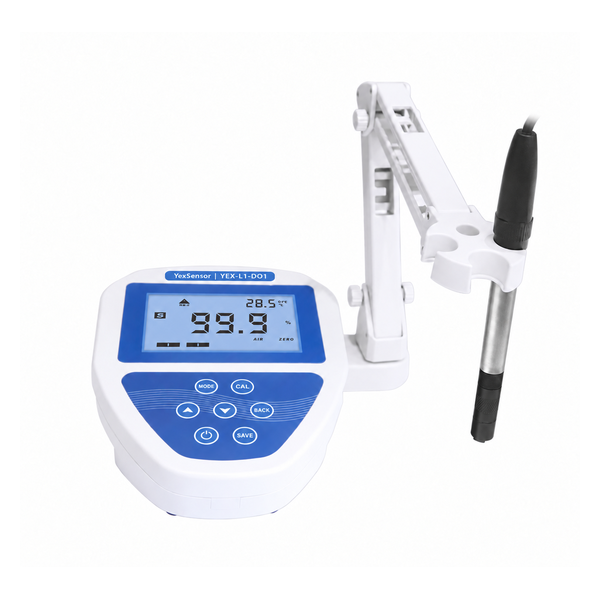
A dissolved-oxygen BOD workflow measures initial and final dissolved oxygen under its governing procedure; a respirometric workflow measures the pressure response. Choose the workflow accepted by the laboratory's reporting obligation. A YEX-L1-DO1 benchtop dissolved oxygen meter is a separate measurement instrument, not an additional BOD position or a complete BOD method by itself.
How the sample changes the investigation
Final effluent after disinfection: a small response may reflect a genuinely low load, biological inhibition, or both. Check the sampling point and disinfectant history. Apply the governing method's treatment and validation requirements rather than adding an improvised neutralizing dose. Retain the preparation record with the result.
Variable industrial wastewater: use an appropriate test plan for dilution, inoculum and controls. A repeat at another dilution can provide useful evidence, but an apparently plausible number alone does not validate the matrix. Unexpected inconsistency belongs in the laboratory's investigation procedure.
Cold samples entering a warm laboratory: follow the prescribed temperature preparation and incubation sequence. Do not change the incubation setpoint to match outdoor weather. Temperature changes can affect both biological activity and gas pressure, so an incubator's displayed setting is insufficient evidence of conditions throughout a loaded test space.
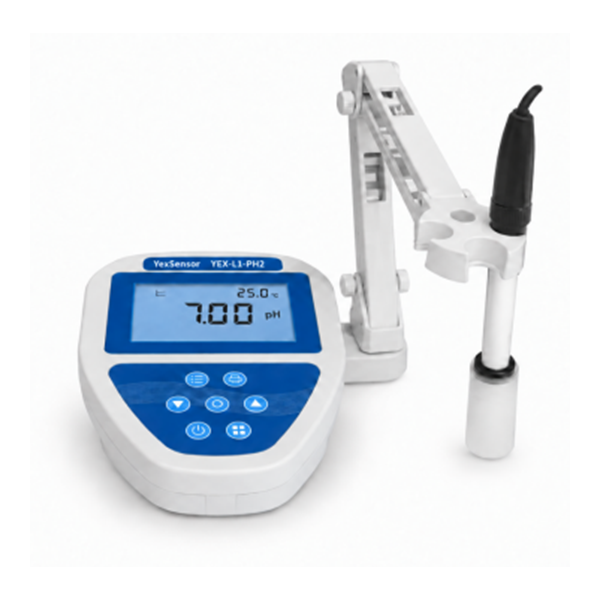
A YEX-L1-PH2 benchtop pH meter can support a separate sample pH check where the method calls for it. A suitable pH reading does not rule out toxicity, and pH adjustment must follow the laboratory's validated procedure.
Build a traceable test and acceptance sequence
Identify each sample, bottle and terminal before preparation. Record the selected range, actual aliquot, dilution and any method-required treatment. Inspect sealing surfaces and assemble the absorption system according to the matched manual. Keep reagents separated from the sample as instructed; this article does not replace chemical-handling instructions.
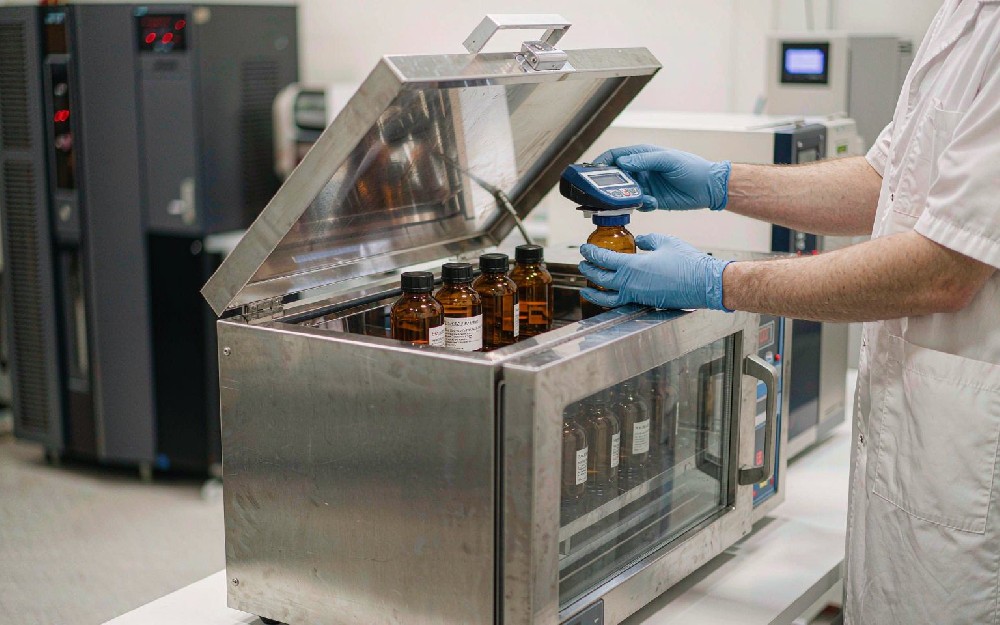
Verify the incubator under the intended load, then run the method-required blank, control and replicate plan. The YEX-L1-BOD manual describes a glucose–glutamic acid check with an expected result of 180–230 mg/L. This is a check of the complete procedure under those instructions, not an instrument accuracy specification or universal proof that an industrial sample is valid.
Acceptance should include retrieving the final result and demonstrating the intermediate-detail retention behavior. Agree how records are copied into the laboratory's controlled reporting system. Do not assume PLC, cloud or automatic LIMS connectivity from a digital display. For the wider preparation sequence, see the wastewater laboratory BOD testing guide.
RFQ inputs for a workable BOD laboratory package
- Reporting method, sample matrices, expected demand range and daily sample arrivals.
- Required controls, dilutions and replicates, plus bottle occupancy over the incubation period.
- Analyzer, bottles, pressure heads, stirring components, incubator and consumables listed separately.
- Incubator qualification, preparation tools, spare seals and replacement-bottle compatibility.
- Record retention, acceptance procedure, training and the supplied manual revision.
Compare cost per complete, usable workflow. Prices, lead times and service terms require the supplier's written offer; they cannot be inferred from the number of positions.
Specify the sample and test capacity
Prepare your sample type, reporting method, expected BOD range, daily workload, control plan and existing incubator details for a YEX-L1-BOD analyzer configuration.
Frequently asked questions
Q1. Does a low respirometric BOD test result prove low biodegradable loading?
A1. No. A low result is meaningful only after the test's validity requirements are met. Biological inhibition, unsuitable seeding, incorrect preparation or a compromised closed system can also reduce the response. Review method controls and sample history together. Procurement acceptance should demonstrate the complete procedure, while routine sample release remains subject to the laboratory's method and quality system.
Q2. How can temperature changes and bottle leaks affect the test?
A2. Both can interfere with the pressure response, but neither is diagnosed by the final number alone. Temperature affects gas pressure and biological activity; leakage compromises the sealed measurement system. Follow the prescribed temperature sequence and inspect closures. If equipment is suspected, use controlled comparisons with identified bottles and terminals rather than changing the incubator, sample and hardware simultaneously.
Q3. What can a glucose–glutamic acid control establish?
A3. It can test whether the complete procedure performs acceptably for that control under the specified conditions. The YEX-L1-BOD manual's 180–230 mg/L expectation is not a sensor accuracy band. A passing control does not establish that a wastewater sample lacks inhibitors. Record the control preparation, incubation and outcome, and apply the governing method's separate sample-validity requirements.
Q4. When should a laboratory change sample volume or dilution?
A4. Repeat with a suitable volume or method-approved dilution when the chosen range is inappropriate or the method's validity criteria require another preparation. The instrument's volume setting must match the actual aliquot. For example, its manual pairs the 0–320 mg/L range with 200 mL. Plan enough bottles for the intended dilution strategy and controls before ordering capacity.
Q5. How should potentially inhibitory samples change the test plan?
A5. They require sample-specific preparation and validity checks under the governing method, rather than an automatic instrument replacement. Disinfection history, unusual industrial inputs and inconsistent dilution responses are useful investigation inputs. Do not assume every inhibitor can be corrected by one treatment. Specify the matrices during procurement and arrange appropriate method training, while keeping reagent doses and acceptance rules within the laboratory's approved procedure.
Q6. Should a laboratory choose pressure-based or dissolved-oxygen BOD testing?
A6. Choose the workflow that meets the reporting method and laboratory validation requirements. Pressure-based and dissolved-oxygen workflows use different measurement chains, even when both address oxygen demand. Compare preparation, incubation, controls, records and staff capability as complete systems. A dissolved oxygen meter alone does not supply the bottles, incubation and quality-control procedure needed for a compliant BOD workflow.
Q7. How many bottle positions are needed for routine work?
A7. Calculate occupied positions from samples, controls, replicates and alternative preparations over the full incubation period. Six positions do not necessarily mean six reportable customer samples per run. Arrival patterns and repeat work also matter. Prepare a workload schedule before comparing packages, and include spare bottles or additional capacity where the laboratory's actual method and turnaround commitments require them.
Q8. Which items and documents belong in the purchase package?
A8. List the analyzer, compatible bottles and closures, stirring components, consumables and a suitable incubator separately. The standard YEX-L1-BOD package does not include the incubator. Require the matched manual, training, record-retention demonstration and an agreed acceptance procedure. Confirm any reporting-system connection in writing; a digital instrument should not be assumed to provide automatic LIMS or cloud integration.
Summary
A low BOD result becomes a hardware decision only after sample validity and the complete test procedure have been investigated. YEX-L1-BOD fits a pressure-based laboratory workflow with matched aliquots, sealed bottles and controlled incubation. Specify the incubator, quality controls, capacity and records alongside the analyzer. The RFQ should define matrices, reporting method, workload and acceptance evidence, so equipment selection supports valid results rather than merely producing a number.