Chinese
 Spanish
 French
 Russian
 German
 Portuguese
 Indonesian
 Thai
 Vietnamese
 Arabic


After a wastewater feed changes, validate the existing UV254 COD calibration against new, time-matched laboratory samples before relying on its concentration alarms. UV absorption is a surrogate for laboratory COD, and a relationship established on the previous mixture may no longer apply. First exclude fouling, bubbles, timing and laboratory-method problems. Change a correlation only through a documented procedure, then test it on samples not used to establish it.
A stable optical trend can conceal a changed relationship
A plant adds another production stream to an equalization tank. The optical estimate changes little, but laboratory COD results rise. Cleaning the sensor and increasing its multiplier might appear to solve the issue. However, the added material may contribute differently to UV absorption and chemical oxygen demand. An adjustment that fits a single batch can produce misleading results when the previous production recipe returns.
Define the decision that the instrument supports: trend observation, investigation of a load change or an input to a separately approved process action. Keep that role distinct from a permitted reporting method. The existing online-versus-laboratory COD guide discusses the general choice; this procedure addresses continued use after the feed matrix changes.
Which UV254 COD calibration claims can the hardware support?
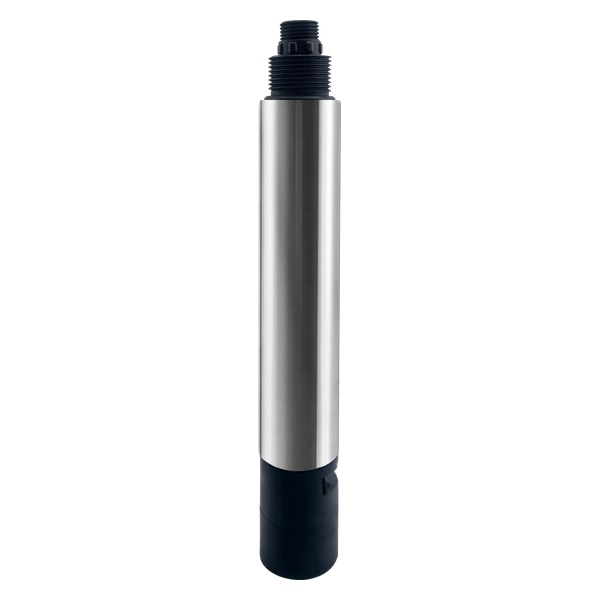
The current YEX-S1PRO-COD page describes UV254 absorption with turbidity compensation. It explicitly distinguishes the surrogate from laboratory dichromate COD and identifies changes in organic composition, color, nitrate, suspended solids, bubbles and window fouling as possible influences. Turbidity compensation does not establish an invariant relationship for every industrial mixture.
| YEX-S1PRO-COD item | Published specification | Meaning for the change study |
|---|---|---|
| COD range alternatives | 0–200, 0–500 or 0–1500 mg/L; customizable | Confirm the supplied range and headroom for new loads; these are alternatives, not one automatically switched range. |
| Optical principle | UV254 absorption with turbidity compensation | Validate the surrogate on the actual mixed wastewater. |
| Accuracy statement | ±5%; temperature ±0.1 °C | Obtain the percentage basis, test matrix and conditions; do not treat this as a validated site-wide COD uncertainty. |
| Response | 10 s | Include bypass transport, controller filtering and sampling time; the page does not label this value T90. |
| Output and power | RS485 Modbus RTU or optional 4–20 mA, select one; 12–24 VDC | Specify the delivered output and demonstrate correct archived values. |
| Installation envelope | NPT 3/4 immersion; 0–50 °C, non-freezing; pressure <0.2 MPa | Check the new stream's temperature, pressure and complete installation separately from correlation. |
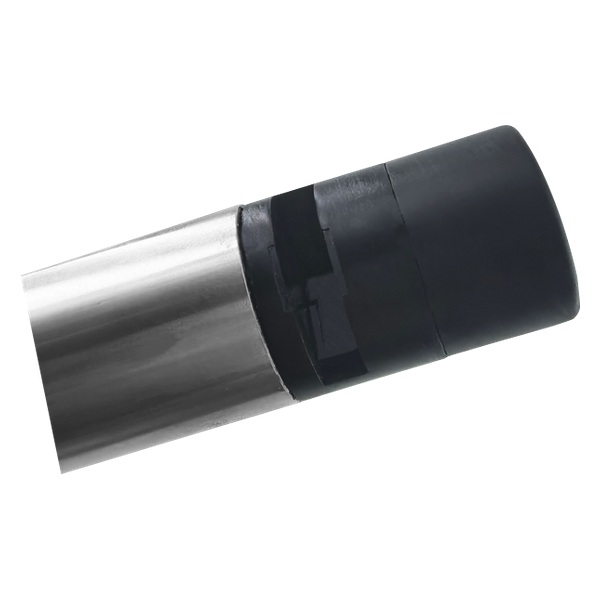
The housing is published as 316L stainless steel plus ABS, and self-cleaning is optional. Neither the material list nor an IP68 rating establishes compatibility with every new solvent, oxidant or cleaning solution. Confirm exposure and the selected cleaning configuration when the feed changes. A chemistry review and a calibration study answer different acceptance questions.
Retain, separate or replace the correlation?
| Observed condition | Approach to evaluate | Acceptance boundary |
|---|---|---|
| New samples agree within the pre-agreed decision criterion | Retain the existing relationship and document its expanded validation set | Only the tested operating region is supported. |
| One consistent new matrix shows a reproducible difference | Develop a new relationship using the approved supplier procedure | Validate independent samples and retain the previous version. |
| Alternating recipes produce different relationships | Evaluate documented matrix-specific operation or another analytical approach | A single multiplier must not conceal unresolved recipe dependence. |
| UV response cannot distinguish materially different laboratory COD | Use another suitable method for the required concentration decision | Additional fitting cannot create missing chemical selectivity. |
Choose the simplest relationship that survives the actual change conditions. A correlation is site- and application-dependent; coefficients and their implementation must be assessed for the actual water matrix and measurement setup. Do not transfer a correlation or its implementation from another device, and do not assume that the same adjustment fields, raw absorbance output or software are available in the YexSensor configuration. Confirm those capabilities in the documentation for the supplied version before specifying how the relationship will be implemented.
Test the feed transition rather than only its settled average
New production recipe: label samples by recipe, feed contribution and tank operating state. Include the transition, established operation and return to the previous mixture where these occur. A study using only a well-mixed afternoon average can miss a morning concentrate discharge. Keep the laboratory comparison linked to water actually at the sensor.
Rain dilution or changing solids: distinguish a changed organic mixture from scattering and sample-fraction effects. Record turbidity and any filtration, settling or dilution in the laboratory procedure. Comparing a filtered optical cell to an unfiltered laboratory aliquot may compare different fractions. Document the analytical purpose before changing sample preparation.
Cleaning or process chemical change: inspect for fouling, entrained air and material exposure. Record the cleaning event and compare the response before and after a controlled intervention. If clean-window checks recover but new-matrix disagreement remains, continue the correlation investigation. Avoid using a coefficient change to compensate for a dirty optical surface.
Consider an illustrative pair, not a product test: the existing online estimate is 80 mg/L and the laboratory result 82 mg/L on one recipe. On a new recipe, the estimate remains 80 mg/L while the laboratory reports 120 mg/L. Repetition with valid methods would show that one displayed estimate can correspond to different COD values. It would not establish a universal factor of 1.5, nor prove that either isolated result was representative.
Separate sample matching, laboratory checks and model validation
Keep two operations separate: an optical calibration checks or adjusts the instrument's optical response under its supplied procedure. A site correlation maps that response to laboratory COD for a particular wastewater. Updating the correlation does not repair contaminated optics, and an optical check does not validate a new feed matrix.
Preserve the supplied range, firmware, controller scaling, accessible coefficients and original records. Identify any limitation to processed outputs. Obtain the approved adjustment and rollback procedure before changing settings or writing registers.
Synchronize clocks and establish the sample's hydraulic path. For a bypass, determine its delay under the study flow and sample at a location representing the sensor water. Record collection time and relevant online averaging interval. Follow the laboratory method's preservation, holding time and handling requirements; no universal storage instruction fits every COD method and sample.
Check the laboratory series with the applicable blanks, standards, duplicates and interference controls. Identify the method, aliquot treatment and any chloride-related limitations relevant to the chosen procedure. A sensor correlation cannot be meaningfully judged against an uncontrolled laboratory reference. Repeating a suspect bottle does not repair an unrepresentative collection.
Build a comparison set across relevant low, normal and high conditions. Record why each sample represents a state the future system will encounter. Reserve separate batches or dates for validation before fitting. Evaluate prediction differences near the actual action region and plot or tabulate errors by recipe, turbidity and operating state. A high correlation coefficient alone can coexist with an operationally important bias.
After an approved adjustment, test the reserved samples and subsequent representative events. Confirm that the new mapping was applied once, at the documented location, rather than both in the probe and PLC. Test scaling, parameter identity and loss-of-signal handling. A stale last value must be distinguishable from a fresh low COD estimate. Process authorities determine any interim actions while the relationship remains unvalidated.
Purchase a defined validation and handover scope
Specify wastewater sources, expected recipe changes, laboratory method, concentration and turbidity bands, temperature, chemical exposure and the intended operational decision. Identify the sampling point and hydraulic delay. State who supplies laboratory analyses, who controls calibration changes and who accepts the validated operating region.
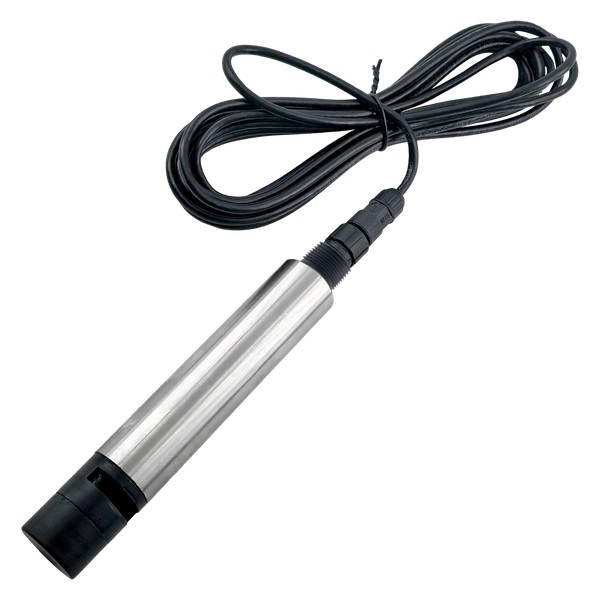
Require the exact range, output option, cleaning configuration, holder, cable and communication-document version. Request documented access to any permitted adjustment parameters and the rollback procedure. Acceptance should include the paired dataset, independent validation results, residual assessment, configuration version and archive check. Prices, delivery, service and any reporting-method approvals require written confirmation; an online value alone does not establish discharge compliance.
Send the changed-water and validation inputs
Provide previous and new feed descriptions, paired online/laboratory records, method, timing, operating range and intended alarm role. Identify the required YEX-S1PRO-COD range and output configuration, chemical exposure and cleaning arrangement.
Send Your Project RequirementsFrequently asked questions
Q1. Why can COD change without a proportional UV254 change?
A1. Different mixtures can contribute differently to UV absorption and to the oxygen demand measured by the laboratory method. A previous relationship can therefore fail after composition changes. Confirm representative, time-matched samples and valid laboratory checks before attributing the difference to chemistry. Evaluate the new operating region rather than assuming that a stable optical trend establishes unchanged COD.
Q2. Does turbidity compensation remove every matrix interference?
A2. No. It addresses a defined influence through the supplied optical and processing design. Changes in absorbing compounds, color, bubbles, fouling or sample fraction can still matter. YEX-S1PRO-COD's product page identifies these limitations. Inspect the installation and validate representative samples. Do not turn the presence of compensation into a guarantee of agreement across all industrial wastewater recipes.
Q3. Is a high correlation coefficient enough for an alarm application?
A3. No. Evaluate prediction differences near the decision region, residual behavior across matrices and performance on independent samples. A study can show a strong overall association while remaining biased at an important threshold. Agree acceptance criteria with the process owner and laboratory before fitting, and retain the unmodified data so another reviewer can examine the same decisions.
Q4. When can the previous UV254 COD calibration remain in use?
A4. Retain it when valid new-matrix comparisons support the required decision within the pre-agreed criterion. Document the tested recipes and operating range. Check that apparent agreement is not produced by delay, filtering or laboratory error. Record triggers for further review, including future feed changes, cleaning problems and observations outside the region represented by the validation samples.
Q5. Should we order the widest available COD range?
A5. Select the supplied range against expected normal and changed-feed conditions, required headroom and verified performance. YEX-S1PRO-COD lists alternative 0–200, 0–500 and 0–1500 mg/L ranges, plus customization. A wider range does not establish better discrimination near your action point. Obtain the accuracy basis and representative-water validation rather than choosing solely by the largest upper limit.
Q6. When is another analytical method preferable?
A6. Consider another suitable method when UV response cannot support the concentration decision across relevant mixtures, or when the required reporting method is different. Matrix-specific operation is useful only if the active matrix can be reliably identified and controlled. Additional regression cannot supply chemical selectivity missing from the observation. Define the reporting and process roles separately before replacing equipment.
Q7. What must the integrator hand over after recalibration?
A7. Hand over the original configuration, paired dataset, laboratory method and quality checks, approved adjustment procedure, new version and independent validation results. Identify where the mapping is applied and demonstrate the archived parameter, scaling and signal-failure behavior. Preserve a rollback route. Include untested conditions so operators know when the relationship needs renewed examination rather than silently extrapolating it.
Q8. How many samples and what acceptance limit should we specify?
A8. Specify coverage and decision requirements with the responsible laboratory and process engineer. Include representative recipes, concentration regions and separate validation batches; one universal sample count or percentage cannot establish suitability. Account for reference-method uncertainty and variability near the action region. Record the agreed plan before data collection so later exclusions or adjustments cannot redefine success after the results are known.
Summary
UV254 COD calibration must remain tied to the wastewater matrix and operational decision it was validated to support. YEX-S1PRO-COD provides a defined optical and integration platform, while site correlation, chemistry suitability and reporting acceptance need separate evidence. Match sampling and archive times, verify laboratory quality, test independent batches and preserve versions. Include changed-feed records, exposure, range, output and acceptance responsibility in the purchase scope.