Chinese
 Spanish
 French
 Russian
 German
 Portuguese
 Indonesian
 Thai
 Vietnamese
 Arabic


Portable multiparameter water quality meter calibration is a set of probe-specific tasks, followed by independent verification. Calibrating pH does not validate conductivity, dissolved oxygen or turbidity. Before fieldwork, match the ordered probes to the host, check standards and temperature conditions, complete each applicable procedure, and record a separate acceptance check. For the configurable YEX-P1-MP2, the supplied probe combination matters as much as the handheld's name.
Why a successful calibration message is not enough
A calibration can finish while the field package remains unsuitable. The team may have selected the wrong buffer group, applied an inappropriate compensation setting, packed an expired standard, or assumed a photographed probe was included. A subsequent measurement can then look precise without answering the intended monitoring question.
Write acceptance around the actual measurement chain: host, identified probe, standard, settings, operator and record. Distinguish instrument calibration from sample handling and site representativeness. A handheld cannot correct a sample that changed during transport, and a traceable standard cannot establish whether the chosen sampling point represents the water body.
Match the YEX-P1-MP2 host and probe conditions
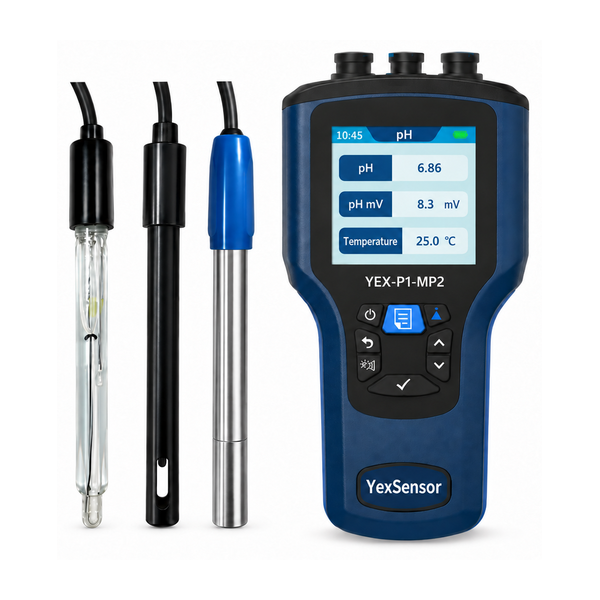
The YEX-P1-MP2 portable multiparameter meter supports configurable measurement tasks. Its documentation distinguishes host specifications from individual probe specifications; the host's wider ambient range must not be applied to every electrode.
| Item | Matched specification | Field or purchase consequence |
|---|---|---|
| Host environment | −5 to 50°C; 10–85% RH, non-condensing; IP65 | Protect the handheld from immersion and condensation. Host ambient limits do not establish probe suitability. |
| pH probe | 0.00–14.00 pH; accuracy ≤±0.05 pH; operating temperature 5.0–40.0°C | Specify the actual water temperature and required uncertainty, rather than relying on display resolution. |
| ORP probe | −2000.0 to 2000.0 mV; accuracy ≤±15 mV; operating temperature 5.0–40.0°C | Select a suitable check standard and acceptance criterion for the ORP task. |
| Connectors | 6-pin: conductivity and pH temperature; BNC: pH or ORP; 4-pin: digital sensors including DO and turbidity | Obtain a connection schedule. Do not assume all photographed probes connect simultaneously. |
| Records and export | Up to 4000 records per probe; Type-C HISTORY.XLS export | Demonstrate identification, export and file archiving. Do not assume industrial telemetry. |
For pH, the manual allows one-, two- or three-point calibration. Select either the 4.00/6.86/9.18 group or the 4.01/7.00/10.01 group, as appropriate to the actual buffers. Recalibrate after changing the group. The manual permits the points in any order; an order required by another brand's meter should not be imposed as a YEX-P1-MP2 requirement.
Portable multiparameter water quality meter calibration by probe
Build the field checklist by parameter. Calibration changes an instrument's response; verification tests whether the resulting measurement meets the project's acceptance criterion without making another adjustment.
| Task | Preparation decision | Independent check |
|---|---|---|
| pH | Match buffer group, certified values, temperature and selected calibration points to the sample task. | Use a suitable check buffer or independent control defined by the quality plan; record the deviation without recalibrating it away. |
| Conductivity | Require written agreement on standard value at its reference temperature, cell configuration and firmware procedure. | Verify with a suitable independent standard and defined temperature/compensation settings. |
| ORP | Use the matched single-point procedure and the standard's temperature-dependent certified value. | Record check conditions and outcome; do not treat ORP as a universal zero-point adjustment. |
| Dissolved oxygen | Follow the supplied DO probe procedure and check local pressure and salinity settings. | Use the quality plan's independent DO check and retain the compensation conditions. |
| Turbidity | Match the supplied probe, fixture and approved standards to its three-point procedure. | Check an appropriate independent standard, controlling bubbles, contamination and handling. |
Conductivity standard concentration, conductivity value and reference temperature must describe the same certified solution. Do not substitute one nominal KCl recipe for another or select a standard from a generic internet tutorial. If the supplied instruction, bottle label and instrument mode disagree, resolve the combination in writing before calibration or acceptance. This is a procurement prerequisite, not a numerical mixing recipe.
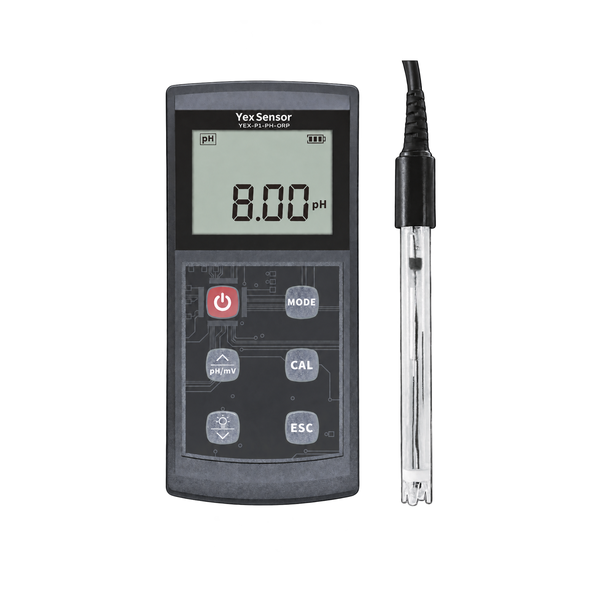
A single configurable host suits sequential tasks when its approved probe combinations and workflow meet the route. Separate meters can suit teams needing simultaneous measurements or independent redundancy. A YEX-P1-PH-ORP portable pH/ORP meter is a separate product option to assess, not evidence that its probes are interchangeable with MP2.
Which field conditions change the checks?
Cold-weather sampling: a host rated down to −5°C does not make the documented pH/ORP probes suitable below 5.0°C. Compare actual water temperature with the selected probe's limit before dispatch. Moving cold equipment into a warm vehicle can also create condensation; the host's environment is specified as non-condensing.
Freshwater and brackish-water routes: check the DO salinity and local pressure inputs for the site. Do not assume automatic conductivity-to-DO compensation merely because both probe types appear in a product photograph. Preserve the settings with the readings so results from different locations can be interpreted correctly.
Changing from clear to turbid samples: control carryover and standard handling. Clean, inspect and rinse using the supplied probe instructions, and repeat the project's verification when a failed check or significant change warrants it. Do not assign one universal calibration interval to all parameters, matrices and field routes.
From preparation bench to archived field record
First identify the host, probes, connectors and firmware procedure. Inspect the sensing surfaces and prepare the matched standards in clean vessels. Keep unused stock separate from used aliquots. For pH, select the correct buffer group before adjustment; for every parameter, stabilize and evaluate temperature as its procedure requires.

The USGS multiparameter field manual emphasizes parameter-specific procedures and contemporaneous calibration records. Use that general quality framework alongside the supplied instrument instructions; it does not establish MP2 settings or probe compatibility.
Next calibrate each installed probe and perform the independent check. Define pass/fail criteria before the test, using the project method and a realistic uncertainty requirement. Retain failed checks and corrective actions as well as successful records. A check that fails after the route calls for an investigation of affected readings; it is not evidence that every earlier result is automatically invalid or acceptable.
Finally demonstrate HISTORY.XLS export through Type-C. Copy and verify the file in the project archive before an export overwrites it or records are reset. Confirm that sample identifiers, units, timestamps and relevant settings are recoverable. USB file transfer is not a promise of RS485, Modbus, Wi-Fi, cloud or automatic LIMS integration. The portable water quality meter selection guide covers the broader purchase decision; use the MP2-specific documents for this model's settings.
RFQ checklist for a complete field kit
- Parameters, sample matrices, temperature range, route duration and simultaneous-measurement needs.
- Host version, identified probe models, connector schedule and included cables.
- Matched calibration and independent-check standards, certificates, storage conditions and replenishment plan.
- Cleaning, storage and replacement items appropriate to each supplied probe.
- Export demonstration, record requirements, training and written resolution of conflicting standard instructions.
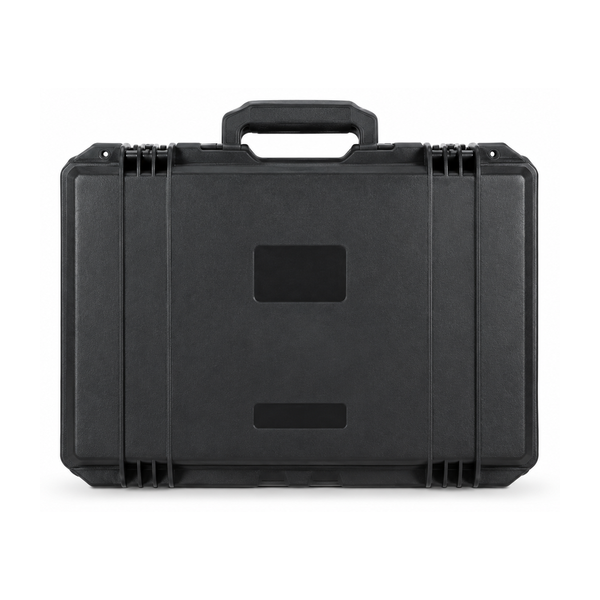
List the carrying case and its contents explicitly. A photograph does not establish which standards, probes or accessories are included, and the pictured case does not extend the host's IP65 rating.
Define the measurement route and probe package
Prepare the required parameters, water types, temperatures, sampling sequence, acceptance criteria and record format for a YEX-P1-MP2 field configuration.
Frequently asked questions
Q1. Does portable multiparameter water quality meter calibration validate every sensor at once?
A1. No. Each parameter has its own probe response, calibration procedure and acceptance check. A successful pH adjustment says nothing by itself about conductivity or turbidity. Identify the installed probes and maintain a separate checklist for each task. During purchase acceptance, demonstrate the ordered configuration rather than treating a general calibration message as approval of all possible accessories.
Q2. Why check temperature and compensation settings first?
A2. They affect how standards and samples are interpreted, so an incorrect setting can persist through an otherwise orderly procedure. Match pH buffers to the selected group and temperature conditions; check the supplied DO procedure's local pressure and salinity inputs. Record those settings with the test. Do not assume another manufacturer's automatic compensation links exist on the YEX-P1-MP2.
Q3. How is independent verification different from recalibration?
A3. Verification checks the measurement against an agreed reference without using that check to make another adjustment. Simply rereading the same calibration aliquot provides limited independent evidence. Define a suitable check standard or control and acceptance tolerance in the quality plan. Record the result, conditions and corrective action, so the field team can distinguish an acceptable check from a concealed adjustment.
Q4. Which connector combinations should be confirmed before ordering?
A4. Obtain a written schedule for the actual host and probes. The MP2 manual lists conductivity and pH temperature at the 6-pin socket, pH or ORP at BNC, and digital sensors including DO and turbidity at the 4-pin socket. This does not establish every possible simultaneous combination. Demonstrate the intended sequence and any required probe changes before accepting the package.
Q5. Which standards belong with the selected probes?
A5. Use standards matched to the supplied probe, firmware procedure, expected samples and project quality plan. For conductivity, the certified conductivity value, reference temperature and any stated concentration must agree with the selected mode. Resolve contradictory instructions in writing rather than substituting a familiar nominal value. Include independent verification materials, certificates, expiry information and appropriate storage provisions in the purchase specification.
Q6. When should a team choose separate meters?
A6. Separate meters merit evaluation when different operators need simultaneous readings, incompatible probe tasks overlap, or independent backup is essential. One configurable host can be practical for a compatible sequential route. Compare complete workflows, including probe changes, standards, cleaning and records. Do not infer probe interchangeability between MP2 and another handheld merely because both products measure pH or dissolved oxygen.
Q7. What should the supplier demonstrate during acceptance?
A7. Demonstrate the ordered probe connections, parameter-specific calibration, independent checks and recoverable records using the supplied procedures. Export HISTORY.XLS through Type-C, then verify that the archived copy supports the project's identifiers and units. Agree pass/fail criteria beforehand. Any automatic transfer to a reporting platform requires a separately demonstrated arrangement; local file export alone does not establish that integration.
Q8. Which consumables and training items belong in the package?
A8. Include the actual probes, compatible standards and check materials, cleaning and storage items, replacement consumables, cables and an itemized case list. Training should cover buffer selection, temperature limits, compensation inputs, failed-check handling and file archiving. Require the matched manual and written resolution of inconsistent instructions. Pricing, replenishment availability and service commitments belong in the supplier's offer rather than assumptions about a standard kit.
Summary
A defensible field measurement needs more than a completed calibration screen. Match the YEX-P1-MP2 host and ordered probes, apply each parameter's procedure, verify independently and archive identifiable records. Keep host ambient limits separate from probe operating limits, and resolve conductivity standard compatibility before use. Specify the field route, standards, accessories, acceptance checks and export requirements together so the purchased package can perform the intended work.