Chinese
 Spanish
 French
 Russian
 German
 Portuguese
 Indonesian
 Thai
 Vietnamese
 Arabic


A portable ORP meter kit must include an identified, compatible ORP electrode and the supplies needed to perform and document the intended measurement. An ORP-capable display alone does not establish a complete kit. For YEX-P1-PH-ORP, the documented standard box lists a combination pH electrode, but no ORP electrode or separate temperature probe. Resolve those items, suitable standards, storage supplies and the record procedure in the signed order before comparing complete-kit prices.
The missing part may be a probe, a document or a record
A quotation headed “pH/ORP meter” can describe the host's capability without identifying the supplied ORP electrode. The box can arrive intact yet leave the operator unable to make the intended measurement. A photographed case is equally insufficient evidence of its contents.
Compatibility and records create two further risks. A replacement probe can have the right plug while its reference system or sample limits remain unspecified. Meanwhile, “data handling” may be mistaken for a promised electronic file. Close these gaps by matching each required task to an item, a supporting document and a receiving test. Do not assume that an omitted accessory is available as a particular optional SKU.
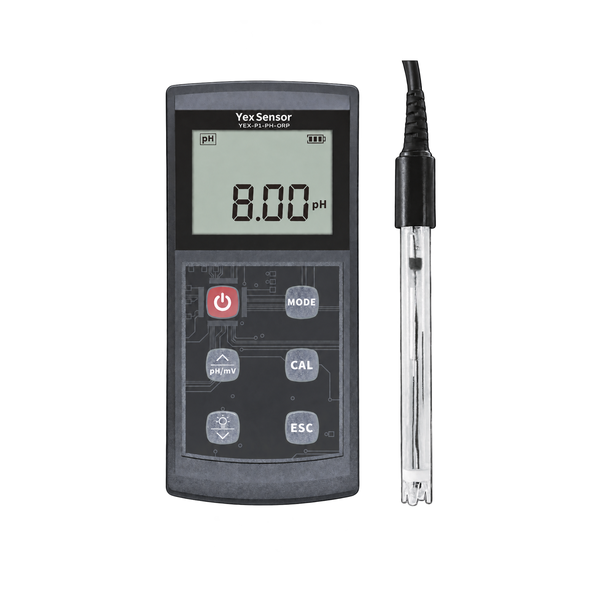
What the YEX-P1-PH-ORP standard box actually contains
The model's Version 1.00 manual and product page identify the following seven packing-list entries. This is the starting inventory; the final supply is governed by the agreed order and packing list.
| Documented item | Quantity | Receiving implication |
|---|---|---|
| YEX-P1-PH-ORP meter | 1 | Check model and serial number against the order. |
| Combination pH electrode | 1 | Identify the supplied pH electrode; it is not an ORP electrode. |
| pH buffer powder | 2 sets | Follow packet instructions; these are not ORP verification standards. |
| AAA dry batteries | 3 | Check condition and install with correct polarity. |
| Screwdriver | 1 | Retain for battery-compartment access. |
| User manual / certificate | 1 set | Match documents to the delivered configuration. |
| Carrying case | 1 | Inspect protection and damage; a case does not establish an IP rating. |
Purchasing conclusion: this list does not establish an ORP-ready package. Any required ORP electrode, temperature arrangement, ORP standard and maintenance supplies need explicit supply confirmation.
Check performance separately from box contents
| YEX-P1-PH-ORP specification | Documented value | Selection boundary |
|---|---|---|
| ORP | −1999 to 1999 mV; 1 mV resolution; ±0.1% F.S. accuracy | Preserve the F.S. expression; agree system acceptance conditions separately. |
| Temperature | 0.0–80.0 °C; 0.1 °C resolution; ±0.5 °C accuracy | Requires a matching sensor; not an unknown ORP electrode's temperature rating. |
| Electrode input | BNC for a compatible pH or ORP electrode | Connector fit alone does not prove compatibility. |
| Temperature input | Separate 3.5 mm connector; automatic pH compensation | Confirm sensor compatibility; no ORP normalization to 25 °C is established. |
| Power / records | 3 × AAA dry batteries; local data handling described | No specified USB export, record capacity or retention guarantee. |
Resolution describes displayed increments. It does not define the electrode-and-standard verification limit. The documents do not define the F.S. calculation and test conditions sufficiently to derive a universal millivolt tolerance. The instrument body and connectors must remain dry; no instrument IP rating is specified.
Choose a portable ORP meter kit around the task
Use this decision table after the inventory check. It compares operating arrangements, rather than repeating the packing list.
| Task | Configuration | Evidence before order | Acceptance record | Purchase conclusion |
|---|---|---|---|---|
| One operator making ORP spot checks | Host, identified ORP electrode, required temperature arrangement, standards and storage supplies | Electrode compatibility and itemized supply confirmation | Item identities, agreed verification and sample record | Consider only after the ORP-specific items are confirmed. |
| Sequential pH and ORP work | Respective electrodes, temperature input and rinsing/storage arrangements | Demonstrated changeover sequence | Each result traced to its electrode and sample | One switched host can be evaluated when sequential work is acceptable. |
| Two technicians working simultaneously | Independent, complete measurement packages | Each operator's required equipment and procedure | Separate instrument/electrode identities and records | Do not schedule parallel jobs around one shared host. |
| Mandatory electronic-file delivery | A configuration with demonstrated required export capability | Written supplied-version specification and file demonstration | Actual file, required fields and accepted archive process | Undocumented USB/export cannot satisfy a mandatory requirement. |
Select arrangements that can demonstrably complete the job before comparing prices. A lower host price does not resolve missing electrodes, parallel-work requirements or an unproven record interface.
Match the contents to three practical assignments
Commissioning checks at a water-treatment handover
A technician needs documented spot readings at agreed sampling points. The order should identify the ORP electrode, temperature arrangement and verification supplies, with protected storage between measurements. At handover, demonstrate the agreed sample sequence and retain electrode identity, temperature, units and verification status. A reading alone does not prove disinfectant concentration or treatment compliance; the project's other required tests remain separate.
Two inspection teams leaving for different sites
Both teams need equipment at the same time. Sharing one host or one standard bottle can disrupt the schedule even when the purchase includes enough electrodes. Assign each team a complete inventory and an approved replenishment plan. Before dispatch, each operator demonstrates setup, safe cable routing and recording with their assigned package. Include separate protection for fragile sensing ends and chemical containers.
A laboratory requiring an electronic results file
The purchase specification requires a file linked to sample identities. Generic data-processing language does not establish that deliverable for YEX-P1-PH-ORP. Require evidence for the exact supplied configuration and inspect an actual example file. If export remains unconfirmed, choose a proven arrangement or obtain explicit approval for an alternative recording process before purchase. A handwritten sheet cannot silently replace a mandatory electronic requirement.
Accept the measurement chain before releasing the kit
BNC and 3.5 mm are connection descriptions, not universal compatibility standards. Record the confirmed ORP electrode model, sensing material, reference system, sample limits and cable arrangement. Specify the matching temperature sensor separately; its element type and wiring cannot be inferred from plug size.
Use separate clean containers for standards and successive samples. Arrange rinsing and storage supplies according to the delivered electrode instructions, keeping the host and connectors dry.
- Reconcile the shipment. Compare the signed order with the final packing list. Record each model, quantity, serial or lot identifier and document version; photograph damage, leakage or mismatches before use.
- Inspect the equipment. Check the sensing end, junction, cable, plug, protective cap and battery compartment. Keep damaged or leaking items out of service and follow the supplied electrode's conditioning instructions.
- Demonstrate connection and handling. Install three matched AAA batteries. Secure the BNC without twisting its cable and seat the matching temperature plug fully. Keep connectors above the sample and route cables so they cannot pull the meter into water.
- Demonstrate the intended task. Use the supplied instructions and agreed quality procedure. Confirm adequate immersion, remove trapped bubbles and allow stable readings. Check temperature plausibility and compare with a traceable thermometer when required.
- Close the record and discrepancies. Retain sample ID, time, mV, temperature, electrode ID, standard lot and acceptance result. Demonstrate any promised file workflow. Resolve missing components or mandatory functions before signing acceptance.
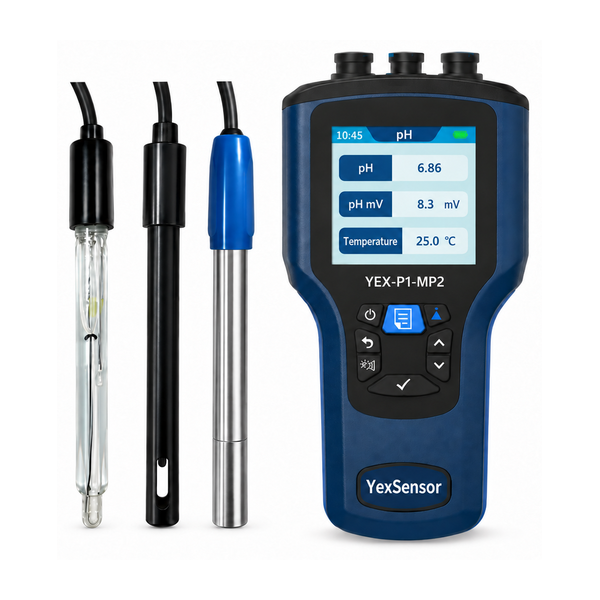
The manual describes ORP verification, but does not specify an ORP offset-adjustment procedure. Obtain a model-specific procedure if adjustment is required. Broader portable instrument calibration and verification guidance concerns separate probe procedures; MP2 interfaces and settings must not be assigned to this model.

RFQ inputs for an order that can be checked
- Measurement duty: aqueous sample composition, expected mV and temperature, sample count, working environment and applicable method.
- Supplied identities: host, compatible ORP electrode, any pH electrode, matching temperature sensor, cable lengths and quantities.
- Consumables: suitable ORP standards and certificates, approved storage/cleaning supplies, protection and agreed spares.
- Deliverables: record fields, any mandatory export, document language, training, acceptance procedure and discrepancy closure.
- Commercial scope: final packing list, transport conditions, replenishment, service and applicable warranty terms in writing.
Specify the measurement package
Provide the sample matrix, expected mV and temperature, operator count, electrode requirements and required record format for a configuration review of the YEX-P1-PH-ORP portable pH/ORP meter.
Frequently asked questions
Q1. Can a pH electrode measure ORP just because the meter has an ORP mode?
A1. No. The documented combination pH electrode does not become an ORP electrode when the display mode changes. ORP measurement requires an identified compatible ORP electrode connected to the BNC input. Specify that electrode and its approved sample conditions in the order. Before accepting the kit, match its label and instructions to the purchase specification and demonstrate the intended measurement procedure.
Q2. Does a BNC connector prove replacement-electrode compatibility?
A2. No. Matching the connector is only one check. The sensing element, reference system, sample compatibility, cable arrangement and operating limits also need confirmation. A blocked or contaminated reference junction can compromise the measurement even when the plug fits. Obtain supplier confirmation for the actual electrode model, then retain its instructions and identity with the kit rather than treating every BNC probe as interchangeable.
Q3. What does a separate temperature probe add?
A3. A matching connected sensor supports temperature display and the documented automatic pH compensation. It is not separately listed in the standard box. Temperature also belongs in an ORP record, but this does not establish automatic normalization of ORP to 25 °C. Specify the compatible sensor and delivered quantity, check adequate immersion and thermal equilibrium, and verify an implausible temperature before using the result.
Q4. Should one pH/ORP meter serve several field tasks?
A4. It can be evaluated when one operator can complete measurements sequentially with the respective compatible electrodes and an approved changeover procedure. Do not infer simultaneous pH and ORP measurement from the instrument name. For parallel site visits or required independent backup, compare complete additional packages. Demonstrate the planned work sequence before purchase so electrode changes, cleaning, storage and records fit the available time.
Q5. Which standards and storage supplies belong in the kit?
A5. Choose them for the actual supplied ORP electrode and test method. The listed pH buffer powder is not a substitute for an ORP verification standard. Identify the standard, certificate, lot, expiry and temperature-dependent reference value, together with approved cleaning and storage materials. Confirm replenishment and transport requirements in the order. Do not prescribe another manufacturer's storage liquid, polishing method or service interval for an unidentified electrode.
Q6. Is this configuration suitable when USB export is mandatory?
A6. The available model documents do not establish USB export, file format, record capacity or guaranteed retention. A generic data function cannot prove compliance with an electronic-record requirement. Require written evidence for the delivered version and a demonstration of the actual required file. If that cannot be established, select a proven configuration or formally approve an alternative workflow before ordering; do not borrow another model's features.
Q7. What belongs in the quotation and final packing list?
A7. List each host, electrode, temperature sensor, cable, standard, certificate, maintenance supply and accessory by identity and quantity. Separate documented standard items from any additional items whose supply has been confirmed. Include required documents, training, records and service terms. A product photograph or the phrase “pH/ORP kit” cannot replace that inventory. Use the same agreed list for shipment checking and discrepancy closure.
Q8. How should a newly delivered portable ORP meter kit be accepted?
A8. Reconcile the order, inspect for damage and confirm the identities of the instrument, electrodes, standards and documents. Then demonstrate the agreed task, temperature arrangement and record workflow using the supplied procedures. Retain the results and close unresolved shortages or mismatches before acceptance. Agree limits beforehand: the stated ±0.1% F.S. specification does not, by itself, define a universal millivolt tolerance for the complete electrode-and-standard check.
Summary
A complete portable ORP meter kit is defined by its task, confirmed components and acceptance evidence. YEX-P1-PH-ORP can be considered for its documented aqueous-sample measurement duty, with an explicitly confirmed compatible ORP electrode and any required temperature arrangement. Keep the host and connections dry, follow the delivered electrode instructions and establish the record path. The standard pH package does not prove ORP readiness, waterproofing or electronic export. A useful RFQ connects sample conditions, operator workload and records to an itemized order and demonstrable acceptance procedure.