


 Chinese
 Spanish
 French
 Russian
 German
 Portuguese
 Indonesian
 Thai
 Vietnamese
 Arabic


An online pH vs handheld meter comparison is useful only when both instruments observe comparable water under documented conditions. Before replacing a probe, align location, time, temperature and reference checks. Then separate sampling effects, electrode condition and host interpretation. A disagreement is evidence to investigate, not proof that the installed sensor is defective.
Start with the purchase decision, not the offset
An integrator is often asked to replace a sensor because an operator’s handheld reading differs from the control-room display. Immediate replacement can leave the real problem untouched: a sample collected before dosing, a bottle that cooled, an unverified reference electrode or a wrongly interpreted register.
The useful outcome is a defensible action: correct the comparison, service an instrument, repair integration or replace an unsuitable probe. Record the original readings before making adjustments. Changing calibration and PLC scaling together removes the evidence needed to identify which intervention worked.
Avoid arbitrary offsets that merely make screens agree: they can conceal sampling problems and fail when process conditions change.
Make the online pH vs handheld meter comparison repeatable
Define the online measurement location and a safe, representative sampling point nearby. Record the actual acquisition time rather than the time someone later copies the display. Include dosing, mixing and transfer events because the water can change while an operator walks between the tank and control room.
When safe and consistent with both instruments’ instructions, compare measurements on the same representative water with minimal delay. Do not remove an operating control probe or place people near an open tank without the approved procedure. An isolated comparison arrangement may be more appropriate for some sites.
Record temperature at both measurements, container identity, elapsed time and visible bubbles or deposits. Sample exposure to air, cooling or ongoing reaction can alter the liquid being measured. A bottle brought to the laboratory is not automatically identical to the water previously surrounding the online electrode.
Check the reference instrument before judging the installed probe
A handheld meter is a comparison instrument, not an unquestionable reference. Review its electrode condition, buffer identity, expiry and recent verification record. Confirm that the reference procedure covers the expected sample and follows the instrument instructions. Contaminated buffers or an aged electrode can affect either measurement route.
Where calibration is necessary, retain the initial result and document the subsequent check. Use suitable fresh standards and their stated temperature-dependent values. Do not pour used solution back into the stock container. This prevents one maintenance step from contaminating later investigations.
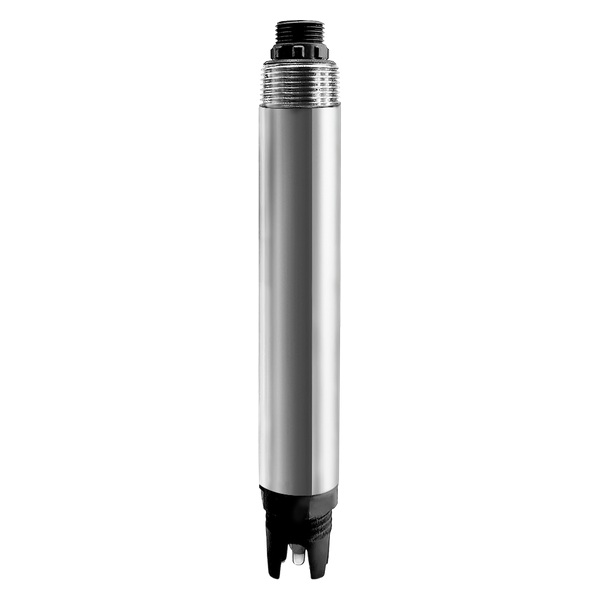
The YEX-S1PRO-PH manual states that the sensor is factory calibrated and should not be recalibrated unnecessarily. It provides calibration instructions when needed. Follow those instructions and obtain application support if verification remains unsatisfactory; routine disagreement does not justify repeatedly changing calibration coefficients.
Use verified specifications without turning them into a tolerance
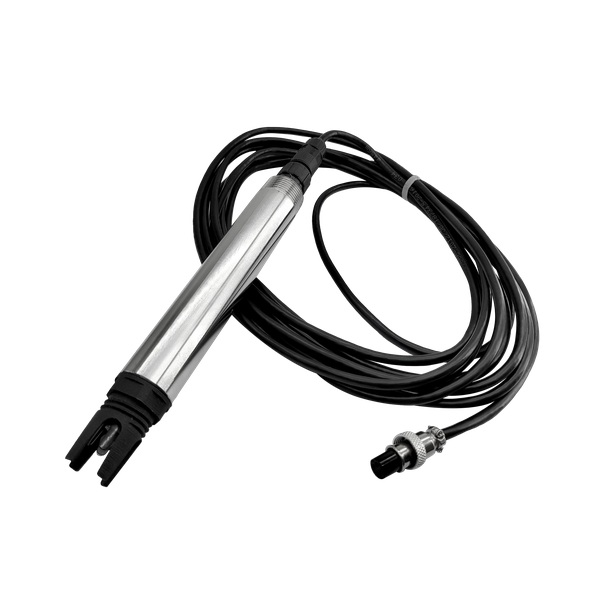
YEX-S1PRO-PH specifies 0.01 pH resolution and ±0.1 pH accuracy. Those numbers describe different things. Fine display increments do not establish the uncertainty of a field comparison, and the sensor accuracy alone cannot define the acceptable difference between two complete measurement procedures.
Agree comparison criteria using both instruments’ documented performance, reference materials, sampling conditions and project requirements. Do not automatically add two catalogue accuracy figures or declare every difference below 0.1 pH acceptable. Where compliance or contractual acceptance is involved, have the responsible quality team approve the method.
Automatic temperature compensation addresses the electrode’s temperature-dependent response; it does not make chemically different or differently conditioned samples identical. If the sample changes while cooling, an accurately compensated measurement can still differ from the original process observation.
| Parameter | Manual specification | Procurement check |
|---|---|---|
| Measuring range | 0–14.00 pH | Check normal and upset exposure separately. |
| Resolution; accuracy | 0.01 pH; ±0.1 pH; ±0.1°C | Do not use display resolution as an acceptance tolerance. |
| Supply; consumption | 12–24 VDC; 0.4 W | Verify supply at the installed instrument. |
| Communication | RS485 (Modbus); 4–20 mA optional | Confirm the actual ordered output and current map. |
| Response | 10 s; convention unspecified | Verify installed behavior; do not assume T90. |
| Operating conditions | 0–50°C, non-freezing; pressure <0.2 MPa | Include cleaning and transient exposure. |
| Housing; protection | 316L + ABS; IP68 | Confirm wetted compatibility and connection protection. |
| Cable | 5 m four-core shielded cable | Confirm termination; jacket material is not stated. |
| Mounting | NPT 3/4; immersion arrangement | Verify orientation, wetting and safe service access. |
Specifications: YEX-S1PRO-PH User Manual supplied by YexSensor. Review the YEX-S1PRO-PH product specification and confirm the delivered configuration.
Locate the disagreement in the measurement chain
Compare the sensor value decoded according to its current register map with the PLC engineering value and operator display. If the digital value and PLC differ at the same acquisition time, investigate decoding, scaling, rounding and tag assignment before replacing the electrode.
If the sensor and PLC agree but the handheld differs, return to the reference method, location and liquid conditions. If both instruments pass appropriate standard checks but disagree in process water, consider representativeness, deposits, interference and sample change. Buffer success is useful evidence, not proof of suitability in every wastewater matrix.
Keep communication gaps visible. A display that holds its last value may appear to disagree with a handheld simply because it is old. Distinguish the probe’s sampling behavior from gateway polling and display refresh. The supplier should not be asked to diagnose a timestamp mismatch as an electrode defect.
Apply the checks to realistic integration work
At a neutralization skid, a grab sample taken during a dosing pulse may not match the subsequent mixed-tank reading. The integration response is to align observations with process events and identify the water being compared. The benefit is avoiding unnecessary probe replacement while preserving the evidence for a separate mixing review.
At a packaged wastewater plant handover, a contractor may use one handheld instrument across several units. Verify that reference instrument and keep unit-specific records rather than transferring one correction to every sensor. This supports a repeatable acceptance process across an equipment fleet.
At a remote monitoring station, network delivery may be delayed while the handheld is current. Compare acquisition timestamps and data quality, not just values shown on two screens. These examples describe diagnostic approaches, not reported YexSensor field results or guaranteed reductions in maintenance cost.
Decide between service, installation correction and replacement
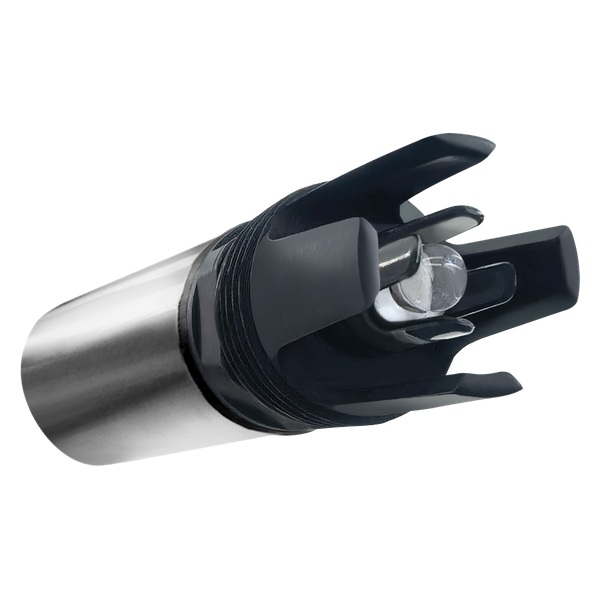
Service is appropriate when approved cleaning or calibration addresses a documented condition and subsequent verification succeeds. Installation correction is more appropriate when immersion, sample turnover or placement is unsuitable. Neither action should be described as a sensor replacement until the investigation supports that conclusion.
Replacement becomes reasonable when damage, persistent failed verification or confirmed incompatibility remains after the approved checks. Review why the old installation failed before ordering the same arrangement. Otherwise the next electrode may encounter the same exposure and maintenance limitations.
For YEX-S1PRO-PH, check 0–50°C non-freezing operation, pressure below 0.2 MPa and the suitability of the complete wetted assembly. The manual identifies 316L + ABS housing but does not establish universal chemical resistance. Cable-jacket material and any unlisted application requirement need supplier confirmation.
Prepare a useful evidence pack for technical support
Send paired readings with times, temperatures, sampling location, process state and reference-instrument identification. Include the calibration or verification records, photographs of deposits and mounting, and raw versus interpreted host values. Preserve the original configuration before making an approved change.
For a replacement quotation, add required quantity, interface, cable length, mounting and delivery destination. Ask about service parts and warranty handling for the actual order; do not assume a fixed replacement interval. A supplier can make a more specific recommendation when the request explains both the symptom and the checks already completed.
For related installation questions, review pH bypass sample delay and the neutralization-skid measurement package.
Discuss Your Project Requirements
Share the paired readings, sampling method, temperature, process events, reference verification and PLC interpretation. Add the installed model, exposure limits, mounting photographs and required quantity if replacement is being considered. This supports a diagnosis-led selection rather than a like-for-like order without a cause.
Review the YEX-S1PRO-PH configuration and Send Your Project Requirements.
FAQ
Q1. Does a handheld meter always give the correct pH?
No. Its electrode, standards, calibration and sampling procedure also need verification. If the reference has not been checked, disagreement cannot identify which measurement is wrong. Use a documented comparison method with aligned conditions before rejecting the installed probe. Include the handheld instrument’s records in any commissioning acceptance or supplier support request.
Q2. Why do readings differ after a sample cools?
Cooling can change both electrode response and the chemistry of the sample; air exposure or continuing reactions may also matter. Temperature compensation does not reverse those changes. Record the sample temperature and elapsed time, and compare under the approved method. Do not specify a replacement sensor solely from a cooled-bottle comparison.
Q3. Can incorrect Modbus decoding create a plausible pH value?
Yes. A wrong register, data type or byte order can produce an incorrect value without an obvious communications alarm. The cited YEX-S1PRO-PH manual uses a two-register CDAB floating-point pH value. Confirm the supplied version’s map and compare decoded data with the PLC before attributing a discrepancy to the electrode.
Q4. How should I choose a reference instrument?
Choose a documented instrument and method appropriate to the sample, expected range and acceptance purpose. Consider calibration traceability, electrode compatibility, temperature measurement and service condition rather than portability alone. Ask the project’s quality owner to approve the comparison method; this guide does not certify a particular handheld model as a reference standard.
Q5. When should the online sensor be replaced?
Consider replacement after documented checks show persistent failure, physical damage or incompatibility with the intended duty. If the problem comes from sampling, stale data or mounting, replacing the probe may not resolve it. Give the supplier the investigation record and exposure conditions so the replacement specification addresses the cause rather than only the symptom.
Q6. Can an offset make online and handheld values agree?
It can make one comparison appear closer, but that does not establish a valid correction across the operating range. Identify sampling, calibration and integration issues first. Apply only an approved instrument adjustment supported by the manufacturer’s method and verification results. Preserve the original settings and avoid undocumented PLC offsets during contractual acceptance.
Q7. What tolerance applies to an online pH vs handheld meter comparison?
There is no universal tolerance for every installation. Use the agreed comparison method, both instruments’ performance, reference materials and sampling conditions to establish project criteria. The YEX-S1PRO-PH accuracy specification alone does not define that difference. Agree and document the acceptance rule before testing, especially where the result affects equipment handover.
Q8. What should a support request include?
Include paired readings, acquisition times, temperatures, sampling location, process events and reference verification. Add the installed model, configuration, mounting photographs and any cleaning already performed. For a procurement decision, state the required interface and quantity. This lets the supplier distinguish a measurement problem from an integration or sample-handling issue.
Q9. Does passing a buffer check prove suitability for wastewater?
No. It shows performance under that check’s conditions, not every characteristic of the process water. Deposits, chemical exposure, reference-junction behavior and location can affect installed performance. Combine standard checks with a representative process comparison and compatibility review before accepting the package or purchasing the same probe for additional sites.
Summary
Resolve disagreement by aligning the water, time and reference method before changing equipment. Compare the sensor output with PLC interpretation, then evaluate electrode condition and installation. YEX-S1PRO-PH specifications support selection within a defined duty, but neither its resolution nor its accuracy creates a universal field-comparison tolerance. Document the evidence, choose service or replacement according to the cause, and share the paired readings and project conditions with YexSensor. The result should be a justified procurement decision and a repeatable comparison procedure, not merely two matching displays.


