


 Chinese
 Spanish
 French
 Russian
 German
 Portuguese
 Indonesian
 Thai
 Vietnamese
 Arabic


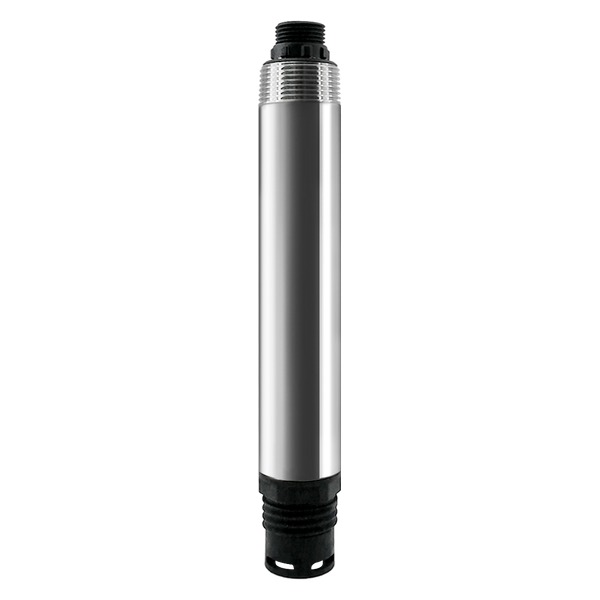
Cleaning wastewater conductivity can support stream-diversion monitoring only when the ionic change reliably distinguishes the water streams your project needs to separate. Validate that relationship before choosing a threshold or sensor range. Conductivity does not identify all contaminants, certify reuse suitability or replace the engineered diversion system.
Start with the stream decision, not a conductivity number
An equipment builder may want to distinguish a concentrated wash discharge from a later rinse, or identify a change entering a collection route. The buying question is whether conductivity supplies useful evidence for that specific distinction under the actual operating conditions.
A low reading does not mean the water is clean. Oils, suspended material and some dissolved organic contaminants may not be represented adequately by conductivity. Likewise, a high reading does not identify which chemical is present. Avoid specifying a general “pollution detector” when the purchased instrument measures ionic conductance.
The process owner must define acceptable destinations and the evidence required to route, hold or treat each stream.
Validate cleaning wastewater conductivity with paired evidence
Collect representative observations across the wash sequence, including startup, normal production, recipe changes and final rinse. Pair conductivity and temperature with the actual stream identity and any analyses required for the routing decision. The test should cover credible variations, not only two conveniently different samples.
Look for overlap between the groups. If water that must be held or treated repeatedly has the same conductivity as water proposed for another destination, a single threshold cannot reliably distinguish them. Use additional approved information, retain segregation by process sequence or choose another measurement approach.
Record the validation scope and review it when formulations change. Do not copy a threshold from a different factory or detergent supplier.
Compare three ways to identify a change
A sequence-based arrangement uses known equipment states and confirmed valve or flow information to identify the active stream. It may be appropriate when the cleaning sequence is controlled, but a command alone does not prove which liquid reached the measuring point.
A conductivity-based arrangement observes an ionic change directly. It is useful when the distinction survives normal variations and the sensor sees representative liquid. It remains vulnerable to overlapping chemistry, unsuitable range, deposits and stale samples. Establish its limitations during the application trial.
A combined arrangement uses process state plus relevant measurements. For example, conductivity may identify a wash-to-rinse transition while separate evidence addresses contaminants that conductivity cannot resolve. The integrator must justify each additional input; more sensors do not automatically establish safe routing or discharge compliance.
Select the range from the full operating envelope
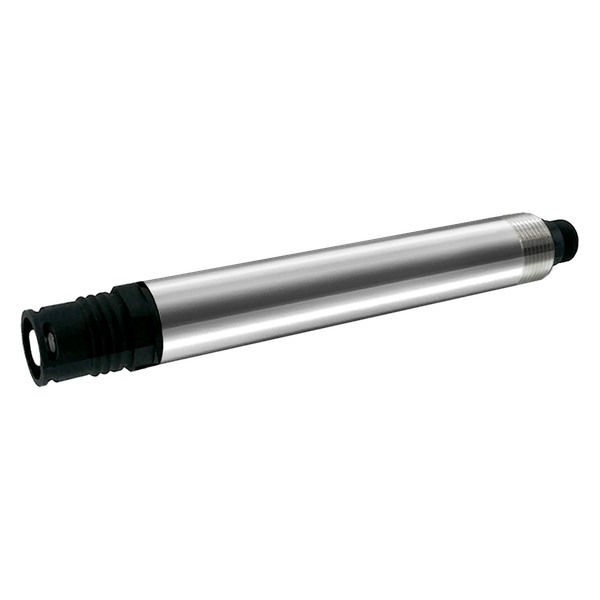
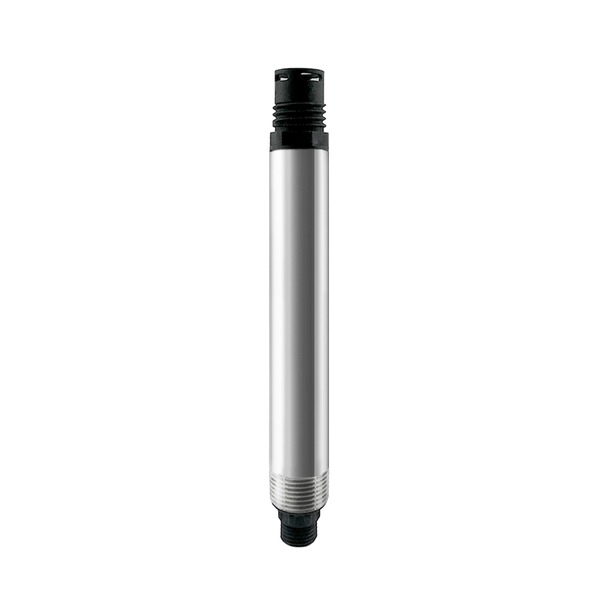
The YEX-S1PRO-EC manual lists conductivity ranges of 0–3000, 0–10000 and 0–30000 µS/cm, with customization noted. Treat these as configurations to confirm, not three guaranteed simultaneous ranges on every supplied unit. Measure expected peaks and the decision region before selecting the order configuration.
The manual states ±1.5% accuracy without specifying its basis. Obtain clarification before deriving an absolute error or deciding whether two streams are distinguishable near a proposed boundary. Resolution and displayed digits do not resolve uncertainty about the accuracy definition or field sampling method.
Operation is limited to 0–50°C, non-freezing, and pressure below 0.2 MPa. Hot concentrated cleaning solution may therefore require another approved arrangement or product. Do not assume that automatic temperature compensation makes this probe suitable for an unrestricted cleaning-in-place duty.
| Parameter | Manual specification | Procurement check |
|---|---|---|
| Conductivity configurations | 0–3000 / 0–10000 / 0–30000 µS/cm | Confirm the ordered range; customization needs approval. |
| Accuracy | ±1.5%; temperature ±0.1°C | Confirm percentage basis and decision-region performance. |
| Supply; consumption | 12–24 VDC; 0.4 W | Verify supply at the installed instrument. |
| Communication | RS485 (Modbus); 4–20 mA optional | Confirm the actual ordered output and current map. |
| Response | 10 s; convention unspecified | Verify installed behavior; do not assume T90. |
| Operating conditions | 0–50°C, non-freezing; pressure <0.2 MPa | Include cleaning and transient exposure. |
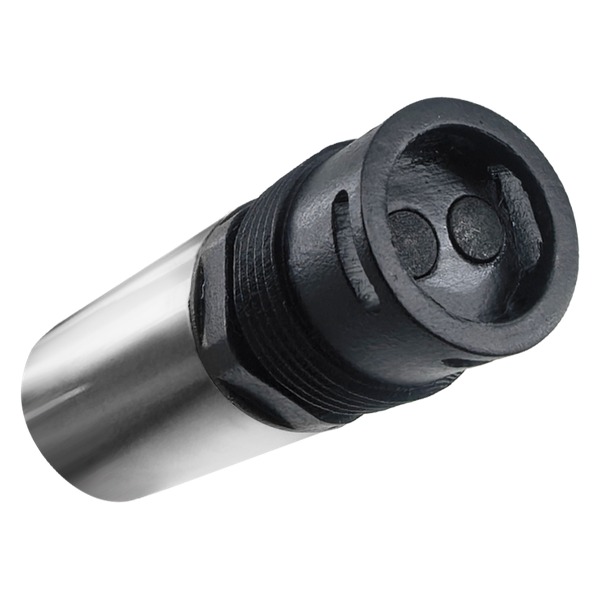
| Housing; protection | 316L + ABS; IP68 | Confirm wetted compatibility and connection protection. |
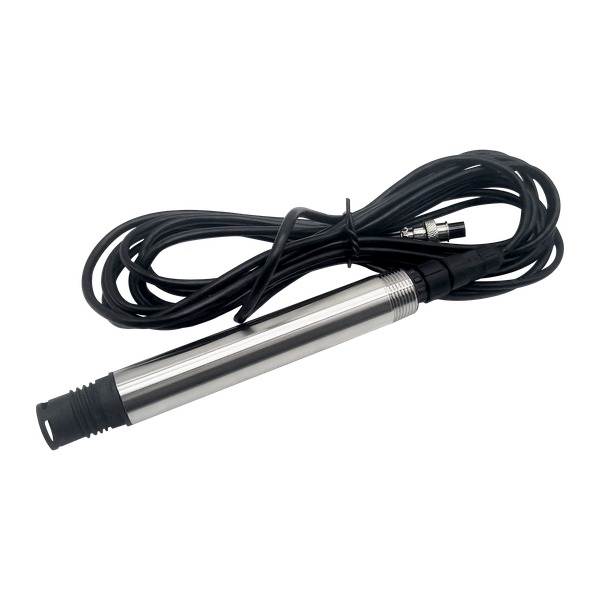
| Cable | 5 m four-core shielded cable | Confirm termination; jacket material is not stated. |
| Mounting | NPT 3/4; immersion arrangement | Verify orientation, wetting and safe service access. |
Specifications: YEX-S1PRO-EC User Manual supplied by YexSensor. Review the YEX-S1PRO-EC product specification and confirm the delivered configuration.
Control temperature and distinguish EC from derived values
Conductivity varies with temperature and ionic composition. Compare field and reference results on a consistent basis, and confirm the supplied instrument’s compensation reference and method. Do not assume that two instruments with temperature compensation use identical settings or represent changing chemistry in the same way.
YEX-S1PRO-EC documentation also includes salinity and TDS values. These should not be treated as independent identification of the cleaning chemical. Confirm their conversion assumptions before using them for a project decision, particularly when the wastewater composition changes between recipes.
USGS conductivity guidance explains that dissolved substances and temperature affect the measurement. That supports a composition-aware validation approach; it does not provide a universal conversion or diversion threshold for industrial cleaning water. Retain the original conductivity and temperature records alongside the process observations.
Check the route from measuring point to diversion device
The measuring point must see the intended stream before the routing action is needed. Review the distance and liquid volume between the point and the diversion device, together with actual flow, sensor behavior, host updates and actuator response. Nominal tube volume divided by flow is not a complete response guarantee.
A bypass may improve access but introduce transport delay or retained liquid when flow stops. An immersion point may observe a mixed collection volume rather than the incoming transition. Choose the installation according to the decision timing, not only the availability of a convenient fitting.
Have the responsible engineer define transition handling and the response to invalid data. Do not route an uncertain stream solely because the display retains its previous acceptable number. Test the approved logic under controlled conditions before it is used for automatic operation.
Apply the evaluation to three industrial projects
In a parts-washing line, ionic cleaner carryover may change across the rinse sequence while oil remains a separate concern. Pair conductivity with the required contamination checks and process history. The value is a bounded monitoring role rather than an unsupported claim that low conductivity proves the absence of oil.
In an industrial laundry collection system, recipes and water sources can change the baseline. The integrator should evaluate those variations before proposing a common threshold across all cycles. This helps determine whether the signal supports stream identification or merely a general change alarm.
In a chemical-equipment cleaning skid, incompatible or hot concentrated streams may fall outside the proposed probe’s duty. Review where a compatible, representative measurement is possible, or select another verified instrument. These are illustrative project assessments, not reported YexSensor installations or guaranteed water-recovery outcomes.
Specify integration and prove the first installation
For RS485 Modbus RTU, agree serial settings, address, register interpretation and engineering units with the actual receiving device. The product page offers optional 4–20 mA as an output choice; do not assume simultaneous analog and digital channels. Confirm the ordered interface before panel manufacture.
Commission the concentration-independent data path separately from the routing decision. First verify communication and interpretation; then evaluate the actual stream relationship and timing. Test timeout, maintenance and recovery behavior through an authorized procedure. Record what the trial did not cover as well as what passed.
For procurement, distinguish probe supply from holders, flow hardware, PLC configuration and commissioning support. Request confirmed delivery, packaging, warranty and spare-part terms for the order. A comparable quotation describes the full measuring scope and its application boundaries, not merely a conductivity range and unit price.
For measurement context, consult USGS field-measurement guidance on conductivity and temperature.
Discuss Your Project Requirements
Provide the cleaning sequence, chemicals, water-source variations, observed conductivity and temperature, peak exposure, stream destinations and validation evidence. Include a route sketch, flow conditions, host interface, mounting, quantity and delivery destination. State whether the signal is for observation, an alarm or an engineered diversion function.
Review the YEX-S1PRO-EC configuration and Send Your Project Requirements.
FAQ
Q1. Does low conductivity prove that cleaning wastewater is reusable?
No. Conductivity does not adequately represent every contaminant, including many oils and organic substances. Reuse suitability depends on the intended use and the required analyses or process evidence. For procurement, define the narrow monitoring role and confirm which other checks remain necessary before presenting a conductivity probe as part of a reuse decision.
Q2. Why do conductivity readings change when temperature changes?
Temperature affects ionic conductance, so results need a consistent comparison basis. Automatic compensation does not prove that two instruments use the same reference or method, particularly with changing cleaning chemistry. Confirm those settings with the supplier and retain temperature records during validation before deciding that a conductivity movement represents a different wastewater stream.
Q3. Are TDS and salinity values independent chemical measurements?
Do not treat them that way without verified model documentation. Conductivity-derived quantities depend on the implemented conversion and water composition. Ask the supplier to identify those assumptions, and do not use a displayed TDS value as proof of a particular cleaning chemical concentration. Keep the original conductivity data for the project’s validation record.
Q4. Which YEX-S1PRO-EC measuring range should be ordered?
Select from the confirmed configurations using normal values, peak exposure and the decision region. The manual lists 0–3000, 0–10000 and 0–30000 µS/cm ranges, with customization noted. Confirm the actual supplied range and accuracy basis before purchase; do not assume every unit offers all listed ranges simultaneously or suits every cleaning recipe.
Q5. Can this probe measure hot cleaning solution directly?
Only when the complete duty is confirmed within its limits and compatibility is established. The manual specifies 0–50°C non-freezing operation and pressure below 0.2 MPa. Temperature compensation does not extend those limits. If a concentrated or hot stream exceeds them, review another approved arrangement or product rather than assuming unrestricted cleaning-in-place suitability.
Q6. Is a bypass always preferable to immersion?
No. A bypass can improve service access but introduce transport delay or retained samples, while immersion may observe a mixed volume rather than an incoming transition. Choose according to the routing decision and actual flow conditions. Provide the supplier and integrator with the sample route and timing requirements before selecting installation hardware.
Q7. What evidence supports cleaning wastewater conductivity as a diversion signal?
Use paired conductivity, temperature, stream identity and the analyses needed for the destination decision across representative operating conditions. Check whether the relevant groups overlap. If they do, conductivity alone is insufficient. Agree the application boundary and additional evidence with the process owner before buying a package intended to support automatic stream routing.
Q8. What should an integrator include in the purchase scope?
Specify the model, confirmed range, output, mounting hardware, cable requirements and required documentation. Separate PLC configuration, sample routing and commissioning from probe supply. Include operating chemistry and temperature so compatibility can be reviewed. Request confirmed commercial terms for that scope rather than comparing quotations that include different levels of integration responsibility.
Q9. Can one validated threshold be reused after changing detergent?
Not automatically. A different formulation or water source can change the relationship between conductivity and the stream characteristic being identified. Review the previous validation against the new conditions and repeat the necessary observations. For multi-site equipment supply, retain recipe-specific limitations instead of copying one threshold into every controller without supporting evidence.
Summary
Use conductivity for the distinction it can actually demonstrate: an ionic change associated with defined cleaning streams. Validate the relationship, reject unsupported clean-water claims and select a confirmed range for the full exposure. YEX-S1PRO-EC may fit compatible duties within its published temperature and pressure limits, but it does not supply a complete diversion system. Account for sampling and actuator timing, test host data quality and retain recipe-specific evidence. Send YexSensor the chemistry, observed range, route and interface requirements to assess the appropriate measuring package.


