


 Chinese
 Spanish
 French
 Russian
 German
 Portuguese
 Indonesian
 Thai
 Vietnamese
 Arabic


Dissolved oxygen sensor selection should follow the application: aquaculture prioritizes representative oxygen warnings, wastewater requires serviceable measurement in fouling liquid, and river stations need reliable unattended records. Industrial duties may impose different pressure, chemistry or low-range requirements. Compare those conditions before selecting the probe, housing, installation and host interface.
Start dissolved oxygen sensor selection with the decision
For distributors and integrators, the right package matches the water, operating decision and maintenance capability. A suitable sensor in the wrong location can still mislead.
Define concentration or saturation, and whether the channel supports observation, alarms or control. The application specialist sets oxygen requirements; no universal target applies.
| Application | Selection priority | Do not assume |
|---|---|---|
| Aquaculture | Representative stock-zone location | Saltwater compatibility |
| Wastewater | Fouling and retrieval | Maintenance-free operation |
| Rivers / lakes | Level and access | Whole-waterbody representation |
| Industrial water | Pressure, chemistry, low-range performance | Trace-oxygen capability |
Aquaculture: choose around animal exposure and system layout
The field challenge is spatial variation: a reading beside an aerator may not represent the water experienced by stock elsewhere. For a pond-system supplier, review the monitored zones, changing level, access and fouling. For a recirculating aquaculture system, distinguish incoming treated water from the water leaving a culture tank.
An optical online probe is a candidate where continuous measurement, suitable correction settings and practical servicing can be provided. The integrator should combine the measurement with the project’s alarm delivery and approved response arrangements. Neither the probe nor a communication protocol guarantees uninterrupted protection of the stock.
Selection: consider an optical online package for continuous monitoring with accessible servicing. For saltwater, require documented compensation and wetted compatibility; exclude an unverified housing configuration rather than assuming stainless steel is sufficient.
Wastewater aeration: prioritize fouling and retrieval
In an aeration basin, suspended material, biological growth and persistent bubbles can complicate measurement and maintenance. A plant-equipment OEM should review the sensing location with the process designer rather than placing a probe wherever a bracket is easiest to install.
Select a package with a safely retrievable mounting arrangement, maintained liquid contact and an approved cleaning method. An optical design avoids electrolyte service associated with some electrochemical sensors, but its sensing surface still requires care. Ask about replacement sensing components and verification after service before standardizing a model.
Selection: prioritize a retrievable, cleanable online probe with supported PLC integration. Exclude a mounting arrangement that cannot be serviced safely. Keep low oxygen, stale data and maintenance states distinct; the process designer defines the blower strategy.
Check the model limits before carrying it across applications
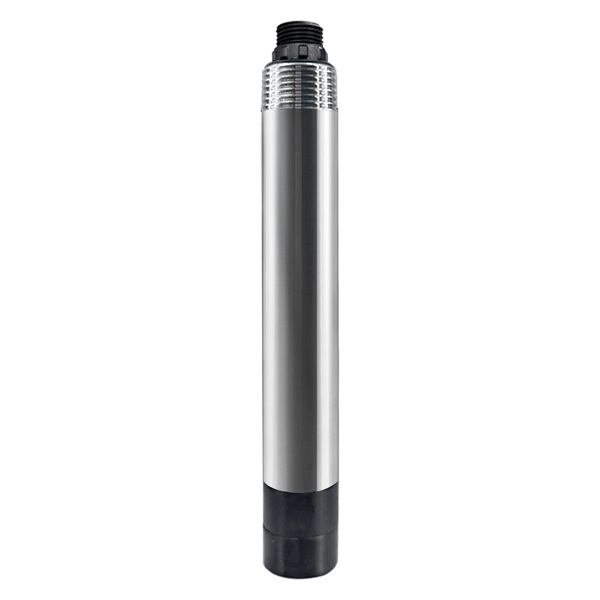
YEX-S1PRO-RDO uses fluorescence lifetime measurement over 0–20.00 mg/L. That range does not establish trace-oxygen performance or compatibility with every process stream.
The manual lists ±2% accuracy without defining the percentage basis. Obtain clarification before converting that statement into an absolute error or contractual acceptance limit. The table summarizes documented characteristics; it does not certify every application discussed here.
The 316L + ABS housing, 0–50°C operating limit and pressure below 0.2 MPa must be reviewed against actual exposure. Temperature compensation does not extend those limits. For aggressive water, cleaning chemicals or unusual immersion conditions, obtain application confirmation before ordering.
| Parameter | Manual specification | Procurement check |
|---|---|---|
| Measuring range | 0–20.00 mg/L | Match the expected DO duty. |
| Resolution; accuracy | 0.01 mg/L; ±2%; temperature ±0.1°C | Accuracy percentage basis requires confirmation. |
| Supply; consumption | 12–24 VDC; 0.4 W | Verify supply at the installed instrument. |
| Communication | RS485 (Modbus); 4–20 mA optional | Confirm the actual ordered output and current map. |
| Measurement principle | Fluorescence lifetime | No numerical response time is established here. |
| Operating conditions | 0–50°C, non-freezing; pressure <0.2 MPa | Include cleaning and transient exposure. |
| Housing; protection | 316L + ABS; IP68 | Confirm wetted compatibility and connection protection. |
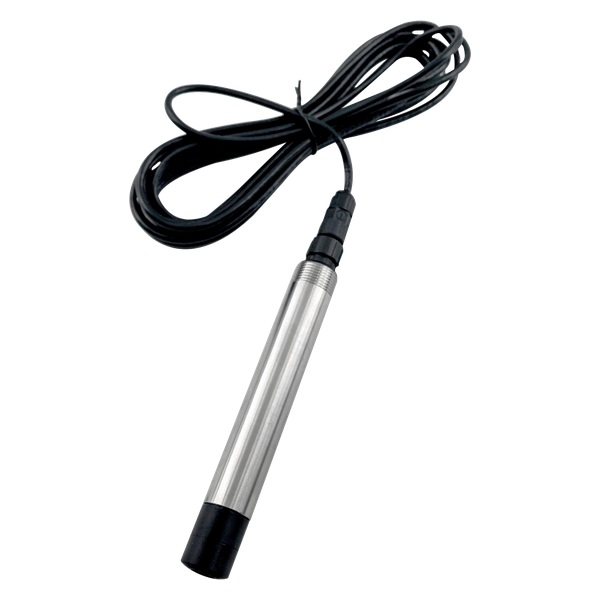
| Cable | 5 m four-core shielded cable | Confirm termination; jacket material is not stated. |
| Mounting | NPT 3/4; immersion arrangement | Verify orientation, wetting and safe service access. |
Specifications: YEX-S1PRO-RDO User Manual supplied by YexSensor. Review the YEX-S1PRO-RDO product specification and confirm the delivered configuration.
Rivers and lakes: select for location, records and service access
The challenge at a surface-water station is maintaining representative measurement while level, flow and biological growth change. A fixed point near a bank may answer a different question from a depth profile. Define the observation purpose before choosing a location or claiming that one point represents an entire water body.
For an unattended station, assess safe retrieval, debris exposure, cable protection and the interval between service visits. Budget for the logger, communications and any cleaning equipment separately from the probe. A nominal sensor power figure is not the total station load.
Selection: choose an online station for time-series records or a portable arrangement for scheduled surveys. Exclude a fixed point that cannot represent the intended observation. Specify telemetry and power separately.
Industrial process water: identify duties needing another instrument
Industrial water is not a single application. A compatible open process tank may be a candidate for the documented probe, while a pressurized line, hot cleaning cycle or chemically aggressive stream requires a different review. Evaluate the maximum exposure at the sensor, not only the normal temperature in a specification sheet.
If the project needs trace oxygen measurement in boiler feedwater or another very low-oxygen duty, do not infer suitability from a 0–20.00 mg/L range starting at zero. Request explicit low-level performance, detection capability and the required sample-conditioning design for that service.
Selection: consider a standard online probe only within its verified duty. Choose a documented specialist instrument for trace oxygen, sterilization or hazardous-area requirements that the proposed model does not establish.
Compare principle, materials and installation as a package
Compare identified models, including service tasks and host compatibility. Neither sensing principle is universally preferable; select the complete package for the operating conditions.
Review housing, seals, sensing surface and cable exposure together. Plastic, stainless steel or titanium require model-specific compatibility evidence; these are not assumed options on YEX-S1PRO-RDO.
Immersion provides direct contact but requires stable wetting and retrieval access. A bypass can improve access while introducing sample delay, gas exchange or retained liquid. Choose the arrangement that preserves the intended measurement, and verify it under site conditions rather than buying solely by thread size.
| Principle | Selection reason | Service check |
|---|---|---|
| Optical | No sensing-reaction oxygen consumption | Inspect optical surface; confirm replacement parts. |
| Electrochemical | Fits a supported controller and service method | Check flow needs, membrane and electrolyte procedures. |
Specify integration and procurement evidence
The official YEX-S1PRO-RDO page lists RS485 Modbus RTU or optional 4–20 mA as selectable outputs. Confirm the ordered version; do not assume simultaneous operation. Agree the host settings, register interpretation or analog scaling, units and data-loss behavior before panel assembly.
Ask how salinity and atmospheric-pressure effects are handled for the intended application. Automatic temperature compensation does not confirm every correction required. USGS dissolved oxygen guidance covers optical measurement and correction factors; the supplier must still confirm the settings and procedures supported by the ordered model.
Before repeat orders, verify configuration, reference comparison and installation. Obtain current calibration instructions; purified water is not necessarily oxygen-free. Confirm spare parts, acceptance evidence, packing, delivery and warranty terms.
Further reading: pond monitoring, aeration control and DO maintenance.
Method reference: USGS dissolved oxygen measurement and correction guidance.
Discuss Your Project Requirements
Send the application, measurement purpose, expected oxygen range, salinity, temperature, pressure, chemical exposure and maintenance interval. Include the mounting location, host input, cable requirement, quantity and destination. These details help YexSensor assess product fit or identify conditions requiring another measuring arrangement.
Review the YEX-S1PRO-RDO configuration and Send Your Project Requirements.
FAQ
Q1. Does optical measurement mean the probe needs no maintenance?
No. Optical probes still require inspection and approved care of the sensing surface. Wastewater deposits, pond growth or river debris create different service conditions. Evaluate access and verification requirements for your application before ordering. Ask the supplier about replacement sensing components and avoid treating the absence of electrolyte service as a maintenance-free guarantee.
Q2. Are mg/L and percent saturation interchangeable?
No. Concentration and saturation describe different quantities and must be mapped separately in the receiving system. Temperature, pressure and salinity matter to interpretation. Confirm the required units and supported correction settings with the supplier, then verify the PLC or logger mapping before using the signal for an alarm or a process decision.
Q3. Does a range starting at zero establish trace-oxygen capability?
No. Range coverage does not establish detection capability or uncertainty at very low concentrations. A trace-oxygen industrial project needs explicit performance and sample-conditioning evidence for that duty. Do not select YEX-S1PRO-RDO for such service solely because its stated 0–20.00 mg/L range includes zero; obtain a suitable documented specification before procurement.
Q4. How should an integrator select a DO probe for aquaculture?
Begin with the water experienced by the stock, the monitoring purpose and the system layout. Review representative points, fouling, salinity and service access rather than choosing only by measuring range. Confirm host alarms and response responsibilities separately. A probe suitable for one freshwater tank is not automatically verified for a marine installation.
Q5. What changes when selecting for an aeration basin?
Fouling, bubbles, representative mixed-liquid contact and safe retrieval become central selection issues. Choose a supported sensing assembly and an installation that operators can inspect and clean. Include data-quality handling in the PLC scope. The sensor supplies measurement information; process engineering must define control targets and any resulting changes to aeration equipment operation.
Q6. Is stainless steel automatically the right choice for saltwater?
No. Compatibility depends on the specific alloy, complete wetted assembly, exposure and maintenance conditions. YEX-S1PRO-RDO identifies 316L + ABS housing, not unrestricted seawater suitability for every project. Provide salinity and chemical conditions for review, and compare another documented material configuration where needed rather than assuming that a metal housing guarantees corrosion resistance.
Q7. What information makes dissolved oxygen sensor selection more reliable?
Provide the application, required measurement and operating envelope, including temperature, pressure, salinity and chemical exposure. Add mounting, service access and host-interface details. For procurement, specify quantities and required verification documents. This lets the supplier assess actual suitability and quote the correct scope instead of treating all oxygen-monitoring projects as the same installation.
Q8. Should a buyer choose RS485 or 4–20 mA?
Choose the confirmed output that matches the receiving equipment and project scope. YEX-S1PRO-RDO lists RS485 Modbus RTU or optional 4–20 mA; simultaneous availability is not assumed. Digital decoding and analog scaling require different checks. Confirm configuration, fault handling and integration responsibility before comparing prices or finalizing the control-panel design for your project.
Q9. Can one approved sensor package be repeated across all sites?
Only where the relevant duty and installation conditions remain within the approved scope. A different salinity, pressure, cleaning regime or access arrangement can change suitability. Retain the first-unit evaluation, but verify each site’s differences before a repeat order. Record required accessories, spare parts and acceptance responsibilities so standardization does not conceal new application risks.
Summary
Choose by application before choosing by model. Aquaculture needs representative stock-zone monitoring; wastewater needs serviceable measurement in fouling liquid; rivers need reliable location and record management; industrial processes need explicit exposure and low-range checks. YEX-S1PRO-RDO is a candidate where its documented limits and supported interface fit, not a universal choice for all four settings. Confirm compensation, materials, installation and maintenance, then verify the complete channel. Share the operating conditions and delivery scope with YexSensor to identify a suitable measuring package or a requirement for another solution.


