


 Chinese
 Spanish
 French
 Russian
 German
 Portuguese
 Indonesian
 Thai
 Vietnamese
 Arabic


For pH monitoring for wastewater neutralization skids, buy a defined measurement package rather than a probe alone. You need a representative measurement point, a compatible signal path and a practical service arrangement. These decisions determine whether your equipment builder can commission, maintain and repeat the configuration.
Define the measurement duty before selecting hardware
You may be building a compact treatment unit, supplying an OEM dosing skid or integrating a replacement panel. In each case, the purchase risk is similar: the sensor arrives, but the holder, sampling arrangement or host configuration remains somebody else's unfinished work.
Start with the decision that needs a pH value. A reaction-tank measurement supports process adjustment. A downstream check supports a different decision about the treated stream. Those functions should not automatically share one measurement point simply because the equipment is compact.
Record minimum liquid level, normal operation, cleaning exposure and credible upset conditions. A skid that works during a factory demonstration may encounter different temperature, solids and chemical exposure after delivery. Define those boundaries before freezing the instrument list.
A practical architecture for pH monitoring for wastewater neutralization skids
The measurement path is sensor → RS485 Modbus RTU → PLC or compatible host → operator display and supervisory system. If you require remote connectivity, add the appropriate gateway or communications equipment. The probe does not provide a dosing strategy or cloud service by itself.
Separate three responsibilities. The sensor measures local pH and temperature. The mechanical design provides representative contact with the liquid. The controls design interprets data, handles invalid measurements and manages equipment actions.
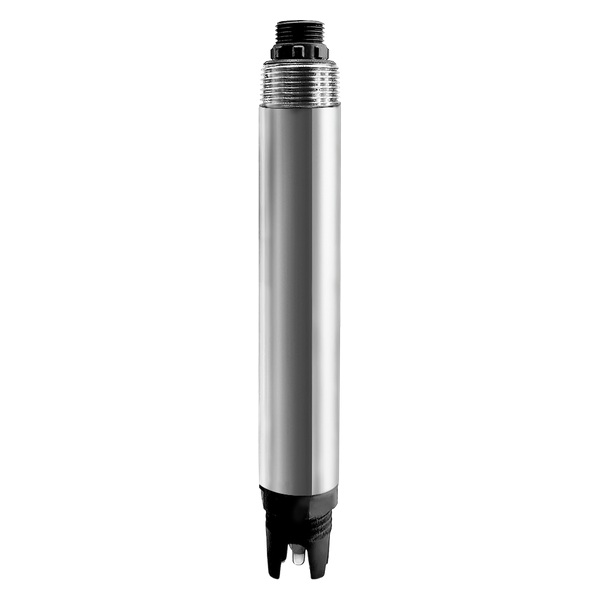
For a repeatable OEM package, use the same tag naming and documented configuration across drawings, software and the bill of materials. A replacement probe should be identifiable by its exact model and ordered interface, not by a photograph of a similar stainless-steel body.
Verified sensor limits and their purchasing implications
The YEX-S1PRO-PH is a candidate for industrial water and wastewater measurement within its specified conditions. The following values describe that model only. They do not establish compatibility with every chemical, cleaning regime or mounting assembly. Confirm the complete exposure and accessories for your skid.
| Item | Model-specific information | Project check |
|---|---|---|
| Model and range | YEX-S1PRO-PH; 0–14.00 pH | Match normal and upset conditions. |
| Resolution and accuracy | 0.01 pH; ±0.1 pH; temperature ±0.1°C | Agree on reference conditions for acceptance. |
| Response | 10 s; response convention not specified | Verify installed timing; do not assume a system response. |
| Supply and consumption | 12–24 VDC; 0.4 W | Include the instrument in the power budget. |
| Output | RS485 (Modbus); 4–20 mA optional | Confirm the ordered configuration and interface document. |
| Environment | 0–50°C, non-freezing; pressure <0.2 MPa | Include cleaning and upset exposures in compatibility review. |
| Housing and protection | 316L + ABS; IP68 | Check chemical compatibility and connector protection separately. |
| Cable | 5 m four-core shielded cable | Confirm length and supplied termination; jacket material is not specified. |
| Mounting | NPT 3/4; immersion arrangement | Check geometry and orientation against the manual. |
| Temperature compensation | Automatic | Do not treat differently conditioned samples as identical. |
Review the YEX-S1PRO-PH online pH sensor and its current application requirements before specifying the final configuration.
Choose the package boundary, not just the lowest probe price
A probe-only supply can suit an experienced OEM with approved holders, power supplies and host software. It leaves mechanical installation, wiring and commissioning with your team. An assembled measurement package needs a clearer list of included accessories and responsibilities; do not assume these accompany the sensor.
For a first integration, request the dimensional drawing, interface document and maintenance instructions. Assign accessories and commissioning explicitly; the comparison below defines purchasing options, not confirmed YexSensor package offerings.
Standardize only after checking the application. A single stock configuration may simplify purchasing, but it should not be imposed on a hot or chemically unsuitable stream. A documented exception is preferable to silently extending the limits of your standard model.
| Purchase scope | Suitable purchaser / retained responsibility |
|---|---|
| Probe only | Experienced OEM with an approved installation. Buyer supplies mounting, power, host configuration and commissioning. |
| Probe plus agreed accessories | Builder needing mounting support. Confirm each included part; buyer still verifies process suitability and host integration. |
| Defined measurement point | Project needing assigned delivery responsibilities. Agree assembly, configuration and acceptance scope separately; availability must be confirmed. |
Three skid situations that change the design
The following are illustrative design situations, not reported customer installations.
For an open reaction tank, the challenge is representative contact during changing levels. The mechanical arrangement should keep the sensing end immersed and accessible without placing it in the reagent jet. Your benefit is a serviceable measurement that supports the intended process decision.
For a transportable treatment unit, the challenge is preserving the configuration between factory testing and site startup. Protect the probe during shipment according to its storage instructions and repeat relevant checks after installation. This gives the receiving engineer an explicit commissioning baseline.
For a compact retrofit, available cabinet inputs and service clearance may dominate selection. Confirm the host interface and retrieval route before ordering. You avoid discovering that an electrically compatible instrument cannot be removed for routine care.
Installation and integration checks before fabrication
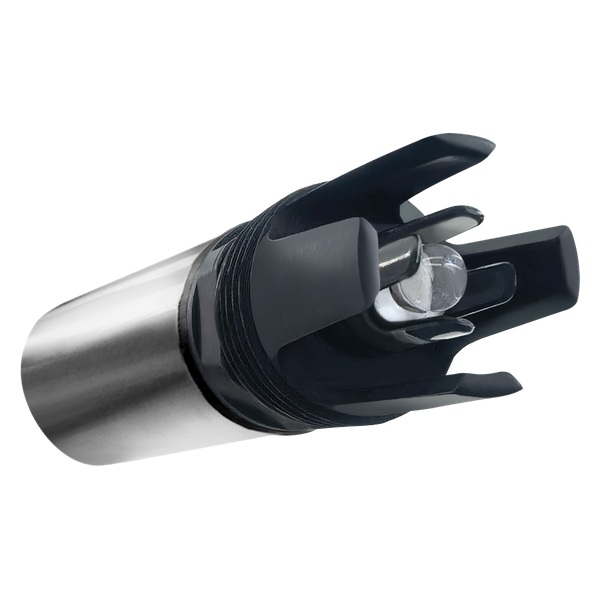
For YEX-S1PRO-PH, the manual requires more than 15 degrees inclination from horizontal and prohibits horizontal or upside-down installation. It also calls for at least one-third immersion, with the sensing tip fully immersed. Check the drawing at minimum operating level, not just with a full tank.
The stated housing materials do not provide a complete chemical-resistance approval. Review wastewater, cleaning solutions and accidental exposures separately. Pressure and temperature limits also apply to the liquid reaching the sensor, including startup and cleaning conditions.
On the electrical side, confirm supply voltage at the instrument under operating load. Match the approved connector markings rather than assuming wire colors are identical between batches. Establish the serial settings and register interpretation from the supplied device documentation; do not reuse another sensor's configuration without verification.
Factory checks and site checks have different jobs
Factory testing should establish that the ordered hardware is present, the sensor communicates and the displayed engineering value matches the approved data interpretation. Record configuration, model identity and the reference conditions used. This is evidence of assembly and integration, not proof that the actual wastewater will behave identically.
Site checks address the installed measurement. Confirm liquid contact, mixing context, service access and comparison with an appropriate reference under aligned sampling conditions. Investigate disagreement before changing calibration.
Include a test of the host's response to maintenance and communication interruption. A plausible number retained after a disconnected instrument must not be mistaken for a current measurement. The responsible controls engineer must define the appropriate equipment response for the process risk.
Prepare a quotation that can become a repeat order
For the sensor and accessories, ask what is standard, what is optional and what is excluded. Confirm the requested delivery date, packaging, probe storage instructions and spare availability with the actual offer. No general product description establishes your project lead time or warranty terms.
For repeat orders, retain the accepted configuration and document any proposed change in connector, firmware, interface or accessory. An apparently small substitution can require another receiving or integration check.
If you are comparing complete skid quotations, compare equivalent measurement duties. A sensor supplied without a holder or host configuration is not the same deliverable as a commissioned measurement point.
For commissioning issues, investigate pH fluctuations after dosing and assess bypass transport delay where sampling is remote.
Discuss Your Measurement Requirement
For your skid configuration review, provide the wastewater description, normal and upset conditions, mounting sketch, host interface and required quantity.
Review the YEX-S1PRO-PH product configuration and Send Your Project Requirements for a project-specific discussion.
FAQ
Q1. Does this pH sensor control a chemical dosing pump directly?
No. The YEX-S1PRO-PH provides measurement data; the PLC or other suitable controller implements the equipment logic. For a neutralization skid, specify the host input, measurement-validity handling and control responsibilities separately. Ask the equipment supplier to identify which parts of the measurement and control package are included before comparing project quotations.
Q2. Does automatic temperature compensation remove every temperature effect?
No. Temperature compensation does not make differently conditioned process samples chemically identical. Compare online and reference measurements under documented sampling and temperature conditions. When purchasing a skid measurement package, define the temperature exposure and reference procedure rather than treating automatic compensation as a guarantee that all sample results will match.
Q3. Is the stated 10-second response the total skid response?
No. The manual lists a 10-second sensor response, but does not define the complete process response. Mixing, transport and host processing add their own effects. For equipment selection, assess the entire measurement path and verify the installed behavior; do not use that specification alone to set an automatic dosing sequence.
Q4. When is YEX-S1PRO-PH a candidate for this project?
It is a candidate when the water chemistry, installation and service conditions are compatible with the selected configuration, including the published 0–50°C non-freezing environment and pressure below 0.2 MPa. Provide credible upset and cleaning conditions as well as normal values. Obtain application confirmation before committing to the standard skid design.
Q5. Should every skid use the same mounting arrangement?
No. A common instrument configuration can simplify purchasing, but mounting depends on liquid level, mechanical access and the intended measurement point. An open tank and a constrained skid enclosure may require different holders or sampling arrangements. Standardize the documented requirements first, then approve the physical arrangement for each equipment design.
Q6. Can I assume optional 4–20 mA is supplied alongside RS485?
No. The manual identifies RS485 and an optional 4–20 mA output, so the ordered configuration needs explicit confirmation. State the actual host requirement in the quotation request and approved equipment list. Do not infer simultaneous outputs, loop characteristics or connector details from a different model or from the word optional.
Q7. What should an OEM send for a pH monitoring package quotation?
Send the water or wastewater description, expected pH and temperature conditions, installation sketch, host interface and quantity. Include cleaning exposure and required accessories. For pH monitoring for wastewater neutralization skids, these details allow the supplier to distinguish a probe-only request from a complete measurement-point requirement and identify unresolved compatibility questions.
Q8. What should be confirmed before placing a repeat order?
Confirm that the model, interface, accessories and documentation match the accepted configuration. Check delivery, packaging, storage, spare and after-sales terms in the current offer. If any component has changed, agree on the necessary verification before shipment. A repeat purchase should reproduce an approved measurement duty, not merely a familiar product name.
Summary
For a neutralization skid, the useful purchase is a defined, maintainable measurement point. Select YEX-S1PRO-PH only where the medium and installation fit its verified limits, and keep the sensor, mechanical arrangement and control responsibilities separate. Confirm the host interface and service access before fabrication, then distinguish factory integration checks from site verification. A clear configuration record supports repeat orders without treating every wastewater stream as identical. Share the process conditions, mounting sketch, host requirement and quantity with YexSensor to establish the appropriate sensor and accessory scope.


