


 Chinese
 Spanish
 French
 Russian
 German
 Portuguese
 Indonesian
 Thai
 Vietnamese
 Arabic


A benchtop pH meter vs portable pH meter comparison starts with one question: can the sample wait? Choose a portable meter when the operator needs pH at collection and transport would change the sample or delay the decision. Choose a bench station when the test method permits transported samples, the route has been validated, and a technician needs to process a queue, repeat results or deliver records. If both tasks matter, test them separately before buying two meters.
What happens to the sample before anyone reads it?
A bottle drawn from an aerated treatment stage may reach the laboratory at a different temperature or after further gas exchange. Its pH can change during that interval. A careful laboratory reading then describes the bottle at the bench. For an operator adjusting a process on the strength of that reading, the difference between collection time and measurement time matters as much as the last digit on the display.
Map the worst routine journey, including the wait for a technician. For example, a fifteen-minute drive followed by a forty-minute queue puts the first bench reading nearly an hour after collection. Those times are illustrative. To qualify your own route, measure at collection and again after the usual transport and queue. Repeat across the water types and shifts that matter. Set an allowable difference from the intended decision and the approved test method before inspecting the results.
Benchtop pH meter vs portable pH meter: compare the supplied specifications
Start with the expected pH range and the smallest difference that would change an operating decision. Read the accuracy figure with its unit. A specification expressed as a percentage of full scale needs the manufacturer's full-scale definition before it can be compared with an error stated directly in pH units. A hundredth of a pH unit on the screen tells you the display increment.
Specifications below were checked against the linked YexSensor product pages on 5 November 2026.
| Model | Documented specification | Purchase decision |
|---|---|---|
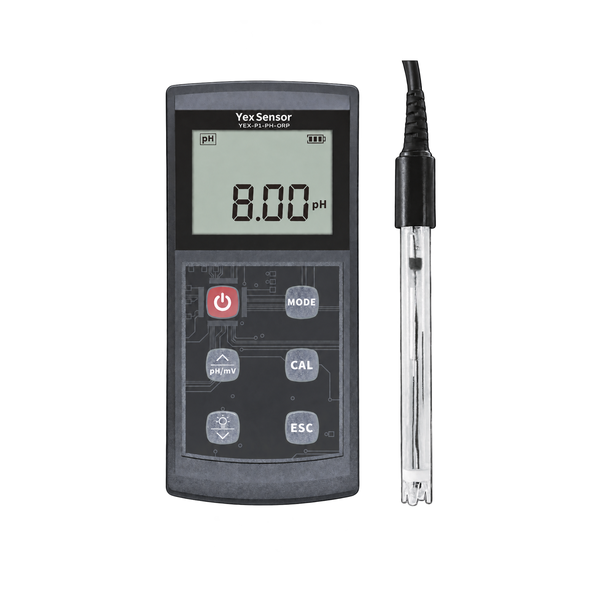
| YEX-P1-PH-ORP | 0.00–14.00 pH range, 0.01 pH resolution, ±0.02 pH accuracy | Check that the field range and decision margin suit the operating point. |
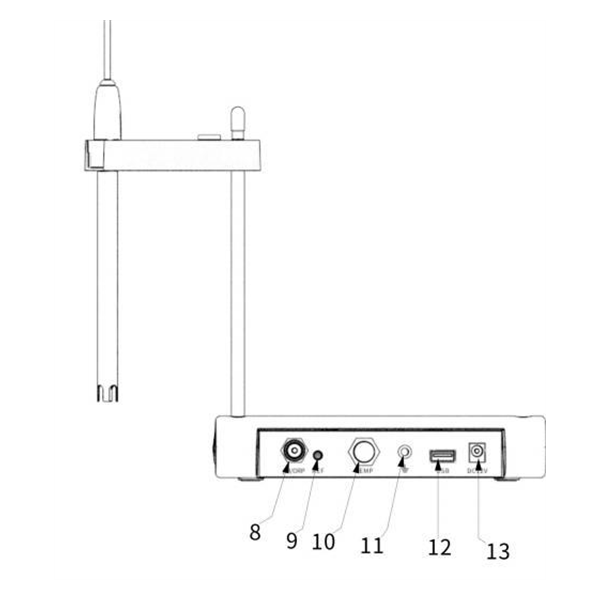
| YEX-P1-PH-ORP | BNC electrode input, 3.5 mm temperature input | Specify both connections for a temperature-compensated route kit. A BNC electrode alone does not supply temperature. |
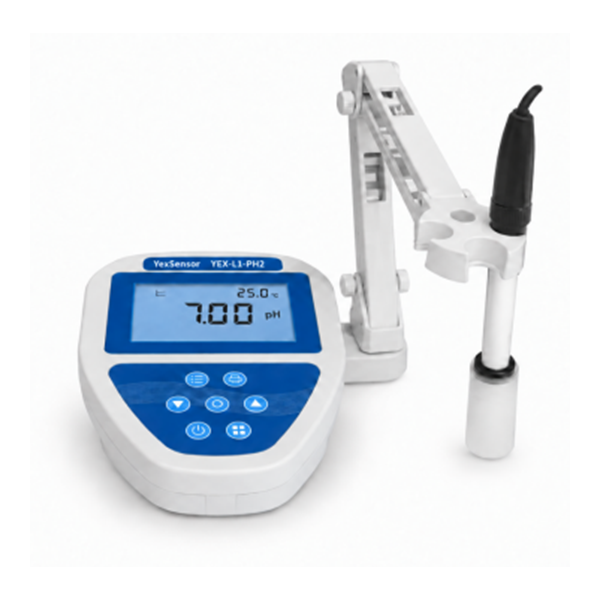
| YEX-L1-PH2 | −2.00 to 16.00 pH range, 0.01 pH resolution, ±0.2% F.S. indication error | Compare the error at the decision point only after establishing how full scale is defined. |
| YEX-L1-PH2 | 256 measurement records, stable-reading lock | Plan how many results accumulate between reviews and how each is assigned to a sample. |
| YEX-L1-PH-ORP | −2.00 to 16.00 pH range, 0.01 pH resolution, ±0.05 pH indication error | Use the error in pH units when assessing a threshold. Validate the complete electrode and sample procedure. |
| YEX-L1-PH-ORP | USB record export, IP54 enclosure | Provide a protected bench and test an exported file before specifying a laboratory data connection. |
| YEX-P1-PH-ORP | 3 × AAA batteries | Include replacement cells for the field route. |
Use the individual specifications when comparing offers: YEX-P1-PH-ORP portable meter, YEX-L1-PH2 benchtop meter and YEX-L1-PH-ORP bench analyzer with USB export. Include the electrode in a performance trial. An instrument that reads buffers successfully may still settle slowly in the actual sample or have a junction that needs frequent attention in dirty water.
Buy for the route, the bench queue or both
| Arrangement | Choose when | Test before ordering |
|---|---|---|
| Portable route | A decision is due before samples reach a staffed bench. | Observe one entire round including buffer check, battery change and sample identification. |
| Central bench | Transported samples remain suitable and arrive within a demonstrated holding interval. | Run a peak delivery of bottles through measurement, rinse and record review. |
| Field and bench pair | Immediate process decisions and later laboratory investigation both have operational owners. | Compare at the same location first, then repeat after transport to distinguish instrument effects from sample change. |
Time one complete sample cycle before estimating capacity: identification, rinsing, a defensible endpoint, saving the result and restoring the electrode. In a peak batch, the last bottle may exceed the permitted interval even though the first one passed. Use the same sample and record requirements when comparing the laboratory instrument range with the portable water-quality instrument range.
Two jobs that lead to different purchase orders
A treatment operator walks several sampling points
The operator needs to know whether the samples collected upstream and downstream of treatment differ during the same operating period. Take the portable meter, record the point and time at each stop, and use the same rinse and endpoint procedure. The P1 model takes three AAA batteries. Budget for a spare set and a clean place to open the case. Test the physical arrangement with gloves: can the operator hold the sample, support the electrode and record the value without setting a connector on a wet surface?
When the upstream and downstream samples are collected far apart in time, the pair may represent different operating conditions. Record changes in flow or dosing between stops. Where the decision needs simultaneous observations or continuous feedback, a single portable route cannot deliver that information. Reconsider the sampling plan before upgrading the meter's nominal precision.
A central laboratory receives bottled process samples
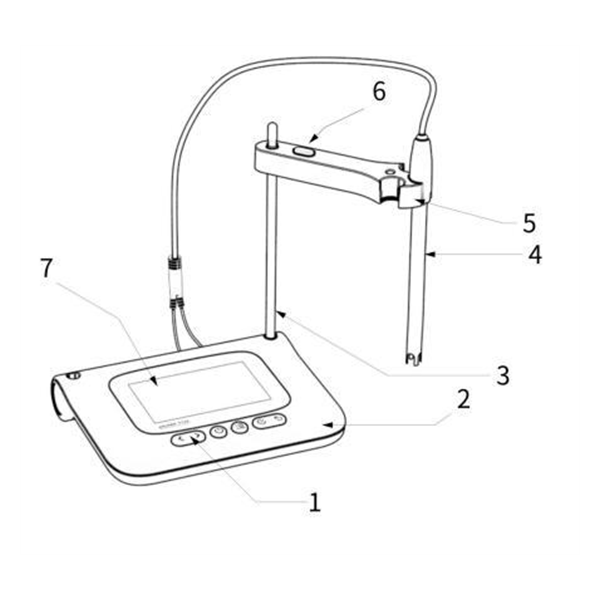
Several departments share one bench. A technician needs to distinguish two samples from the same line taken on different shifts and find the calibration used for each result. The L1-PH2 can serve a local worksheet process if the operator can reconcile each saved result with its bottle. Where an electronic handover is essential, trial the USB export on the L1-PH-ORP. Load the file into the receiving system and trace one row back to the bottle and the calibration record. Include any manual join in the work instruction.
Commission the electrode, sample route and result record together
At the bench, lay out a clean buffer area, a rinse vessel, a waste container and a stable holder that leaves clearance between the glass bulb and the vessel bottom. On the route, find a protected place to perform the same tasks. Check the vessel opening and available depth with the actual electrode and temperature sensor. A connector that fits the meter tells you nothing about whether the junction will contact liquid in your smallest sample.
Choose a supported buffer group that brackets the working region under the approved method. The EPA field pH procedure, section 3.2, illustrates bracketing buffers, recording temperatures and checking calibration with a separate measurement. Follow the delivered meter's sequence. Record buffer lot, temperature and time, use fresh portions, and keep used liquid out of the stock container. Follow the electrode instructions for storage and cleaning.
For a two-meter acceptance trial, first have both operators measure adjacent portions of the same freshly mixed sample at the same location and temperature. Keep sample IDs, instrument and electrode IDs, times and both original readings. Then repeat the normal field-to-bench route with a new split. Agreement in the first test followed by a difference in the second points the investigation toward transport, queue time and handling. Disagreement at the first step calls for checking the buffers, probes, temperature inputs and endpoints before blaming transport.
If the comparison instrument is an installed transmitter, use the online pH versus handheld comparison guide to check the sampling point, timing and receiving display. Keep that investigation separate from the two-meter transport trial.
RFQ details that make offers comparable
Document the sample matrix, expected pH and temperature, vessel geometry, daily volume, peak arrivals and longest routine delay. Include the required decision time, the accepted comparison margin and an example of the final record. List the meter, pH electrode, temperature probe, holder or case, power supplies, buffers, cleaning and storage solutions as separate lines. Identify which items are supplied and which the site already stocks. For shared instruments, include replacement electrode identification and the procedure for verifying a replacement before returning it to duty.
Match the meter to your sampling route
Include the collection points, longest wait, sample vessel and required record format. For a field route, identify the proposed portable pH meter and electrode configuration.
Send Your Project RequirementsFrequently asked questions
Q1. Can temperature compensation correct a delayed pH result?
A1. No. Temperature compensation adjusts the electrode response, as explained in Hamilton's pH temperature guidance. It cannot reconstruct sample chemistry before transport. Record temperature together with collection and measurement times. For a decision about water at the valve, compare immediate and transported portions under the actual route conditions before accepting a bench procedure.
Q2. Why do two meters agree in buffers but disagree on process water?
A2. Buffers challenge the measuring system in defined solutions. Process water may differ in temperature, composition or the time the electrode takes to settle. Use the same fresh sample at the same location first. If a difference persists, check electrode condition, junction contact and temperature input before moving either instrument's calibration to match the other.
Q3. Does 0.01 pH resolution support a 0.01 pH acceptance margin?
A3. The display step alone gives no such assurance. For example, the portable P1 specifies a larger accuracy figure than its smallest displayed increment. Include the reference method, sample variability and the consequence of a wrong decision when setting a margin. Test the assembled meter and electrode with representative water near the actual decision point.
Q4. Benchtop pH meter vs portable pH meter: which fits one sample per shift?
A4. Choose by the deadline and condition of that sample. One bottle collected at a distant site may justify a portable meter if staff must act before it reaches the laboratory. One stable sample at a staffed laboratory may fit an existing bench station. Include the operator time required to check calibration and maintain either electrode.
Q5. When can one portable instrument cover the laboratory too?
A5. It can serve both locations when the electrode fits the samples, staff can record results reliably and neither job needs the instrument while it is elsewhere. Try the busiest shift with the actual sampling schedule. Count missed or delayed measurements as well as time spent preparing, transporting and checking the meter between users.
Q6. Which bench model suits an electronic handover?
A6. Evaluate the L1-PH-ORP when the laboratory needs USB record export. Before purchase, import a representative file into the intended worksheet or receiving system and check how it links to sample identity and calibration. For the PH2, the published storage capacity supports local records. Build the proposed retrieval procedure around a demonstrated feature of that model.
Q7. What should a distributor put in the electrode and consumables package?
A7. List the sample types, smallest vessel opening and service conditions beside each electrode. Itemize the temperature sensor, compatible buffers, electrode storage solution and replacement parts. Identify who replenishes them and how a replacement is checked. For a portable kit, have the sampler pack and unpack the complete order to check protection and access.
Q8. What evidence should the buyer retain at acceptance?
A8. Keep the instrument and electrode identifiers, buffer details, original readings, sample temperatures, timing and disposition of any failed check. For a paired workflow, label same-location comparisons separately from transported splits. Have the future operator reproduce a measurement and the reviewer retrieve it from the agreed record system before signing the handover.
Summary
Measure at collection when the operating decision cannot wait or the sample changes on its way to the laboratory. Where the method permits transported samples, a validated route opens the choice of a shared bench station. Select the PH2 for a suitable local record workflow or evaluate the L1-PH-ORP when USB export matters. Qualify the portable P1 with the actual vessel and electrode. Put the sample route, acceptance margin, accessories and record handover into the purchase specification.


