Chinese
 Spanish
 French
 Russian
 German
 Portuguese
 Indonesian
 Thai
 Vietnamese
 Arabic


Turbidity meter condensation should be investigated before an unexpected cold-water result is used to adjust calibration or reject an instrument. Establish whether moisture is on the sample-cell exterior or inside a recently moved meter, then check cell condition, a suitable verification standard and the sample's elapsed handling time. A dry optical surface is necessary, but it does not prove that the water has remained unchanged.
For laboratory managers, distributors and project buyers, the practical decision is whether to improve the measurement workflow, replace a damaged cell or investigate the analyzer. Buying a wider range or selecting longer averaging does not establish which of those actions is appropriate. The evidence must connect the observed problem with the part of the measurement that changed.
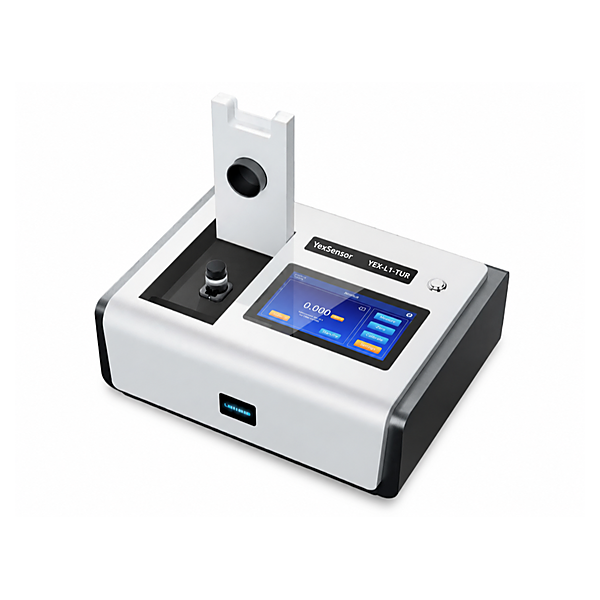
Why a cold-sample problem can lead to the wrong purchase
An unusual reading can originate outside the water. Moisture, fingerprints, scratches or residue on a sample cell affect the optical path. Meanwhile, bubbles and moving particles can change the sample presented to the instrument. These mechanisms require different checks even when they appear as the same complaint: an unstable or unexpectedly high result.
Adjusting calibration to force agreement with one affected sample can carry its handling error into subsequent measurements. Replacing the analyzer may leave the same faulty cells or transfer procedure in use. Keep the original result and handling observations, investigate the conditions, and document the reason for accepting or rejecting a repeat.
EPA field turbidity guidance identifies cell condensation and moisture in the holder as measurement interferences and calls for dry cells. Its field procedure is informative here; it does not establish the reporting method or acceptance limits for every laboratory.
Which YEX-L1-TUR specifications matter for cold samples?
The YEX-L1-TUR benchtop turbidity analyzer has documented cell, operating-environment and measurement-mode requirements. Use those requirements to specify the laboratory setup; do not reinterpret an instrument operating-temperature range as permission to heat any water sample.
| Model and parameter | Published specification | Consequence for selection and acceptance |
|---|---|---|
| YEX-L1-TUR: operating environment | 5–40 °C | Keep the instrument within its operating environment and distinguish instrument acclimation from sample preparation. |
| YEX-L1-TUR: sample cell | Round borosilicate glass, 95 × 25 mm; minimum sample volume 25 mL | Order the specified cells and adequate sample volume; another meter's vial dimensions are not interchangeable. |
| YEX-L1-TUR: measuring range and accuracy | 0–4000 NTU; 0–1000 NTU: ±2% + 0.01 NTU; 1000–4000 NTU: ±5% | Set the relevant verification points and acceptance criteria for the working range rather than using the total span alone. |
| YEX-L1-TUR: resolution | 0.001 NTU at the lowest range | Displayed increments do not establish uncertainty or prove that a small change is caused by the process. |
| YEX-L1-TUR: reading modes | Single, continuous and Rapid Settling Turbidity; adjustable response or averaging time 8–60 seconds | Match the mode to sample behavior; an averaging setting cannot repair a wet cell exterior. |
The product instructions also require a stable, dry bench and closed chamber cover during measurement. An instrument moved from a cold location should reach room temperature before power-on to prevent optical-system condensation. This instruction concerns the instrument; it is not a universal sample-warming procedure.
Compare the responses to turbidity meter condensation
Select a response from the observed condition. A lower reading after intervention is useful evidence, but it is not sufficient by itself to prove that the intervention recovered the original sample value.
| Observation | Evidence to collect | Appropriate action | Decision boundary |
|---|---|---|---|
| Droplets reform on the cold cell exterior | Exterior condition before insertion and after the reading; elapsed time | Follow the approved dry-cell handling procedure and document the repeat | If the exterior cannot remain dry, stop treating repeats as directly comparable measurements |
| Readings fall as the prepared sample stands | Mixing history, visible solids, time and behavior in a second checked cell | Investigate settling and the selected reading mode | Waiting for bubbles to disappear can also allow particles to settle |
| The meter has just entered a warmer room | Transport history, instrument acclimation and standard verification | Apply the instrument's acclimation instructions before operation | Wiping the sample cell cannot resolve internal optical-system moisture |
| Standards pass but field and laboratory results disagree | Sampling point, timing, transport, optical method and reporting unit | Use a controlled field-to-laboratory comparison | Do not adjust either instrument solely to match the other |
Correct a demonstrated cell or environment problem first. Change the sampling or measurement location when sample integrity cannot be maintained within the required method. Consider instrument service when verification remains unacceptable after the documented handling checks.
Three conditions that require different decisions
Cold, clear water arriving at a warm laboratory
In this illustrative situation, exterior fog appears during repeated low-level measurements. Inspect and dry the cell as specified, preserve its orientation and note whether moisture returns. Compare the relevant standard check with the sample sequence. A failed sample measurement alongside an acceptable standard points the investigation toward sample handling; it does not, by itself, certify the sample result.
A sample with visibly settling solids
Here, longer standing time changes the particle distribution while the exterior is being managed. Record mixing and measurement timing, evaluate the documented reading modes and check whether the chosen handling procedure represents the required sample. An apparently stable final display can describe the settled portion rather than the water originally collected.
A bench instrument relocated from cold storage
The first decision concerns instrument readiness. Follow the stated acclimation instruction, establish a dry operating environment and verify performance before testing samples. If abnormal verification persists, preserve the observations for service assessment. Do not open the optical system or apply heat as an improvised repair.
Build a repeatable handling and verification record
A useful investigation changes one controllable factor at a time while keeping the timing visible. Record the sampling point and time, arrival time, relevant sample and room conditions, cell identity and exterior condition, preparation steps, reading mode, averaging setting, result and any rejection reason. Use the laboratory's approved method for permitted preparation and repeat measurements.
First inspect the selected cell and check the relevant verification standard. Prepare the sample using the specified volume and handling sequence, keep the optical exterior clean and dry, align the cell mark and close the cover. Inspect the exterior again when removing the cell. If a repeat is justified, retain the original observation and record what changed.
A second checked cell can help distinguish a bottle-specific problem from a common sample effect. Its comparison must account for the additional elapsed time and sample preparation. If both the cell and waiting time change, the result cannot isolate one cause. Where the wider question is process disagreement, use the guide to comparing benchtop and online turbidity readings.
The YEX-L1-TUR stores up to 40,000 records and supports USB export. Link exported results to the handling record through the laboratory's sample identifiers and timestamps. The meter record alone will not explain an undocumented wet exterior or transport delay. The reserved RS-485 connection has no standard protocol assigned; define any integration requirement separately before ordering.
Specify the acceptance task and replacement items
A technically useful purchasing package explains what the laboratory needs to distinguish. Provide the matrix, expected minimum and maximum turbidity, required method and unit, lowest verification point, daily workload and available sample volume. Add the cold-sample transport and arrival conditions, known settling behavior and the permitted handling window.
List the analyzer, compatible cells, verification and calibration standards, cleaning materials, adapter and required records. Define standard traceability, validity period and storage requirements in the purchase specification. Match the ordered mains adapter and plug to the destination. Printing or remote-transfer options should have their own configuration and acceptance requirements.
For acceptance, combine the agreed standard checks with representative sample handling and a complete result record. Set criteria before the test and retain failures as well as successful repeats. The required method and project quality plan determine the limits; a neat display or a single favorable comparison is not a substitute. Broader analyzer selection is covered in the laboratory turbidity meter selection guide.
Specify your cold-sample measurement task
Provide the sample matrix, expected turbidity, required method and unit, transport conditions, handling window, daily workload and acceptance criteria. Include cell and standard requirements and the desired data-export workflow for the YEX-L1-TUR benchtop turbidity analyzer.
Frequently asked questions
Q1. Can condensation change a turbidity reading after successful calibration?
A1. Yes. A successful calibration does not prevent moisture forming on the exterior of a later sample cell. That moisture affects the optical path through which the sample is measured. Inspect the cell before and after reading, verify the relevant standard and preserve the handling sequence. Resolve the identified handling problem before deciding whether calibration adjustment or instrument service is justified.
Q2. Can warming a cold sample change the result we are trying to measure?
A2. It can change the conditions under which the result is obtained. Temperature adjustment and additional waiting may be accompanied by bubble formation, settling or other sample changes. Use the governing method to decide what conditioning is permissible and record temperature and elapsed time. Distinguish this decision from acclimating a cold instrument before power-on; the product's instrument instruction does not validate every sample treatment.
Q3. How can we distinguish exterior condensation from bubbles and settling?
A3. Observe the cell exterior separately from the liquid and retain a timed sequence of the checks. Reappearing external moisture, visible bubbles and changing particle distribution are different observations. A second checked cell and a suitable verification standard can help investigate the pattern. Account for additional preparation and waiting time, because changing several conditions together prevents a clear attribution of the result.
Q4. When is field measurement preferable to transporting a sample to the bench?
A4. Consider field measurement when transport or waiting prevents the sample from representing the required measurement, provided the field instrument, environment and procedure suit the task. Confirm its optical method, reporting unit, range, verification and records. Portability alone does not establish equivalence with the laboratory analyzer. Procurement should compare the complete sampling-to-result workflows rather than selecting a handheld instrument simply to shorten travel time.
Q5. Will longer averaging or RST mode remove a condensation error?
A5. Neither setting establishes that a wet optical exterior is acceptable. Averaging changes how readings are combined, while Rapid Settling Turbidity mode addresses a particular sample behavior. The YEX-L1-TUR provides these choices, but the cell still requires proper handling. Investigate moisture, timing and particle movement first, then select and verify the mode under the approved procedure rather than choosing the smoothest display.
Q6. Which sample cells and standards should be included in the order?
A6. Specify the YEX-L1-TUR's round borosilicate cell, 95 × 25 mm, and plan for at least 25 mL of sample per prepared cell. Select calibration and verification standards for the actual working range, with documented validity and storage requirements. Confirm quantities, replacement cells and cleaning materials in the order. An accessory supplied for a different portable instrument should not be assumed compatible.
Q7. What should a cold-sample acceptance check demonstrate?
A7. It should demonstrate the agreed instrument verification, cell handling and representative-sample workflow within the project requirements. Record preparation, time, exterior condition, measurement mode and the decision to retain or reject results. Include representative low-level or settling samples where relevant. Agree the tolerances and method before testing; neither a universal waiting period nor a favorable repeat can establish acceptance for every matrix.
Q8. Which records help a supplier investigate turbidity meter condensation?
A8. Include the sample matrix, expected range, required method and unit, sampling and arrival times, relevant temperature conditions, known settling behavior and existing verification records. Describe the cells, standards, current handling sequence and the observed fault pattern. These inputs help distinguish replacement consumables from a new analyzer or a workflow change, and define the documentation and acceptance test needed for a comparable quotation.
Summary
Manage cold-sample turbidity by separating cell moisture, instrument readiness and changing water conditions. The YEX-L1-TUR provides documented laboratory cell requirements, measurement modes and export functions, but valid results still depend on the complete handling and verification path. Specify the method, working range, transport conditions, cells, standards and acceptance record before deciding to recalibrate, replace consumables or purchase another instrument.