


 Chinese
 Spanish
 French
 Russian
 German
 Portuguese
 Indonesian
 Thai
Thai Vietnamese
 Arabic

If you need pulp and paper wastewater monitoring sensors, you must separate fiber loss, chemical carryover, organic load and biological-treatment problems. This guide explains how to specify YexSensor pH, TSS, COD, DO and conductivity monitoring points.

Why Buyers Search for pulp and paper wastewater monitoring sensors
Mill wastewater changes with pulping route, bleaching, paper grade, recycled fiber, wet-end chemistry and cleaning. Buyers search for pulp and paper wastewater monitoring sensors because a single final-outlet instrument cannot explain whether a disturbance began with fiber loss, a chemical spill, overloaded primary clarification or unstable aeration.
The practical objective is to protect treatment while reducing product and fiber loss. pH and conductivity help identify chemical events, TSS supports fiber and solids tracking, UV254 COD provides an organic-load trend when correlated, and DO supports biological aeration. The final selection must follow the actual mill process rather than a generic five-parameter package.
YexSensor Monitoring Solution and Engineering Limits
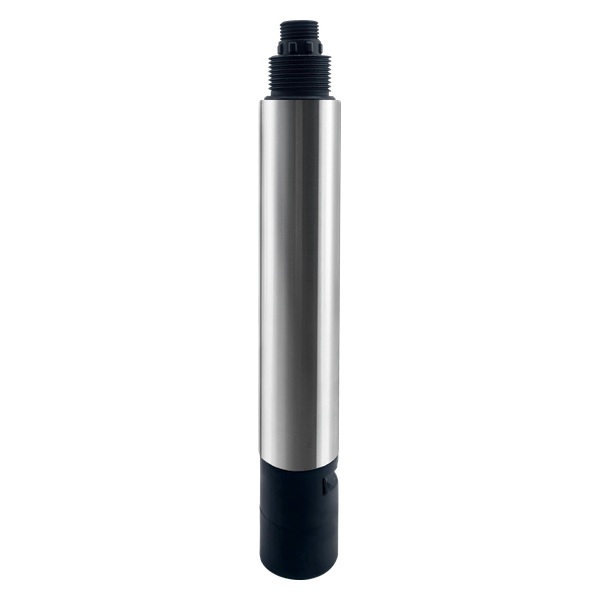
YexSensor offers YEX-S1-PH, YEX-S2-TSS-S, YEX-S1Pro-COD, YEX-S1-RDO and YEX-S1-EC with digital integration options. These instruments can cover equalization, clarification, aeration and treated-water points. Optical fouling, fibers, colored liquor, bubbles and changing wastewater composition must be included in the installation and validation plan.

Technical Parameters and Procurement Checks
| Selection item | Official specification or engineering meaning | Procurement check |
|---|---|---|
| pH performance | 0.00–14.00 pH; 0.01 resolution; ±0.1 pH | Define chemical-spill and biological-process alarm bands |
| TSS range | YEX-S2-TSS-S: 0–2000 mg/L; 0.1 mg/L resolution | Confirm fiber and sludge maxima at each proposed point |
| TSS accuracy note | ±5%, depending on sludge homogeneity | Specify site correlation with gravimetric TSS samples |
| COD trend ranges | 0–200, 0–500 or 0–1500 mg/L; customizable | Select from mill-specific laboratory COD data |
| COD principle | UV254 absorption with turbidity compensation | Evaluate color and changing organic composition |
| DO range | YEX-S1-RDO: 0–20.00 mg/L | Define aeration control and low-DO response separately |
| DO accuracy | ±2%; T90 <30 seconds | Include basin mixing and sensor-position checks |
| Conductivity options | 0–20 μS/cm to 0–200 mS/cm configurations | Use chemical and white-water data to select the range |
| Communication | RS485 Modbus RTU | Map quality, maintenance and communication alarms |
| Maintenance scope | Optical cleaning and reference comparisons required | Provide safe access, water and cleaning tools at each point |
Recommended Monitoring Points and Operating Decisions
Process drain and equalization
Use pH and conductivity to identify chemical carryover and production changes before they reach biological treatment. Link alarms to source inspection or controlled transfer.
Primary clarification
Use TSS trend to detect fiber escape and changing solids removal. Select a point with representative flow and a cleaning arrangement that handles fibers.
Biological treatment
Measure DO in a mixed, representative aeration zone and interpret it with loading, airflow and ammonia data. Avoid placement immediately beside diffusers.
Final treatment trend
Use turbidity or TSS for solids carryover and UV254 COD for organic trend after site correlation. Preserve the required laboratory methods for compliance decisions.
How to Select Sensors for pulp and paper wastewater monitoring sensors
Start with the operating decision at each point, then select the parameter and range. A sensor at raw influent may protect equalization from a shock load, while a sensor after treatment may verify stability or trigger confirmation sampling. These are different duties even when they use the same parameter. Record the minimum, normal, warning and credible maximum values instead of asking for the widest available range.
Match the measurement principle to the matrix. Optical windows can be affected by coating, color, bubbles and changing particles. Electrodes can be affected by deposits, extreme chemistry and unsuitable sample conditions. Ion-selective measurements require review of pH, interfering ions and calibration practice. A catalog range alone does not prove that a sensor is suitable for an untreated industrial stream.
Installation and Sample-Point Design
Install every probe where the water represents the decision. Avoid stagnant corners, settled sludge, surface foam, trapped air and direct chemical injection before mixing. For aggressive, pressurized or highly variable streams, use an engineered bypass with isolation, pressure control, drainage, flow indication and safe access. The bracket should protect the probe while allowing one technician to remove and clean it.
Define wet-state logic whenever a channel, sump or batch tank can drain below the sensing surface. Separate process alarms from dry exposure, cleaning, calibration and communication faults. Provide cable protection against vehicles, pumps and chemical handling, and check wetted materials against the complete stream rather than against pH alone.
PLC, SCADA and Gateway Integration
For RS485 Modbus RTU, confirm power polarity, A/B convention, slave address, baud rate, parity, stop bits, data type, byte order, engineering unit and register map for the ordered revision. Use unique addresses, appropriate bus topology and separation from motor or variable-frequency-drive cables. Test power-cycle recovery and communication-loss behavior before handover.
Store the raw reading, unit, temperature, configured range, quality flag and maintenance state. Do not let SCADA hold the last valid value without a stale-data alarm. Warning and action limits need delays or rate-of-change rules that reflect process transport time, tank mixing and harmless short spikes. Automatic control also needs manual override and defined fail-safe behavior.
Calibration, Cleaning and Acceptance
Create a maintenance plan for each sensor principle. Specify who cleans, what material is used, when calibration or reference comparison is required and how the value is marked during service. Cleaning frequency should be adjusted from site records after commissioning; describing any industrial wastewater probe as maintenance-free creates an avoidable data-quality risk.
Factory acceptance should confirm model, range, output, cable, accessories, documents and communication. Site acceptance should add installation inspection, stable-value review, paired reference samples across normal and upset conditions, alarm simulation and fault testing. Preserve the initial correlation, because later product, chemical or treatment changes may alter the relationship between an online optical or ion-selective value and the laboratory method.
Before handover, give operators a one-page response matrix for every tag. It should show the normal condition, warning condition, confirmation check, immediate process action, escalation contact and rule for returning the value to service. This prevents a technically correct signal from becoming an unused dashboard number.
How to Request a Comparable Quotation
Send the process flow diagram, stream source, batch schedule, minimum, normal and maximum values, temperature, pressure, pH, conductivity, solids, organic load, oils, chemicals and cleaning agents. Add the monitoring purpose, reference method, installation drawing, cable distance, power, PLC or gateway, quantity, destination and required certificates. Representative sample data makes technical review more useful.
Ask suppliers to identify the exact model, range, measured and calculated outputs, wetted materials, cable, connector, mounting, flow cell, automatic cleaning, controller, standards, spares, drawings, protocol document, warranty, lead time and exclusions as separate lines. Compare the installed, maintainable measurement point—not only the probe price—so quotations remain comparable during engineering and commissioning.

Frequently Asked Questions About pulp and paper wastewater monitoring sensors
Which sensors are most useful in pulp and paper wastewater?
pH, TSS, COD trend, dissolved oxygen and conductivity commonly support different decisions. The correct priority depends on pulping, bleaching, recycled fiber, paper grade and treatment design. Provide the process map and historical data so YexSensor can assign each parameter to equalization, clarification, aeration or final monitoring instead of duplicating instruments. Rank those parameters by the cost of a missed event, then state the chosen range, monitoring point and operator response in the RFQ.
Can online TSS show fiber loss?
It can provide a useful solids trend when the optical response is correlated with representative fiber-containing samples. Particle size, color and sludge composition can change the relationship. Install the sensor where flow is mixed, collect paired gravimetric samples, and define when an alarm triggers production inspection, clarifier review or confirmation sampling. The quotation should name the measured species or optical response, applicable range and intended use so the value is not mistaken for compound identification.
Does UV254 equal laboratory COD in mill wastewater?
No automatic equivalence should be assumed. Colored compounds and changes in wood source, pulping or bleaching can alter UV absorbance independently of laboratory COD. Use YEX-S1Pro-COD for continuous trend after a site study, retain the reference method required by the project, and review the correlation after significant production changes. Approve the location only after checking normal and upset concentrations, hydraulic representativeness, isolation, cleaning access and a nearby reference-sampling point.
Where should a DO sensor be installed in the aeration basin?
Choose a mixed zone that represents the biomass, away from direct diffuser bubbles, inlet jets, dead corners and a local chemical feed. Verify the location under different loads and blower states. The procurement drawing should show depth, bracket, retrieval path, cable protection and how operators compare the online value with a portable reference. Define the reference method, sample pairs, concentration points and acceptable difference before FAT or site acceptance begins.
How do fibers affect optical sensors?
Fibers can collect on optical windows or brackets, create changing scatter and increase cleaning demand. A self-cleaning feature may help but does not remove the need for inspection. Ask for accessible mounting, define cleaning criteria, and record maintenance states in SCADA so cleaning movement is not interpreted as a process upset. Order the required cleaning or conditioning accessories explicitly and assign who will inspect, verify and return the measurement to service.
Should conductivity be used as a TSS substitute?
No. Conductivity measures ionic load, while TSS represents suspended mass; they may move together during one mill event but are not interchangeable. Use conductivity for chemical or dissolved-load changes and a TSS sensor for solids. Any empirical relationship should be site-specific, documented and limited to the process conditions used to build it. Write the interpretation into the alarm procedure, including confirmation sampling, process inspection and the condition for resuming automatic operation.
Can all sensors share one Modbus network?
Yes, compatible RS485 Modbus RTU devices can share a properly designed bus with unique addresses and consistent serial settings. Confirm register maps and power requirements for each ordered model. During acceptance, test disconnection of one sensor, stale-data handling and recovery so a single field fault does not silently freeze multiple process values. Request written confirmation of matrix suitability, wetted materials, consumables and expected maintenance for the exact model and ordered range.
How often should pulp and paper sensors be cleaned?
There is no universal interval because fiber, resin, biological growth and chemical coating vary by point. Begin with frequent inspection during commissioning, then adjust from observed fouling and reference drift. The quotation should include cleaning tools or options, safe retrieval hardware, spare optical or electrode parts and clear instructions for post-clean verification. Include registers, units, stale-data behavior, maintenance flags, power-cycle recovery and communication loss in the PLC acceptance test.
What should a pulp and paper wastewater RFQ include?
Send mill type, products, treatment diagram, fiber and solids data, COD, pH, conductivity, temperature, chemicals, operating schedule, monitoring points, mounting, utilities, PLC and laboratory methods. State whether each signal supports spill detection, chemical dosing, aeration, fiber-loss review or discharge sampling, and request itemized accessories and commissioning scope. Ask for separate prices for probes, mounting, sample conditioning, cleaning, controller or gateway, standards, spares, documents and commissioning.

Summary
Pulp and paper wastewater monitoring works when each parameter explains a process risk: pH and conductivity for chemical carryover, TSS for fiber or sludge loss, DO for aeration condition and UV254 COD for a validated organic-load trend. Fiber buildup, colored liquor and production changes make cleaning and reference comparison essential. For a project-specific YexSensor quotation, send the mill process, paper grades, treatment diagram, historical ranges, chemicals, sample-point drawings, PLC requirements, laboratory methods and the operating response expected from each monitoring point.



