


 Chinese
 Spanish
 French
 Russian
 German
 Portuguese
 Indonesian
 Thai
 Vietnamese
 Arabic


pH reading fluctuations after chemical dosing do not automatically mean the sensor has failed. Check when the movement occurs, what liquid reaches the probe and whether the host displays current data. Your next step should follow that evidence, rather than an immediate replacement order or an arbitrary calibration adjustment.
Separate a real process change from a measurement problem
For a dosing-equipment builder or service integrator, the difficult question is whether the measurement is wrong or the process is moving. A sensor near the injection point may correctly detect a local chemical plume while giving a poor indication of the mixed tank.
Begin with the event sequence. Record dosing activity, mixer state, liquid level, pH, temperature and the host timestamp where available. Keep the original trend rather than saving only a screenshot of the most dramatic peak.
Do not alter the chemical-control sequence solely to make the graph look smoother. The process engineer should approve any operational test, especially where a change could affect containment, discharge or dosing safety. The diagnostic objective is to explain the signal before changing its use.
pH reading fluctuations after chemical dosing: follow the timing
Look for repeatable relationships rather than assigning every fluctuation to electrode drift. A change immediately beside reagent injection suggests a local exposure issue. A delayed change may reflect mixing or sample transport. A step visible only in the supervisory display points toward a different part of the data path.
Compare several events under similar operating conditions. Record whether the signal returns, remains displaced or changes when equipment starts. Those observations narrow the investigation without requiring an unsupported claim about the root cause.
Yokogawa's batch-neutralization application note identifies mixing time and sensor location as contributors to chemical-feed overshoot. That is a useful reason to examine the process arrangement; it is not a universal timer setting for your skid. Read the batch-neutralization application note.
Use a short diagnostic matrix before changing calibration
Follow the sequence below before changing calibration. Treat each result as evidence for the next check, not a diagnosis by itself. Mixing, contamination and data-processing problems can coexist.
If another measurement is used for comparison, document its calibration status, location and sample conditions. A handheld meter reading from a convenient drain is not necessarily a reference for the liquid around an immersed probe.
Retain raw and processed values where available. Do not assume the probe provides diagnostic channels absent from its interface documentation.
| Sequence and evidence | Next decision |
|---|---|
| 1. Align timestamps, location and sample handling. | If conditions differ, repeat a comparable observation before judging either instrument. |
| 2. Compare the change with dosing and mixing events. | If the liquid really changes, review the process with its responsible engineer. |
| 3. Inspect wetting, deposits and sample flow. | If contact is unsuitable, correct it safely and repeat the comparison. |
| 4. Compare the interpreted register value with PLC and display. | If values differ, resolve mapping or freshness before replacing the probe. |
| 5. Review results after approved servicing and reference checks. | If the problem persists, document damage or incompatibility for the supplier review. |
Review the actual sensor limits
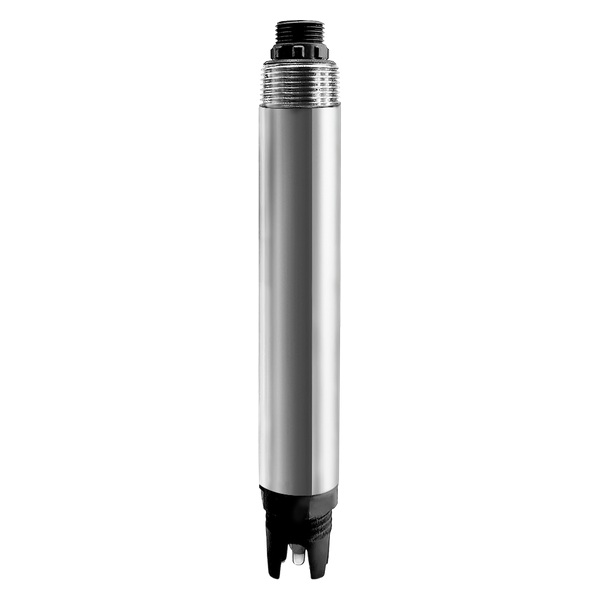
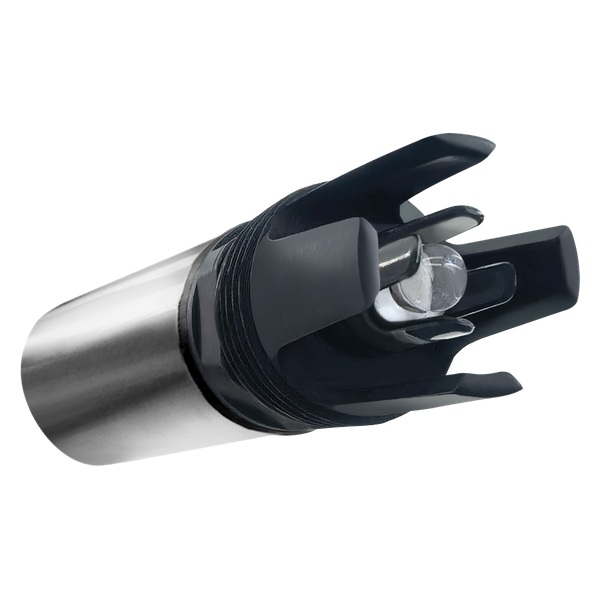
For a YEX-S1PRO-PH installation, compare the recorded conditions with the model-specific information below. The range is not a blanket chemical-compatibility approval, and a published accuracy is not a promise that a poorly located sensor represents the tank. Resolve exposure or installation problems before judging the instrument against its specification.
| Item | Model-specific information | Project check |
|---|---|---|
| Model and range | YEX-S1PRO-PH; 0–14.00 pH | Check the observed exposure, not only the displayed value. |
| Resolution and accuracy | 0.01 pH; ±0.1 pH; temperature ±0.1°C | Do not confuse display resolution with representativeness. |
| Response | 10 s; response convention not specified | Verify installed timing; do not assume a system response. |
| Supply and consumption | 12–24 VDC; 0.4 W | Check supply when the symptom occurs. |
| Output | RS485 (Modbus); 4–20 mA optional | Confirm the ordered configuration and interface document. |
| Environment | 0–50°C, non-freezing; pressure <0.2 MPa | Include cleaning and upset exposures in compatibility review. |
| Housing and protection | 316L + ABS; IP68 | Check chemical compatibility and connector protection separately. |
| Cable | 5 m four-core shielded cable | Confirm length and supplied termination; jacket material is not specified. |
| Mounting | NPT 3/4; immersion arrangement | Check geometry and orientation against the manual. |
| Temperature compensation | Automatic | Do not treat differently conditioned samples as identical. |
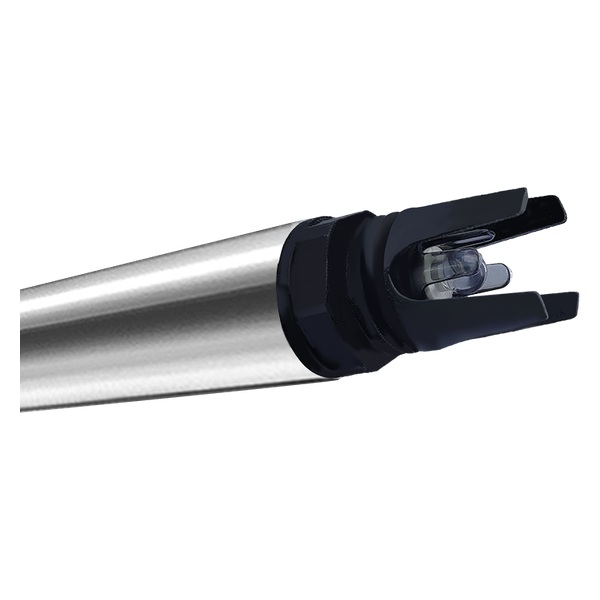
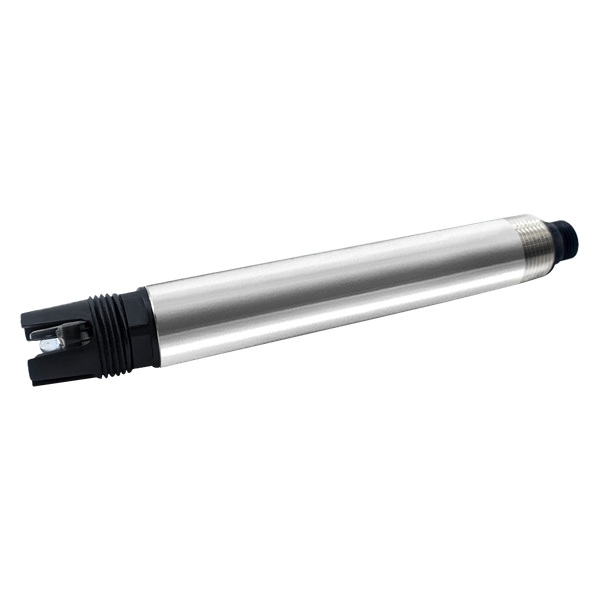
Review the YEX-S1PRO-PH online pH sensor and its current application requirements before specifying the final configuration.
Check the liquid contact and maintenance evidence
Inspect whether the sensing end remains wetted as level changes. Look for deposits, nearby gas release, stagnant pockets and direct reagent contact. Use the prescribed isolation and service procedure before retrieving equipment; do not remove a probe from an uncontrolled pressurized arrangement.
Record the reading before maintenance and after stabilization following the approved cleaning procedure. If cleaning consistently changes the result, investigate the deposit and service interval. Do not repeatedly calibrate over contamination to hide its effect.
For this model, follow its storage and conditioning instructions. The manual specifies KCl storage and cautions against prolonged exposure to deionized water or damaging solutions. The appropriate maintenance method depends on the sensor and contamination, not a universal acid-cleaning recipe.
Trace the complete electrical and digital path
A readable Modbus response is not proof of a correct pH display. Compare the value interpreted from the approved register map with the PLC tag and operator display. Confirm data type, byte order and engineering units for the delivered device revision.
Check whether a value is newly acquired or retained from an earlier successful poll. A flat interval followed by a jump may be a data-refresh problem, but that pattern alone does not prove it. The host should distinguish current data from a communication interruption.
Review supply and cable routing when the symptom coincides with motors or other equipment. Use qualified electrical personnel and the applicable wiring design. Avoid improvised grounding changes or shield connections made solely to remove a visible spike.
Illustrative project situations and the next useful action
On a compact neutralization skid, repeated peaks begin with each dosing event. The useful investigation is a time-aligned comparison of injection, mixing and measurement location. This helps the integrator decide whether the point represents the mixed liquid before requesting another probe.
At a remote bypass cabinet, the process changes before the displayed pH moves. Measure actual sample flow and establish line volume, then compare the expected transport time with observed behavior. The procurement issue may be sampling hardware rather than electrode speed.
At a replacement panel, local and supervisory values differ while the liquid is stable. Trace the scaling and timestamp through the system. A corrected integration record can prevent another unnecessary sensor purchase. These situations illustrate diagnostic reasoning, not verified YexSensor customer outcomes.
Decide between correction, servicing and replacement
Correct the installation when the point is not representative or fails to remain wetted. Service the sensor when the maintenance evidence supports contamination or conditioning issues. Review calibration using the prescribed method and suitable reference materials when the evidence calls for it.
Consider replacement when damage, persistent failure under appropriate checks or incompatible service conditions make continued use unsuitable. Document what the new sensor must change. Replacing the same configuration without resolving its exposure can reproduce the problem.
For a supplier review, include the exact model, trend excerpt with timestamps, installation photographs and relevant sample results. This is more actionable than reporting only that the readings are unstable.
If the sample is delayed, review bypass transport calculations. For replacement scope, define the skid measurement package.
Discuss Your Measurement Requirement
For a measurement review, send the installed model, a timestamped trend, mounting photographs, process conditions and the checks already completed.
Review the YEX-S1PRO-PH product configuration and Send Your Project Requirements for a project-specific discussion.
FAQ
Q1. Does a pH spike after dosing prove that the probe is defective?
No. A spike can be a real local change near the injection point, a mixing effect or a measurement-path issue. Compare timing and installation conditions before attributing it to the probe. For a replacement enquiry, supply the event trend and location sketch so the review addresses the observed behavior rather than only the nominal range.
Q2. Should I add more signal filtering to stop the fluctuations?
Not as the first corrective action. Filtering can reduce displayed variation while concealing a changing process or adding delay. First establish the source and the required response. Any processing change should be reviewed by the controls engineer and documented in the acceptance test, rather than treated as proof that the underlying issue has disappeared.
Q3. Can incorrect Modbus interpretation create an apparent pH problem?
Yes. Incorrect register interpretation, byte order or scaling can produce misleading values even when communication succeeds. Check the delivered protocol and compare the interpreted value with the host display under stable conditions. Ask for the current interface document when purchasing or replacing the sensor; matching an RS485 label alone is insufficient.
Q4. Is a faster sensor always the answer to dosing fluctuations?
No. A faster measurement element does not eliminate mixing, transport or host delay. The YEX-S1PRO-PH manual lists a 10-second response, but the complete installed path must be evaluated separately. Select hardware after identifying the dominant cause and reviewing the trend; otherwise a replacement can leave the same project problem unresolved.
Q5. How can I distinguish fouling from the need for recalibration?
Record the as-found condition, follow the approved cleaning procedure, allow stabilization and then evaluate suitable reference measurements. A change after cleaning is maintenance evidence, not automatic proof of a calibration error. Agree on the relevant checks and consumables with the supplier before replacing a sensor or changing its stored calibration.
Q6. Should I move the sensor away from the dosing point?
Possibly, if the current point measures a concentrated local plume rather than the liquid relevant to your decision. The new point must still remain representative, wetted and serviceable. Review mixing and timing before relocating it; distance alone does not determine suitability, and a long bypass can introduce another source of delay.
Q7. What information helps a supplier investigate pH reading fluctuations after chemical dosing?
Provide the sensor model, a time-aligned trend, dosing and mixing events, water temperature, installation photographs and any reference checks. Include recent maintenance or configuration changes and the host model. These details support a focused technical review and help distinguish a service request, an installation correction and a justified replacement quotation.
Q8. When should the project procure a replacement sensor?
Procure a replacement when documented checks identify damage, persistent measurement failure or a configuration unsuitable for the exposure. Confirm the new model, interface and installation before ordering. Also agree on storage, delivery and technical support terms; an urgent purchase should still address the cause instead of repeating an unverified specification.
Summary
Treat fluctuating pH as a measurement-chain investigation, not an automatic sensor failure. Establish event timing, inspect the liquid contact and compare the actual data path before adjusting calibration or ordering a replacement. YEX-S1PRO-PH can be considered within its verified environmental and installation limits, but it cannot correct incomplete mixing, stale host data or an unsuitable sample point. For a useful YexSensor review, provide the model, process trend, mounting photographs, exposure conditions and reference results. The purchasing decision should follow the identified cause and the changes required to prevent recurrence.


