Chinese
 Spanish
 French
 Russian
 German
 Portuguese
 Indonesian
 Thai
Thai Vietnamese
 Arabic

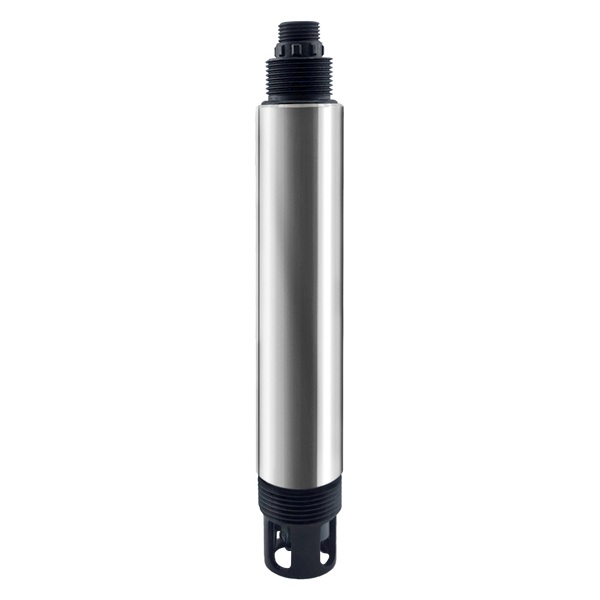
An online ammonia nitrogen sensor gives operators a continuous nitrogen trend without waiting for every laboratory result, but ion-selective measurement remains sensitive to matrix, calibration and maintenance. YexSensor YEX-S1Pro-NHN lists a 0–1000.00 mg/L NH3-N range, integrated pH and temperature, a five-minute response and RS485 Modbus RTU. Procurement should also clarify how ammonium, free ammonia, nitrate nitrogen and total nitrogen outputs are obtained and validated.
Why Buyers Search for a online ammonia nitrogen sensor
Buyers search this product type for aeration control, treatment warning, aquaculture protection and remote river stations. Their real concerns include membrane fouling, ionic interference, pH and temperature effects, the difference between ammonia-related terms, and whether every value shown in a register is independently measured. A clear RFQ must separate direct sensing, compensation and any calculated or project-specific output.
The first engineering task is to define the process event, available response time, acceptable uncertainty and action supported by the value. Trend, alarm, automatic control and regulatory reporting have different validation requirements. This decision determines the range, location, maintenance plan and reference method.
YexSensor YEX-S1Pro-NHN Product Positioning
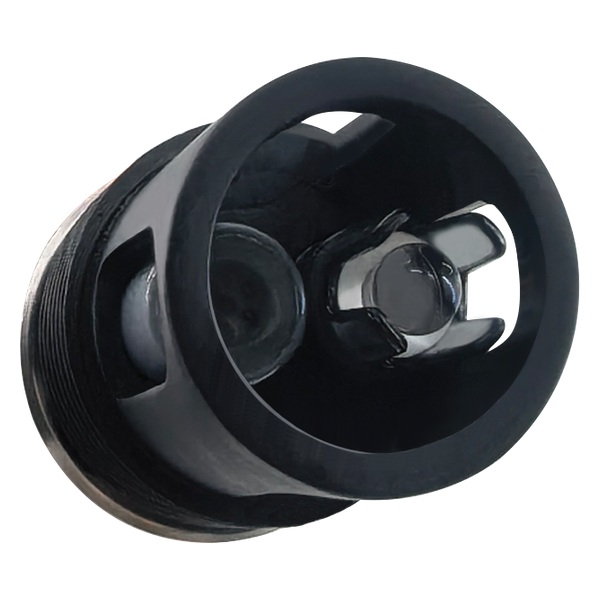
YEX-S1Pro-NHN uses an ion-selective electrode with an ion-active membrane. The official page lists ammonia nitrogen, ammonium, free ammonia, nitrate nitrogen, total nitrogen, pH and temperature outputs; NH3-N range is 0–1000.00 mg/L and pH range is 0–14. It lists NH3-N accuracy of ±10% of reading, pH ±0.1, temperature ±0.1°C, and a five-minute response. RS485 is standard and 4–20 mA is optional.
Published specifications are configuration boundaries, not proof that an unknown matrix or installation is suitable. Ask YexSensor to confirm the ordered range, output, wetted materials, cable and application limits on the quotation or attached datasheet.
Technical Parameters and Procurement Checks
| Technical item | Official product specification | Procurement check |
|---|---|---|
| Listed outputs | Ammonia nitrogen, ammonium, free ammonia, nitrate nitrogen, total nitrogen, pH and temperature | Ask which values are directly measured, compensated or calculated |
| NH3-N range | 0–1000.00 mg/L | Provide minimum, normal, alarm and shock-load data |
| pH range | 0–14 | Confirm operating pH and its role in compensation |
| Accuracy | NH3-N ±10% of reading; pH ±0.1; temperature ±0.1°C | Compare error with alarm and permit decisions |
| Response time | 5 minutes | Include transport, stabilization and control delay |
| Measurement principle | Ion-selective electrode with ion-active membrane | Disclose ions and chemicals that may affect response |
| Outputs | RS485 Modbus RTU or optional 4–20 mA; select one | Define register map or analog measurand and scaling |
| Power | 12–24 VDC; approximately 0.4 W | Check field cabinet and remote-station power budget |
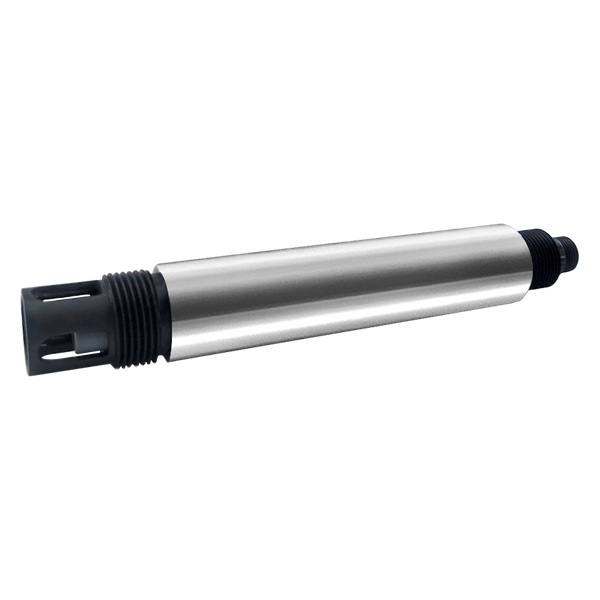
| Construction and limits | 316L stainless steel plus ABS; IP68; 0–50°C; pressure below 0.2 MPa | Review chemistry, freezing and hydraulic pressure |
| Mounting and service | 3/4 NPT immersion; standard 5 m shielded cable | Plan membrane cleaning, calibration and safe retrieval |
What the Specifications Mean in a Real Project
Ammonia nitrogen, ammonium and free ammonia are not interchangeable labels. The project must define the required measurand, unit and compensation basis in the PLC and reporting plan.
The page lists nitrate nitrogen and total nitrogen among outputs, but procurement should obtain written documentation of whether these are measured, calculated or configured values and how they are validated.
A five-minute sensor response is only part of total detection time. Sample transport, tank mixing, stabilization and controller persistence add delay.
±10% of reading may be appropriate for process trend but may be too broad near a low compliance limit. Compare the absolute error with the action threshold and retain the required laboratory method.
Ion-selective membranes require matrix-aware verification. Cleaning chemicals, competing ions and deposits should be disclosed before final selection.
Separate the probe from the complete measurement point. Brackets, flow cells or bypasses, isolation, drain, power, surge protection, waterproof junctions, controller, gateway, calibration materials and spares can determine whether the delivered system is usable.
Acceptance and Lifecycle Planning
Write the site acceptance test before issuing the order. Define the reference method, comparison range, stabilization period, allowable difference and response when results fail. Include alarm, invalid-data, power-loss and communication-loss tests. If the value starts a pump, valve, diversion or dose, simulate that sequence in a safe test state.
Record range, engineering units, calibration status, cleaning events and protocol version with the time series. Assign who reviews drift, changes setpoints and releases a sensor after maintenance. Hold suitable cleaning tools, standards and critical spares. These details help buyers compare maintainable systems rather than probes with different hidden support needs.
Review sunlight, condensation, electrical noise, vibration, access and cable strain. Confirm retrieval, isolation and drainage so one technician can safely clean or verify the sensor. Where an alarm protects an important process, define a temporary reference check or fallback during maintenance.
Data Quality and Alarm Design
Store the raw value, engineering unit, configured range, quality flag and maintenance state together. A number without context can look valid after a cable fault, dry exposure or range change. Keep enough time resolution to investigate short events, but use persistence or rate-of-change logic where bubbles, cleaning cycles or batch transitions create harmless spikes.
Define warning, action, out-of-range, maintenance and communication-loss states separately. Every automatic response should have a reset condition, maximum operating time and manual override. The controller should reject impossible values and hold a documented safe state when communication is lost instead of treating zero as a genuine water result.
During handover, give operators a short diagnostic sequence: check the process, verify immersion and flow, inspect the measuring surface, compare a reference result, and then review wiring and communication. Record every cleaning, calibration and configuration change. This evidence distinguishes normal process variability from drift and prevents unnecessary recalibration that can make long-term trends harder to interpret.
Recommended Applications
Wastewater treatment
Trend influent shock loads or nitrification performance with laboratory verification.
Aquaculture water
Use persistent ammonia alarms with pH, temperature and animal-specific operating procedures.
River warning stations
Trigger sampling when a sustained change occurs and maintain remote cleaning access.
Industrial effluent
Use online trend where the ionic matrix and chemicals have been reviewed.
Mark every point on the process diagram with stream name, depth or sample flow, nearby dosing and return lines, expected range and operating action. A convenient but unrepresentative location can provide less value than a simpler sensor at the correct point.
online ammonia nitrogen sensor: Selection Recommendations
Send the exact nitrogen definition, expected concentrations, pH, temperature, pressure, major ions, salinity, cleaning agents, suspended solids, mounting, cable, output, PLC and reference method. Request the register map and written explanation for every listed nitrogen output, including its unit, source and validation.
A suitable configuration stays inside official limits, represents the process and remains safely serviceable. An unsuitable point exposes the sensor to unreviewed chemistry or pressure, confuses one parameter with another, or reports after the available response time has passed.
Installation, Integration and Maintenance
Use representative, mixed water and keep the sensing end fully submerged. Avoid direct chemical injection, settled solids and severe bubbles. Provide safe retrieval for gentle membrane cleaning and reference checks. Commission across the actual pH and concentration range, then define invalid data during cleaning, calibration or exposure.
For RS485 Modbus RTU, confirm supply polarity, A/B convention, device address, baud rate, parity, stop bits and register map. Use appropriate topology, shielding and termination. Store final settings and PLC tag definitions with commissioning records.
Commissioning should include mechanical inspection, stable-value confirmation, reference comparison, alarm simulation and communication-loss testing. Values collected during cleaning, dry exposure or maintenance should be marked invalid rather than stored as process events.
How to Request a Comparable Quotation
Send the process diagram, water sources, measurands, units, minimum, normal and maximum values, temperature, pressure, pH, matrix components, mounting, cable, output, controller, power, quantity and destination. Add required drawings, certificates, packing and delivery terms.
Ask for line-item pricing for the sensor, mounting, cleaning option, controller, gateway, calibration materials, spares and commissioning. Compare cleaning labor, consumables, standards, replacement parts and field visits over the service period instead of comparing probe price alone.
Frequently Asked Questions About a online ammonia nitrogen sensor
Does YEX-S1Pro-NHN directly measure every listed nitrogen value?
Do not assume so. The page lists several outputs; ask YexSensor to document which are directly measured, compensated, calculated or configured and how each is validated.
What is the NH3-N range?
The published range is 0–1000.00 mg/L. Compare the ±10% of reading accuracy with the project alarm and low-end decision before ordering.
How fast does the sensor respond?
The listed response is five minutes. Add sample transport, mixing, stabilization and alarm persistence when calculating total warning time.
Can it replace laboratory ammonia testing?
It can provide continuous trend and alarms, but compliance or contractual decisions should retain the required approved method and paired verification plan.
Can this online ammonia nitrogen sensor connect to a PLC or SCADA system?
Yes. The standard output is RS485 Modbus RTU, while 4–20 mA is optional. Confirm address, baud rate, register map, cable, grounding and whether digital or analog output is selected before ordering.
How should the measurement range be selected?
Use minimum, normal, alarm and credible upset data from the actual point. Order by measurement duty rather than choosing the widest range for every location.
What installation limits must be checked?
Confirm 0–50°C non-freezing operation, pressure below 0.2 MPa, full immersion, 3/4 NPT mounting, cable protection and safe access against the project drawing.
Can online data replace laboratory testing?
Online ion-selective data supports trend and process response; permit reporting and nitrogen species confirmation may require approved laboratory analysis. Define paired verification, acceptance tolerance and the action taken when results disagree.
What should the quotation include?
Require the exact model, range, selected output, measured variables, cable, connector, mounting, optional cleaning, protocol, calibration items, spares, warranty, lead time, exclusions and line-item pricing.
Summary
The YEX-S1Pro-NHN is a online ammonia nitrogen sensor for continuous industrial and environmental water monitoring when the selected range, matrix, mounting and maintenance plan match the official limits. Its S1 PRO construction, digital integration and optional configurations should be evaluated as a complete measurement point.
For an actionable quotation, send the process drawing, values, chemistry, installation, cable, output, controller, validation method, quantity and destination. YexSensor can then confirm a defined configuration instead of an ambiguous product-family request.