Chinese
 Spanish
 French
 Russian
 German
 Portuguese
 Indonesian
 Thai
 Vietnamese
 Arabic


Low-flow groundwater sampling stabilization requires a time series that the field lead can trace to flowing water from a particular well interval. Record discharge, water level, probe readings and interruptions together. The cell holds the probes, the instruments measure the parameters and the field lead applies the criteria in the approved sampling plan.
What can make a flat trend unreliable?
A disconnected inlet can leave a probe immersed in yesterday’s rinse water. Its output may look impressively steady. A technician who checks the outlet and records a measured discharge has evidence that a remote reviewer looking only at pH values lacks. Specify fields for flow, drawdown and field observations alongside the instrument channels. Ask the bidder to demonstrate what a stopped pump looks like in the exported file.
Which specifications matter for low-flow groundwater sampling stabilization?
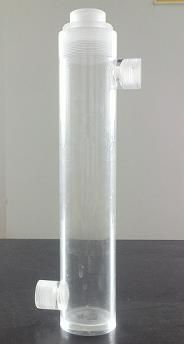
A stable trend has meaning only when representative water continues to reach verified instruments. The transparent YEX-Flow-Pool helps the crew observe the measuring arrangement, but it is an unpowered installation accessory. Sensor selection, sample handling and recording must match the project’s approved sampling plan; the chamber’s presence cannot replace those decisions.
| Parameter | YEX-Flow-Pool | Engineering and purchase implication |
|---|---|---|
| Function | Sensor installation and water-flow accessory | Select the measurement instruments separately for the sampling plan. |
| Structure | Transparent cylindrical chamber | Allow the crew to inspect sample passage and the installed sensing arrangement. |
| Power | No chamber power required | Each installed sensor and the logger need their own specified power arrangement. |
| Water connections | Inlet and outlet hose/barb structure | Confirm tubing fit and the approved sampling route. |
| Sensor ports | Threaded installation according to project configuration | Obtain an assembly drawing for the exact probes, seals and service method. |
These model-specific values come from the YEX-Flow-Pool official product page. Review the delivered configuration and its documents against the proposed installation.

Groundwater flow-through cell and logging options
| Decision | Evidence to request | Purchase condition |
|---|---|---|
| Probe fit | Thread, insertion depth and seal drawing | Approve the assembled configuration before ordering adapters. |
| Sample path | Wetted materials, tubing length and installed volume | Check compatibility with analytes and decontamination chemicals. |
| Recording | Time-stamped channel export with units and fault flags | Replay one complete visit before accepting the logger. |
| Recording arrangement | When it fits | Acceptance evidence |
|---|---|---|
| Portable meter and manual sheet | A staffed visit with manageable channels and observation intervals | Complete raw readings, flow and level notes, instrument IDs and event annotations. |
| Sensors with an event-capable logger | Repeated rounds or multiple channels need time-aligned records | Verified units, original timestamps, fault states and an export another crew can interpret. |
| Logger plus a linked field sheet | Automated values need context that is recorded by the operator | One well and event ID connecting instrument data, interventions and bottle labels. |
A portable meter and paper sheet can suit a small crew visiting a few wells if one person can read the instruments at the required interval and record adjustments. Include the raw readings, units, instrument identifiers and the operator’s initials. Photograph or scan the completed sheet under the correct well ID before leaving the site.
For repeated rounds or several simultaneous channels, request a logger that exports the original time series. Give the crew a way to annotate a hose change or pump restart. At handover, compare the exported timestamps with the operator’s watch and bottle labels. Preserve raw values even if the report presents rounded results. Rounding close to a decision boundary can hide a change that the field plan requires the reviewer to see.
Select the sensors and sampling method first, then confirm chamber fit. Use a manual sheet where a staffed procedure can capture the required observations reliably; use a verified logger where channel count and repeated visits justify it. Either arrangement must retain water passage, instrument identity and interruptions alongside the values.

Low-flow sampling records when flow or crews change
Separate travel time from stabilization
Estimate how long a pump adjustment takes to reach the probes. A measuring path holding 0.3 L at an observed branch discharge of 0.1 L/min has a nominal three-minute transit. Mixing in the chamber and sensor response can extend the transition. This illustrative calculation explains a delay. Only the site plan defines the observation interval and criteria for collection.
On a split line, a flowing bottle branch can hide a pinched chamber hose. Check discharge at the measuring outlet, inspect for air and compare the instrument timestamp with the log. Record the repair time and identify the first observation after fresh water reaches the probes. The flow cell cannot measure the parameters or declare the series stable.
Deciding whether a collection time can be signed off
Read across the field sheet before reading down the parameter columns. For each candidate observation, match the timestamp to discharge, drawdown and instrument status. Then compare consecutive eligible observations for every required parameter using the approved interval and tolerances. If a required channel is missing or a bubble was cleared between rows, flag those rows and apply the plan's interruption rule. Enter the collection time and bottle identifier only when the field lead can identify the sequence supporting that decision.
The field crew changes between monitoring rounds
A kit can be assembled differently even when the equipment list is unchanged. Use a marked setup drawing, sensor identifiers, tube labels and an example record to preserve the method. The acceptance exercise should be repeatable by the receiving crew, including instrument checks and the location used for bottle collection.
Verify sample transit and groundwater parameter stabilization
Keep the physical and data paths explicit. Water moves through the approved sampling arrangement and measurement chamber; compatible sensors require their own supply and host connections. Their readings are logged with parameter names, units, time and instrument identity. A bottle route is approved separately for the analytes. Provide that relationship on a setup drawing without assuming that all water-quality instruments or sample collection methods can share the same plumbing.
Use the screen interval and approved intake position in the well record. Measure the starting water level from the designated reference point. Route the measuring line so the crew can see discharge, remove trapped air and service the cell without disturbing the intake. Follow the specific instrument instructions for sensor orientation and calibration. Mark the sampling outlet separately and follow the analyte-specific collection procedure for routing water to the bottles.
Puls and Barcelona describe how disturbance, gas exchange and suspended sediment can affect observations during purging. Use the current site-approved field plan to determine the required parameters, interval, tolerance and number of consecutive observations. Record the plan revision on the form. Read the EPA low-flow sampling issue paper.
Header: site, well, date and timezone, operator, reference point, screened interval, intake position, pump, probe IDs, calibration record and plan revision. Enter the approved limits and required sequence in the header before assessing the observations. Repeat the observation row as often as the plan requires.
| Time / event | Discharge and water level | Field channels and units | Observation / action |
|---|---|---|---|
| ____ / start | ____ L/min; ____ m below reference | Baseline or pending | Initial level ____; start time ____ |
| ____ / reading | ____ L/min; drawdown ____ m | pH ____; temperature ____ °C; other required channels ____ | Air, flow and instrument status ____ |
| ____ / decision | Final pumping conditions ____ | Qualifying readings from ____ to ____ | Collect or hold ____; reason ____; operator ____ |
| ____ / sample | Any change since decision ____ | Sample ID ____ | Bottle time ____; custody reference ____ |

RFQ scope for a groundwater sampling kit
Provide the well geometry, expected flow and drawdown restrictions, tubing layout, target analytes, site sampling procedure and channels to record. Ask each bidder to identify which parts touch sample water and which parts require field assembly. Specify who supplies the water-level measurement, calibration materials, data export software and spare seals. Ask for the cleaning procedure and the time required to prepare the rig for the next well.
The equipment supplier owns the port, seal and tubing drawing. The sampling lead owns the bottle route and collection decision. At handover, replay a stopped-pump event from the exported record and identify which observations the site procedure allows the reviewer to use.
Project inputs for a configuration review
Include these project inputs when requesting the YEX-Flow-Pool.
- Approved sampling plan and required parameters and decision criteria
- Exact probes, tubing connections, chamber arrangement and bottle route
- Logger or field-sheet format, instrument checks and kit acceptance responsibilities
Frequently asked questions
Q1. What evidence supports low-flow groundwater sampling stabilization?
A1. Use repeated plan-defined observations, verified sample passage and instrument checks from the same well event. Stagnant tubing or repeated old data can also produce an unchanged display. Confirm flow, the approved pumping arrangement and measurement timestamps before assessing stabilization. Apply the site sampling plan’s parameters, intervals and criteria rather than a generic rule. The field record should show the observations supporting the decision, with any interruption or instrument problem linked to the same sampling event.
Q2. Can the YEX-Flow-Pool determine stabilization by itself?
A2. The flow pool is an installation accessory that guides water past compatible sensors. It does not measure pH, conductivity or dissolved oxygen and cannot decide whether a well meets the sampling plan. Select the required instruments and logging method separately. Specify the sensor ports, sample route and verification procedure as an assembly so the buyer can confirm that the chamber supports, rather than defines, the measurement method.
Q3. Why can bubbles or a changed flow path undermine the record?
A3. Air entering the measuring route can affect contact with the sensing surfaces and the condition of the sample presented to them. A changed hose or trapped volume also alters sample arrival and response timing. Inspect the chamber and connections before interpreting a sudden trend change. Record the intervention and follow the sampling plan for subsequent observations instead of treating a post-adjustment display as continuous evidence from the earlier arrangement.
Q4. How should the chamber be selected for the required parameter set?
A4. Start with the sampling plan’s required parameters and the exact sensor assemblies. Confirm that each sensing surface is properly wetted, the ports fit and the chamber can be observed and serviced in the field. A photograph showing several probes does not establish compatibility with every model. Obtain an assembly drawing and identify any unused ports, seals and fittings before ordering a standardized kit.
Q5. Should the sampling bottles be filled directly from the measuring chamber?
A5. Use the collection point and procedure specified for the analytes and site plan. The measuring chamber may serve a different purpose from the bottle collection path, and additional surfaces or handling can affect some samples. Mark both routes on the field setup drawing. Ask the project technical lead to approve the bottle location and any bypass arrangement before the contractor purchases and labels the final kit.
Q6. When is automatic logging preferable to a manual field sheet?
A6. Automatic logging helps retain timestamps and repeated values when many observations or wells must be documented, provided the channel configuration and freshness checks are verified. A manual sheet can work for a staffed procedure with clearly defined intervals and responsibilities. Compare the complete data-handling task, not merely logger cost. Require an example export or completed field record that another reviewer can trace to the well, instruments and sampling event.
Q7. What should a low-flow sampling kit acceptance test demonstrate?
A7. Assemble the actual tubing, chamber, sensors and logger, then verify sample passage, channel identity, timestamps and recording under the intended field arrangement. Check how an interruption and a restarted measurement appear in the record. Identify the bottle collection point separately. The contractor should supply the setup drawing, instrument checks and a readable example record so the receiving crew can reproduce the method at the next well.
Q8. What information does YexSensor need to quote the installation accessory?
A8. Provide the exact sensor models and dimensions, required parameter set, approved sampling arrangement, tubing connections and field-service constraints. Include the intended logger or controller and whether the chamber must be moved between wells. Request written confirmation of port fit, assembly limits, seals and delivery scope. The quotation should identify the chamber as an accessory and list measurement instruments and data recording as separate equipment responsibilities.
Summary
Choose the chamber around the approved method and exact sensors. Verify that water passage and data freshness support each stabilization observation, preserve interruptions and identify the bottle route separately. Supply the sensor dimensions, tubing arrangement, parameter set and recording needs with the RFQ, and require a reproducible setup and acceptance record.