Chinese
 Spanish
 French
 Russian
 German
 Portuguese
 Indonesian
 Thai
Thai Vietnamese
 Arabic

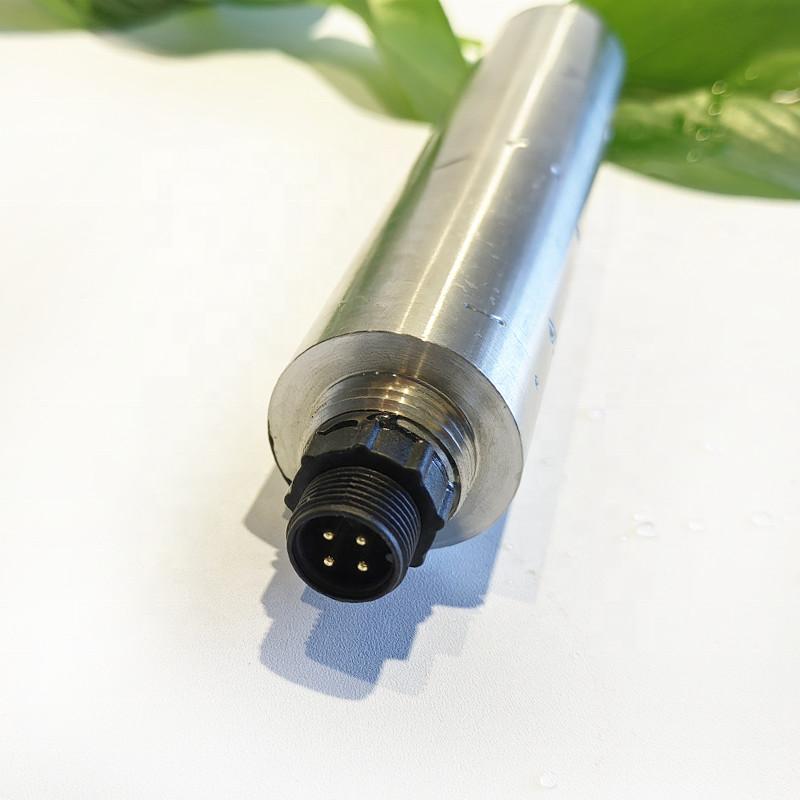
Direct Answer: Seven Causes of Unstable ORP Readings
Unstable ORP readings usually come from one or more of seven areas: a dirty metal surface, a weak or contaminated reference system, poor flow or mixing, trapped bubbles, electrical grounding or communication problems, temperature or process-chemistry changes, and an installation point that does not represent the controlled process.
ORP is a process-state indicator in millivolts, not a direct concentration reading. Diagnose it with pH, temperature, dissolved oxygen, dosing events and process stage. A moving ORP value can be correct when the chemistry is changing, while a perfectly steady value can be wrong if the electrode is coated.

Buyer Risk: Replacing the Sensor Before Checking the Process
The costly mistake is to assume every unstable trend is sensor failure. Before replacing hardware, check the sample location, recent chemical dosing, mixing, deposits, reference condition, wiring, grounding, Modbus scaling and the local-versus-SCADA value. A structured check separates a real water-chemistry change from installation or maintenance error.
For procurement, define the water matrix, expected ORP direction, chemical process, pH range, installation method, cleaning access, cable distance, output and acceptance method. The final model and materials must be confirmed from the current official product page or manual.

Temperature, Electrode Condition and Water Matrix Effects
An ORP electrode uses an inert metal surface, commonly platinum or gold, to exchange electrons with oxidizing and reducing species in the sample. The measured value is the potential difference between the indicating electrode and the reference electrode.
Temperature can influence electrochemical behavior, but ORP temperature compensation is not as straightforward as pH because natural water rarely contains a single known redox couple. This is why recording temperature with ORP data is valuable for trend comparison and troubleshooting.
Sensor fouling is another major factor. Organic film, inorganic scale, oil, biofilm or invisible deposits on the metal surface may cause the sensor to measure the ORP of the fouling layer rather than the actual solution.
Key Parameters and Procurement Configuration
The following table converts the technical topic into procurement and integration items. It is intended for engineering comparison, project commissioning and life-cycle operation rather than consumer-level browsing.
| Project item | Recommended configuration | Engineering value |
|---|---|---|
| Main measurement | ORP in mV with temperature record | Shows oxidation-reduction state instead of single pollutant concentration |
| Companion parameters | pH, DO, conductivity, dosing status and flow | Improves interpretation of redox trend |
| Cleaning method | Soak and clean with suitable reagent, avoid scratching sensitive parts | Reduces drift caused by surface contamination |
| Sensor output | RS-485 Modbus RTU, optional controller or transmitter output | Supports PLC, RTU, DCS, recorder and gateway integration |
| Installation | Immersion, flow cell, bypass cabinet, pipe or tank mounting according to matrix | Improves representativeness and service access |
| Data objects | Current value, unit, trend, alarm, maintenance status and fault state | Turns measurement into usable operation information |
| Verification | Portable or laboratory comparison under the same sample condition | Builds trust during commissioning and audits |
Selection Guide and Integration Notes
Select an ORP sensor according to water chemistry and fouling risk. Wastewater with oil, high organic load or suspended solids needs easier cleaning access than clean process water.
Define whether ORP will be used for observation, alarm or control. Control applications require stricter sampling, alarm delay and commissioning checks.
For oxidation dosing, reducing agent dosing or anaerobic process monitoring, trend direction is often more useful than one isolated reading.
Use a stable reference system and confirm whether the sensor is designed for immersion, pipe or tank installation.
System Delivery, Acceptance and Lifecycle Control
For a commercial online water quality monitoring project, procurement should define a complete measurement loop rather than a loose sensor purchase. The loop includes parameter selection, sensor principle, installation method, sample condition, cable route, power supply, communication protocol, engineering unit, alarm logic, maintenance responsibility and acceptance method.
System integrators should start with the operating decision behind the value. A parameter used for dosing control, aeration control, disinfection verification, filtration inspection, corrosion review, discharge warning or compliance reporting needs a more disciplined design than a value used only for reference.
Representative sampling is the foundation of reliable data. Dead zones, air bubbles, sediment pockets, intermittent flow, oil film, strong color, biological fouling and poor mixing can create more error than the instrument itself. The site survey should document why the selected point represents the process decision.
Electrical and communication design should be confirmed before commissioning. Shielded cable, grounding, surge protection, waterproof glands, terminal labels, Modbus address, baud rate, parity, register scaling and maintenance mode all affect whether the sensor value remains useful after handover.
A professional dashboard should show current value, unit, trend, alarm state, sensor status, last maintenance date and related equipment. Operators need an operations screen that supports action, while engineers need raw values, configuration records and exportable historical data.
Acceptance should include trend observation, not only one comparison result. The team should verify response direction, repeatability, alarm output, communication recovery after power cycling, reference comparison and whether maintenance mode prevents false operating decisions.
For projects connected to PLC, RTU, DCS, SCADA or cloud platforms, communication failure must be visible. A frozen normal-looking value is more dangerous than an explicit fault. The platform should separate normal measurement, maintenance status, sensor fault and communication loss.
Maintenance planning should be included in the purchase scope. Cleaning tools, standard solutions, membranes, optical caps, spare electrodes, cable connectors, flow cells and operator training determine the life-cycle cost of online water quality monitoring.
Data quality records support both operation and audits. Calibration, cleaning, comparison checks, operator notes, abnormal trend explanations and spare part replacement history make the data defensible when managers review treatment efficiency or water safety performance.
After the first month, alarm thresholds and maintenance intervals should be reviewed with real site data. Online monitoring is strongest when the initial design is refined by actual water matrix, fouling speed, process variation and operator response time.
Procurement documents should also define the boundary between sensor supply and system integration. If the buyer only purchases sensors, the project still needs cabinet wiring, power distribution, surge protection, controller programming, gateway configuration, dashboard naming and site commissioning. If the buyer expects a turnkey monitoring package, those responsibilities should be listed in the quotation and acceptance checklist.
A complete project specification should confirm: which parameter should be measured, where the sensor should be installed, how the value connects to PLC or SCADA, how often calibration is required, what accessories are needed and what failure modes should be considered. Engineers also need this information during project design.
| Integration checkpoint | Recommended practice | Risk if ignored |
|---|---|---|
| Temperature record | Log temperature with each ORP value | Trend comparison becomes weak |
| Electrode surface | Keep platinum or gold surface clean and smooth | False mV response |
| Reference system | Protect junction and storage solution | Slow drift and disagreement between sensors |
| Process context | Review pH, DO and dosing together | Wrong interpretation of redox condition |
| Calibration check | Use ORP standard for verification when needed | Uncertain baseline after long operation |
Operation, Maintenance and Data Quality
ORP probes should be rinsed before measurement so contaminants are not transferred between samples or tanks. For online use, the cleaning schedule should be adjusted after observing actual fouling speed.
If two ORP sensors show different readings in the same water, check surface contamination, reference condition, cable connection, temperature record and whether the water contains weak redox couples.
When cleaning and verification no longer restore stable readings, the electrode may be exhausted and should be replaced rather than forced into service.
ORP Troubleshooting and Integration Path
Review the YexSensor online ORP sensor for the current model description and datasheet. In PLC or SCADA projects, trend ORP together with process events and supporting parameters instead of using one isolated threshold without site validation.

Commissioning should prove three things: the electrode responds to a known change, the installed point represents the process, and the remote system displays the same value and unit as the local device. Save cleaning, comparison and alarm-test records as the operating baseline.

Request an ORP Sensor Recommendation
Send the water type, treatment stage, oxidant or reductant used, expected ORP direction or working band, pH and temperature context, installation drawing, flow or mixing condition, fouling risk, cable distance, power, Modbus RS485 or controller requirement and quantity.
For integration planning, read the RS485 Modbus integration FAQ, then Send Your Project Requirements for model and current-document confirmation.
FAQ
Q1. What are the most common causes of unstable ORP readings?
Start with fouling, reference condition, mixing and flow, bubbles, wiring or grounding, process-chemistry changes and sampling location. Check these in order before assuming the sensor must be replaced.
Q2. Is ORP a direct measure of disinfectant concentration?
No. ORP reflects the combined oxidation-reduction state of the water. Use it as a process indicator and interpret it with pH, temperature, dosing and any concentration-specific measurement required by the project.
Q3. Why can ORP change after pH changes?
Redox chemistry and the activity of oxidizing or reducing species can depend on pH. Review pH and ORP trends together and validate site action limits under the actual treatment chemistry.
Q4. How does fouling affect an ORP electrode?
A coating can isolate the metal surface from the bulk water and slow or bias the response. Inspect and clean according to the current manual, then compare the value before and after cleaning.
Q5. Where should an online ORP sensor be installed?
Choose a representative, well-mixed point with stable water contact and maintenance access. Avoid dead zones, trapped air, settled solids and direct dosing zones unless that local reaction is the intended measurement.
Q6. How should ORP be verified during commissioning?
Confirm response to process change, compare with a suitable same-point reference when practical, and check the local versus PLC/SCADA value. Record pH, temperature and dosing state with the result.
Q7. What Modbus details must the integrator confirm?
Confirm wiring, address, baud rate, parity, register map, data type, engineering unit, scaling and communication-fault behavior. Test alarms and recovery after power or communication interruption.
Q8. How should ORP alarm thresholds be selected?
Use process trials, historical data and treatment objectives rather than copying a generic threshold. Define warning delay, operator response and cross-check conditions before enabling automatic action.
Q9. What should be included in the RFQ?
Include the water matrix, treatment chemistry, working conditions, installation, cable, output, controller, mounting, cleaning access, reference method, spare parts and quantity. Ask for the current datasheet and protocol document.
Q10. When should the electrode be replaced?
Consider replacement only after approved cleaning, conditioning, reference checks and wiring or integration checks fail to restore acceptable response. Use model-specific service criteria from YexSensor documentation.
Summary
ORP accuracy cannot be judged from one millivolt value alone. Diagnose unstable readings through electrode condition, reference stability, hydraulic conditions, grounding, process chemistry, temperature and installation location. A strong industrial monitoring package links the correct sensor to a representative point, Modbus RS485 or PLC/SCADA verification, maintenance records and a complete RFQ.