Chinese
 Spanish
 French
 Russian
 German
 Portuguese
 Indonesian
 Thai
 Vietnamese
 Arabic


COD chloride interference must be addressed through the sample and reagent method before selecting a laboratory analyzer. A wider COD range does not establish greater chloride tolerance. First compare the sample's chloride concentration, expected COD, the selected reagent's documented limits and the laboratory's reporting requirement. Dilution is useful only if it reduces interference while leaving enough COD to measure reliably. When those conditions cannot be met together, evaluate another suitable method or validated preparation route rather than buying a higher-range instrument to solve a chemical problem.
Why COD chloride interference changes the purchase decision
An unexpectedly high result can trigger the wrong response: changing treatment operation, replacing an analyzer or selecting a higher-range curve without investigating the sample. In dichromate COD testing, chloride can also consume oxidant and cause a positive bias. That does not prove every high result is interference. The process may have changed, the sample may contain other oxidizable material, or contamination may have entered during preparation.
The purchasing question is therefore whether the complete method can distinguish the result needed for this water. A reagent blank examines a different problem from a fortified sample matrix. A clean-water standard can demonstrate satisfactory performance without proving that a saline industrial sample behaves correctly. The EPA Method 410.4 definitions and interference discussion provide useful distinctions; the actual laboratory procedure must specify the checks and acceptance criteria.
What the YEX-L1-MP1 specifications establish
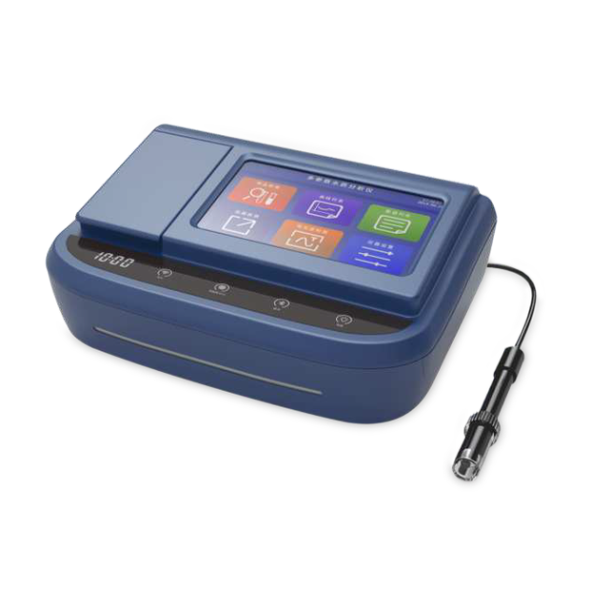
The YEX-L1-MP1 benchtop analyzer is an optical platform for configured water-testing methods. Its published capabilities help define the equipment package, but they do not establish a universal high-chloride method.
| Model and published item | Documented capability | Consequence for procurement |
|---|---|---|
| YEX-L1-MP1: COD menu | Configured COD methods; available 10–15000 mg/L with the corresponding reagent and curve | Identify the actual curve and reagent range. The menu's overall span is not one method's reporting range or chloride limit. |
| YEX-L1-MP1: absorbance | 0–3.5 Abs; 0.001 Abs resolution | Specify the complete analytical method. Display resolution cannot establish a sample reporting limit. |
| YEX-L1-MP1: vessels | 16 mm tubes and 24 mm bottles | Match the vessel, reagent and curve rather than assuming equal diameter makes two reagent systems interchangeable. |
| YEX-L1-MP1: digestion | External digestion where required; rapid 20-minute COD digestion described for the applicable method | List the compatible external digester and the supplied reagent procedure separately. |
| YEX-L1-MP1: records | 10,000 records and USB export | Test the export and retain the sample, method, dilution and QC context alongside results. |
Compare methods using the dilution window
Dilution reduces both chloride and COD. The useful question is whether one dilution factor can satisfy both constraints. Use values from the same proposed method and its laboratory validation, not the widest numbers found across several catalogs.
Let D be the dilution factor, Ccl the original chloride concentration, and Lcl the method's documented chloride tolerance under the relevant conditions. Let Ccod be the estimated original COD, R the validated reporting limit for the final test solution, and U its validated upper limit. Concentrations use mg/L. R is not automatically the detection limit or the analyzer's lower display range.
Dmin = max(1, Ccl/Lcl, Ccod/U)
Dmax = Ccod/R
A theoretical concentration window exists only when Dmin is no greater than Dmax. A chosen factor must also be permitted by the method and practicable with the available volumetric equipment. If a window exists, other matrix effects, reaction conditions and QC still need evaluation. If expected COD is unknown, preliminary testing is needed before this screening calculation can guide selection.
A hypothetical sample that cannot be rescued by dilution alone
Assume an original chloride concentration of 10000 mg/L and a reagent tolerance of 1000 mg/L. Reducing chloride to that level requires at least 10-fold dilution. Now assume the original COD is 40 mg/L and the validated test-solution reporting limit is 10 mg/L. Maintaining reportable COD permits at most 4-fold dilution. The requirements do not overlap. At tenfold dilution, the estimated test-solution COD would be 4 mg/L, below that assumed reporting limit.
These numbers are an engineering illustration, not YexSensor reagent limits or test results. The calculation identifies a method-selection problem. It does not prescribe chemical treatment. The original-sample reporting limit also rises with dilution: using factor D makes it D × R before considering other method requirements.
| Observed condition | Route to evaluate | Decision boundary |
|---|---|---|
| Permitted dilution leaves chloride and COD within validated limits | The matched method with appropriate blanks, standards and matrix checks | A feasible dilution is a starting condition, not proof of an unbiased sample result. |
| Chloride reduction pushes COD below the required reporting capability | A method or preparation route demonstrated for that matrix | More display digits or a higher COD upper range will not restore the lost reporting capability. |
| Reagent chloride tolerance is undocumented | Obtain the reagent-specific procedure and suitability evidence | An analyzer parameter list cannot establish the missing reagent performance. |
Select the route that can meet the sample's reporting purpose with documented performance. Changing method, pretreatment or reagent chemistry also changes the validation task; it is not a reason to transfer a chloride limit from another reagent system.
Three laboratory situations with different next steps
Low COD in a highly saline discharge
The hypothetical no-overlap example above represents this risk. Record chloride and the reporting requirement before selecting a dilution. Evaluate a suitable high-chloride method or validated preparation with the laboratory responsible for the result. Do not approve the instrument solely because its COD menu reaches a high concentration.
High COD and high chloride in a process sample
A permissible dilution may create a useful window when enough COD remains. Compare the proposed factor against both constraints, retain the dilution record and investigate matrix performance. The configuration decision includes accurate volumetric equipment, consumables and staff capacity for the additional preparation.
A colored or turbid sample that changes between batches
Chloride may be only one concern. Use the selected method's treatment of color, solids and sample homogeneity, and establish what the reported result represents. Filtering or other preparation cannot be assumed harmless to total COD. A changed sample matrix can require renewed suitability checks even when yesterday's standard and blank passed.
These are proposed engineering situations, not reported customer trials. The broader multi-parameter wastewater laboratory setup guide addresses bench configuration; the decision here is whether the selected COD method can handle the sample.
Commission the method from sample to exported result
Acceptance should follow one identifiable sample through preparation, reaction, optical reading and reporting. Document sampling and preservation under the selected method, sample mixing, aliquot volume, dilution, reagent batch, external digestion conditions, cooling and the matching vessel and curve. Configure the instrument only after those choices are fixed.
A rapid-digestion statement does not establish compliance with a named reference procedure. EPA Method 410.4 Revision 2.0 describes 150 °C for two hours and measurement at 600 nm; its provisions for changes have documented performance conditions. Those details cannot simply be replaced by the MP1's rapid-digestion description. Where a project names that method, review the complete delivered configuration and any applicable modification evidence. This comparison does not establish acceptance or rejection of every MP1 configuration.
Retain the blank, independent standard check and matrix-check results according to the approved QC procedure. Test USB export with a representative record and its accompanying worksheet. The file must remain traceable to the original sample and dilution factor. Repeating a plausible display value without its method context is not a complete handover.
RFQ information for a matched COD package
- Water and purpose: source, process changes, chloride range, expected COD, required original-sample reporting limit and destination method requirements.
- Analytical package: reagent part number and procedure version, curve, validated range, chloride tolerance, vessel, standards and matrix acceptance plan.
- Equipment and workload: analyzer, compatible external digestion device where required, volumetric equipment, sample throughput and consumable quantities.
- Delivery and records: reagent instructions, safety data sheets, chemical transport conditions, accessory list, export demonstration and training scope.
- Commercial terms: quantities, destination, replenishment needs, spare vessels and written agreement on delivery and support; no assumed project-specific terms.
Match the analyzer to your sample and method
For a YEX-L1-MP1 laboratory configuration, provide the water type, chloride and expected COD ranges, required reporting limit, specified method, daily workload, digestion equipment and destination. These inputs define the suitability review and supply scope.
Frequently asked questions
Q1. Why can chloride produce an apparently high COD result?
A1. COD chloride interference can create a positive bias because chloride may participate in the dichromate reaction. The size of that problem depends on the sample and the reagent method, so a high result alone does not identify its cause. Review the process history, reagent-specific chloride tolerance, dilution and prescribed QC. Procurement should include method suitability evidence for the actual water rather than treating the high reading as proof that the analyzer needs replacement.
Q2. Does passing a COD standard prove that a saline sample is free from interference?
A2. No. A standard check evaluates the analytical system under the conditions represented by that standard. A saline process sample introduces a different matrix. A reagent blank, an independent standard and a fortified sample matrix therefore answer different questions. Use the checks required by the selected procedure and interpret them together. For acceptance, retain those results with the sample identity, reagent batch and dilution; a satisfactory clean-water standard is not complete evidence of matrix suitability.
Q3. How do chloride tolerance and the reporting limit constrain dilution together?
A3. Chloride establishes a minimum dilution, while the COD reporting requirement can establish a maximum. The proposed factor must reduce chloride within the matched method's tolerance and leave COD within its validated test-solution range. Dilution also raises the original-sample reporting limit by that factor. Calculate the interval using the same method's documented values. When the minimum exceeds the maximum, evaluate another analytical route; neither finer display resolution nor further dilution resolves that conflict.
Q4. What should a laboratory do when no acceptable dilution window remains?
A4. Evaluate a method or preparation route demonstrated for the sample's chloride level and required COD reporting capability. Establish its validation, equipment, consumables and operator requirements before changing routine practice. Do not improvise an additive dose or borrow another reagent's tolerance. If the new route changes the measured fraction or reporting basis, resolve that with the laboratory's method owner. The purchase decision should follow the analytical route, including its ongoing workload and acceptance evidence.
Q5. Can an online UV254 COD estimate replace a chemical COD result for a saline matrix?
A5. Not simply because both results are labeled COD. UV254 estimation and chemical COD use different measurement paths, and a project-specific relationship must be demonstrated where an estimate is used. Chloride interference in a chemical method does not establish that an optical estimate will satisfy the same reporting purpose. Define whether the requirement is a process trend, an investigation or a specified laboratory result, then select and validate the corresponding method before substituting one value for another.
Q6. Does a rapid COD digestion claim establish compliance with a specified reference method?
A6. No. A digestion time is one part of a method, alongside reagent composition, volumes, reaction conditions, optical detection and QC. Compare the supplied procedure and instrument configuration with the named method and its permitted changes. The MP1's published rapid-digestion description should not be relabeled as EPA Method 410.4 without the relevant evidence. Where a contract specifies a method, obtain written documentation for the delivered analytical route before including a conformity statement.
Q7. Which method documents and reagent specifications belong in the quotation?
A7. Identify the reagent part number, procedure version, supported curve, usable range, chloride tolerance and associated vessels. Add the applicable reporting-limit evidence, standards, external digestion requirements and the agreed matrix acceptance plan. The quotation should distinguish supplied items from optional equipment and consumables. For international orders, include safety and chemical transport documentation plus the destination's method requirements. This allows an importer or laboratory to compare complete packages instead of comparing analyzer prices alone.
Q8. What evidence should a matrix acceptance trial retain before routine testing?
A8. Preserve sample identification and condition, chloride information, expected COD basis, preparation and dilution records, reagent lot, method version, curve, digestion conditions and original readings. Retain the prescribed blank, standard and matrix-check results with their interpretation and any departures. Include the original-sample reporting limit and the exported record's traceability. Agree the acceptance criteria and responsible reviewer before testing; the trial should show the method's demonstrated scope, including conditions that require further investigation.
Summary
Choose a COD method that can manage the actual chloride level while preserving the required reporting capability. A feasible dilution window supports further evaluation; it does not replace matrix verification. The YEX-L1-MP1 provides configured photometric methods, compatible vessels and result export, while the specific reagent, curve and external digestion path determine the analytical package. Define the complete sample-to-record workflow and acceptance evidence, then place the water matrix, method, reporting requirement, workload and delivery scope in the RFQ.