Chinese
 Spanish
 French
 Russian
 German
 Portuguese
 Indonesian
 Thai
Thai Vietnamese
 Arabic

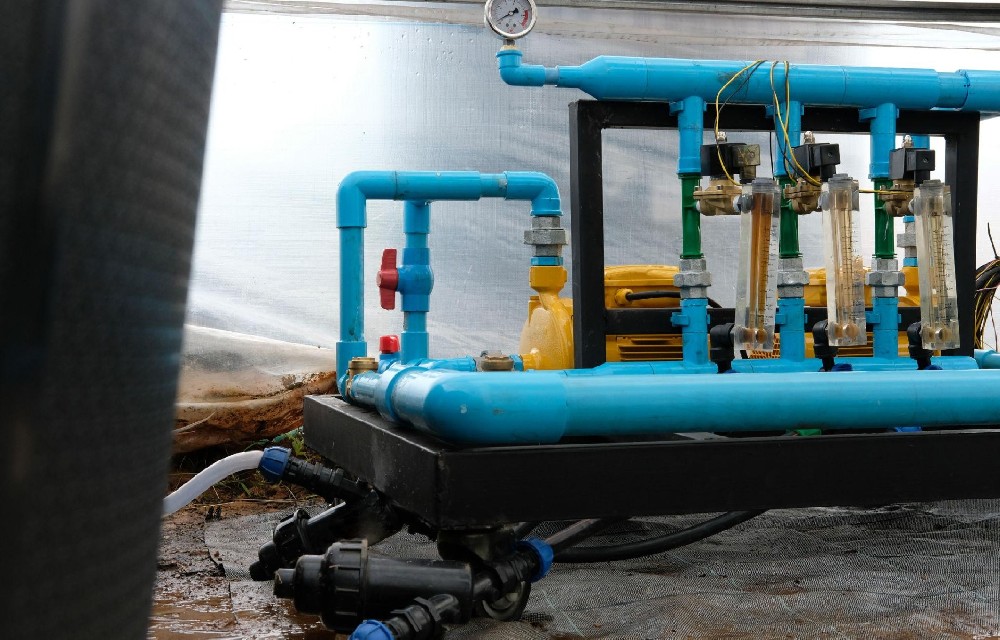
Industrial Residual Chlorine Analyzer for PLC, SCADA and Modbus RS485
An industrial residual chlorine analyzer should be selected as part of a control system, not as a standalone instrument. In wastewater disinfection, reuse water, membrane protection and industrial water treatment, the analyzer must provide stable free chlorine or total chlorine data that can be read by PLC, SCADA, RTU or gateway systems through Modbus RS485 or analog output.
This guide helps engineers compare residual chlorine analyzer options by chlorine form, sample flow, pH conditions, alarm response, maintenance workload and communication requirements. The objective is to select a measurement chain that can be installed, verified and integrated with industrial control systems.
For free chlorine, total chlorine and combined chlorine monitoring, the analyzer should be selected with the sample point, flow cell, pH/temperature context and alarm response in mind.
YexSensor online chlorine analyzers can connect to PLC, SCADA, RTU and Modbus RS485 platforms for continuous industrial monitoring and dosing control.
A residual chlorine analyzer wastewater project should define whether the control value is used for dosing, discharge review, membrane protection or operator alarm response.
Free Chlorine vs Total Chlorine Analyzer Selection
When chlorine enters water, it forms hypochlorous acid and hypochlorite ion. These are generally described as free chlorine, and hypochlorous acid is the more effective disinfecting form.
Chlorine also reacts with ammonium and organic matter, forming chloramines and organic chlorine compounds. These are combined chlorine. Total chlorine is free chlorine plus combined chlorine.
Residual chlorine is the chlorine left after reactions with microorganisms, organic matter and reducing substances. The measurement target should be defined by the application: free chlorine, total chlorine or available chlorine.
PLC, SCADA and Modbus RS485 Integration Checklist
The following table converts the technical topic into procurement and integration items. It is intended for engineering comparison, project commissioning and life-cycle operation rather than consumer-level browsing.
| Project item | Recommended configuration | Engineering value |
|---|---|---|
| Free chlorine | HOCl and OCl- measurement focus | Shows active disinfection potential |
| Combined chlorine | Chloramines and organic chlorine compounds | Explains chlorine consumption and odor |
| Total chlorine | Free plus combined chlorine | Useful where full chlorine balance is needed |
| Flow cell | Stable 30-60 L/h type flow where specified | Improves sensor accuracy |
| Compensation | pH and temperature context | Improves disinfection interpretation |
| Sensor output | RS-485 Modbus RTU, optional controller or transmitter output | Supports PLC, RTU, DCS, recorder and gateway integration |
| Installation | Immersion, flow cell, bypass cabinet, pipe or tank mounting according to matrix | Improves representativeness and service access |
| Data objects | Current value, unit, trend, alarm, maintenance status and fault state | Turns measurement into usable operation information |
| Verification | Portable or laboratory comparison under the same sample condition | Builds trust during commissioning and audits |
Selection Guide and Integration Notes
Select free chlorine monitoring for drinking water disinfection control where active residual matters most.
Use total chlorine monitoring where combined chlorine is relevant or regulations require total residual tracking.
Install the sensor in a flow cell with stable flow and avoid air bubbles, direct dosing turbulence and stagnant lines.
Confirm calibration method, zero check, slope check, membrane or electrode maintenance and Modbus integration before purchase.
System Delivery, Acceptance and Lifecycle Control
For a commercial online water quality monitoring project, procurement should define a complete measurement loop rather than a loose sensor purchase. The loop includes parameter selection, sensor principle, installation method, sample condition, cable route, power supply, communication protocol, engineering unit, alarm logic, maintenance responsibility and acceptance method.
System integrators should start with the operating decision behind the value. A parameter used for dosing control, aeration control, disinfection verification, filtration inspection, corrosion review, discharge warning or compliance reporting needs a more disciplined design than a value used only for reference.
Representative sampling is the foundation of reliable data. Dead zones, air bubbles, sediment pockets, intermittent flow, oil film, strong color, biological fouling and poor mixing can create more error than the instrument itself. The site survey should document why the selected point represents the process decision.
Electrical and communication design should be confirmed before commissioning. Shielded cable, grounding, surge protection, waterproof glands, terminal labels, Modbus address, baud rate, parity, register scaling and maintenance mode all affect whether the sensor value remains useful after handover.
A professional dashboard should show current value, unit, trend, alarm state, sensor status, last maintenance date and related equipment. Operators need an operations screen that supports action, while engineers need raw values, configuration records and exportable historical data.
Acceptance should include trend observation, not only one comparison result. The team should verify response direction, repeatability, alarm output, communication recovery after power cycling, reference comparison and whether maintenance mode prevents false operating decisions.
For projects connected to PLC, RTU, DCS, SCADA or cloud platforms, communication failure must be visible. A frozen normal-looking value is more dangerous than an explicit fault. The platform should separate normal measurement, maintenance status, sensor fault and communication loss.
Maintenance planning should be included in the purchase scope. Cleaning tools, standard solutions, membranes, optical caps, spare electrodes, cable connectors, flow cells and operator training determine the life-cycle cost of online water quality monitoring.
Data quality records support both operation and audits. Calibration, cleaning, comparison checks, operator notes, abnormal trend explanations and spare part replacement history make the data defensible when managers review treatment efficiency or water safety performance.
After the first month, alarm thresholds and maintenance intervals should be reviewed with real site data. Online monitoring is strongest when the initial design is refined by actual water matrix, fouling speed, process variation and operator response time.
Procurement documents should also define the boundary between sensor supply and system integration. If the buyer only purchases sensors, the project still needs cabinet wiring, power distribution, surge protection, controller programming, gateway configuration, dashboard naming and site commissioning. If the buyer expects a turnkey monitoring package, those responsibilities should be listed in the quotation and acceptance checklist.
A complete project specification should confirm: which parameter should be measured, where the sensor should be installed, how the value connects to PLC or SCADA, how often calibration is required, what accessories are needed and what failure modes should be considered. Engineers also need this information during project design.
| Integration checkpoint | Recommended practice | Risk if ignored |
|---|---|---|
| Flow stability | Use matched flow cell and stable flow | Unstable chlorine value |
| pH influence | Review pH with free chlorine | Wrong disinfection interpretation |
| Chlorine form | Define free, combined or total chlorine | Wrong analyzer selection |
| Activation | Condition new or stored electrode before use | Slow startup and drift |
| By-product risk | Avoid excessive residual where not required | Taste, odor and chemical risk |
Operation, Maintenance and Data Quality
Residual chlorine sensors should be kept in a stable sample flow and maintained according to electrode or membrane requirements.
If readings become inaccurate, inspect flow rate, bubbles, electrode activation, calibration solution and whether the sample chlorine is changing rapidly.
Disinfection control should balance safety and over-chlorination. A continuous analyzer provides the trend needed to adjust dosing responsibly.
How to Select a Residual Chlorine Analyzer for Industrial Monitoring
Start with the control objective. If the purpose is membrane protection, fast detection of excessive chlorine may be more important than laboratory-level reporting. If the purpose is disinfection verification, the project may need stable trend data, pH context and confirmation testing. If the purpose is PLC dosing control, response time, flow stability and fault status become critical.
A practical analyzer specification should include measurement type, range, accuracy expectation, sample flow, flow cell material, cleaning method, calibration method, output signal, Modbus RS485 register table, PLC scaling and SCADA alarm display. These details directly affect commissioning time and long-term reliability.
The same online monitoring architecture can be adapted for WWTP, industrial water reuse, cooling water and selected aquaculture water treatment systems when chlorine chemistry, water matrix and downstream equipment sensitivity are reviewed before installation.
Residual Chlorine Analyzer RFQ Checklist
Provide the water source, required chlorine form, expected range, pH and temperature conditions, sample-flow arrangement, installation point, cleaning and consumable requirements, cable distance, output signal, PLC or SCADA interface, alarm logic, quantity and destination.
Review the YEX-S1-CL residual chlorine sensor and the RS485 Modbus integration FAQ. For project support, Send Your Project Requirements.
FAQ
Q1. What should buyers confirm before choosing a residual chlorine analyzer?
Buyers should confirm whether the analyzer is intended for free chlorine, total chlorine or another chlorine species, because each target supports a different operating decision. They should also check sample flow, pH context, output signal, cleaning method, spare parts and whether PLC or SCADA integration needs Modbus RS485 or analog output.
For residual chlorine analyzer monitoring, a suitable solution is not only about whether the sensor can measure the parameter; it must also match the process decision, site access, fouling condition, alarm response and reporting requirement.
In drinking water plants, distribution networks, swimming pools, cooling water and wastewater disinfection projects, this usually means defining whether the value will support dosing, aeration, filtration, disinfection, compliance warning, equipment protection or management reporting.
These decisions should be written into the procurement specification before comparing brands or prices.
Q2. Where should a residual chlorine analyzer be installed for stable online data?
The installation point should have stable flow, representative water and safe service access. For flow cell installations, the sample line should avoid bubbles, sediment and dead water. For immersion or tank installation, the sensor should not sit directly at a chemical injection point unless the project specifically needs that reaction value.
A convenient pipe, tank corner or channel edge may be easy to install, but it can produce misleading data if flow is stagnant, bubbles are present, solids settle nearby or chemical dosing is not fully mixed.
For residual chlorine analyzer monitoring, integrators should review hydraulic conditions, safety access, cleaning space, cable routing and whether the sensor can be removed without shutting down the process.
A representative point reduces false alarms and improves confidence in online water quality monitoring.
Q3. How does a residual chlorine analyzer support wastewater and reuse water control?
A residual chlorine analyzer is often used for dosing control, disinfection verification, membrane protection and reuse water monitoring. In wastewater projects, it helps operators avoid both under-disinfection and excessive chemical use. The value becomes more useful when it is linked with pH, flow and alarm response procedures.
Q4. Why are free chlorine and total chlorine not interchangeable?
Free chlorine and total chlorine are not interchangeable. Free chlorine is normally closer to the active disinfection potential, while total chlorine includes combined forms. A project should define which one is required for the process, because using the wrong value may create poor dosing decisions or misleading compliance review.
In drinking water plants, distribution networks, swimming pools, cooling water and wastewater disinfection projects, online data may trigger chemical dosing review, aeration adjustment, filter backwash inspection, disinfection alarm, laboratory confirmation, discharge hold or maintenance work order.
A dashboard that only displays numbers is weaker than a monitoring system that defines warning thresholds, response roles and historical trend review.
When residual chlorine analyzer, free chlorine sensor, total chlorine monitoring, online chlorine sensor, YexSensor are evaluated together, buyers can understand how the parameter contributes to process stability and risk control.
Q5. How should a chlorine analyzer be integrated with Modbus RS485, PLC and SCADA?
For Modbus RS485 integration, define the register map, device address, baud rate, parity, scaling and timeout response before PLC programming. SCADA should display both the chlorine value and the analyzer status. This helps operators distinguish a real process event from low flow, maintenance mode or sensor fault.
For residual chlorine analyzer monitoring, the project should include standards, cleaning tools, spare parts, replacement intervals and records of before-and-after values.
Without this plan, even a high-quality instrument can drift or become distrusted by operators.
Q6. Why is stable sample flow important for online chlorine measurement?
Flow stability is critical because many online chlorine measurements depend on a consistent sample path. Unstable flow, bubbles, fouling and exhausted consumables can cause slow response or noisy readings. A good design includes a matched flow cell, accessible drain, cleaning procedure and verification method.
The online value should be compared with a laboratory or portable reference under the same sample condition, not with a sample taken from another time or location.
Integrators should verify trend direction, response speed, maintenance mode, data storage and recovery after power interruption.
This process creates a defensible baseline for free chlorine, combined chlorine, total chlorine, residual chlorine, flow cell, pH and temperature and gives the plant confidence before using the data for control or reporting.
Q7. How should calibration and verification be managed after commissioning?
Calibration and verification should be planned as part of routine operation, not only during startup. Operators should compare online readings with a portable or laboratory method under the same sampling condition. Any adjustment should be recorded with time, standard, operator and reason so the data remains defensible.
Q8. What actions should high and low residual chlorine alarms trigger?
The analyzer should trigger practical actions, not only display numbers. A low alarm may require checking dosing, flow or chemical supply; a high alarm may require reviewing overdosing risk or downstream membrane protection. Each alarm should have an owner and a verification step.
Q9. What information is required for a residual chlorine analyzer quotation?
Provide the required chlorine species, expected range, water matrix, pH and temperature, sample-flow conditions, installation location, cleaning and calibration access, power, output signal, Modbus or analog integration requirement, alarm logic, quantity and destination.
Q10. Which lifecycle costs should be compared before purchase?
Compare the flow cell, sampling hardware, cleaning labor, calibration or verification work, model-specific consumables, replacement parts, cable and cabinet integration, downtime and technical support. The analyzer price alone does not represent the complete operating cost.
Summary
Water, Chlorine and Residual Chlorine Analyzers: Free Chlorine, Total Chlorine and Disinfection Monitoring should be treated as a project decision topic, not only as a technical definition. In drinking water plants, distribution networks, swimming pools, cooling water and wastewater disinfection projects, the value of online water quality monitoring comes from stable field measurement, representative installation, clear alarms and a maintenance plan that keeps data reliable after startup.
For system integrators and procurement teams, the strongest design starts by linking free chlorine, combined chlorine, total chlorine, residual chlorine, flow cell, pH and temperature with the process decision each value supports. This approach makes the monitoring package more useful for dosing control, aeration control, disinfection management, filtration optimization, discharge warning, equipment protection and management reporting.
Procurement teams usually need to understand sensor selection, installation requirements, Modbus or PLC compatibility, data verification, life-cycle cost and how the solution performs in a real project environment.
YexSensor positions residual chlorine analyzer monitoring as part of an integration-ready water quality monitoring solution. Digital sensor output, RS-485 Modbus RTU compatibility, clear commissioning steps and field maintenance planning help EPC contractors, OEM builders and plant operators build systems that remain useful beyond the first installation day.
A successful project should end with usable data, not only installed hardware. When calibration records, cleaning events, alarm responses, comparison checks and trend reports are maintained together, the monitoring system becomes a long-term operational asset for industrial water, municipal water, aquaculture, wastewater treatment and environmental monitoring applications.