Chinese
 Spanish
 French
 Russian
 German
 Portuguese
 Indonesian
 Thai
 Vietnamese
 Arabic


Use stormwater effluent turbidity after restart only when the branch carries fresh treated water, the reading is within the instrument's working range and the host has received a current result. Commission the branch against an independent sample from the actual discharge. A pump running and a stable number on the screen can both coexist with yesterday's water in the flow cell.

What reaches the sensor after a shutdown?
Trace the water from the last treatment stage to the outfall. If a bypass rejoins downstream of the takeoff, the station can accurately measure polished water while the discharge includes untreated runoff. Decide whether the buyer needs a filter-performance signal or a final-discharge measurement before fixing the takeoff location. Show both routes on the piping drawing, including which one carries water during a changeover.
A second error occurs within the branch. At a stop, particles settle in low points and relatively clear water remains in the chamber. On restarting, an initial low value can give way to a spike as the settled material moves. Suppressing the entire interval would also suppress evidence of a genuine solids pulse. Retain the numerical history with its quality state and give operations a separate way to judge the discharge while the station is being checked.
Which specifications matter for stormwater effluent turbidity?
The YEX-S2-ZSA low-range turbidity sensor measures 90° scattered light in an integrated flow cell. Its IP65 enclosure is designed for wall mounting. Plan a dry, accessible installation and bring treated water to it through tubing. Particles scatter the incident light, but air entrained at restart can also produce a high result. Inspect the wetted route before attributing the spike to a filter failure.
| Parameter | YEX-S2-ZSA | Engineering and purchase implication |
|---|---|---|
| Principle | 90° scattered light | A representative optical sample requires attention to bubbles and deposits. |
| Standard range | 0–10 NTU | Select a wider-range instrument when the actual duty exceeds this band. |
| Resolution | 0.001 NTU | The display increment does not establish the uncertainty of a low-level decision. |
| Accuracy | ±2% FS or ±0.02 NTU, whichever is greater | At 10 NTU full scale, the percentage term is ±0.2 NTU. |
| Operating conditions | 0–50 °C; pressure ≤0.2 MPa | Confirm the complete sample installation and the delivered operating limits. |
| Supply / output | 12–24 V DC / RS485 Modbus RTU | Specify the host, validity states and communication documentation. |
| Enclosure | IP65 | Use a supplier-approved dry-mounted flow-through arrangement. |
Consider a hypothetical process decision at 1.0 NTU. A display of 0.95 NTU leaves only 0.05 NTU to that decision point, smaller than the model's published accuracy term of ±0.2 NTU on its standard span. Even a perfectly representative sample would leave the side of the decision boundary uncertain. The owner needs a decision margin and comparison method appropriate to the consequence of an incorrect release. This example supplies neither a discharge limit nor a complete uncertainty budget.
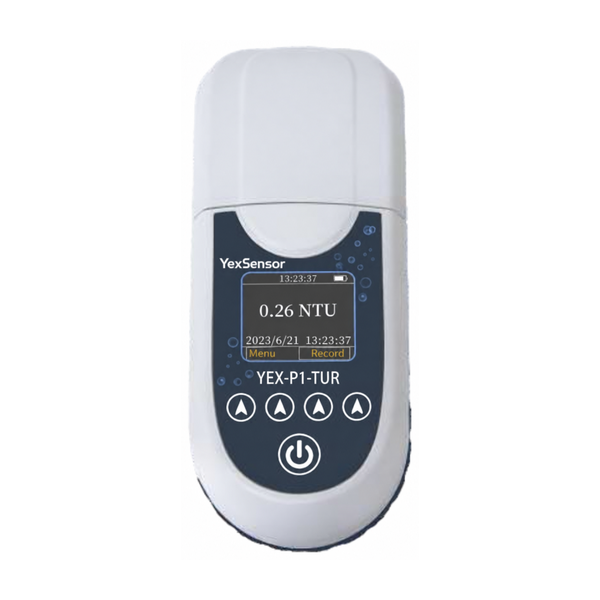
Low-range turbidity sensor or wider event coverage?
| Arrangement | Selection condition | Required purchase boundary |
|---|---|---|
| Dry-mounted low-range sample station | Verified treated outlet values fit the range and uncertainty | Confirm sample flow, operating limits, flushing and host states. |
| Wider-range measurement station | Event peaks or failure conditions need quantification beyond the low range | Obtain suitable model-specific evidence and an acceptance method. |
| Independent outlet sampling | The online route is being verified or an event is disputed | Provide safe access, timestamps and the owner-approved reference method. |
A grab point supplements either continuous station. It provides an independent observation when a blockage or trapped air affects the online sample. It cannot reconstruct a short peak after the event has passed. If first-flow peaks determine whether the treatment train diverts water, procure a channel with documented performance across that event range. Where the aim is fine discrimination in polished water, evaluate low-end accuracy as well as peak coverage before choosing a single wider-range instrument.
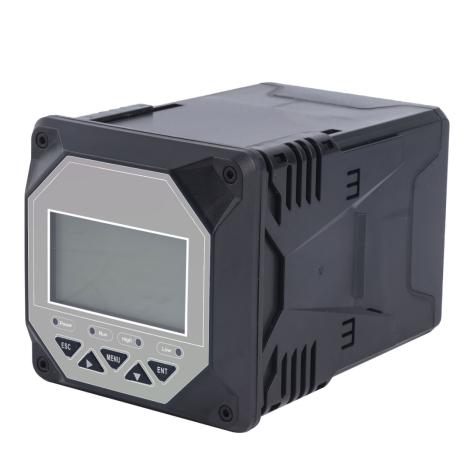
Turbidity sample line restart under dry spells and storm peaks
A long dry interval followed by a short pump cycle
The first discharge can leave the site before its sample reaches the cabinet. Compare the shortest observed discharge cycle with the transport time at the lowest intended branch flow. For illustration, a line holding 0.4 L at a measured 0.2 L/min has a nominal transit time of two minutes. The cell volume, mixing and response add delay. A 90-second pump run under those assumed conditions could end while the display still describes earlier water. Shorten the route or arrange event sampling at the outlet if timely observation is essential.
Collect an outlet grab when flow begins and mark the collection time. Compare it with the later online observation associated with that parcel. Use a clean sample vessel and consistent handling under the site's comparison procedure. Settlement during a long delay or bubbles introduced while pouring can widen the difference between methods. If the delayed online spike recurs after idle periods while repeated outlet samples remain low, examine pockets of retained solids and the drain route.
A filter breaks through during a rising storm
When time-aligned outlet samples and the online trend rise together, operations has grounds to investigate loading, bypass position and filter condition. Preserve a separate record of what the instrument could quantify. A number held at the top of its span cannot establish the peak or prove when it subsided. Use an independent method with adequate range and record the event response assigned by the site owner. The event-driven runoff monitoring guide covers planning the upstream observation separately.
Turbidity controller integration: sample flow and valid restart states
Place branch flow indication where it shows water actually passing through the cell. Map any service bypass that could satisfy a flow switch while leaving the instrument isolated. The product page recommends inlet flow below 300 mL/min and a direct drain without upward bends or compression to reduce bubble problems. Establish the site's usable minimum flow by witnessing fresh-sample arrival. The published upper-flow guidance gives no minimum for the proposed line length.
The integrator should implement the following host states using the delivered register map and independent flow evidence. Where the instrument cannot identify an excursion above its span, document how the host marks a ceiling value as suspect and how operators obtain a higher-range comparison. Assign each transition to an observed event so that a timer or an acknowledgement alone cannot release an invalid value.
- No sample. Stop branch flow with the main pump running. The historian should retain the last good timestamp and mark the current channel unavailable. Check the remote display as well as the local screen.
- Restart under verification. Restore branch flow at the lowest intended rate. Witness fresh-water arrival and pair the online trend with an outlet sample, accounting for transport delay. Record the conditions used to establish the restart interval.
- Communications fault. Interrupt the data connection while water is flowing. A stale register or repeated last value must lose its current-valid status within the agreed host timeout. Restore communications and verify a new timestamp.
- Over-range or suspected clipping. Exercise the documented device response or simulate it at the host with the test boundary recorded. The alarm and event history must survive signal recovery. The operator uses the approved sampling and discharge procedure while the peak remains unquantified.
- Return to service. The instrument technician records the sample-path and comparison results. The designated duty operator records whether the process alarm remains active and who authorized normal monitoring. Restoring measurement validity and releasing discharge are separate operating decisions.

RFQ scope for an intermittent effluent turbidity station
Provide a takeoff drawing showing bypass junctions, line volume, discharge elevation, cabinet exposure and grab access. Include the shortest pump run, longest normal stop and lowest branch flow. Supply separate normal, first-flow and upset observations with timestamps and measurement methods. These inputs let bidders estimate sample age, identify peaks outside the proposed span and explain where an independent measurement will be needed.
Itemize the integrated instrument, sample conditioning, isolation, flow indication, drain connection and panel wiring. Identify who supplies the comparison equipment, implements validity flags, sets the timeout and witnesses the restart trial. The handover should include the delivered register map, calibration and cleaning instructions, accepted comparison tolerance and event log with operator sign-off. State exclusions such as sample-line installation or historian changes so competing quotations cover the same operating duty.
Project inputs for a configuration review
Include these project inputs when requesting the YEX-S2-ZSA.
- Normal, first-flow and filter-upset turbidity observations
- Required uncertainty and dry-mounted branch operating conditions
- Sample route, independent outlet access and controller validity states
Frequently asked questions
Q1. When is stormwater effluent turbidity valid after a dry period?
A1. It is usable only when representative treated water is passing the measuring point and the instrument is verified within its supported measuring band. A full sample chamber can retain old water after the main pump stops, producing a plausible but irrelevant trend. Check branch flow and the sampling route before judging the number. The controller specification should distinguish no sample from a valid low-turbidity measurement and keep the original restart data available for later investigation.
Q2. Does a running discharge pump prove that the sample branch is flowing?
A2. The main pump may operate normally while a closed valve, obstructed takeoff or air pocket prevents representative sampling. Verify flow in the branch itself and test this failure during commissioning. A pump-run contact can support the state logic but cannot replace the branch check. Ask the supplier to show how the host reports a blocked or isolated sample route before the channel is used for outlet decisions.
Q3. Can NTU be converted directly into suspended-solids concentration?
A3. A universal conversion is unsuitable because particle size, composition and optical properties affect scattering. If the project needs a mass concentration, establish a site-specific relationship using paired samples and a suitable reference method, or specify the relevant measurement directly. Keep the units and acceptance criteria separate in the data logger. A turbidity reading should not be relabeled as solids concentration merely to fit an existing reporting field.
Q4. Is YEX-S2-ZSA suitable for immersing in a stormwater chamber?
A4. The official page identifies this low-range model as IP65 and specifies its operating conditions. Treat it as an accessible, dry-mounted flow-through candidate and confirm the complete sampling installation with the supplier. An immersion requirement needs a product explicitly suitable for that duty. Include the proposed mounting and exposure in the RFQ, rather than inferring immersion suitability from the appearance of a water-monitoring instrument.
Q5. Can this 0–10 NTU model cover raw runoff and filter failure?
A5. Select it only when measured outlet values and the required decision margin fit its published range. Raw runoff or a filtration failure may exceed that band, so obtain event data before purchase. Provide an explicit over-range state and the owner’s required operating response. If the project needs continuous quantification above the limit, quote a suitable wider-range channel instead of treating a capped reading as a complete event record.
Q6. Does 0.001 NTU resolution establish suitability near a low alarm limit?
A6. Resolution is the displayed increment. The published accuracy is ±2% full scale or ±0.02 NTU, whichever is greater. At a 10 NTU full scale, the percentage term is ±0.2 NTU. Compare that specification with the project’s required uncertainty and decision margin. If a small change must be distinguished reliably, request application-specific evidence or a different configuration before accepting a low-range label as sufficient.
Q7. What must a restart acceptance test demonstrate?
A7. Witness a normal stop and restart at the minimum intended branch flow, with independent samples from the actual outlet. Record pump and valve states, fresh-sample arrival, bubbles and the online trend using aligned times. The test should distinguish line deposits from a treatment upset. Agree who authorizes return to normal monitoring and what happens to discharge while the sample or reading remains unverified.
Q8. What belongs in the supplier’s scope and quotation?
A8. Request the instrument, sample fittings, isolation and flushing arrangement, branch flow indication, power and host integration as explicit line items. Supply normal, first-flow and upset turbidity observations with the required uncertainty. Ask for the delivered revision’s service and calibration procedure and identify who validates the sampling path. Confirm price, delivery and spare-parts terms in writing against that configuration and its acceptance test.
Summary
Choose this low-range channel only for treated-water conditions and uncertainty requirements that match its verified specification. Keep the IP65 housing in an appropriate dry wall-mounted installation, verify the sample path during restart and preserve exceptional event data. Include peak turbidity, branch conditions, controls states and acceptance responsibilities in the RFQ.