Chinese
 Spanish
 French
 Russian
 German
 Portuguese
 Indonesian
 Thai
Thai Vietnamese
 Arabic

If you need earlier bloom warning, set your blue-green algae sensor alarm threshold from local baseline data, seasonal change and a defined response—not a universal limit. YexSensor YEX-S1PRO-BGA reports Kcells/mL and temperature, but you must confirm range, depth, cleaning and laboratory follow-up.
Why a Blue-Green Algae Sensor Alarm Threshold Is Site-Specific
Reservoirs, lakes and aquaculture ponds differ in species, pigment response, depth, mixing and seasonal background. A value that is unusual at one intake may be normal at another. Sunlight and vertical migration can also create daily patterns. The most useful online alarm detects a meaningful departure early enough for confirmation sampling, intake adjustment, aeration review or treatment preparation.
Define the decision first: increased sampling, operator inspection, intake-depth change, notification, treatment review or harvest protection. Each action needs a threshold, persistence period and reset rule. A single instantaneous alarm without an operating response creates nuisance alerts and reduces trust in the monitoring system.
YEX-S1PRO-BGA Product Fit
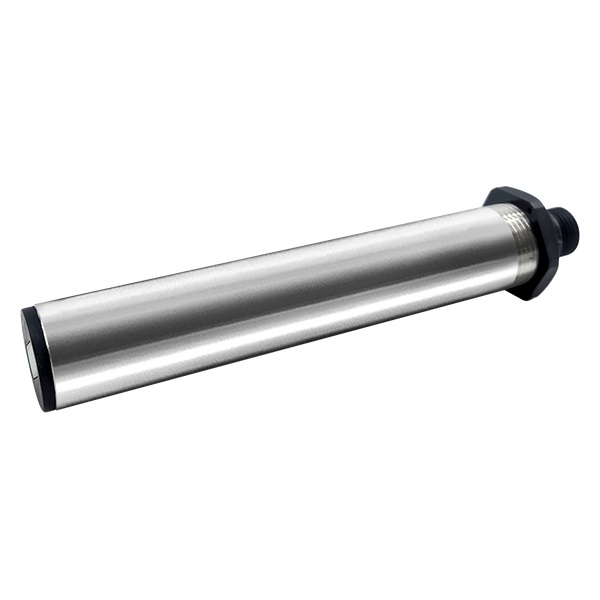
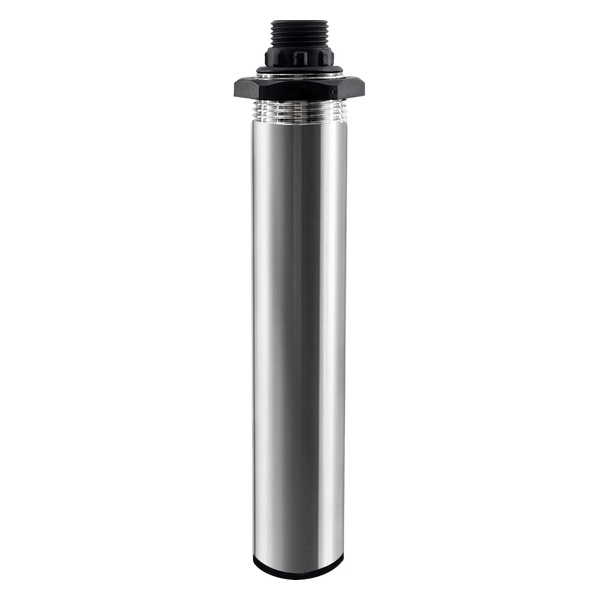
The official YEX-S1PRO-BGA specification lists blue-green algae and temperature, a standard 0–300.0 Kcells/mL customizable range, ±3% of reading accuracy, temperature accuracy of ±0.1°C, linearity of 0.999 R² and a 30-second response. It uses a narrow-band LED fluorescence method with automatic temperature compensation.
The probe has 316L stainless steel plus ABS construction, IP68 protection, 12–24 VDC power and approximately 0.4 W consumption. Output is RS485 Modbus RTU or optional 4–20 mA. The default cable is 5 m shielded, installation uses a 3/4 NPT immersion arrangement and self-cleaning is optional for long-term stations.
Understand the Unit Before Setting the Alarm
Kcells/mL means thousands of cells per milliliter as represented by the instrument’s fluorescence calibration. It is not chlorophyll concentration, biovolume, species identification or toxin concentration. Pigment content per cell can change with species and physiological state, so paired microscopy, laboratory pigment or toxin analysis may be required for public-health or regulatory decisions.
Confirm the exact register unit and decimal position during commissioning. Do not rename the PLC tag as cells/mL without applying the correct multiplier. Store the original unit in SCADA and reports so an alarm value cannot be misread by a factor of one thousand.
Technical Parameters and Procurement Checks
| Selection item | Official specification or engineering meaning | Procurement check |
|---|---|---|
| Measured outputs | Blue-green algae in Kcells/mL and temperature | Keep the original unit in PLC, SCADA and reports |
| Range | 0–300.0 Kcells/mL; customizable | Use seasonal baseline and bloom-event samples for selection |
| Accuracy | ±3% of reading; temperature ±0.1°C | Define acceptance material and site comparison method |
| Linearity | 0.999 R² | Do not treat linearity as species-independent accuracy |
| Response | 30 seconds | Add averaging, persistence and sample-transport delay |
| Principle | Narrow-band LED fluorescence | Review species, color, turbidity and daylight effects |
| Output | RS485 Modbus RTU or optional 4–20 mA | Confirm unit, decimal, address, registers and scaling |
| Construction | 316L stainless steel plus ABS; IP68 | Review freshwater or brackish chemistry and depth |
| Installation | Immersion, 3/4 NPT; 5 m shielded cable default | Specify depth, vertical profile and safe retrieval |
| Cleaning | Optional self-cleaning | Define cycle, brush parts and invalid data during cleaning |
Build a Multi-Level Alarm Strategy
Collect a baseline across day-night cycles, weather, inflow events and seasons. The first level can identify a sustained deviation and trigger inspection or sampling. A higher level can trigger operational preparation or an intake response after confirmation. A rate-of-change rule may detect a rapid developing event that remains below a fixed threshold.
Use persistence so one bubble, cleaning movement or floating patch does not trigger action. Define reset hysteresis to prevent repeated alarm cycling. Every level should name the person responsible, the sample method, response time and escalation route. Record confirmation results with the online trace to improve future thresholds.
Depth, Location and Fouling
Algae distribution can change vertically with light, temperature, wind and intake operation. A surface probe may provide early ecological warning but not represent a deep intake; a fixed intake-depth probe may protect the plant but miss a surface accumulation. State the monitoring purpose and consider multiple depths or periodic profiles where stratification is important.
Install in representative renewed water away from walls, bottom sediment and severe bubbles. Biofilm and deposits on the optical window can create drift. Optional cleaning reduces attachment but operators still need inspection and paired samples. Mark cleaning and retrieval periods invalid so they do not appear as bloom events.
When the Online Signal Is Not Enough
Use laboratory or microscopic confirmation when decisions require species, toxin, cell morphology or regulatory evidence. A fluorescence decline does not always mean the risk has ended; pigment response can change as cells age or treatment damages them. Online data is strongest as continuous surveillance that directs timely confirmation and operational attention.
For aquaculture, combine algae trends with dissolved oxygen, temperature and pH because bloom growth and decay can change nighttime oxygen risk. For drinking-water sources, combine algae with turbidity, intake depth and treatment observations. The goal is an actionable monitoring system, not an isolated fluorescent number.
Installation, Data Quality and System Integration
A sensor is only one part of the measurement point. The project also needs a representative location, rigid or retrievable mounting, cable protection, suitable power, a controller or gateway, documented communication settings and safe maintenance access. Install the measuring end in continuously renewed water and keep it away from direct chemical injection, trapped air, settled deposits and unrepresentative dead zones unless the approved design specifically requires that location.
For RS485 Modbus RTU, confirm power polarity, A/B convention, device address, baud rate, parity, stop bits and the register map supplied with the ordered revision. Use a unique address for every device on a shared bus, appropriate topology and termination, and separation from variable-frequency-drive or motor cables. If optional 4–20 mA is selected instead, define the engineering-unit scaling, fault behavior and PLC analog-input isolation before the purchase order is released.
Store the raw reading, unit, configured range, temperature, quality flag and maintenance state together. A number without context can appear valid after dry exposure, cleaning, a range change or communication recovery. Define warning, action, out-of-range, maintenance and communication-loss states separately. Use persistence or rate-of-change rules when bubbles, cleaning movements or hydraulic transitions can create short harmless spikes.
Commissioning should include mechanical inspection, stable-value confirmation, reference comparison, alarm simulation and communication-loss testing. Record the model, serial number, range, output, cable length, protocol revision and initial reference results.
Lifecycle Cost, FAT and Responsibility Boundaries
Evaluate ownership cost over the planned service period. Include mounting hardware, flow cells or bypass piping, junction boxes, controller inputs, gateways, standards, cleaning labor, consumables, replacement sensing parts, travel and downtime. A lower probe price can become the more expensive option if it requires unsafe weekly retrieval or if missing protocol documents delay PLC commissioning. Ask each supplier to separate included equipment from recommended accessories and customer-supplied items.
Write a factory acceptance checklist that verifies the ordered model, range, output, cable, connector, displayed units, Modbus communication and supplied documents. The site acceptance test should add installation inspection, comparison with the agreed reference method, alarm and interlock simulation, power-cycle recovery, communication-loss behavior and maintenance-state handling. Define who approves the sensor after cleaning or calibration and who may change ranges, addresses or setpoints.
Plan critical spares according to site access and consequence of failure. A remote station may need a complete exchange probe, while an accessible plant may hold cleaning tools, standards, seals or sensing elements.
How to Request a Comparable Quotation
Send the monitoring objective, process drawing, water source, minimum, normal and credible maximum values, temperature, pressure, pH, salinity or conductivity, suspended solids, oil or biological fouling risk, cleaning chemicals, mounting, cable length, power, PLC or gateway, output signal, quantity and destination.
Require line-item confirmation of the exact model, ordered range, measured and calculated outputs, housing and wetted materials, cable, connector, thread, mounting accessories, optional cleaning, controller, calibration materials, spares, drawings, protocol document, warranty, lead time and exclusions. Compare the installed and maintainable measurement point rather than the probe price alone. This makes quotations technically comparable and reduces change orders during commissioning.
Frequently Asked Questions About blue-green algae sensor alarm threshold
What does Kcells/mL mean?
It means thousands of cells per milliliter as represented by the instrument calibration. Keep this unit in PLC and SCADA so values are not misread by a factor of one thousand. When ordering, require the quotation, Modbus register map and SCADA tag list to show Kcells/mL, decimal position and any display conversion. Train operators on the unit and preserve it in exports, dashboards, alarm messages and reports.
Is there one universal alarm threshold?
No. Build thresholds from site baseline, seasonal events, confirmation data and the operational action. Regulatory or public-health decisions may require separate approved methods. Procurement documents should list each alarm level, persistence, reset rule, confirmation sample and responsible operator rather than one copied threshold. Review thresholds after seasonal validation data grows, while keeping an approved change history.
Can the sensor identify cyanobacteria species or toxins?
No. Fluorescence supports continuous warning but does not identify every species or toxin. Use microscopy or laboratory analysis when those decisions are required. If species or toxin determines an operational or public-health response, include the approved laboratory method, turnaround time and escalation rule. The purchase plan should name the responsible laboratory and maximum confirmation turnaround time.
Which range should be ordered?
Choose the standard 0–300.0 Kcells/mL range or a confirmed customization using background, warning and credible bloom samples from the actual water body. Ask YexSensor to confirm the ordered range and expected background region on the quotation using seasonal samples, not only the highest historical bloom value. Also confirm how the controller represents over-range values during an intense bloom event.
Where should the probe be installed?
Select the depth that represents the decision—surface warning, intake protection or aquaculture operation. Avoid walls, sediment, severe bubbles and stagnant water. When requesting a quotation, attach a depth profile and require confirmation of mounting depth, retrieval, cable length and whether multiple points are needed. For stratified water, compare fixed-depth monitoring with periodic profiles or multiple sensor points.
How should alarm persistence be set?
Use enough persistence to reject bubbles, cleaning and floating patches while meeting the response time. Separate sustained-level and rate-of-change alarms where useful. Require persistence testing with normal diurnal variation, cleaning events and a simulated rising trend during SAT before allowing automatic notifications. Document why the chosen delay meets both nuisance-alarm control and the required response time.
Can YEX-S1PRO-BGA connect to an IoT gateway?
Yes. It supports RS485 Modbus RTU or optional 4–20 mA. Confirm the register map, Kcells/mL unit, decimal position, address and failure states. Specify RS485 or 4–20 mA, gateway model, register unit, scaling, quality flag, logging interval and communication-loss alarm in the RFQ. Verify gateway polling, timestamps, data quality and recovery after a communication interruption.
Is automatic cleaning included?
Self-cleaning is listed as optional. Specify the mechanism, schedule, replacement parts and how readings are flagged during cleaning. Price the cleaning mechanism, command method, brush or wear parts, inspection interval and invalid-data handling as separate deliverables. Require a maintenance alarm or inspection method that reveals when the cleaning mechanism is ineffective.
What should buyers send with the RFQ?
Provide site type, seasonal algae data, unit, range, species information if known, turbidity, color, depth, mounting, cleaning, cable, output, gateway, alarm actions and quantity. With these inputs, the supplier can quote the probe, cleaning option, mounting, integration documents, confirmation plan and spares as one usable system. Ask the quotation to separate probe, cleaning, mounting, gateway integration, spares and commissioning prices.
Final Thoughts
For site-specific bloom warning, review the YEX-S1PRO-BGA with YexSensor. Send seasonal Kcells/mL data, monitoring depth, water conditions, alarm actions, cleaning and gateway requirements for a complete monitoring quotation.