Chinese
 Spanish
 French
 Russian
 German
 Portuguese
 Indonesian
 Thai
Thai Vietnamese
 Arabic

Online Monitoring Station Procurement Checklist for WWTP and Industrial Water
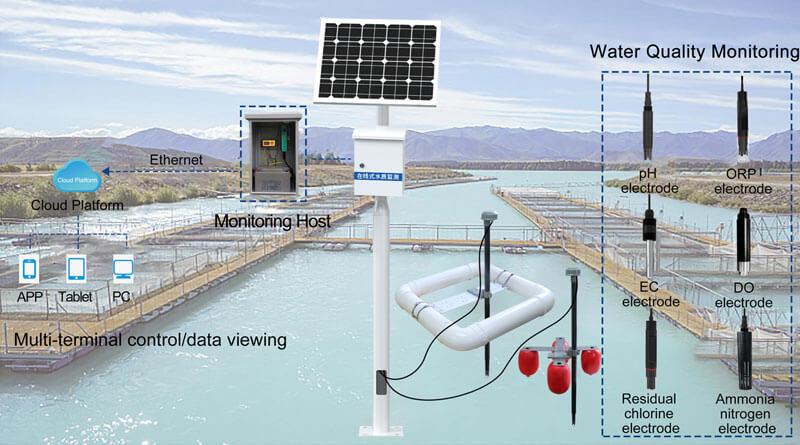
An online monitoring station procurement checklist should help buyers compare a complete system, not only a list of sensors. For WWTP, industrial discharge, surface water, reuse water and selected aquaculture monitoring projects, the purchase scope should cover measurement parameters, field installation, PLC or SCADA integration, Modbus RS485 communication, dashboard handover and long-term maintenance.
this selection is written for procurement teams, EPC contractors and system integrators who need a practical checklist before issuing a purchase order. It explains what to confirm from sensors to dashboard delivery so the monitoring station can be commissioned, accepted and operated without hidden integration gaps.
For online monitoring station procurement, the buyer should define the water matrix before comparing brands. Clear water, mixed liquor, sludge, recirculating aquaculture water, industrial wastewater and outdoor river water create very different fouling, bubble, solids and cable-protection conditions. The same online water quality sensor can perform well or poorly depending on whether the sampling point is representative and serviceable.
A practical specification should state the measured parameter, expected range, power supply, RS485 Modbus water quality sensor requirements, cable length, mounting method, enclosure needs and alarm response. These details make quotations easier to compare and reduce the chance that the lowest price becomes the highest installation cost.
Selection Priorities for the Application
The safest selection path is to connect each parameter with a field action. For monitoring stations, procurement should include sensors, mounting hardware, cabinet design, power supply, gateway, dashboard, alarm ownership and maintenance documents. If a sensor value will trigger automatic control, the project should also define maintenance hold, alarm delay, communication fault status and a manual verification method.
Field installation should protect the measurement surface and the cable route. A probe mounted in a dead zone, foam layer, sediment pocket or direct chemical injection area may produce a clean-looking value that does not represent the process. The site survey should include flow direction, service access, splash risk, sun exposure, grounding, cable glands and safe retrieval.
Data reliability is a system property. The sensor body, bracket, cleaning routine, calibration record, Modbus register map, dashboard unit, alarm ownership and operator response must work together. When one part is missing, operators often lose confidence and return to manual sampling even after purchasing an online monitoring system.
| Project decision | Recommended practice | Procurement value |
|---|---|---|
| Sensor package | Select parameters according to field action | Avoids unnecessary instruments |
| Cabinet and power | Define protection, grounding and backup | Improves uptime |
| Dashboard | Show value, unit, alarm, fault and service status | Makes data actionable |
Product and Parameter Recommendation
A station can use several YexSensor digital sensors depending on the project risk. The purchasing decision should describe the whole delivery scope instead of listing parameter names only.
If the buyer expects a turnkey station, the quotation should include cabinet layout, power distribution, surge protection, cable routing, Modbus settings, data display and operator training.
| Product or parameter | Key specification / use point | Best-fit application |
|---|---|---|
| YEX-S1-RDO optical dissolved oxygen sensor | RS-485 Modbus RTU, 12-24V DC power, IP68 protection, 0-20.00 mg/L range, optical fluorescence principle | aquaculture oxygen warning, aeration basin control and long-term outdoor monitoring |
| YEX-S1-PH industrial online acidity sensor | RS-485 Modbus RTU, 12-24V DC power, IP68 protection, 0.00-14.00 measurement range | neutralization, chemical dosing review and wastewater process protection |
| YEX-S1-EC online conductivity sensor | RS-485 Modbus RTU, 12-24V DC power, IP68 protection, 0-5000 uS/cm conductivity and 0-3000 mg/L TDS display | source change warning, salinity trend, rinse water and industrial discharge review |
| YEX-S1-ZS online turbidity sensor | digital output, optical turbidity measurement, field installation for water and wastewater monitoring | filtration release, final effluent warning, surface water and process clarification |
| YEX-S1-CL online residual chlorine sensor | RS-485 Modbus RTU, 12-24V DC power, IP68 protection, 0-2.000 mg/L measurement range | disinfection control, reuse water, drinking water and final effluent verification |
Common Field Mistakes
Do not select a sensor only from the parameter name. The range, matrix, measurement principle and cleaning condition matter as much as the label on the product page.
Do not place the sensor where it is convenient but not representative. A good installation point balances process meaning, hydraulic stability and safe service access.
Do not allow the platform to hide communication failures. A frozen normal-looking value can be more dangerous than a clear fault state because operators may act on old data.
Do not skip comparison checks during startup. Portable or laboratory confirmation under the same sample condition helps the buyer separate process variation from installation or scaling errors.
Commissioning and Handover Notes
Commercial buyers often specify phrases such as online water quality sensor, RS485 Modbus water quality sensor and water quality monitoring station because they need equipment that can be purchased, installed and maintained, not a theoretical definition. The supplier should answer how the product connects to PLC or cloud software, how the value should be checked during commissioning, and what spare parts or accessories are required for long-term use.
A useful quotation should separate sensor supply from system integration. Sensor-only supply may be suitable for experienced integrators, while turnkey packages need cabinet wiring, controller configuration, gateway setup, dashboard naming, alarm rules, data storage and training. This boundary should be written before purchase orders are issued.
Life-cycle cost should include cleaning tools, calibration standards, replacement parts, brackets, flow cells, cable connectors, site visits and downtime. A product with a slightly higher purchase price can be less expensive if it reduces false alarms, protects data quality and gives operators a simple maintenance routine.
Commissioning for online monitoring station procurement should be treated as a controlled acceptance process. The team should verify response direction, engineering unit, register scaling, alarm threshold, fault behavior and recovery after power interruption. A single comparison value is not enough; trend stability over several operating conditions gives stronger confidence.
The first month should be used to tune cleaning intervals and alarm logic. Real water is rarely as stable as a datasheet example. Seasonal temperature, loading variation, biological growth, chemical dosing rhythm and operator habits will reveal whether the initial maintenance schedule is realistic.
A professional handover package should include installation photos, wiring diagram, communication settings, maintenance method, calibration or verification record, spare-parts list and the decision each parameter supports. This documentation protects the buyer when staff change or when the monitoring system is expanded later.
Lifecycle Cost and Supplier Support
Accessory planning is often where online monitoring station procurement projects succeed or fail. A sensor may be correctly selected, but the project can still struggle if the mounting bracket is weak, the cable gland is not waterproof, the flow cell is difficult to clean, the cabinet has no spare terminals, or the operator has no standard method to remove the probe safely. The quotation should therefore include the mechanical and electrical items that make the measurement usable in the field.
The acceptance document should connect every measured value with a responsible person and a response action. If an alarm appears, operators should know whether to inspect the process, clean the sensor, confirm with a portable meter, check communication, or adjust equipment. This prevents online monitoring from becoming a passive display and turns the data into a practical operating tool.
Historical records create long-term value. Cleaning dates, comparison results, abnormal trend notes, communication faults and replacement events help managers understand whether the system is reducing risk. They also help procurement teams justify future expansion because the buyer can see which values produced useful decisions and which points need improvement.
For online monitoring station procurement, supplier support should include more than a product photo. Buyers should ask for installation suggestions, parameter range confirmation, communication details, maintenance guidance and practical notes for the water matrix. This soft recommendation style is more useful than a hard product push because it lets the application prove why a specific YexSensor direction is appropriate.
Handover should be practical enough for the person who will maintain the station next month. Labels, photos, wiring diagrams and spare-part lists are not paperwork decoration; they reduce troubleshooting time when a sensor is removed, replaced or cleaned.
Monitoring Station Procurement Checklist
A procurement checklist should clearly state what must be included, what is optional and what is often forgotten. The strongest checklist therefore separates sensor selection, installation accessories, communication settings, dashboard functions, acceptance testing and lifecycle support.
For industrial monitoring projects, the checklist should include pH, ORP, DO, turbidity, TSS, COD, ammonia, conductivity, residual chlorine or other required parameters only when they match the process objective. Each parameter should be connected to a sampling point, alarm rule, PLC/SCADA data object and maintenance responsibility.
A YexSensor-oriented monitoring station can combine water quality sensors, controllers, RS485 Modbus communication, dashboard handover and project documentation so buyers receive a practical operating system instead of disconnected devices.
FAQ
Q1. What should an online monitoring station procurement checklist include?
A useful online monitoring station procurement checklist should include the complete delivery scope: sensor parameters, controller or gateway, power supply, cabinet layout, cable length, mounting hardware, communication protocol, Modbus RS485 register map, PLC or SCADA interface, dashboard functions, calibration method, spare parts and handover documents. Buyers should compare the full monitoring loop, not only the price of individual sensors.
In aquaculture this may be oxygen stress, ammonium nitrogen accumulation or fast chemistry swings after feeding. In wastewater treatment it may be aeration instability, discharge turbidity, sludge imbalance or chemical dosing risk.
A project should not begin with a shopping list of instruments; it should begin with the action that operators will take when the value changes.
Q2. How is a monitoring station different from buying only one sensor?
One sensor only produces a measurement value. A monitoring station turns that value into an operating system with installation, communication, alarm rules, data storage, dashboard display and maintenance records. For WWTP and industrial monitoring projects, this difference matters because the buyer needs reliable data for decisions, compliance review and remote operation.
A convenient pipe or tank edge can still be a poor measurement point. The best point gives stable contact with the sample, allows cleaning, protects the cable and reflects the water condition operators need to control.
Q3. Which parameters should be selected first for WWTP and industrial water projects?
Parameter selection should start from the process decision. WWTP projects may need pH, DO, ORP, turbidity, TSS, ammonia, COD, conductivity or residual chlorine depending on the treatment section. Industrial discharge projects may prioritize pH, conductivity, turbidity, COD trend, oil-in-water or specific analyzers. The checklist should connect each parameter to a control action or alarm response.
Q4. What PLC, SCADA and Modbus RS485 details must be confirmed before purchase?
Before purchase, confirm RS485 Modbus address rules, baud rate, parity, register scaling, unit, fault status, alarm output and how the PLC or SCADA system will display maintenance mode. These details reduce commissioning risk and prevent a station from being installed physically but remaining difficult to use digitally.
Q5. How should dashboards and data handover be specified?
Dashboard handover should specify real-time values, trends, alarm history, sensor status, last calibration date, maintenance records, data export and user permissions. A dashboard is useful only when operators can see what changed, when it changed, whether the sensor is healthy and what action was taken.
Electrochemical probes may need hydration, standard solution checks or flow control. Conductivity sensors may need electrode cleaning and standard confirmation.
A practical schedule records before-and-after values so later trend changes can be explained instead of guessed.
Q6. What installation and maintenance items are often missed in quotations?
Common missing items include brackets, flow cells, waterproof junction boxes, surge protection, grounding, spare electrodes, cleaning tools, calibration standards, SIM or network configuration, cabinet drawings and training records. These items often decide whether the station can be commissioned smoothly after delivery.
Q7. How should suppliers be compared for long-term operation?
Suppliers should be compared by measurement range, industrial durability, documentation clarity, integration support, spare parts availability, response time and lifecycle cost. A low initial quotation may become expensive if Modbus registers are unclear, maintenance parts are unavailable or the dashboard cannot support the required handover data.
Q8. How does YexSensor support online monitoring station delivery?
YexSensor supports online water quality monitoring station projects with sensors, controllers, Modbus RS485 communication, installation advice and integration-ready documentation for WWTP, industrial water, environmental monitoring, reuse water and selected aquaculture projects. The goal is to help buyers receive a station that can be installed, commissioned, maintained and accepted as a complete system.
Summary
This topic should be handled as an engineering and procurement decision. The buyer needs reliable online data for water treatment plants, river stations, industrial discharge sites and aquaculture farms, but reliable data comes from the full measurement loop: sensor principle, range, installation, communication, cleaning, verification and operator response.
The strongest purchasing result is a solution that connects online monitoring station procurement with a clear field action. If the value will guide aeration, dosing, feeding, discharge review, sludge control or maintenance, the specification must define how the value is measured, checked, displayed and used after commissioning.
YexSensor product direction for this application includes YexSensor digital water quality sensors combined with integration-ready communication and site-specific installation accessories. These products make sense when the buyer wants an online water quality sensor that can be integrated into PLC, RTU, gateway or cloud systems and maintained by real operators in demanding water conditions.
A professional project should leave the buyer with more than a datasheet. It should leave a working monitoring point, clear alarm logic, a maintenance routine, comparison records, spare-part planning and documentation that supports future expansion. That is what turns a sensor purchase into a dependable water quality monitoring system.