Chinese
 Spanish
 French
 Russian
 German
 Portuguese
 Indonesian
 Thai
Thai Vietnamese
 Arabic

An online color sensor for textile wastewater discharge is typically required when periodic sampling no longer gives the project team enough time to respond. Buyers want a continuous value, but the purchase decision depends on more than range. The sensing method, water matrix, measuring point, output, cleaning access and reference checks decide whether the data will be trusted after commissioning.
this selection treats the instrument as a complete measuring point rather than a product description. It separates published YEX-S2-COL-8S specifications from conditions that need supplier confirmation and shows what the buyer should send with the RFQ.

online color sensor for textile wastewater discharge: what the measurement means
Color and turbidity are related but not interchangeable. Suspended particles scatter light, while dissolved dyes absorb selected wavelengths. The dual-wavelength design compensates for turbidity, but the site still has to validate how its dye mix responds. A Hazen value is only useful when the online and laboratory methods are compared on the same basis.
The published YEX-S2-COL-8S range is Color 0–500 Hazen; turbidity 0–200 NTU. Its principle is dual-wavelength visible-light absorption with turbidity compensation, and the listed output is RS485 Modbus RTU; optional 4–20 mA. Published accuracy is Confirm the ordered configuration and site matrix; resolution is Confirm color and turbidity resolution on the current datasheet. Applicable operating conditions are Send temperature, pressure and cleaning-chemical conditions for confirmation.
Those values describe the configured instrument, not every possible sample. Review dye spectrum, suspended solids, bubbles, window coating and mismatch with the laboratory color method before approving the model. Give the supplier actual laboratory data and the expected operating envelope. If a configuration-dependent value is not stated on the current datasheet, require written confirmation instead of filling the gap with an assumption.
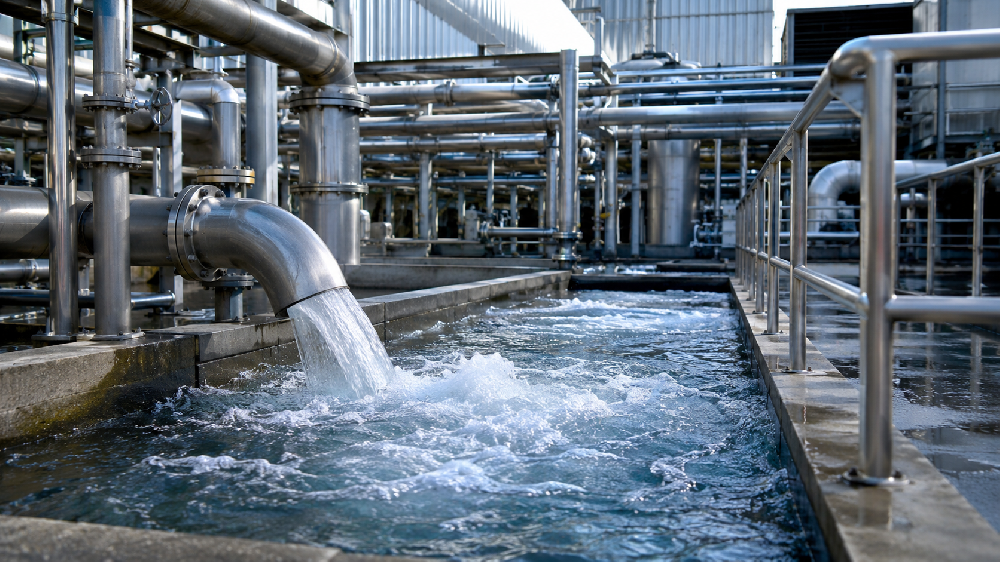
Selection comparison table
| Selection item | YEX-S2-COL-8S | Buyer confirmation |
|---|---|---|
| Range | Color 0–500 Hazen; turbidity 0–200 NTU | Normal, peak and alarm value |
| Accuracy | Confirm the ordered configuration and site matrix | Required control margin and reference method |
| Principle | Dual-wavelength visible-light absorption with turbidity compensation | Matrix effects and limitations |
| Output | RS485 Modbus RTU; optional 4–20 mA | PLC model, registers and scale |
| Installation | Submersible installation with built-in cleaning brush | Access, flow, pressure and cable route |
| Applicable water | Textile effluent, drinking-water stages, rivers, lakes and industrial discharge | Send actual water analysis |
Define the control decision before choosing hardware
The project objective is to identify color breakthrough and treatment instability before final discharge. Write down what happens when the value changes: collect a confirmation sample, inspect upstream treatment, change production, adjust dosing or trigger an alarm. A measurement with no assigned response becomes a maintenance cost rather than a control tool.
Set alarm delays from process dynamics. A short bubble, cleaning cycle or communication glitch should not command a large correction. Use warning, high and instrument-fault states where the consequence justifies them. Record the valid operating range and flag stale data so a PLC does not hold the last good value indefinitely.
Installation design and representative sampling
The preferred location is a well-mixed final treatment outlet with steady flow and service access. The installation arrangement is Submersible installation with built-in cleaning brush. Keep the sensing surface continuously wet, protect it from impact and allow removal without draining a major process unit. Show the holder, nozzle or side-stream panel on the inquiry drawing.
An immersion point is simple when the basin is mixed and accessible. A side stream can control flow, bubbles and service access, but it adds tubing delay and can alter the sample. State operating pressure and ensure the discharge is safe. Cable length should include routing and service loops; avoid field splices in wet areas.

RS485 and 4–20 mA integration
For RS485 Modbus RTU, document supply voltage, device address, baud rate, parity, stop bits, register addresses, data type, byte order and engineering units. Use shielded twisted pair and a bus layout with suitable termination. Bench-read the sensor with the intended controller before installing several units at remote points.
If optional 4–20 mA is selected, define the concentration at 4 mA and 20 mA and specify under-range, over-range and fault behavior. Verify the final value at the PLC or SCADA screen, not only at the probe. Store communication settings and scaling in the handover record so a replacement can be commissioned without reconstructing the design.
Real application: project operating method
Install the sensor after biological and polishing treatment, before the compliance sample point. Trend color through production recipe changes and cleaning cycles. If color rises while turbidity remains stable, investigate dissolved dye removal; if both rise, check solids carryover and the optical window before changing chemical dose.
During commissioning, collect the plant’s approved color method and a same-time sample while recording the online value, time, process state, temperature and maintenance condition. Compare several operating states. One matching sample is not enough, and a bottle collected at another hydraulic point is not a fair test. Establish a clean baseline and a site acceptance band before enabling control.
Calibration, cleaning and data confidence
When readings disagree, inspect the installation first. Check for bubbles, deposits, a dry sensing surface, loose wiring, wrong units or an unrepresentative sample. Clean only with the method approved for the sensing material. Aggressive brushing or solvent can create permanent damage that looks like calibration drift.
Keep calibration, cleaning, replacement and reference-sample events in the same data record. That history lets operators distinguish a process change from a maintenance effect. Start with short verification intervals and extend them only after site evidence shows stable performance.
Procurement and lifecycle-cost checks
Compare complete point costs: sensor, holder or flow cell, cable, power supply, junction box, surge protection, controller input, programming, standards, reference testing, cleaning labor and spare sensing parts. The lowest probe price can be the higher project cost when the sensor is difficult to service or the method does not match the decision.
Request the current specification sheet, calibration instructions, wiring drawing and Modbus register map. Confirm the ordered range, output, cable, wetted material, installation accessories, factory checks, export documentation, warranty route and after-sales diagnosis. A clear quotation reduces substitutions and commissioning disputes.
RFQ parameter checklist
- Medium or water type and representative analysis
- Required range, normal value, peak and alarm point
- Minimum and maximum temperature
- Operating pressure and pH or salinity where relevant
- Installation method and available space
- Required output: RS485 Modbus RTU or 4–20 mA
- Cable length
- Project quantity
Recommended YexSensor product
Review the YEX-S2-COL-8S product page for the published configuration. Send the actual water conditions rather than ordering from the range alone. YexSensor can review the sensing principle, output, cable and mounting details and provide the corresponding datasheet and integration documents.
Request model selection and quotation
Send us your water type, measuring range, installation method and required output for model selection and quotation.

Frequently asked questions about online color sensor for textile wastewater discharge
Q1: What does an online color sensor for textile wastewater discharge help a buyer decide?
It supplies a continuous trend to identify color breakthrough and treatment instability before final discharge. The useful output is not merely a number on a screen. The project should define an alarm, confirmation or process response and identify who owns that response. Keep any regulatory method separate unless the site has formally validated the online measurement for that use.
Q2: What range should be stated in the RFQ?
The published range is Color 0–500 Hazen; turbidity 0–200 NTU, with Confirm color and turbidity resolution on the current datasheet. Send normal values, credible peaks and the actual decision threshold. A wider range is not automatically safer because it may reduce useful detail near the operating limit. Ask the supplier to confirm the ordered range on the quotation and label.
Q3: How does the YEX-S2-COL-8S measure the parameter?
It uses Dual-wavelength visible-light absorption with turbidity compensation. This method has to be reviewed against dye spectrum, suspended solids, bubbles, window coating and mismatch with the laboratory color method. Request the current datasheet and calibration instructions, then compare the installed trend with the plant’s approved color method and a same-time sample across low, normal and high conditions before using it for automatic control.
Q4: Can the sensor connect to PLC, SCADA or an IoT gateway?
Yes. The listed output is RS485 Modbus RTU; optional 4–20 mA. RS485 commissioning requires the same address, baud rate, parity, register map, data format and units in the sensor and controller. If 4–20 mA is ordered, put the lower and upper engineering scale plus fault behavior on the loop drawing.
Q5: Where should the sensor be installed?
The proposed point is a well-mixed final treatment outlet with steady flow and service access. The published arrangement is Submersible installation with built-in cleaning brush. Avoid dead water, direct chemical or fertilizer injection, heavy bubbles, settled solids and any position that cannot be reached safely for cleaning. Confirm cable length before ordering so no underwater splice is needed.
Q6: How often should the sensor be calibrated?
Start with frequent verification during commissioning, using the plant’s approved color method and a same-time sample. Extend the interval only after the site has evidence of stable readings. Recheck after cleaning, sensing-part replacement, a major water change or unexplained drift. Do not recalibrate automatically when fouling, bubbles or a sampling mismatch could explain the difference.
Q7: What maintenance items should be included in the purchase?
Ask for approved cleaning instructions, calibration solutions or reference checks, replaceable sensing parts, seals, holders and cable accessories. The main site risks are dye spectrum, suspended solids, bubbles, window coating and mismatch with the laboratory color method. Order spares according to consequence and delivery time, and confirm how exported projects receive remote diagnosis and replacement-part identification.
Q8: What details are required for model selection and quotation?
Send the water type, normal and maximum range, temperature, pressure, pH or salinity where relevant, installation method, output, cable length and quantity. Include the controller model, the plant’s approved color method and a same-time sample, and a description of dye spectrum, suspended solids, bubbles, window coating and mismatch with the laboratory color method. That information is more useful than asking for a generic sensor price.
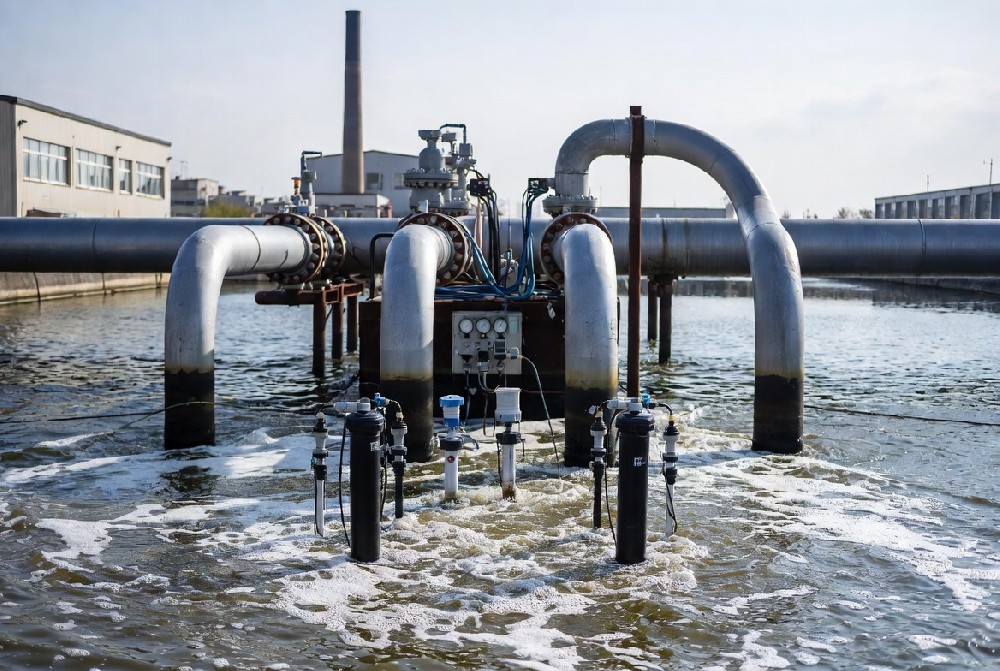
Summary
An online color sensor for textile wastewater discharge should be purchased as a complete, maintainable measuring point. The YEX-S2-COL-8S uses dual-wavelength visible-light absorption with turbidity compensation, covers Color 0–500 Hazen; turbidity 0–200 NTU and provides RS485 Modbus RTU; optional 4–20 mA. Final suitability depends on the real sample, installation, reference method and control purpose. Send the eight RFQ parameters so YexSensor can confirm the configuration and prepare a project quotation.