Chinese
 Spanish
 French
 Russian
 German
 Portuguese
 Indonesian
 Thai
Thai Vietnamese
 Arabic

An online COD sensor is usually searched when periodic sampling cannot support control rhythm. Buyers normally want faster reaction, stable data quality, and predictable integration into PLC/SCADA. If these three are not in the RFQ, the purchase often becomes a technical debate after installation.
COD plus turbidity trend is used for process response; without maintenance and correlation planning, users may get stable numbers but wrong process decisions.
Select an online COD sensor for industrial effluent by COD and turbidity range, cleaning, dual-channel logic, and RS485 / 4-20mA integration before quotation starts.

Online Cod Sensor technical meaning for project decisions
Range COD 0~200 mg/L (0~500 mg/L KHP), Turbidity 0~100NTU / 0~200NTU and resolution COD 0.1 mg/L, turbidity 0.1 NTU describe what can be represented in the trend. Accuracy COD +/-5%, turbidity +/-5% FS tells the confidence boundary. Principle Dual-wavelength ultraviolet absorption with turbidity compensation defines how environmental interference is handled in operation.
Published operating condition is Temperature 0~45C, power 12~24V DC, storage -5~65C, 316L housing. Procurement is valid only if this matches your site envelope and your acceptance window. If your project has wider fluctuation, do not proceed without written confirmation.
Online Cod Sensor selection comparison table
| Selection item | YEX-S1-COD | Buyer confirmation |
|---|---|---|
| Range | COD 0~200 mg/L (0~500 mg/L KHP), Turbidity 0~100NTU / 0~200NTU | Normal value and spike points |
| Accuracy | COD +/-5%, turbidity +/-5% FS | Acceptance tolerance and verification method |
| Resolution | COD 0.1 mg/L, turbidity 0.1 NTU | Trend precision requirement |
| Principle | Dual-wavelength ultraviolet absorption with turbidity compensation | Matrix interference tolerance |
| Output | RS485 Modbus RTU, optional 4-20mA | Controller mapping and register settings |
| Installation | Immersion mounting with cleaning brush, fixed hydraulic position | Representative location and access path |
| Applicable water | Industrial wastewater, textile discharge, municipal effluent, process plant outlets | Operational matrix and seasonal variation |
Common engineering questions before purchase
COD is one of the few variables where data confidence depends on both chemistry and sample optics. Cleanliness and flow stability matter as much as range and accuracy.
Before award, define whether dual output is used for monitoring and control. If analog is required, clarify address mapping and conversion logic in supplier scope.
Set acceptance with two channel checks: COD and turbidity during the same water event. Single-channel approval often hides integration issues.
In industrial effluent, plan calibration standards storage and exchange cycle with the operator. KHP handling and standard preparation can affect trend continuity.
Budget hidden cost often appears after project go-live when maintenance frequency is underestimated. Include cleaning brush replacement and periodic checks in the quotation terms.

Installation quality controls
Immersion mounting with cleaning brush, fixed hydraulic position must be evaluated against flow stability and service access. A clean mounting point reduces drift, while maintenance access reduces downtime. Do not ignore cable path, sealing method, and platform safety in quotation line items.
Set site conditions and responsibilities before delivery: installation party, acceptance party, retest intervals, and owner-level escalation rules.
Calibration, cleaning, and reliability
COD plus turbidity trend is used for process response; without maintenance and correlation planning, users may get stable numbers but wrong process decisions. Build a cleaning and calibration schedule based on site fouling. A visible SOP in procurement documents is more valuable than long model descriptions.
When values drift, verify maintenance and installation effects first, then parameter tuning. Jumping straight to alarm logic changes often masks root causes.
Integration with Modbus and control
Output option for this model is RS485 Modbus RTU, optional 4-20mA. The buyer should require register list, address map, baud rate, and protocol check points at the quotation stage. Without these, integration support may be delayed.
In multi-layer systems, decide whether one output is primary and which channel is backup. This reduces false switching and avoids duplicated alarm conditions.

Procurement parameter checklist
- Water type and representative chemistry
- Range and alarm thresholds
- Temperature and pressure conditions
- Installation form and access
- RS485 settings and optional 4-20mA requirement
- Cable length and conduit path
- Quantity, spare plan and replacement time
- Maintenance responsibility and SLA
Procurement decision logic for online COD sensor
The buyer is not only purchasing a sensing element. The buyer is purchasing a measurable decision path: sample representativeness, signal confidence, communication reliability, maintenance workload, and documented acceptance. If one of these parts is missing, a technically correct sensor can still become a project problem after installation.
Start by writing the reason for measurement in one sentence. For example, alarm-only monitoring needs stable threshold reporting, while dosing or aeration control needs predictable response behavior and failover rules. This distinction affects controller programming, spare planning, and after-sales responsibility.
Next, compare the site water with the published water scope: Industrial wastewater, textile discharge, municipal effluent, process plant outlets. If the real site has oils, high solids, scaling risk, bubbles, disinfectants, or sudden pH movement, those conditions should be attached to the RFQ. This prevents quotation based only on clean-water assumptions.
Buyer concerns that should be answered before order
The first concern is whether the range covers both normal operation and shock events. The second concern is whether the installation point represents the water body, not a local dead zone. The third concern is whether the controller can read the signal without unit mismatch. The fourth concern is whether maintenance can be done safely and consistently after commissioning.
For procurement teams, these concerns should become commercial requirements. Ask for datasheet, wiring document, protocol document, calibration method, and after-sales response terms as part of the same quotation packet. If the supplier cannot provide these before the order, the project should not rely on verbal confirmation.
Acceptance criteria for engineering and purchasing teams
Acceptance should include visual installation check, live output check, communication readback, alarm simulation, and comparison against field sample or standard solution where applicable. Do not close acceptance only because the device powers on and shows a value. The value must be meaningful to the process and readable by the final data system.
For RS485 Modbus RTU, confirm address, baud rate, parity, register address, data type, decimal scaling, and timeout behavior. For 4-20mA, confirm low value, high value, fault behavior, and controller scaling. These small items decide whether the monitoring point becomes a useful operational signal.
Commercial comparison and lifecycle cost
When two quotations look similar, compare lifecycle cost rather than sensor price alone. Include controller compatibility, cable length, mounting accessories, spare parts, calibration materials, site service, and replacement lead time. A lower unit price can become more expensive if the project later needs extra converters, longer cables, repeated site visits, or undocumented protocol support.
For tenders and distributor purchases, request one clean technical-commercial table from the supplier. It should state model, range, accuracy, output, installation method, warranty, delivery time, and excluded items. This makes internal approval faster and reduces arguments after purchase order confirmation.
Also define who owns routine review after the first month. Many projects pass startup testing but lose value when nobody checks trend quality, sensor cleaning records, and alarm action history. A simple monthly review log gives purchasing, engineering, and operations the same evidence base.
Real applications and operation design
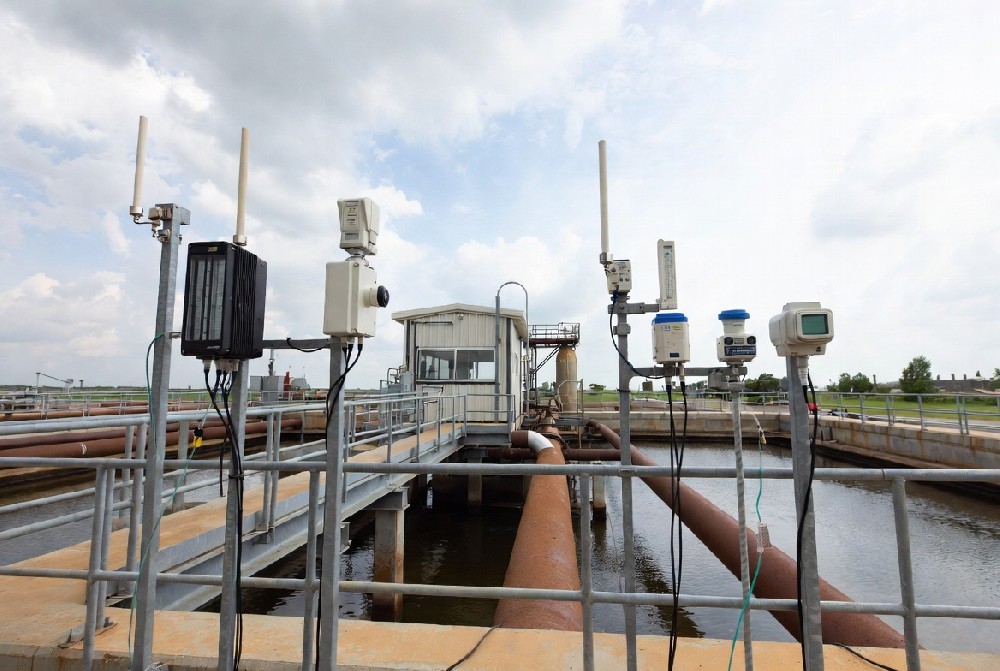
In industrial effluent, the sensor is commonly placed at final outlet, process drain, or equalization tank outlet points where organic load changes quickly. In municipal effluent, it supports discharge trend review and early alarm before laboratory confirmation. In textile, printing, food, and mixed industrial wastewater, it gives operators a faster basis for load control and treatment adjustment.
A real deployment is complete only when operator actions are tied to the signal. Define alarm response, sample confirmation, and action owner for each threshold before go-live. For wastewater, aquaculture, river monitoring, water plants, and industrial processes, the sensor should reduce uncertainty in daily operation, not create another number with no owner.
How this article supports searchable buying intent
A searcher using the phrase online COD sensor may be an engineer, purchasing manager, system integrator, or plant operator. Engineers usually care about range, principle, installation, output, and interference. Purchasing teams care about quotation completeness, documentation, delivery, warranty, and after-sales response. This guide connects both needs so the page can answer technical search queries and procurement search queries in the same buying path.
The stronger article structure for this type of search is not a product description. It is a decision guide that tells the buyer what to check, what to send, what to compare, and which YEX model page should be opened next. That is why the model link, quotation checklist, FAQ answers, and Summary are included as conversion points.
Trust proof and post-sale support
Ask for datasheet, calibration method, installation wiring example, and after-sales support policy. Confirm RS485 and 4-20mA details, warranty, replacement lead time, and technical support channels before purchase.
For long projects, include expected failure scenario examples and response SLA in the contract, not as informal notes.
Recommended product
Model reference: YEX-S1-COD
Request model selection and quotation
Send us your water type, measuring range, installation method and required output for model selection and quotation.

Frequently Asked Questions
Q1: When should a project choose an online COD sensor?
Use it when organic load changes quickly and discharge points need continuous trend support for operations and alarms.
Q2: Can COD and turbidity be treated as one signal?
They share one data path but should be interpreted differently. The buyer should define which rule triggers each control action.
Q3: Does this model support analog integration?
Yes, 4-20mA is optional. Lock this as a standard term before quote acceptance.
Q4: How is communication validated?
Run address, scale, and alarm test with PLC and HMI before operator handover. Any mismatch should be resolved in project acceptance.
Q5: How should RFQ include cleaning and maintenance?
Include cleaning brush frequency, replacement expectation, and labor assumptions. This avoids unexpected service interruption and hidden expenses.
Q6: What are the risks if range is undersized?
Saturation can flatten peaks and delay response, especially when occasional concentration spikes occur.
Q7: How to avoid compliance mismatch?
Use a formal comparison plan between online trend and lab method, and define conversion boundaries before procurement is closed.
Q8: What core data must be submitted for quote?
Water profile, range and alarm points, temperature/pressure, installation form, output mode, cable length, quantity, and maintenance policy.
Summary
The right buyer route for an online COD sensor is clear specification matching, explicit integration checks, and measurable acceptance criteria. Provide water type, range, temperature, pressure, installation method, output, cable length, and quantity so the supplier can return a procurement-ready model and quotation.