Chinese
 Spanish
 French
 Russian
 German
 Portuguese
 Indonesian
 Thai
Thai Vietnamese
 Arabic

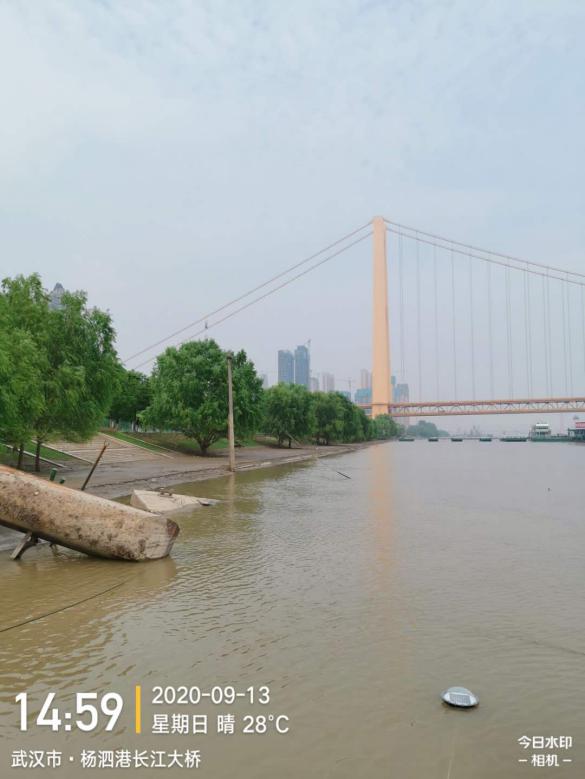
Project Background
The Yangsigang Yangtze River Bridge area in Wuhan is influenced by large river flow, bridge structures, vessel activity and changing hydrological conditions. The monitoring goal is to understand dissolved oxygen, turbidity, conductivity, pH and COD changes under real field conditions.
A bridge area has stronger water movement than a small urban river, so the sensor configuration must be suitable for continuous operation and stable data output in a dynamic river environment.
How YexSensor Solves It
The recommended configuration includes dissolved oxygen, turbidity, conductivity, pH and COD sensors. Dissolved oxygen reflects ecological condition, turbidity captures flow disturbance and suspended solids, conductivity helps identify water source or discharge changes, pH provides basic water chemistry data, and COD supports organic pollution tracking.
Depending on the site, the sensors can be deployed with a bridge-attached, bank-side or buoy-based structure. The RS485 Modbus RTU output allows the data to be integrated into the monitoring platform.
Recommended Product Configuration
| Product Image | Model / Product Link | Configuration Role |
|---|---|---|
 | YEX-S1-RDO Optical Dissolved Oxygen Sensor | Evaluates dissolved oxygen variation and ecological status in the bridge area |
 | YEX-S1-ZS Online Turbidity Sensor | Monitors suspended solids, vessel disturbance and flow impact |
 | YEX-S1-EC Online Conductivity Sensor | Helps identify water source variation or abnormal discharge impact |
 | YEX-S1-PH Industrial Online pH Sensor | Monitors basic pH changes |
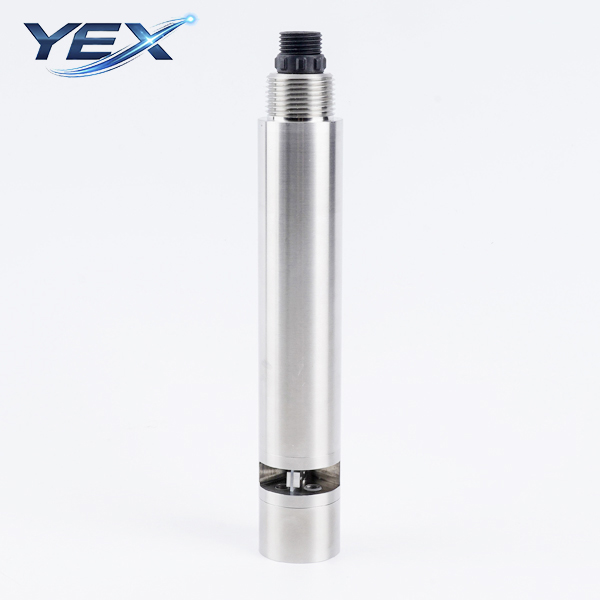 | YEX-S1-COD COD Online Sensor | Tracks organic pollution changes |
This configuration is suitable for bridge-area river monitoring, large river sections and hydrologically dynamic water bodies.
Related FAQ
For sensor selection, communication and maintenance details, you can also read [Water Quality Sensor Selection FAQ](https://www.yexsensor.com/FAQ/water-quality-sensor-selection-faq.html), [RS485 Modbus Water Quality Sensor Integration FAQ](https://www.yexsensor.com/FAQ/rs485-modbus-water-quality-sensor-integration-faq.html) and [Water Quality Sensor Installation and Maintenance FAQ](https://www.yexsensor.com/FAQ/water-quality-sensor-installation-maintenance-faq.html).