


 Chinese
 Spanish
 French
 Russian
 German
 Portuguese
 Indonesian
 Thai
Thai Vietnamese
 Arabic

wastewater discharge monitoring sensors are purchased when a project needs stable online data, not just a sensor on a datasheet. Buyers search this topic because they must connect instruments to a real plant, define outputs, control maintenance cost and avoid wrong model selection. The right YEXsensor choice depends on water type, measuring range, installation method and how the data will be used after commissioning.

wastewater discharge monitoring sensors: start from the buyer's decision
The first question is not which probe looks most advanced. The first question is what decision the reading will support. In industrial park final effluent station, the same parameter may be used for alarm, process control, compliance support or remote maintenance. Each purpose changes the acceptable response time, installation point, data output and service plan.
A procurement guide should therefore define the measuring point, normal value, expected upset value, required output and responsible operator. When these items are missing, the supplier can quote a sensor that technically measures the parameter but does not fit the project. YEXsensor product pages provide model options, while the final quotation should lock the exact configuration and documents.
Engineering concerns behind the search
Project buyers usually worry about five practical risks: the sensor cannot survive the water, the PLC cannot read the signal, the reading is not representative, maintenance is more difficult than expected, or the final user cannot obtain spare parts. These risks are solved through specification, not by adding more adjectives to the purchase order.
For water quality projects, confirm whether the sensor is installed in a tank, channel, pipe, bypass flow cell or outdoor station. State temperature, pressure, solids, oils, biofilm, cleaning chemicals and available power. If RS485 Modbus RTU is required, request address, baud rate, parity and register map. If 4-20 mA is required, define the engineering scale and fault behavior.
Specification notes for engineering and procurement teams
Engineering teams should translate the process requirement into measurable limits before procurement compares suppliers. A phrase such as continuous water quality monitoring is not enough. The specification should say which parameter controls a pump, which parameter creates an alarm, which value is only trended for diagnosis and which data must be archived. This prevents overbuying features that are not used and underbuying the documents needed for integration.
Procurement teams should also separate mandatory requirements from items that can be confirmed during model selection. Mandatory items include water type, communication output, installation space, cable route, power supply and required documents. Items such as exact holder material, final Modbus address or spare quantity can be refined with the supplier when the site drawing and maintenance plan are available. This makes the RFQ clear without pretending that every field condition is already solved.
For package purchases, request one combined bill of materials rather than five isolated sensor prices. The combined scope should identify sensors, controller or gateway, mounting accessories, cables, calibration items and spare parts. It should also state which items are supplied by YEXsensor and which are supplied by the panel builder or installer. This avoids disputes during commissioning when a missing holder, register map or cable gland stops a technically correct sensor from being used.
A second review should be made from the purchasing side. Check whether each quoted item can be matched to a tag number, drawing location and maintenance task. If an item cannot be tied to one of those three things, ask why it is included. If a required task has no supplied item, such as calibration standard, holder, spare cap or communication document, ask for the quotation to be revised before approval.

Selection comparison table
| Sensor or package | Range | Principle | Output | Installation | Suitable water |
|---|---|---|---|---|---|
| pH | Confirm from current product configuration | Electrode measurement | RS485 where configured | Flow cell or immersion holder | Neutralization outlet, final discharge |
| COD | Project range must match effluent load | UV/optical online method by model | RS485 by configuration | Flow or in-situ installation | Industrial effluent trend |
| Turbidity | 20, 200 or 1000 NTU options | 90 degree scattered light | RS485 Modbus RTU | Submerged or flow point | Solids carryover, filter failure |
| Ammonium | 0-10 or 0-100 mg/L options | Ion-selective electrode | RS485, optional 4-20mA | In-situ submerged | Nitrification and outlet control |
| Conductivity | Configured to water salinity | Conductive cell | RS485 Modbus RTU | Inline or immersion | Industrial salts and process leakage |
Product fit and YEXsensor links
The following YEXsensor pages are the direct product handoff for this topic. Use them as the model reference during quotation, then confirm current datasheets before order approval.
- YEX-S1-PH online pH sensor
- YEX-S1-COD online COD sensor
- YEX-S1-TS online turbidity sensor
- YEX-S2-NHN-A ammonium nitrogen sensor
- YEX-S1-EC online conductivity sensor
A category page can help browsing, but procurement should link to the exact sensor or controller model. Direct links reduce confusion when several parameters, outputs or installation accessories are discussed in one system article.

Real application workflow
In a real industrial park final effluent station project, define the monitoring point on the piping or basin drawing before selecting the model. Confirm whether the water is continuously present, whether the sensor can be removed without stopping the process, and whether operators can clean it safely. Then choose the sensor range and signal output around the control strategy.
Commissioning should prove the complete path from water to dashboard. A technician should read the sensor locally, then verify the same value at the PLC, SCADA or gateway. The test should include normal reading, alarm value, disconnected sensor and communication failure. This prevents a common problem: the probe works, but the control system stores the wrong decimal place or unit.
Procurement details that change the quotation
Range, pressure, temperature, cable length, mounting accessories, communication output and calibration materials all affect price and delivery. A low-cost quotation that excludes holders, flow cells, junction boxes, standards, spare caps or wiring documents may be incomplete. Ask the supplier to state what is included and what must be ordered separately.
For exported projects, include destination voltage, panel standard, language requirement for documents, packing needs and after-sales process. If the installation will be performed by a third-party integrator, the wiring diagram and register map should be available before shipment. This avoids delaying installation while waiting for missing technical files.
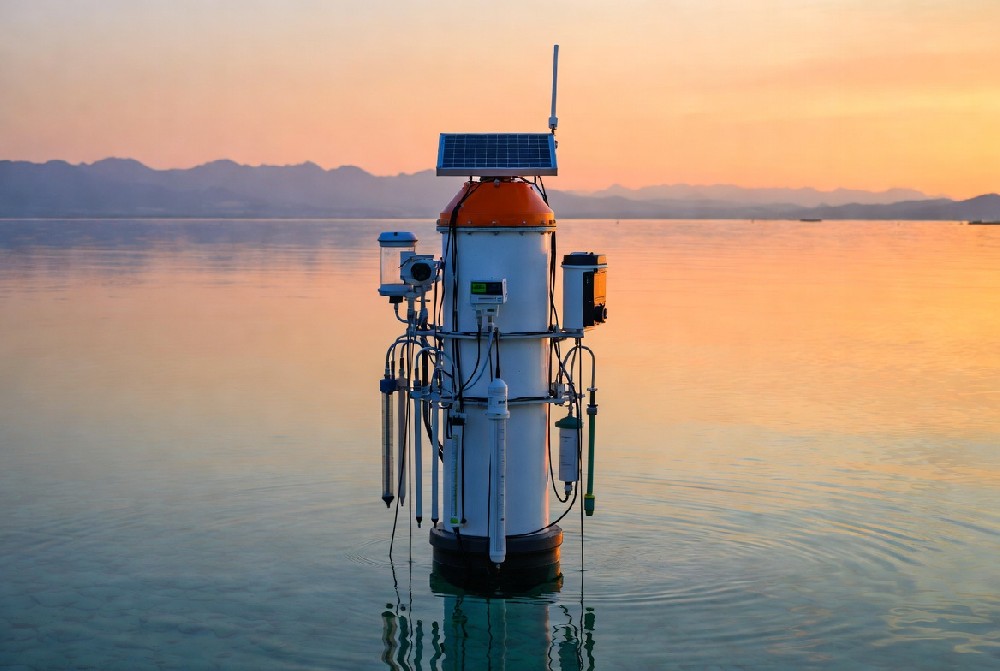
RFQ parameter checklist
- Medium or water type
- Required measuring range
- Minimum and maximum temperature
- Operating pressure
- Installation method and available space
- Required output: RS485 Modbus RTU or 4-20 mA
- Cable length
- Project quantity
Trust and supplier verification
Before approval, request the current datasheet, calibration instructions, wiring diagram, Modbus register map and output configuration. Confirm whether the quoted model supports RS485 Modbus RTU, 4-20 mA or both, and ask how calibration, spare parts, export packaging and after-sales diagnosis are handled. YexSensor can match sensor model, cable, output and installation details to water quality monitoring projects.
For quality control, ask for model-specific datasheets rather than generic brochures. Confirm calibration records, available output protocols, RS485 or 4-20 mA support, export experience and how after-sales diagnosis is performed. For a multi-sensor project, request one consolidated model-selection sheet so the buyer, integrator and end user approve the same scope.
Frequently asked questions about wastewater discharge monitoring sensors
Q1: Which wastewater discharge monitoring sensors are usually considered first?
A practical outlet package often starts with pH, COD, turbidity, ammonium nitrogen and conductivity because these parameters show neutralization, organic load, solids carryover, nutrient load and salt or process leakage. The exact list should follow the permit, process risk and plant operating decision.
Q2: Should a discharge station use individual probes or a multi-parameter controller?
Use individual probes when each measurement point needs optimized installation and maintenance. Use a controller or data acquisition panel when operators need display, alarms, data output and easier wiring. Many stations combine several sensors with one controller and send data to PLC, SCADA or a remote platform.
Q3: How should COD sensor range be selected for industrial effluent?
Use historical laboratory COD data, maximum upset values and the required alarm point. Do not choose only from the normal daily average. If the effluent contains unusual color, suspended solids or chemicals, send the matrix information to the supplier so the optical method and cleaning needs can be reviewed.
Q4: Why include conductivity in a discharge package?
Conductivity is a useful warning for salt load, chemical leakage, cleaning wastewater or process carryover. It does not identify a specific pollutant by itself, but it provides a fast trend that can trigger investigation. It is especially useful when combined with pH and COD or turbidity.
Q5: Where should sensors be installed at an outlet?
Install them where water is well mixed, representative and continuously available. Avoid stagnant corners, air bubbles, direct chemical dosing points and locations where rags or sediment will bury the probe. Provide a bypass or flow cell when maintenance access and hydraulic stability are more important than placing every sensor in the channel.
Q6: Can RS485 sensors connect to a discharge monitoring platform?
Yes, when the platform or gateway supports RS485 Modbus RTU and the sensor addresses and registers are configured correctly. For mixed pH, COD, turbidity, ammonium and conductivity points, document the polling order, engineering units and alarm thresholds during commissioning.
Q7: What should buyers compare besides sensor price?
Compare holder, flow cell, controller, cable, cleaning tools, calibration standards, spare electrodes or optical parts, commissioning support and data integration. A low probe price can become expensive if the installation cannot be cleaned safely or the controller cannot read the output.
Q8: How should an industrial park prepare the RFQ?
Send water type, normal and peak values, temperature, pressure, installation drawing, power supply, output requirement, cable length, number of points and whether the data goes to PLC, SCADA or a cloud platform. Include the discharge compliance parameters and any site-specific chemicals.

Summary
wastewater discharge monitoring sensors should be selected as part of a complete monitoring point: sensor, installation, output, calibration, spare parts and data integration. A useful article answers the buyer's real engineering and procurement questions, then sends the inquiry to exact YEXsensor product models. Send us your water type, measuring range, installation method and required output for model selection and quotation.



