Chinese
 Spanish
 French
 Russian
 German
 Portuguese
 Indonesian
 Thai
Thai Vietnamese
 Arabic

river water quality monitoring sensors are searched by buyers who need a project decision guide, not a product description. The real concern is whether the selected YEXsensor products can survive the water, connect to the control system, be maintained by operators and produce data that supports purchasing approval. The model choice should start from water type, range, installation method and output requirement.

river water quality monitoring sensors: why buyers search this topic
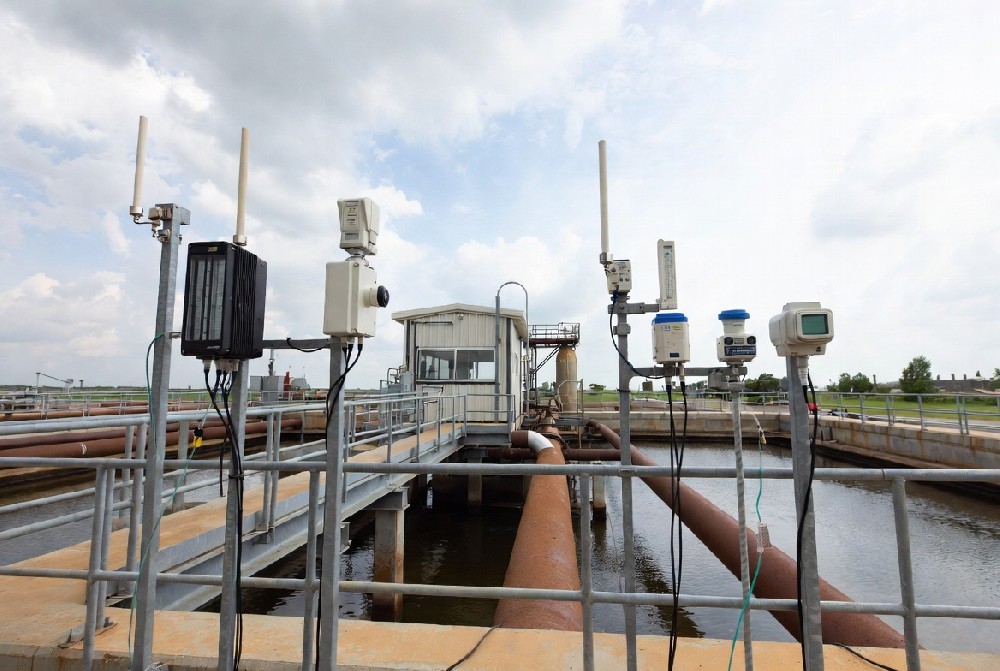
In a real river bridge station, reservoir inlet or surface-water warning point project, the buyer is usually trying to reduce engineering risk before placing an order. The search may begin with a sensor name, but the purchase decision depends on the complete measuring point: where the probe will be mounted, how it will be cleaned, which signal the controller accepts and which values operators will trust after commissioning.
A useful specification separates the process decision from the instrument list. Some readings create alarms, some control dosing, some prove trend history and some only support troubleshooting. When those roles are mixed together, quotations become difficult to compare. The supplier may offer the correct parameter but the wrong range, output or installation accessory.
Engineering risks that affect model selection
Water quality instruments fail most often because the site condition was not described clearly. Fouling, bubbles, sediment, pressure, temperature, chemical dosing points, cable routing and unsafe maintenance access all change the correct model and holder. Ask the engineer to mark the measuring point on a drawing before final quotation.
Output selection matters just as much. RS485 Modbus RTU is useful for PLC, SCADA and gateway integration, but the address, baud rate, parity and register map must be known. A 4-20 mA loop is simple for legacy PLC panels, but the engineering scale and fail behavior must be documented. A local controller can simplify display, alarms and maintenance when operators work near the process.
Procurement view: what the buyer must control
Procurement should request a complete scope instead of a loose sensor price. The quotation should state the sensor model, controller if required, holder or flow cell, cable length, calibration items, spare parts and technical documents. Every included item should connect to a tag number, drawing location or maintenance task. If a required task has no quoted item, the quote is incomplete.
For exported equipment or contractor-built panels, confirm document language, packing, cable labeling, Modbus registers, terminal wiring and after-sales diagnosis before shipment. A missing register map or installation drawing can delay site startup even when the sensor itself is technically suitable.

Selection comparison table
| Sensor or item | Range | Principle | Output | Installation | Suitable water |
|---|---|---|---|---|---|
| Radar level | 0.1-65 m for YEX-HY-RWLS-01 | Non-contact radar | RS485 Modbus RTU | Overhead fixed mount | River level and flood warning |
| Radar flow | Confirm channel and velocity conditions | Non-contact radar flow measurement | Confirm configured output | Bridge or bank mount | Open-channel flow trend |
| Turbidity | 20, 200 or 1000 NTU options | 90 degree scattered light | RS485 Modbus RTU | Submerged or flow point | Sediment and runoff events |
| pH | Confirm range from datasheet | Electrode measurement | RS485 by configuration | Protected immersion holder | Surface-water chemistry |
| Blue-green algae | Confirm fluorescence range and units | Fluorescence method | RS485 where configured | Representative intake depth | Bloom warning |
Product handoff to YEXsensor models
Use these direct product pages for model selection and quotation. Do not link only to a category page when the inquiry involves exact sensors, controller, outputs and accessories.
- YEX-HY-RWLS-01 radar water level sensor
- YEX-HY-RFMS-01 radar flow meter sensor
- YEX-S1-TS online turbidity sensor
- YEX-S1-PH online pH sensor
- YEX-S2-BGA-8S blue-green algae sensor
Final range, accuracy, protocol, material and installation conditions should be confirmed from the current product datasheet or by supplier confirmation. If a value is configuration-dependent, state the expected operating condition and ask YEXsensor to confirm the offered model.

Real application workflow
For river bridge station, reservoir inlet or surface-water warning point, start with a site drawing and a process description. Mark normal water level, maintenance access, power source, controller location and cable route. Then identify which parameter must create an alarm, which parameter controls dosing or aeration and which parameter only needs trend recording.
During commissioning, verify the whole data path. Read the sensor locally, confirm the same engineering value at the controller, then check PLC, SCADA or gateway records. Test high alarm, low alarm, communication loss and sensor removal. Record the address, scaling, calibration status and cleaning baseline before handover.
Installation and integration notes
Do not place sensors where water is stagnant, where direct chemical dosing hits the probe, or where operators cannot remove the sensor safely. Use flow cells or bypass loops when stable flow and easy service are more important than direct immersion. Outdoor stations also need cable protection, surge protection, enclosure sealing and access planning.
When multiple sensors share RS485, assign unique addresses before shipment and record them on the panel drawing. Use shielded twisted-pair cable where required by the site standard. Avoid underwater splices and long uncontrolled branches. For analog loops, document the range corresponding to 4 mA and 20 mA so the PLC display matches the sensor reading.
Acceptance criteria before final payment
Acceptance should be written into the purchase process before equipment is shipped. The buyer should require a visual inspection of model labels, cable length, accessories and documents, then a functional check after installation. Each sensor should display a reasonable value, communicate through the specified output and respond to a known process or reference change. The controller should show correct engineering units, alarm thresholds and tag names. If data upload is part of the scope, the same values should appear in the remote platform with the correct timestamp.
The acceptance record should include serial numbers, calibration status, Modbus address or analog scaling, installation depth or flow-cell location, cleaning baseline and the person responsible for routine checks. This record is not paperwork for its own sake. It prevents later disputes when a reading changes and the operator needs to know whether the cause is water quality, fouling, changed settings or a damaged cable.
Maintenance and spare-part planning
Procurement should request the first maintenance package together with the sensors. Depending on the parameter, this may include pH buffers, ORP verification solution, optical caps, cleaning tools, seals, holders, spare electrodes, calibration instructions or a replacement cable. The quantity depends on site criticality, travel time and the number of measuring points. A station that is difficult to access should carry more local spares than a plant with daily technicians on site.
Maintenance intervals should be adjusted from real fouling, not copied blindly from another project. Wastewater may need frequent optical cleaning, aquaculture may need biofilm checks after feed changes, river stations may need inspection after storms and cooling water points may need review after chemical program changes. Ask YEXsensor for model-specific guidance, then turn it into a site schedule that operators can actually follow.

RFQ parameter checklist
- Medium or water type
- Required measuring range
- Minimum and maximum temperature
- Operating pressure
- Installation method and available space
- Required output: RS485 Modbus RTU or 4-20 mA
- Cable length
- Project quantity
Trust and supplier verification
Before approval, request the current datasheet, wiring diagram, calibration instructions, Modbus register map and output configuration. Confirm RS485 Modbus RTU or 4-20 mA support, calibration method, spare parts, export packaging and after-sales diagnosis. YEXsensor can match sensors, controller, cable, output and installation details to the actual water project.
Ask for model-specific documents, not a generic brochure. A serious purchase file should include datasheet, wiring diagram, calibration instructions, Modbus map if applicable, spare-part list and after-sales contact path. For repeat export projects, use the same tag naming, cable labeling and commissioning record format across all sites.
Frequently asked questions about river water quality monitoring sensors
Q1: Which river water quality monitoring sensors are commonly combined?
River stations often combine level, flow, turbidity, pH and algae-related sensors when the project needs both hydraulic and water-quality context. The final list depends on flood warning, pollution tracking, intake protection or ecological monitoring requirements.
Q2: Why combine water level and water quality data?
Water quality changes often depend on rain, runoff and flow conditions. Level and flow help explain turbidity spikes, dilution, pollutant movement and sampling access. Combining hydraulic and quality data gives operators a clearer event record than a single water parameter.
Q3: When is radar level suitable for a river station?
Radar level is suitable when a stable overhead mounting point and clear beam path are available. The YEX-HY-RWLS-01 product page lists 0.1-65 m range and RS485 Modbus RTU. Confirm bridge structure, mounting height and flood debris risk before selection.
Q4: How should turbidity be specified for rivers?
Provide normal dry-weather turbidity and expected storm peaks. A low range may work for clean intake water, while flood runoff may require a wider range. Do not use TSS and NTU interchangeably without a site correlation plan.
Q5: Where should algae sensors be installed?
Install algae or fluorescence sensors at a representative intake depth or warning point, away from heavy sediment and trapped debris. Confirm whether the goal is bloom warning, intake protection or ecological trend because each goal can require a different location.
Q6: Can river stations upload data remotely?
Yes, when the controller, gateway or RTU is configured for the site power and communication method. Confirm RS485 wiring, Modbus registers, telemetry power, enclosure protection and antenna location. Solar sites need a full power budget.
Q7: What maintenance is realistic for river stations?
Plan cleaning, flood inspection, cable protection, bracket inspection and seasonal recalibration or verification. Outdoor stations need stronger mechanical planning than indoor process points. Procurement should include service access and spare parts.
Q8: What should buyers send in the RFQ?
Send river cross-section, mounting location, level range, expected turbidity, water temperature, power supply, data upload method, cable length, number of sensors and whether the station is for flood warning, intake protection or environmental monitoring.
Summary
river water quality monitoring sensors should guide the buyer from project risk to model selection. The strongest RFQ explains water type, range, temperature, pressure, installation method, output, cable length and quantity, then links the inquiry to exact YEXsensor products. Send us your water type, measuring range, installation method and required output for model selection and quotation.