Chinese
 Spanish
 French
 Russian
 German
 Portuguese
 Indonesian
 Thai
 Vietnamese
 Arabic


Use ORP dechlorination monitoring to follow how the water responds after treatment. When a membrane feed or other downstream process has a residual chlorine limit, verify it at the designated release point with a chlorine method that can resolve the project limit in that water. Pair the result with the ORP trend, pH, temperature and sample flow from the same operating period. A low millivolt reading can support an investigation, but it cannot establish how much chlorine remains.
Why a reassuring ORP reading can hide a failed check
An ORP electrode measures electrical potential against a reference electrode. The reading reflects multiple reactions in the water. Changes in oxidant and reductant levels, pH, temperature and electrode condition can all change the signal. Chlorine breakthrough, excess reductant and a mixing delay can therefore produce different patterns at different sites. A single reading gives too little evidence to tell those conditions apart.
The sample path can create a second problem. A probe near the chemical injection point may see water that has yet to mix. An analyzer on a long bypass may still be measuring water from before a pump change. The readings can each be valid for their own samples while showing different stages of the event. Before ordering, mark the treatment point, mixing section, verification tap and branch return on one drawing. Give each instrument tag its stream name and measurement units.
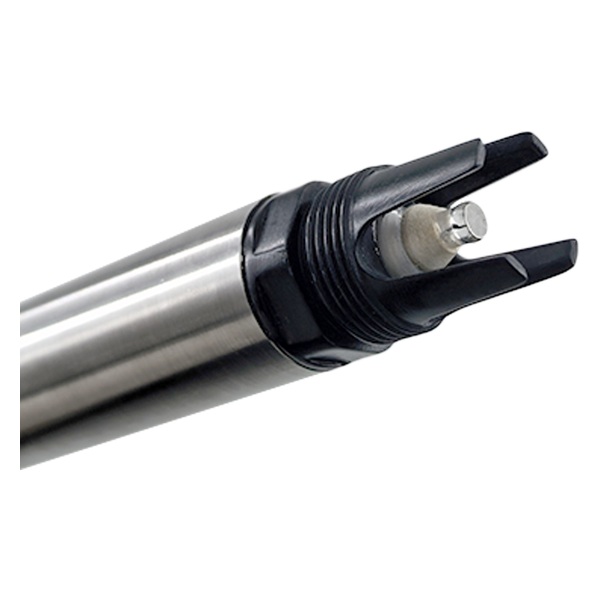
Which specifications matter for ORP dechlorination monitoring?
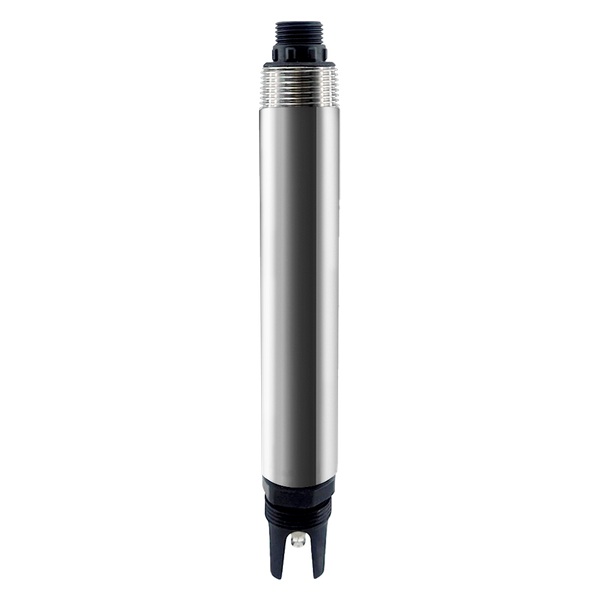
Select a signal and configuration for each measurement role. The YEX-S1PRO-ORP online probe provides the redox trend. Assess the YEX-S1-CL residual chlorine sensor separately against the sample, analytical definition and required low-end performance.
| Model | Published specification | Procurement check |
|---|---|---|
| YEX-S1PRO-ORP | −2000 to +2000 mV. Stated ORP accuracy ±20 mV. | Compare the required warning band with observed variation and measurement accuracy. If the plant needs to distinguish very close trends, verify repeatability on the intended water before assigning an alarm. |
| YEX-S1PRO-ORP | 12–24 V DC. Select RS485 Modbus RTU or the optional 4–20 mA output. | Order the signal option that fits the cabinet. Confirm analog scaling and available variables, or obtain the delivery register map for signed millivolts and separate temperature values. |
| YEX-S1PRO-ORP | NPT 3/4 thread. 0–50 °C, non-freezing, and pressure below 0.2 MPa. | Check pressure at the actual measuring point, including credible transients. Review the selected fitting, probe inclination and clearance before ordering a pressurized mounting assembly. |
| YEX-S1-CL | 0–2.000 mg/L. The manual identifies the measurement as hypochlorous acid (HOCl). | Have the supplier confirm the shipped analytical basis and performance near the project limit. A range beginning at zero does not establish a reporting limit. |
| YEX-S1-CL | RS485 Modbus RTU and 12–24 V DC. | Quote the probe with the approved sample assembly. Require the delivered flow and pressure limits, an accessible reference tap and a way for the controller to identify loss of sample flow. |
What ORP and residual chlorine measurements verify after treatment
| Decision | Measurement | Evidence to require |
|---|---|---|
| Investigate a change after treatment | Continuous ORP with pH and treatment status | Log normal and changed feed conditions with paired residual samples so operators can recognize where the trend is informative. |
| Verify a residual concentration | Analyzer for the specified chlorine fraction and an independent check method | Demonstrate uncertainty and reporting capability near the decision limit with representative samples. Match the chlorine fraction, units and reporting basis used by the reference method. |
| Protect a continuously fed downstream process | Residual verification with monitored sample flow. Add ORP if trend context helps. | Test sample transit, analyzer response and the programmed action together. Simulate sample loss and an invalid result during commissioning. |
| Investigate possible excess reductant | Treatment status and a project-approved reductant check where required | Include pH or other diagnostic data appropriate to the process. A very low ORP does not identify the chemical species or its concentration. |
Choose the verification method first when a concentration limit governs the decision. At typical treatment pH, free chlorine includes hypochlorous acid and hypochlorite. Total chlorine also includes combined chlorine. Qualify the delivered measurement against the required fraction and reference method. ORP can help explain changes between reference checks. Where continuous concentration coverage is required, match the analyzer cycle and sample transport time to the shortest event the station must detect. Scheduled grab samples provide a useful cross-check and leave gaps between results.

How the decision changes between operating conditions
RO feed changes source
Suppose an industrial reverse osmosis skid alternates between water sources with different pH and disinfectant histories. A change in ORP may follow the source switch even with similar chlorine results. During approved commissioning runs, collect paired readings for each source after the mixed stream reaches the measurement point. If a previous trend band fails to distinguish the new condition, restrict its use to the operating envelope it was validated in. The desalination pretreatment monitoring guide covers the broader intake and filtration measurements.
A bypass restarts after a shutdown
A stopped bypass can leave old water in the analyzer while the process line has already changed. As an illustrative calculation, a line containing 0.5 L at a measured 1.0 L/min has a nominal transit time of 30 seconds. That is volume divided by flow. The real response also depends on mixing, cell volume, analyzer timing and controller processing. Test the elapsed time at the installed station. Define a recovery check after normal sample flow returns and require fresh evidence before using the result.
Install and commission the verification point
- Pick a representative tap. Locate it after sufficient mixing and before the downstream decision point. Check bypass velocity, draining and service access. Follow the ORP manual for orientation. Use the chlorine probe only in the approved installation for the delivered version.
- Record traceable pairs. Record sample location, collection and analysis times, the corresponding online measurement timestamp, ORP, pH, temperature, sample flow, source and treatment status. Align trends by sample transit and run the approved residual method promptly. Reducing chemistry can keep changing a stored sample.
- Test the signal path. Verify the supplied power, wiring and interface document. Read a known state on the PLC and check signed ORP, engineering units, sample flow status and stale data handling. The gateway, when used, forwards records to a remote system. The local controls and approved project logic own the immediate response.
- Write the recovery criteria. Test low or lost sample flow, power loss, communications loss and stale values without exposing the downstream equipment. Mark affected data invalid and suspend any release decision that depends on it under the approved logic. After flow returns, verify that the measured sample renewal and instrument response time has elapsed and that fresh, valid chlorine evidence meets the project criterion. Record who can authorize recovery and retain the paired results and approved logic version.

RFQ checklist for an endpoint verification station
Specify the reference method, chlorine fraction and reporting basis, project decision limit, water chemistry and operating range. Include the process drawing, available sample flow and pressure, piping distance, tolerated reporting delay and downstream action. List the power and PLC interface, mounting accessories, sample-line hardware and spare parts, required drawings, quantity, destination and commissioning date. Define who verifies the low end, tests invalid signals and signs off the recovery criteria.
Review your monitoring point
Include the water source, sampling drawing, chlorine decision limit, plant flow range and control interface for a configuration review of the YEX-S1PRO-ORP trend measurement.
Frequently asked questions
Q1. Can an ORP dechlorination trend prove that chlorine is absent?
A1. A millivolt reading alone cannot verify absence. ORP responds to the combined electrochemical conditions of the sample, including reductants and other oxidants. If a reporting requirement applies, measure the specified chlorine fraction with a method suited to that requirement. Preserve a below-reporting-limit result with the limit and sample time. When that reporting limit exceeds the plant criterion, the result cannot establish that the water meets it.
Q2. Why can ORP move after a feed change while the chlorine result stays similar?
A2. The new feed may change pH, temperature or the balance of other electroactive species. Probe fouling and a delay between instruments can also create the appearance of a chemistry change. Compare the same stream and operating period, check the sample path and log both pH and temperature. Verify the probe separately before changing the alarm band.
Q3. Does checking an ORP probe in a standard also verify the treatment endpoint?
A3. A check solution verifies the probe response under known conditions. Endpoint verification still requires a representative treated-water sample and an appropriate residual method. Record the standard value at its check temperature, the observed result and the probe condition. Keep the probe check and the process verification as separate acceptance records.
Q4. When is ORP alone useful for an operator trend?
A4. ORP can serve as an operator trend if the site has reproduced the response across the intended feeds and the result only triggers an investigation. Establish the baseline with paired residual measurements under the approved startup and steady conditions. When the decision requires a concentration, add a method with demonstrated performance for that purpose.
Q5. Is the YEX-S1-CL suitable for verifying a very low limit?
A5. Request evidence near the actual limit before selecting it. The published 0–2.000 mg/L range and the displayed resolution do not specify the achievable reporting limit in your water. Confirm the chlorine fraction, uncertainty, sample assembly and comparison method for the delivered configuration. If suitable performance is unproven, select a method validated at that limit.
Q6. Where should the independent reference sample be taken?
A6. Use an accessible tap on the same treated stream as the verification measurement, with known transit between the two points. A sample from before treatment answers a different question. Document the flow state and record collection time, then analyze within the approved method conditions so the comparison reflects the water the instrument actually saw.
Q7. What should a supplier supply for the proposed measurement station?
A7. Require the exact model and output option, the approved mounting and sample drawings, wetted materials, wiring, current register details and the site verification method. For any chlorine analyzer, ask for low-level performance and analytical basis. Itemize the probe, flow hardware, cable, any flow monitor, service tools, spares and the division of commissioning work.
Q8. What evidence should the buyer retain after commissioning?
A8. Retain timed residual results and corresponding trends with location, flow, pH, temperature, feed source and maintenance state. Record the measured sample delay, fault simulations, restored-flow check and responsible approver. These records help a later operator decide whether the previous acceptance still applies after the sample line or feed chemistry changes.
Summary
Use the YEX-S1PRO-ORP where a validated redox trend helps operators see process changes. Select endpoint verification by the required chlorine fraction, operating matrix and performance near the project limit. Evaluate the YEX-S1-CL only within its confirmed configuration and installed sample conditions. Place the tap after mixing, measure the real delay, and test fresh data recovery. Quote the sample assembly, PLC interface, reference check and acceptance responsibilities as part of the station.