Chinese
 Spanish
 French
 Russian
 German
 Portuguese
 Indonesian
 Thai
Thai Vietnamese
 Arabic

Searches for an online potassium ion sensor usually come from fertigation, fertilizer production, wastewater or process-water teams that need a potassium trend between laboratory checks. The buyer is not only asking whether potassium can be measured online; the project needs to know whether the selected range, ISE membrane principle, RS485/4-20mA output, installation angle and calibration routine can survive daily operation. This guide reviews YEX-S2-KA-A from engineering and purchasing angles before an RFQ is sent.

Potassium range and fertigation/process control decisions
For potassium monitoring, the range decision should start with the water source and the control action. Irrigation water, fertigation return water, fertilizer process water and wastewater do not create the same alarm limits. For YEX-S2-KA-A, the published range is 0-100.00 mg/L for KA-A; 0-1000.0 mg/L for KA-S. Treat that number as a selection boundary, then ask the operator for the normal value, expected peak, seasonal high point and alarm value.
Confidence should be written into the acceptance plan. The accuracy is +/-10% of reading or +/-1 mg/L; temperature +/-0.5 C, and the resolution is 0.01 mg/L, 0.1 C for KA-A; 0.1 mg/L, 0.1 C for KA-S. Define whether startup verification will use standard solution, laboratory comparison, paired trend review or project-specific field samples.
Site condition is the third selection gate. The operating temperature is 0-40 C and pressure condition is <0.1 MPa. If the point has aggressive wastewater, scaling, strong fouling, frequent cleaning, deep immersion, pump surge or long cable distance, include that condition in the quotation request and ask for written confirmation.
What buyers must confirm before selecting YEX-S2-KA-A
The main procurement risk is buying a potassium sensor that fits a brochure keyword but not the site chemistry. Confirm the expected K+ level, fertilizer spikes, pH environment, suspended solids, cleaning access and whether the signal will be used for dosing, warning or trend reporting. Purchasing teams should also compare delivery scope, warranty, spare parts, calibration documents and after-sales response, not only model names.
The measurement principle is PVC membrane potassium ion selective electrode. This matters because the principle decides the risk pattern. Ion selective electrodes need correct posture, activation and calibration discipline. Optical sensors need clean measurement windows and fouling control. Multi-parameter optical sensors need clear parameter interpretation and acceptance against the intended control goal.
Selection comparison table
| Selection item | YEX model data | Procurement check |
|---|---|---|
| Range | 0-100.00 mg/L for KA-A; 0-1000.0 mg/L for KA-S | Confirm normal value, peak value and alarm threshold. |
| Accuracy | +/-10% of reading or +/-1 mg/L; temperature +/-0.5 C | Define acceptance method before purchase. |
| Principle | PVC membrane potassium ion selective electrode | Check water matrix and interference risk. |
| Output | RS-485 Modbus RTU; optional 4-20mA | Confirm Modbus map or analog scaling before delivery. |
| Installation method | 3/4 NPT thread, submersible, pipeline or tank installation; more than 15 degree tilt | Match hydraulic point, mounting hardware and cleaning access. |
| Applicable water | agricultural irrigation, fertigation water, industrial process water, wastewater and environmental water | Match the project type and seasonal water variation. |
| Temperature | 0-40 C | State the real site envelope in the RFQ. |
| Pressure | <0.1 MPa | Check depth, pump surge or pipe pressure before order. |

Fertigation, tank and pipeline installation checks
The installation method is 3/4 NPT thread, submersible, pipeline or tank installation; more than 15 degree tilt. A representative measurement point is more important than the easiest mounting point. Avoid dead zones, air bubbles, unstable water level, cable tension and places that operators cannot reach safely. Put mounting thread, bracket, cable protection, junction box and cleaning access into the purchasing scope.
The output is RS-485 Modbus RTU; optional 4-20mA. For RS485 Modbus RTU, request the register list, address, baud rate, parity, data type, engineering unit, decimal scaling and timeout rule before delivery. If 4-20mA is optional, decide whether the project needs analog output for an old controller, recorder or alarm panel.
Power and materials also affect procurement. The product page states 12-24 V DC, 0.2 W at 12 V; wetted or housing materials are POM+ABS for KA-A; POM+316L for KA-S. These details should be included in the approval file because outdoor stations, industrial wastewater, aquaculture tanks and cabinet systems can have very different installation risk.
Calibration, cleaning and trust proof
Calibration or verification note: two-point calibration. The buyer should define who performs the first check, what standard or reference method is used, and what drift condition triggers recalibration. Cleaning ownership should also be written into the handover record, especially for optical windows and ion electrode membranes.
Before purchase, request datasheet, wiring diagram, RS485 protocol, calibration method, installation drawing, warranty terms, export packing method and after-sales response process. These documents are trust proof and reduce the risk of unclear responsibility after commissioning.
Real applications for online potassium ion sensor
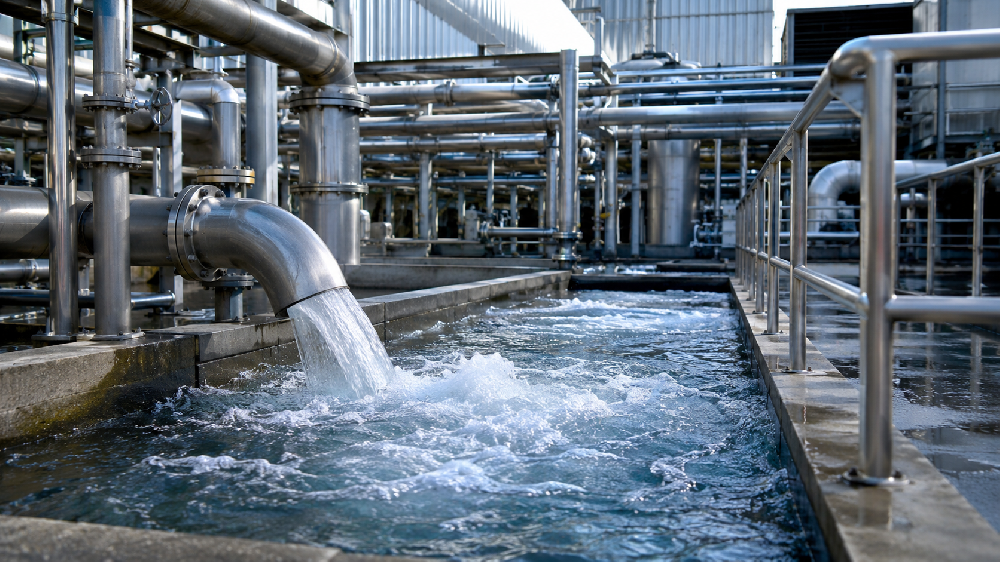
In precision irrigation and fertigation, potassium trend helps operators avoid underfeeding or fertilizer waste. In industrial process water, it supports concentration control in chemical, fertilizer or pharmaceutical lines. In wastewater and environmental monitoring, it gives continuous ion trend evidence when manual sampling is too slow for process adjustment.
In wastewater treatment, the value should be tied to an action such as dosing change, aeration review, discharge confidence or manual sample confirmation. In aquaculture, the signal should support alarms that operators can act on quickly. In river, reservoir or industrial monitoring, the signal should support trend evidence and maintenance scheduling, not only dashboard display.
Product handoff
For the related YEX product, open the model page directly: YEX-S2-KA-A. Use that page for datasheet request, final parameter confirmation and protocol details.
RFQ parameter checklist
- Medium and water type, including pH, salinity, suspended solids, fouling and possible interference
- Measuring range, normal value, peak value, alarm threshold and acceptance target
- Temperature, pressure, flow condition and installation depth
- Installation method: tank, pipe, immersion, flow cell, buoy, cabinet or sampling channel
- Required output: RS485 Modbus RTU, optional 4-20mA if available, or both
- Cable length, junction box, conduit route and waterproofing requirement
- Quantity, spare plan, calibration materials and expected delivery schedule
- Warranty, service response time and documentation package required before shipment
Send us your water type, measuring range, installation method and required output for model selection and quotation.
Commercial comparison for potassium monitoring projects
For YEX-S2-KA-A, compare the delivered scope instead of only the unit price. Sensor body, cable, mounting hardware, calibration documents, protocol support, spare parts and support response can change the real cost. A lower quotation may become more expensive if it leaves protocol mapping, cleaning tools or cable extension outside the offer.
For repeat orders, keep the accepted project record as a template. The template should include model, range, output, installation drawing, cable length, Modbus settings, calibration method, service notes and acceptance evidence. This reduces mistakes when multiple plants or distributors order similar systems.
Acceptance plan for potassium trend handover
Use five checks before closing the purchase: physical installation, live value on local controller, value on the final platform, alarm or threshold simulation, and documented calibration or comparison. If any step is missing, the project may appear complete but still be weak when abnormal water conditions occur.
Also define abnormal-data ownership. The project should state who checks the sensor, who checks the process, who collects a manual sample and who approves alarm reset. This turns online monitoring into an operating tool rather than an unattended number.
Potassium project risks to close before supplier comparison
Close four risks before comparing suppliers. First, confirm whether the measured value will be used for control, compliance evidence, trend warning or maintenance planning. Second, confirm whether the water matrix matches the measurement principle and whether site-specific interference must be checked. Third, confirm whether the installation point can be cleaned and inspected without shutting down the whole process. Fourth, confirm whether the supplier can support protocol questions during startup.
For purchasing departments, these risks should become written comparison fields. A quote that includes the same model but excludes cable length, mounting method, protocol file or calibration support is not equal to a quote that includes those items. This is why the RFQ should ask for a complete supply boundary and not only the sensor price.
Lifecycle value for irrigation and process operators
The value of online measurement is not only faster data. It reduces repeated manual checks, gives operators a continuous trend, and helps distributors prove that their recommended model fits the project. To protect that value, keep a record of installation photos, startup readings, calibration checks, communication settings and the first month of trend review.
If the project will buy multiple units, standardize the same selection form across all sites. Use one template for medium, range, output, installation, cable length, quantity and service requirement. This makes later procurement faster and prevents mixed technical assumptions between similar sites.

Frequently Asked Questions
Q1: When should buyers shortlist this sensor?
Shortlist an online potassium ion sensor when manual sampling is too slow for the control or compliance decision. It is useful when the value supports alarm review, dosing, process optimization or trend reporting.
Q2: What range should be requested?
Use the published range 0-100.00 mg/L for KA-A; 0-1000.0 mg/L for KA-S as the technical starting point. Then send normal value, expected peak and alarm threshold so the supplier can confirm whether the selected model is suitable.
Q3: Can it connect to PLC or SCADA?
Yes, the output is RS-485 Modbus RTU; optional 4-20mA. For RS485 projects, ask for address, baud rate, register map, data format and unit scaling before commissioning.
Q4: What installation details affect stability?
The installation method is 3/4 NPT thread, submersible, pipeline or tank installation; more than 15 degree tilt. Stability depends on representative water, full wetting or clean optical path, cable protection, safe maintenance access and avoiding bubbles or dead zones.
Q5: How should calibration be handled?
Use the product calibration note: two-point calibration. The buyer should define startup verification, recalibration trigger and who owns routine checks after handover.
Q6: Is 4-20mA required?
Use 4-20mA only when the receiving equipment needs analog input. For new digital systems, RS485 Modbus RTU is usually easier to document, network and troubleshoot.
Q7: What documents should be requested before payment?
Request datasheet, wiring diagram, Modbus register map, calibration procedure, installation note, warranty, spare part list and after-sales support contact route.
Q8: What information should be sent for quotation?
Send medium, measuring range, temperature, pressure, installation method, required output, cable length, quantity and photos or drawings of the measurement point.
Q9: How does this article help procurement decisions?
It turns the search for online potassium ion sensor into concrete checks: range, accuracy, principle, output, installation, applicable water, maintenance and supplier proof.

Summary
A workable potassium purchase depends on the KA-A or KA-S range fit, membrane care, correct immersion angle, communication setup and a realistic calibration plan. Use the YEX model page to confirm the final variant, then send medium, potassium range, temperature, pressure, installation method, output, cable length and quantity for a quotation that engineering and purchasing can both approve.