Chinese
 Spanish
 French
 Russian
 German
 Portuguese
 Indonesian
 Thai
Thai Vietnamese
 Arabic

Industrial Outfall COD Online Warning is searched by buyers who need a decision guide, not a definition of a water quality parameter. The real question is whether the measuring point can be installed, connected to a controller or PLC, maintained by site staff and accepted against agreed records. For wastewater projects, the useful measuring point is usually selected around process control, discharge warning and trend comparison with laboratory records. Influent shock, dosing points, solids, bubbles and cleaning access matter as much as the sensor model.

The product connection for this topic is YEX-S1-COD online COD sensor product page. The YEXSENSOR reference model should be checked against the current datasheet before ordering. The inquiry should include water type, measuring range, temperature, pressure or depth, mounting method, output signal, cable length, quantity and expected documents. This gives engineering and purchasing teams a comparable quotation instead of a bare sensor price.
Industrial Outfall COD Online Warning buying conditions
Suitable for: Projects where Industrial Outfall COD Online Warning must support online monitoring, alarm, control or acceptance records. Check organic absorption, color, turbidity, optical-window fouling, laboratory comparison and data purpose.
Not suitable for: Industrial Outfall COD Online Warning should not be quoted for an industrial process loop if the buyer only needs a grab-sample result, cannot maintain the probe, or cannot define range, mounting and output. In that case, confirm the test method or site responsibility before buying YEX-S1-COD.
| Selection item | Recommended confirmation | Purchasing impact |
|---|---|---|
| Range | COD 0 to 200 mg/L, KHP 0 to 500 mg/L, turbidity 0 to 100 NTU or 0 to 200 NTU reference ranges | The range must cover normal values, peak values and alarm points without losing useful resolution. |
| Accuracy or confirmation | COD +/-5% and turbidity +/-5% FS as reference values, with site correlation confirmed by sample comparison | The acceptance method should be agreed before purchase, especially for dirty water or model-based outputs. |
| Principle | dual-wavelength UV absorption with turbidity compensation | The principle decides fouling risk, response behavior, maintenance work and comparison method. |
| Output | RS485 Modbus RTU with optional 4-20 mA | The output must match the controller, PLC, SCADA, gateway or analog input specified in the project. |
| Installation | submersible installation where the optical window can remain clean and representative | The installation method affects brackets, flow cells, cable length, cleaning space and commissioning cost. |
| Suitable water | industrial effluent, municipal wastewater, discharge outlets and surface-water trend points | The water type should be written into the RFQ so the supplier can reject unsuitable conditions early. |
YEX-S1-COD technical parameters for selection
YEX-S1-COD online COD sensor is the recommended YEXSENSOR reference for this article. The reference range is COD 0 to 200 mg/L, KHP 0 to 500 mg/L, turbidity 0 to 100 NTU or 0 to 200 NTU reference ranges. The stated principle is dual-wavelength UV absorption with turbidity compensation, and the output reference is RS485 Modbus RTU with optional 4-20 mA. Final accuracy, accessories and operating limits should be confirmed from the current datasheet and the actual sample condition, especially when the water contains solids, oil, color, bubbles, scaling or chemical shock.
| Technical item | YEXSENSOR reference | How it helps selection |
|---|---|---|
| Recommended model | YEX-S1-COD online COD sensor | Use the exact model name in the RFQ so datasheets, drawings and spare parts match. |
| Measuring range | COD 0 to 200 mg/L, KHP 0 to 500 mg/L, turbidity 0 to 100 NTU or 0 to 200 NTU reference ranges | Confirm against current site normal value, maximum value and alarm setpoint. |
| Measuring principle | dual-wavelength UV absorption with turbidity compensation | Check whether the site needs optical, electrochemical, electrode or system-level measurement. |
| Output and integration | RS485 Modbus RTU with optional 4-20 mA | Request wiring diagram, address, register map, scaling and controller compatibility. |
| Installation condition | submersible installation where the optical window can remain clean and representative | Confirm mounting thread, flow cell, submersion, cabinet, bracket and service space. |
| Application limit | optical COD is useful for continuous trend and alarm work; laboratory digestion remains important for formal reference checks | Write these limits into the inquiry to reduce commissioning disputes. |

What Industrial Outfall COD Online Warning buyers want to reduce
The buyer is trying to reduce site risk, not collect another datasheet. Check organic absorption, color, turbidity, optical-window fouling, laboratory comparison and data purpose. The RFQ should show how the value will be used: local display, PLC input, alarm, dosing control, trend logging or acceptance comparison. That use decides whether the quotation needs only the sensor or also controller, bracket, cable, calibration material, communication file and spare parts.
A wrong selection has practical consequences. A range chosen too narrowly can overrun during a process upset; a range chosen too widely can hide small changes near the normal operating point. A poor installation point can create false alarms. A missing communication file can delay PLC work. A quotation without calibration materials, spare parts or mounting accessories can look cheaper but cost more after delivery.
Installation details that affect the measuring point
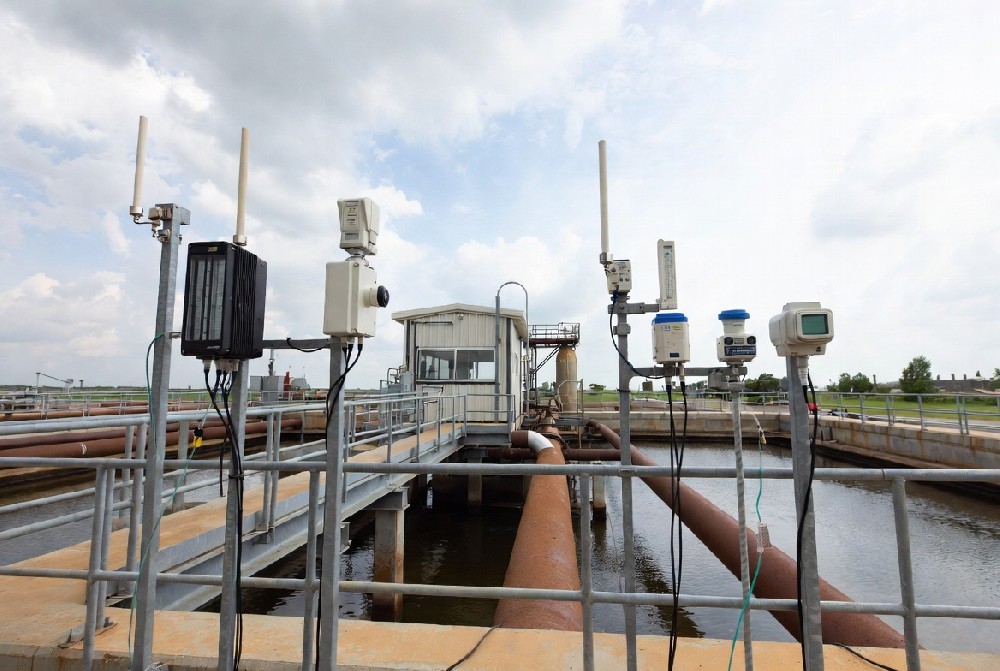
For wastewater projects, the useful measuring point is usually selected around process control, discharge warning and trend comparison with laboratory records. Influent shock, dosing points, solids, bubbles and cleaning access matter as much as the sensor model. For YEXSENSOR model selection, photos are often as important as the parameter list. A useful photo shows the pipe, tank or channel, flow direction, water depth, available bracket position, cabinet distance and whether staff can reach the probe for cleaning. If the project uses a flow cell, include sample pressure, flow stability and drainage conditions.
The installation method should match the water body. Wastewater points often need protection from rags, sludge and dosing shock. Aquaculture ponds need access during feeding and aeration changes. Drinking water and secondary supply systems need stable flow and traceable records. Industrial process water may need attention to chemicals, temperature, pressure, grounding and signal shielding.

Quotation comparison for the complete measuring point
Send the medium, measuring range, temperature, pressure or depth, installation method, output requirement, cable length and quantity. Add normal value, peak value, alarm point, comparison method, cabinet or PLC brand, communication protocol requirement and delivery schedule when available. If the point is outdoors, also confirm sun exposure, rain protection, freezing risk, lightning protection and enclosure needs.
Compare quotations item by item: sensor body, controller, gateway, relay output, mounting bracket, flow cell, cable, calibration liquid or verification tools, cleaning parts, spare consumables, wiring diagram, Modbus register map, packaging and remote support. The lowest sensor-only price is not comparable with a complete measuring-point quotation that includes accessories and commissioning documents.

Industrial Outfall COD Online Warning Questions
Q1: Why do buyers search for Industrial Outfall COD Online Warning?
A1: Buyers usually search for Industrial Outfall COD Online Warning when a real project needs continuous data for control, alarms, acceptance records or remote supervision. They are trying to reduce commissioning risk, not read a basic definition. A useful inquiry should describe the process purpose, water condition, measuring point and expected data use. For optical COD projects, add turbidity, color, oil, solids, laboratory comparison method and whether the point is for trend warning or compliance support. Send a site photo and the project target so YEXSENSOR can judge whether the selected model is suitable before quoting.
Q2: Which YEXSENSOR model should be checked for this application?
A2: The model connected with this guide is YEX-S1-COD. Use that exact model name when requesting a datasheet, wiring diagram, Modbus information and quotation. The reference range is COD 0 to 200 mg/L, KHP 0 to 500 mg/L, turbidity 0 to 100 NTU or 0 to 200 NTU reference ranges Confirm against current site normal value, maximum value and alarm setpoint.; the measurement basis is dual-wavelength UV absorption with turbidity compensation Check whether the site needs optical, electrochemical, electrode or system-level measurement.; the normal integration route is RS485 Modbus RTU, with 4-20 mA only where the selected model supports it; and the installation condition should be checked as submersible installation where the optical window can remain clean and representative. Final suitability should always be confirmed against the current datasheet and the actual water sample.
Q3: What information should be sent before quotation?
A3: Send water type, expected range, normal value, peak value, temperature, pressure or depth, mounting method, output signal, cable length and quantity. Include normal value, highest expected value, alarm point, controller or PLC requirement and the comparison method used on site. If the water contains oil, color, foam, scaling, high solids, chemical shock or strong temperature change, state it clearly. These details help separate a complete measuring-point quotation from a sensor-only price.
Q4: How should the installation point be selected?
A4: The sensor should be installed where the water is representative of the process decision and where operators can clean, remove and check it without unnecessary shutdown. Avoid locations with settled sludge, trapped bubbles, heavy window fouling or sample conditions that cannot be compared with a laboratory method. Photos should show the tank or pipe, water depth or pipe size, flow direction, cabinet distance, cable route and available bracket or flow-cell position. If the point is outdoors, also confirm rain, sun, freezing and lightning-protection conditions.
Q5: Should the project use RS485 Modbus or 4-20 mA?
A5: RS485 Modbus is usually better when the project needs digital records, multiple measuring points, long-distance collection or platform integration. 4-20 mA is easier for older control cabinets that only read one scaled value. Do not choose only by habit: confirm the selected model output, wiring distance, power supply, address, baud rate, register map, scaling and PLC input before ordering.
Q6: How should acceptance and maintenance be planned?
A6: Acceptance should compare the online reading with the agreed reference method under stable sample conditions, then check local display, PLC or platform value, alarms, wiring and calibration or verification records. Maintenance depends on fouling, flow, temperature, chemical exposure and how important the point is to production. Request the current datasheet, calibration or comparison method, wiring diagram, Modbus register map and spare-part recommendation before delivery.
Q7: Who is this measuring point suitable for, and who should avoid it?
A7: This topic is suitable for wastewater plants, aquaculture sites, waterworks, river stations and industrial users that can define the water type, measuring range, installation method and data interface. It is not suitable when the buyer cannot maintain the sensor, cannot provide the real water condition, or expects one catalog item to replace laboratory confirmation in every situation. Ask YEXSENSOR to review the point before purchase if the sample is dirty, corrosive, high-solids or difficult to access.
Q8: How should purchasing teams compare quotations?
A8: Compare whether the quote includes the sensor body, controller if required, mounting bracket or flow cell, cable, calibration or verification materials, spare parts, wiring diagram, communication file, export packing and remote after-sales support. A lower probe-only price may not cover the installed measuring point. For Industrial Outfall COD Online Warning, request a line-by-line quotation and confirm what documents will be supplied for commissioning and acceptance. Send us your water type, measuring range, installation method and required output for model selection and quotation.
Summary
This COD monitoring point should be purchased as a complete online measuring point. Confirm the water type, range, principle, output, installation method, calibration or verification plan, documents, spare parts and after-sales support before comparing price. Send us your water type, measuring range, installation method and required output for model selection and quotation.