


 Chinese
 Spanish
 French
 Russian
 German
 Portuguese
 Indonesian
 Thai
Thai Vietnamese
 Arabic


Project Background
Water bodies near livestock or agricultural activity areas are often sensitive to nitrogen and organic pollution. In the Nanchang monitoring scenario, the key task is to observe whether nearby discharge, runoff or pond water exchange causes ammonium nitrogen and COD to increase.
Because pollution impact may appear intermittently, continuous online monitoring is more effective than isolated sampling. Trend data can show when values rise, how long the change lasts, and whether turbidity or conductivity changes at the same time.
How YexSensor Solves It
The recommended configuration uses ammonium nitrogen and COD sensors as the core monitoring devices, supported by turbidity, conductivity and pH sensors. This combination helps identify organic pollution, nitrogen pollution, runoff disturbance and abnormal water source changes.
The sensors can be installed at key inlet, outlet or nearby water body positions. With RS485 Modbus RTU output, data can be connected to a local station or remote monitoring platform for long-term trend analysis.
Recommended Product Configuration
| Product Image | Model / Product Link | Configuration Role |
|---|---|---|
 | YEX-S1-NHN Ammonium Nitrogen Sensor | Core sensor for detecting ammonium nitrogen increase caused by livestock wastewater impact |
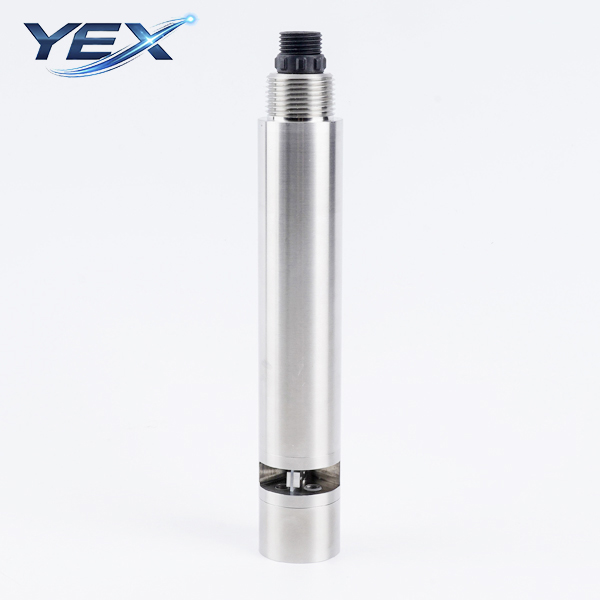 | YEX-S1-COD COD Online Sensor | Monitors organic pollution changes and supports pollution source screening |
 | YEX-S1-ZS Online Turbidity Sensor | Observes drainage disturbance, suspended solids and rainfall flushing |
 | YEX-S1-EC Online Conductivity Sensor | Helps identify external discharge or water source variation |
 | YEX-S1-PH Industrial Online pH Sensor | Provides basic pH monitoring for water quality assessment |
This solution is suitable for livestock wastewater impact screening, rural water bodies and agricultural drainage monitoring.
Related FAQ
For sensor selection, communication and maintenance details, you can also read [Water Quality Sensor Selection FAQ](https://www.yexsensor.com/FAQ/water-quality-sensor-selection-faq.html), [RS485 Modbus Water Quality Sensor Integration FAQ](https://www.yexsensor.com/FAQ/rs485-modbus-water-quality-sensor-integration-faq.html) and [Water Quality Sensor Installation and Maintenance FAQ](https://www.yexsensor.com/FAQ/water-quality-sensor-installation-maintenance-faq.html).



