Chinese
 Spanish
 French
 Russian
 German
 Portuguese
 Indonesian
 Thai
Thai Vietnamese
 Arabic

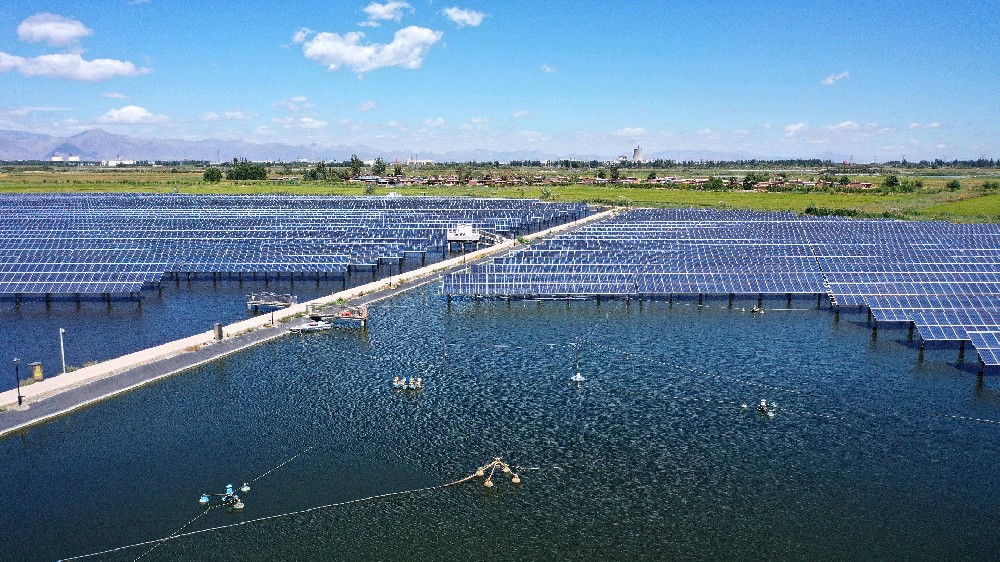
Water Quality Conditions Decide Pond Stability
Aquaculture ponds are biological production systems. Dissolved oxygen, pH, ammonia nitrogen, nitrite, temperature, salinity and turbidity do not operate as isolated numbers; they interact with algae, feed input, sediment, microbial decomposition and weather.
The reference material highlights dissolved oxygen, pH, ammonia nitrogen and nitrite as major pond indicators. For commercial farms, these values should be monitored as a control network because a change in one parameter often changes the risk level of another.
Online monitoring allows farm managers to observe daily pH cycles, night-time oxygen decline, ammonia accumulation after feeding and nitrite rise during incomplete nitrification. This trend view is more useful than a single manual test taken at a convenient time.
How DO, pH, Ammonia and Nitrite Interact
Dissolved oxygen supports fish and shrimp respiration, aerobic decomposition and beneficial microbial activity. Low DO can create floating-head emergencies, poor feed conversion, higher stress and slower degradation of organic waste.
pH affects blood oxygen transport, gill health, microbial activity and ammonia toxicity. In many ponds, photosynthesis raises pH during the day and respiration lowers it at night. The amplitude of this daily cycle is often more meaningful than one value.
Ammonia nitrogen and nitrite reflect nitrogen-cycle balance. Unionized ammonia becomes more toxic at high pH and temperature, while nitrite can interfere with oxygen transport. A pond with acceptable ammonia at one pH may become dangerous when pH rises.
Key Monitoring Parameters and Procurement Points
The table below summarizes the key requirements for engineering comparison, integration, commissioning and acceptance.
| Indicator | Typical monitoring method | Farm management meaning |
|---|---|---|
| Dissolved oxygen | Fluorescence DO sensor | Controls aeration and emergency warning |
| pH | Industrial pH electrode | Tracks acid-base balance and ammonia toxicity risk |
| Ammonia nitrogen | Ion-selective or analyzer method | Shows feed load and nitrogen conversion pressure |
| Nitrite | Ion-selective or reagent analyzer where required | Warns of incomplete nitrification and stress risk |
| Temperature | Integrated temperature sensor | Explains oxygen solubility and metabolism |
| Data transmission | Solar station, RTU or gateway with Modbus data | Supports multi-pond comparison and remote alarms |
Selection Guide for System Integrators
For high-density ponds, DO and pH are the minimum real-time pair. Ammonia nitrogen and nitrite should be added when stocking density, feeding load or previous water quality incidents justify closer nitrogen control.
Sensor position should avoid direct aerator bubbles, sediment burial, feed accumulation and areas where water is not representative. Floating stations, fixed brackets or side-stream cells can be selected according to pond structure.
Alarm thresholds should be species-specific. Shrimp, fish fry, adult fish and different salinity systems have different tolerance levels, so the integrator should configure alarms with the farm manager rather than copy a generic table.
The monitoring project should also include manual verification. Online sensors provide trend and early warning, while portable or laboratory checks help confirm calibration and unusual events.
Integration, Acceptance and Lifecycle Control
For a commercial water quality project, procurement should define a monitoring loop rather than a single instrument. The loop includes the sensor or analyzer, mounting method, sample condition, cable route, waterproof connection, power supply, communication protocol, register map, engineering unit, alarm thresholds, verification method and service responsibility.
The first design question is what decision the value will support. A parameter used for dosing control, aerator control, disinfection verification, membrane protection, discharge warning or management reporting needs a defined sample point and an agreed response procedure.
A good site survey records water matrix, expected range, temperature, flow condition, pressure, suspended solids, biological fouling, chemical interference, cabinet distance, safety restrictions and the person responsible for routine service. These details determine whether the online value remains stable after handover.
System integrators should standardize Modbus address rules, baud rate, parity, register scaling, dashboard labels, alarm delay, maintenance hold and communication fault status. Standardization is essential when one platform manages several tanks, ponds, treatment units or remote stations.
Acceptance should include a trend period, not only one comparison reading. Operators should confirm that the value responds logically to process changes, remains stable in normal conditions and can be compared with a laboratory or portable reference under the same sample condition.
The dashboard should show the current value, unit, trend, alarm state, sensor status, last maintenance date and related equipment. A clean operations screen is more useful than a crowded engineering page when staff need to respond quickly.
Documentation should include installation photos, wiring diagram, Modbus register map, calibration procedure, cleaning method, spare part list, alarm settings and acceptance records. These records protect the project when staff change or when the monitoring system is expanded later.
Maintenance should be visible in the data history. Cleaning, calibration, electrode activation, membrane replacement, cap replacement or sensor removal should be recorded so that a maintenance event is not mistaken for a real water quality event.
Long-term value comes from correlating online water quality data with flow, temperature, dosing state, aeration state, rainfall, feeding load, production schedule and laboratory records. A connected monitoring system explains why a value changed, not only that it changed.
Procurement teams should define after-sales responsibility before startup. The plant should know who owns routine cleaning, who checks calibration, who keeps spare parts, who manages platform accounts and who calls for technical support when the trend becomes abnormal.
For retrofit projects, the integrator should review old cable routes, grounding, cabinet space and controller inputs before quoting. Many measurement problems are caused by weak electrical installation rather than by the sensing principle itself.
For new projects, the monitoring loop should be included in factory acceptance and site acceptance checklists. The checklist should verify sensor output, scaling, alarm output, trend storage, communication recovery after power cycling and maintenance mode.
Data ownership should be clear. Operators need real-time alarms and simple maintenance prompts, managers need trend summaries and exception reports, and engineers need raw values and configuration records. If all users see the same crowded screen, the system becomes harder to use than it needs to be.
For cloud-connected or remote stations, password policy, gateway access, user roles, data export permission and remote configuration authority should be documented. A wrong remote setting can affect dosing, aeration, alarm response or compliance reporting.
For formal quality systems, the online value should be linked to calibration and verification records. The record should show who performed the check, what reference was used, before-and-after values and whether any process action was taken.
Spare parts should be quoted with realistic service intervals rather than left to later negotiation. Electrodes, optical caps, membranes, standards, cleaning materials, waterproof connectors and one critical spare sensor can reduce downtime when the value is tied to production or compliance.
Training should use real fault examples. Operators should recognize a blocked sample line, air bubbles, dirty optical window, exhausted reagent, loose terminal, wrong range setting or frozen communication value from the trend, not only from a manual page.
The project should define an initial baseline period after commissioning. During this period the team records normal operation, cleaning events, rain influence, production change, feed change or disinfection events. This baseline becomes the reference for future alarm tuning.
When laboratory comparison is required, sampling time, sampling location, preservation, holding time and unit conversion must be aligned. Many disputes come from comparing an online value at one condition with a laboratory result taken from another point or another time.
YexSensor-oriented solutions should therefore be presented as integration-ready monitoring packages. The sensor is important, but the complete value includes communication compatibility, installation method, maintenance procedure, data quality control and practical response guidance.
A professional project should also define the difference between advisory data and control data. Advisory data helps operators understand trends, while control data may trigger dosing, aeration, valves, pumps or warnings. Control data requires stricter verification, alarm delay rules and maintenance bypass logic.
Sampling hydraulics deserve early attention. Dead zones, air bubbles, intermittent flow, sediment pockets, oil layers and unbalanced mixing can create more error than the sensor itself. The integrator should document why the chosen point is representative of the process decision.
Electrical design should not be treated as an afterthought. Shielding, grounding, surge protection, cable separation, waterproof glands and terminal labeling reduce noise, corrosion and troubleshooting time. This is especially important for outdoor stations, wet pump rooms and farms with long cable runs.
The alarm plan should include escalation levels. A warning alarm may prompt inspection, a process alarm may trigger equipment action and a critical alarm may notify managers. Communication failure, maintenance mode and sensor fault should have separate states so that operators do not confuse a missing value with a safe value.
Historical records should be useful for management review. Monthly exports of trend curves, alarm duration, maintenance events, comparison checks and operator notes allow the plant to evaluate whether the monitoring project is reducing risk, improving response time and supporting better process control.
When multiple parameters are installed together, the platform should preserve relationships between values. pH helps interpret chlorine and ammonia, temperature helps interpret DO, conductivity helps identify source changes and turbidity helps explain optical or disinfection issues. The strongest decisions come from parameter combinations.
For procurement, the buyer should request a clear boundary of supply. Sensor-only supply is suitable for experienced integrators, while turnkey packages should include cabinet design, communication programming, platform configuration, commissioning and training. Unclear scope often becomes the source of delays.
For long-term operation, the site should keep a small but complete service kit. Standards, cleaning solution, soft brushes, spare seals, spare cable connectors and parameter-specific consumables prevent minor maintenance needs from becoming long data gaps.
After the first quarter of operation, the project should be reviewed. Alarm thresholds, cleaning intervals, sample point suitability, spare part use and operator response records can be adjusted based on real evidence instead of assumptions made before installation.
A final acceptance report should connect the technical system with business value. It should show monitored parameters, installation locations, communication test results, alarm settings, comparison records, maintenance plan and the decisions each value supports. This makes the system easier to defend in audits and future expansion budgets.
| Integration item | Recommended practice | Risk if ignored |
|---|---|---|
| Pond zoning | Place sensors in representative water zones | Localized readings mislead farm decisions |
| Aerator linkage | Use DO trend and alarm delay before control action | Unstable control or late oxygen response |
| Nitrogen control | View ammonia with pH and temperature | Toxicity risk may be underestimated |
| Outdoor protection | Use waterproof cables and stable mounting | Sensor drift or communication failure |
| Farm platform | Compare ponds by trend, not only current value | Abnormal ponds are found too late |
Operation and Data Quality Management
Aquaculture sensors face algae, biofilm, sediment and animal contact. Cleaning intervals should be based on actual fouling and recorded in the platform so that operators can separate service effects from real water quality changes.
DO sensors, pH electrodes and ion-selective nitrogen sensors have different maintenance logic. The farm should stock the correct consumables and not treat all probes as identical.
Data review should focus on patterns: night-time oxygen minima, afternoon pH maxima, post-feeding ammonia rise and weather-related crashes. These patterns help the farm prevent incidents rather than simply document them.
FAQ
Q1 Which aquaculture water quality indicators should be monitored first?
Dissolved oxygen, pH, ammonia nitrogen, nitrite and temperature are common core indicators because they directly affect survival, feed conversion and disease stress. In commercial pond, cage and recirculating aquaculture system projects, this answer should be linked to the full measurement loop: representative sampling, correct sensor principle, stable installation, calibration or verification and a clear operator response. Buyers comparing aquaculture water quality monitoring solutions should ask how the value will be used after installation, because the strongest systems connect measurement with dosing, aeration, disinfection review, filtration inspection, discharge warning or compliance documentation. Buyers often evaluate aquaculture pond water quality, dissolved oxygen pH ammonia nitrite, pond monitoring system together with industry application, integration requirement and service responsibility, so the answer should connect those points in practical language.
Q2 Why is dissolved oxygen often the first online sensor?
DO can fall quickly at night or after weather changes, and low oxygen creates immediate risk. The engineering reason is that aquaculture pond water quality monitoring data is only useful when the measurement condition is controlled. Sample flow, temperature, fouling, bubbles, chemical interference and communication stability can all change how the value should be interpreted. During procurement, the buyer should request the installation method, verification procedure, maintenance interval and alarm logic in writing rather than treating the sensor as a standalone accessory. Buyers often evaluate aquaculture pond water quality, dissolved oxygen pH ammonia nitrite, pond monitoring system together with industry application, integration requirement and service responsibility, so the answer should connect those points in practical language.
Q3 How does pH change ammonia toxicity?
At higher pH and temperature, a larger fraction of ammonia exists as unionized ammonia, which is more toxic to aquatic animals. For system integrators, the practical design question is where the sensor should be installed so that the value represents the process decision. A convenient installation point is not always a representative point. Good projects define the water matrix, expected range, mounting hardware, cable route, grounding, waterproof connection and safe service access before commissioning, which reduces false alarms and long-term drift. Buyers often evaluate aquaculture pond water quality, dissolved oxygen pH ammonia nitrite, pond monitoring system together with industry application, integration requirement and service responsibility, so the answer should connect those points in practical language.
Q4 Why monitor nitrite?
Nitrite indicates incomplete nitrification and can interfere with oxygen transport in aquatic animals, especially when pond biological balance is unstable. The value should also be interpreted with related parameters. pH can affect chlorine and ammonia risk, temperature affects dissolved oxygen, conductivity can reveal source changes and turbidity can explain filtration or optical measurement problems. This combined view improves search relevance for buyers because it connects aquaculture pond water quality monitoring with real operating scenarios instead of isolating one parameter from the rest of the water treatment system. Buyers often evaluate aquaculture pond water quality, dissolved oxygen pH ammonia nitrite, pond monitoring system together with industry application, integration requirement and service responsibility, so the answer should connect those points in practical language.
Q5 Can online sensors replace manual testing?
They reduce blind spots and provide alarms, but manual or laboratory checks are still useful for verification, calibration and special investigations. From a maintenance perspective, the answer depends on whether the site can keep the sensor clean, verified and traceable. A technically correct measurement principle still fails if the optical window, electrode, membrane, flow cell or reagent path is neglected. Operators should record cleaning, calibration, replacement parts and before-and-after values so that future trend changes can be separated from service events. Buyers often evaluate aquaculture pond water quality, dissolved oxygen pH ammonia nitrite, pond monitoring system together with industry application, integration requirement and service responsibility, so the answer should connect those points in practical language.
Q6 Where should pond sensors be installed?
Install them in representative water, away from direct aerator bubbles, sediment accumulation and unsafe service locations. For digital integration, confirm RS-485 Modbus RTU settings, register scaling, engineering units, alarm delay, maintenance mode and communication fault behavior before the system goes live. These details matter for PLC, RTU, DCS and cloud platform projects because a correct sensor value can still become unusable if it is displayed with the wrong unit, frozen during a fault or missing from historical reports. Buyers often evaluate aquaculture pond water quality, dissolved oxygen pH ammonia nitrite, pond monitoring system together with industry application, integration requirement and service responsibility, so the answer should connect those points in practical language.
Q7 How can data improve farm management?
Trend data helps adjust aeration, feeding, water exchange, microbial treatment and pond inspection priority. Life-cycle cost should include accessories and service materials, not only the purchase price. Mounting brackets, flow cells, cable connectors, standards, cleaning tools, spare electrodes, membranes or optical caps can decide whether the system remains reliable. A professional quotation for aquaculture water quality monitoring should therefore include commissioning, operator training and spare-part planning alongside the sensor or analyzer itself. Buyers often evaluate aquaculture pond water quality, dissolved oxygen pH ammonia nitrite, pond monitoring system together with industry application, integration requirement and service responsibility, so the answer should connect those points in practical language.
Q8 How does YexSensor support aquaculture farms?
YexSensor provides online DO, pH, ammonia, turbidity and multi-parameter sensor options that can be integrated through digital communication and farm platforms. YexSensor approaches this topic as an integration-ready online water quality monitoring requirement. The goal is to help EPC contractors, OEM builders and plant operators turn field values into actions, records and repeatable management decisions. For buyers comparing aquaculture pond water quality, dissolved oxygen pH ammonia nitrite, pond monitoring system, the strongest solution connects the parameter, application scenario, communication method, maintenance plan and operational value in one coherent package. Buyers often evaluate aquaculture pond water quality, dissolved oxygen pH ammonia nitrite, pond monitoring system together with industry application, integration requirement and service responsibility, so the answer should connect those points in practical language.
Summary
Aquaculture Pond Water Quality Conditions: Online Monitoring for DO, pH, Ammonia and Nitrite Control should be understood as an engineering and procurement topic, not only as a short technical explanation. In real pond, cage and recirculating aquaculture system projects, the value of aquaculture pond water quality monitoring comes from reliable field measurement, representative sampling, clear alarm thresholds and a defined response workflow. When these elements are designed together, online water quality monitoring becomes a practical tool for process stability, risk prevention and management review.
The practical project need is clear: YexSensor explains key aquaculture pond water quality conditions and how online monitoring supports DO, pH, ammonia nitrogen and nitrite control for farm management. A useful solution page should therefore answer what to measure, why it matters, how to integrate the sensor, how to verify the data and how the buyer should evaluate life-cycle cost.
For system integrators, the strongest project results come from connecting sensors, controllers, communication and maintenance records into one usable loop. Parameters should be selected according to water matrix, operating risk, response time and the decision each value supports. This is especially important for searches around aquaculture pond water quality, dissolved oxygen pH ammonia nitrite, pond monitoring system, online aquaculture sensors, where buyers are usually looking for a solution that can be installed, commissioned and maintained rather than a basic definition.
Data quality is the foundation of long-term knowledge value and operational value. A useful monitoring system should record calibration, cleaning, comparison checks, communication faults, maintenance mode and abnormal trend notes. These records help operators explain why a value changed, help managers evaluate treatment performance and help procurement teams justify future expansion of aquaculture water quality monitoring systems.
YexSensor positions aquaculture pond water quality monitoring as part of an integration-ready online water quality monitoring solution. With digital sensors, RS-485 Modbus RTU compatibility, practical installation guidance and project-oriented data logic, YexSensor helps EPC contractors, OEM builders and plant operators turn water quality parameters into actionable decisions for industrial water, environmental water, drinking water, aquaculture and disinfection applications.