Chinese
 Spanish
 French
 Russian
 German
 Portuguese
 Indonesian
 Thai
Thai Vietnamese
 Arabic

Direct answer: choose a turbidity sensor when the control variable is optical clarity in NTU, a TSS sensor when the project needs suspended-solids mass concentration in mg/L, and an MLSS sensor when the measurement point is mixed liquor in an activated-sludge process. These signals may trend together, but they are not interchangeable. There is no universal NTU-to-mg/L conversion because particle size, shape, color, density and refractive properties change the relationship. The correct purchase decision starts with the process duty, expected range, reference method, installation point and required PLC signal—not with a unit conversion.

Turbidity vs TSS vs MLSS: the engineering difference
Turbidity, total suspended solids (TSS) and mixed liquor suspended solids (MLSS) answer different operating questions. Turbidity describes how suspended particles scatter light. TSS reports the mass of suspended material in a water sample. MLSS is the suspended-solids concentration in mixed liquor, normally used to manage biological wastewater treatment. A buyer should therefore specify the parameter that supports the intended decision: filter performance, effluent-solids control or aeration-basin biomass control.
| Parameter | Typical unit | What it represents | Best-fit process decision | Buyer risk if substituted |
|---|---|---|---|---|
| Turbidity | NTU | Optical scattering and water clarity | Filter breakthrough, source-water change and clarification trend | An assumed NTU-to-mg/L conversion can fail when particles change |
| TSS | mg/L | Suspended-solids mass concentration | Effluent solids, clarifier performance and industrial discharge trending | A turbidity-only value may not match the laboratory filtration result |
| MLSS | mg/L or g/L | Solids concentration in biological mixed liquor | Aeration-basin inventory, return-sludge checks and wasting decisions | An effluent-range TSS sensor can saturate or require excessive dilution |
Buyer risks that affect data quality and project acceptance
The most expensive error is ordering by parameter name alone. Two sensors can use optical scattering while serving very different concentration ranges and process locations. A low-range turbidity probe placed in dense mixed liquor may remain over-range. An MLSS probe selected for an effluent compliance point may not provide the resolution expected near a low discharge limit. A TSS signal can correlate well with laboratory results during commissioning and then diverge when the particle population changes.
Define whether the online value will be used for trend indication, alarm, automatic control or compliance screening. For compliance work, keep the laboratory reference method in the acceptance plan. Online optical measurements provide continuous process visibility; they do not automatically replace the method required by a permit or customer specification.
Verified YexSensor options for each measurement duty
The following specifications are separated by model and come from the current YexSensor product pages. Do not combine ranges, response times or output configurations across rows when preparing an RFQ.
| Process duty | Recommended model | Verified range / performance | Output and construction | Procurement recommendation |
|---|---|---|---|---|
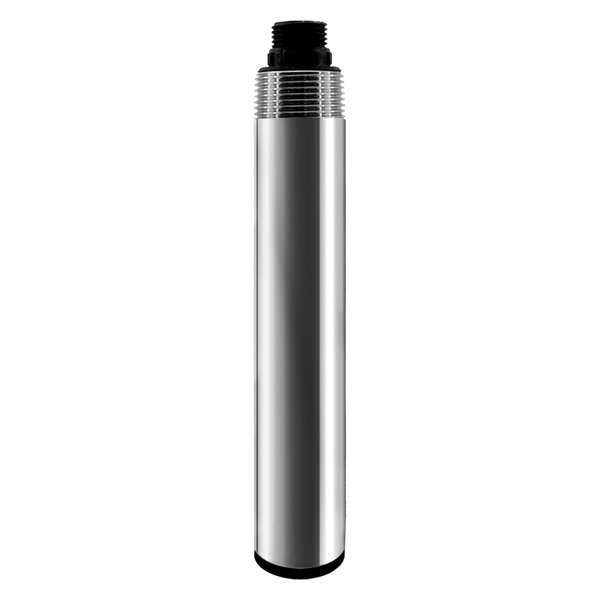
| Water clarity and turbidity | YEX-S1-TS turbidity sensor | Selectable 0–20.00, 0–200.0 or 0–1000.0 NTU; 90° infrared scattered-light method with automatic temperature compensation | RS-485 Modbus RTU; 12–24 VDC; IP68; immersion installation with NPT 3/4; standard 5 m four-core shielded cable | State normal, alarm and upset NTU values so the range is selected before production |
| Wastewater or surface-water suspended solids | YEX-S1PRO-TSS suspended-solids sensor | 0–2000.0 mg/L, customizable; ±5% of reading; temperature ±0.1°C; linearity 0.999 R²; 15 s response | Optical scattering; RS-485 Modbus RTU or optional 4–20 mA, select one; 316L + ABS; IP68 | Provide the laboratory TSS method, particle conditions and required output option in the RFQ |
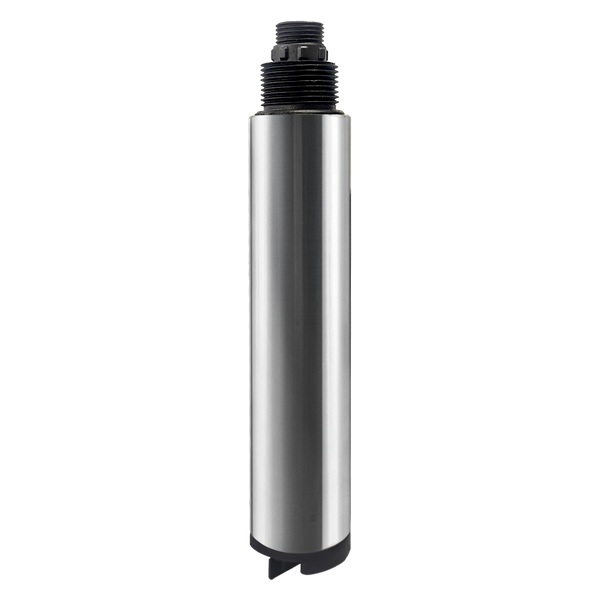
| Activated-sludge mixed liquor | YEX-S1PRO-MLSS sludge concentration sensor | 0–20,000 mg/L; ±5% of reading; temperature ±0.1°C; linearity 0.999 R²; 30 s response | Optical scattering; RS-485 Modbus RTU or optional 4–20 mA, select one; 316L + ABS; IP68 | Use for aeration or sludge duties and request optional self-cleaning where fouling is expected |
Selection by field scenario
Drinking water, source water and filter outlet
Select turbidity when operators need an NTU trend for clarification, filtration or source-water change. The YEX-S1-TS offers three selectable ranges, so the buyer should provide both routine and worst-case values. A 0–20.00 NTU range may suit a low-turbidity duty, while a higher selectable range may be required upstream or during upset conditions. Confirm the project alarm limits before selecting the range.

Wastewater effluent, clarifier outlet and industrial discharge
Select TSS when the result must be expressed as suspended-solids concentration. The YEX-S1PRO-TSS has a verified 0–2000.0 mg/L range that can be customized. The quotation should identify the expected minimum, normal and maximum TSS, the reference filtration method, particle color and size changes, cleaning access and whether RS-485 or 4–20 mA is required. This information determines whether the standard configuration is suitable.
Aeration basin, return activated sludge and sludge process
Select MLSS for dense mixed liquor where biomass inventory and sludge-control decisions are the objective. The YEX-S1PRO-MLSS measures 0–20,000 mg/L and is therefore the appropriate one of these three models for high-solids biological process points. Confirm whether the sensor will be installed in an aeration basin, return-sludge channel or another sludge location. Include expected fouling and maintenance access; the model can be ordered with an optional self-cleaning function for sludge or high-fouling duties.
Installation and integration checklist
Optical sensors must see a representative sample. Avoid dead zones, sediment beds, direct chemical-injection points, strong bubble streams and locations where the sensing window can leave the water. Maintain clearance from walls and structures that can reflect light or trap solids. Use immersion hardware that keeps the sensing area fully wetted while allowing safe removal for cleaning.
For the two S1 PRO models, the verified operating environment is 0–50°C, non-freezing, with pressure below 0.2 MPa. Both use a 5 m four-core shielded cable by default and NPT 3/4 immersion installation. The YEX-S1-TS also uses immersion installation, NPT 3/4 and a standard 5 m four-core shielded cable. Confirm required cable length and mechanical arrangement before ordering instead of extending an installed signal cable without an approved plan.
At commissioning, record the exact model, range, unit, serial number, output option, Modbus address, baud rate, register mapping and scaling. Verify the probe reading, PLC register and HMI display as one complete loop. Create separate alarms for process limits and communication failure. Collect simultaneous laboratory samples across representative operating conditions, then document the approved correlation and cleaning interval.
| Project stage | Evidence to confirm | Acceptance action |
|---|---|---|
| Selection | Parameter, unit, normal and upset range, water matrix, particle variation | Match the exact model and range to the decision duty |
| Mechanical design | Depth, flow, bubbles, sediment, access, temperature, pressure and cable route | Approve a representative and serviceable mounting point |
| Electrical integration | 12–24 VDC supply, RS-485 settings or ordered 4–20 mA option | Function-test every mapped value and fault alarm |
| Performance verification | Simultaneous samples, reference method and operating condition | Approve correlation limits and a documented cleaning interval |
RFQ checklist for distributors, EPCs and system integrators
Required parameter: turbidity, TSS or MLSS, with the engineering unit.
Minimum, normal, alarm and maximum expected values, including upset conditions.
Water source and process point: filter outlet, clarifier, discharge, aeration basin or return sludge.
Particle or sludge characteristics, seasonal changes, color, bubbles and fouling tendency.
Reference laboratory method and the acceptance tolerance required by the project.
Installation type, available thread, immersion depth, pressure, temperature and cleaning access.
Required cable length, supply voltage and cabinet distance.
Output choice: RS-485 Modbus RTU or the optional 4–20 mA configuration where available.
PLC, RTU, data logger or SCADA platform and required register/commissioning documents.
Quantity, destination country, delivery schedule, documentation language and FAT/SAT scope.
Request a project-specific sensor recommendation
Send the parameter, range, water type, process location, installation method, output signal, cable length, quantity and acceptance method. YexSensor can check whether YEX-S1-TS, YEX-S1PRO-TSS or YEX-S1PRO-MLSS fits the duty before quotation.
Project data to include: parameter and unit; minimum/normal/maximum value; water and particle conditions; temperature and pressure; installation drawing; power and signal; cable length; controller; quantity; reference method; required documents and schedule.
Frequently asked questions
1. Can turbidity in NTU be converted directly to TSS or MLSS in mg/L?
No universal conversion exists. A site-specific relationship may be developed from simultaneous samples, but it changes when particle size, shape, density, color or composition changes. Use the parameter and reference method required by the process decision.
2. Why can two samples with the same TSS have different turbidity?
TSS measures retained mass, while turbidity depends on optical scattering. Fine light-scattering particles can produce a higher NTU value than heavier or darker particles at the same mass concentration. Confirm the water matrix before relying on a correlation.
3. What affects optical TSS and MLSS readings?
Particle properties, bubbles, deposits on the optical surface, changing sludge composition and non-representative flow can shift the signal. Select a representative point, keep the window clean and verify the online value against simultaneous reference samples.
4. Which sensor should be used after a drinking-water filter?
Choose the YEX-S1-TS when the required result is turbidity in NTU. Provide the routine and breakthrough values so the 0–20.00, 0–200.0 or 0–1000.0 NTU range can be selected correctly.
5. Which sensor should be used at a wastewater discharge point?
Choose YEX-S1PRO-TSS when the required result is suspended-solids concentration in mg/L and the stated range suits the duty. Include the laboratory filtration method and expected particle changes in the RFQ. Keep compliance confirmation tied to the required reference method.
6. Which sensor should be used in an aeration basin?
Choose YEX-S1PRO-MLSS for mixed-liquor sludge concentration up to its verified 0–20,000 mg/L range. State the typical and peak MLSS, fouling level, installation point and cleaning access; request optional self-cleaning when the site conditions justify it.
7. Where should an optical solids sensor be installed?
Use a continuously wetted point with representative mixing and safe maintenance access. Avoid dead zones, sediment accumulation, direct dosing impact, severe bubbles and wall interference. Final orientation and mounting must follow the supplied model manual.
8. How should RS-485 Modbus be specified for PLC integration?
State the power supply, device count, network topology, address plan, baud rate, register format, scaling and required cable length. During commissioning, compare the local value with the PLC register and HMI display, then test communication-loss and process alarms separately.
9. What information is required for a reliable quotation?
Provide the parameter, unit, expected range, water type, process location, particle or sludge conditions, installation, cable length, output, controller, quantity, destination and documentation requirements. These details prevent a quote based on an unsuitable range or interface.
10. What should FAT and SAT verify?
FAT should confirm the ordered model, range, output, documents and communication setup. SAT should verify the mounting point, wiring, scaling, live PLC/SCADA value, fault alarms and comparison with the agreed site reference. Record the baseline and maintenance interval for later troubleshooting.
Summary
The choice between turbidity, TSS and MLSS depends on the decision the measurement must support. Use YEX-S1-TS for NTU-based clarity duties, YEX-S1PRO-TSS for suspended-solids concentration in wastewater or surface water, and YEX-S1PRO-MLSS for high-solids biological mixed liquor. Keep each model's verified range and output configuration separate. A successful purchase also requires a representative installation point, correct PLC integration, laboratory correlation and an RFQ that states the range, water matrix, mechanical arrangement, signal, cable, controller, quantity and acceptance method.