


 Chinese
 Spanish
 French
 Russian
 German
 Portuguese
 Indonesian
 Thai
Thai Vietnamese
 Arabic

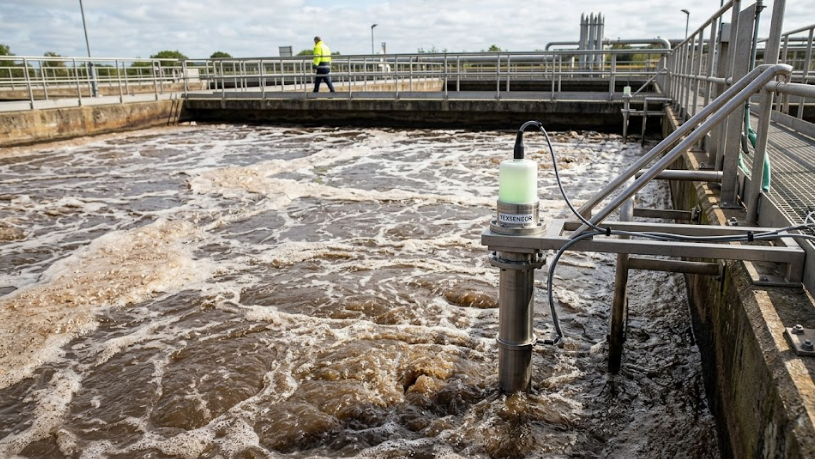
Why This Topic Matters for Industrial Water Projects
Textile dyeing wastewater varies with desizing, scouring, bleaching, mercerizing, dyeing, printing and finishing. It often has high pH, color, COD and poor biodegradability, so online monitoring is needed to control equalization, pretreatment and biological process stability.
For procurement teams, the monitoring package should be selected from treatment risk, compliance requirement and operating action, not from a generic parameter list.
YexSensor focuses on online water quality sensors and integration-ready measurement loops that can be connected to PLC, RTU, DCS, gateways and cloud platforms.
Process Characteristics and Monitoring Logic
Desizing wastewater may contain starch, PVA, alkali and auxiliaries. Dyeing and printing wastewater can have high color, surfactants and COD. Alkali reduction wastewater may contain very high pH and difficult organics such as terephthalic acid derivatives.
The monitoring design should identify which values are used for early warning, which values are used for automatic control and which values are used for reporting or laboratory confirmation.
Process interpretation should combine online data with flow, production condition, pH, temperature, dosing, sludge state and historical baseline.
Project Applications for System Integrators
Online pH, COD trend, color/turbidity, conductivity, ORP and flow data help operators separate streams, control neutralization, verify coagulation and protect biological treatment.
In retrofit projects, online monitoring can expose hidden variation that periodic sampling missed. In new projects, it should be designed into the process rather than added after problems appear.
The best installations give operators a clear action path: inspect, adjust, dose, clean, verify, report or escalate.

Key Monitoring and Procurement Parameters
The table below summarizes the key requirements for engineering comparison, integration, commissioning and acceptance.
| Monitoring requirement | Recommended configuration | Engineering purpose |
|---|---|---|
| Monitoring layer | Online sensor, analyzer or multi-parameter station | Defines whether the project needs continuous control, alarm warning or periodic verification |
| Communication | RS-485 Modbus RTU, optional 4-20 mA where applicable | Supports PLC, RTU, DCS, recorder, gateway and cloud platform integration |
| Data objects | Current value, unit, trend, alarm, maintenance state and communication fault | Gives operators usable information rather than isolated numbers |
| Installation | Representative sample point, stable mounting and waterproof cable route | Prevents misleading data caused by poor sampling or weak wiring |
| Acceptance | Compare online trend with laboratory or portable reference under the same sample condition | Builds trust before the data is used for control or reporting |
| Maintenance | Cleaning, calibration, standards, spare parts and event records | Keeps long-term data quality stable after handover |
Selection and Integration Guide
For textile wastewater, combine physical adsorption, coagulation, oxidation and anaerobic-aerobic biological treatment according to water quality.
Confirm communication protocol, cabinet wiring, sample conditioning, alarm ownership and maintenance tools before purchasing.
Use laboratory or portable reference checks during commissioning to build confidence in the online trend.
Where the matrix is dirty, colored, high in solids or chemically aggressive, select installation hardware and cleaning routines with the sensor.
Engineering Delivery, Acceptance and Lifecycle Control
A commercial textile dyeing wastewater monitoring project should begin with a process survey. The survey should record wastewater source, production rhythm, expected concentration range, temperature, pH, flow variation, solids load, chemical dosing, discharge permit risk, access condition and the staff responsible for routine maintenance.
The dyeing wastewater quality value should be connected to a decision. A value used for discharge warning, chemical dosing, sludge control, membrane protection, toxicity risk or compliance reporting needs a defined sampling point, alarm threshold and response procedure.
System integrators should avoid treating all wastewater as the same matrix. Textile wastewater, metallurgical wastewater, slaughterhouse wastewater, chemical wastewater and source water monitoring stations have different color, solids, toxicity, salinity, biodegradability and fouling behavior.
The monitoring architecture should separate field measurement, local control and data reporting. Sensors and analyzers collect values, PLC or RTU logic handles alarms and interlocks, and the platform stores trends, maintenance events and exception reports.
Acceptance testing should include a stabilization period. One isolated reading is not enough for online water quality monitoring. The team should confirm response direction, repeatability, communication recovery, alarm output, historical storage and comparison with a reference method.
Alarm design should be layered. A warning alarm can trigger inspection, a process alarm can trigger dosing or equipment action, and a critical alarm can notify supervisors. Communication loss and maintenance mode should have separate status codes.
For remote stations, communication fault behavior matters. The platform should show a clear fault instead of freezing the last good value. A visible fault is safer than a normal-looking value that is no longer being updated.
For discharge-related projects, data traceability is part of compliance risk control. Calibration records, standard solution records, sample comparison records, operator notes and maintenance photos should be retained with the monitoring data.
Procurement specifications should include installation hardware, cable length, waterproof joints, cabinet terminals, power supply, communication settings, register map, spare parts and training. These details decide whether the purchased equipment can be commissioned quickly.
Maintenance should be planned by water matrix. High color, high suspended solids, oil, protein, scale, disinfectant, heavy metals and high salinity require different cleaning and verification intervals.
The first month after startup should be treated as optimization. Trend data can reveal whether the sample point is representative, whether alarm limits are too sensitive and whether cleaning intervals match actual fouling.
Operators should be trained on the installed system, not only on a manual. They need to practice maintenance mode, sensor removal, cleaning, calibration check, reinstalling, alarm reset and abnormal trend reporting.
Long-term value comes from linking dyeing wastewater quality with flow, production load, chemical dosing, pH, temperature, COD, ammonia, turbidity, residual chlorine, heavy metal risk and laboratory data. This turns online monitoring into operational intelligence.
For EPC and OEM projects, the quotation should not hide essential accessories. Mounting brackets, flow cells, standards, cleaning tools, spare electrodes, reagent lines and gateway configuration should be specified before contract signing.
Management review should focus on avoided risk: fewer emergency discharges, earlier abnormal detection, reduced chemical waste, stable treatment efficiency, safer reuse and better evidence for environmental management.
The project should define a baseline period after commissioning. During this period, operators compare normal production, cleaning discharge, rainfall influence, shift change and shutdown conditions. This baseline becomes the reference for future alarm tuning and process troubleshooting.
If the monitoring value is used for environmental reporting, the system should keep raw data, corrected data, calibration records and maintenance records separately. This prevents later confusion when an operator needs to explain why a value changed after service or recalibration.
Water quality projects should include a clear sampling philosophy. Some sensors should measure in the main channel, some should use a side-stream or flow cell, and some analyzers need pretreatment. Choosing the wrong sampling method can create more error than choosing between two sensor brands.
For high-risk pollutants, online monitoring should be combined with emergency response planning. The plan should say who receives alarms, who confirms the event, which valve or process should be checked, whether discharge should be stopped and how laboratory confirmation is requested.
Integrators should design the cabinet layout for maintenance. Terminal labels, fuse protection, grounding, surge protection, cable glands, spare terminals and clear separation between signal and power wiring reduce commissioning time and future service mistakes.
For multi-parameter platforms, parameter names should be written in plain operating language. Operators should see COD trend, pH, turbidity, ammonia, residual chlorine or heavy metal warning with unit and location, not cryptic register names copied from a configuration sheet.
The system should support data export for managers and engineers. Monthly trend exports, alarm lists, maintenance logs and comparison records help the plant evaluate treatment efficiency and justify future upgrades.
When wastewater contains strong color, high salinity or high suspended solids, the integrator should define what the sensor can measure directly and what requires sample conditioning or laboratory confirmation. This honesty improves trust and reduces unrealistic expectations.
A maintenance budget should be approved together with the equipment budget. Reagents, standards, electrodes, membranes, caps, cleaning materials and site visits are part of the life-cycle cost of online monitoring.
Training should include abnormal examples. Operators should learn how a blocked sample line, dirty optical window, exhausted reagent, loose cable or frozen communication value appears in the trend. Recognizing instrument faults quickly protects process decisions.
For reuse and closed-loop projects, online data should support water balance as well as quality control. Flow, conductivity and quality indicators together show whether the reuse system is actually reducing discharge or only circulating risk.
Finally, the monitoring system should be reviewed whenever production changes. New raw materials, dyes, disinfectants, metals, cleaning agents, slaughter volume or process chemicals can change the wastewater matrix enough to require new alarm limits or additional parameters.
Commercial buyers should request a clear boundary between sensor supply and system integration. If the supplier only provides a sensor, the buyer still needs cabinet design, power supply, communication programming, platform configuration and site commissioning. If the supplier provides an integrated monitoring package, those responsibilities should be written into the scope.
For plants with strict discharge requirements, online monitoring should be connected to a response matrix. The matrix should list each alarm, likely cause, first inspection step, responsible role, temporary control measure and required documentation. This turns alarms into controlled work rather than stressful messages.
When water quality is highly variable, the project should include equalization and sample stabilization before the sensor point where possible. Online sensors measure the water they touch; they cannot solve a process that sends unmixed slugs, oil layers, solids plugs or extreme pH shocks directly across the sensing surface.
Data review should include both process and instrument explanations. A sudden rise may be real pollution, but it may also be a dirty window, air bubbles, reagent issue, lost flow or incorrect scaling. Good review practice checks the process first, then the instrument condition, then the communication path.
The spare parts strategy should match the consequence of downtime. A monitoring point used for environmental reporting or automatic control should have faster replacement access than a point used only for reference. Critical points may justify a spare sensor, spare cable and prepared calibration materials on site.
A project should also define how online data is compared with laboratory data. Sampling time, sampling location, preservation, holding time and unit conversion must be aligned. Many disputes come from comparing an online value in one water condition with a laboratory sample taken from another point or another time.
YexSensor-oriented solutions should therefore be presented as integration-ready monitoring loops. The sensor is important, but the complete value includes communication compatibility, installation method, maintenance procedure, data quality control and practical response guidance.
| Integration item | Recommended practice | Risk if ignored |
|---|---|---|
| Sampling point | Choose representative water after mixing and before the decision point | Data may not represent the controlled stream |
| Parameter package | Select by pollutant risk and treatment objective | Important risks may be missed |
| Communication | Standardize Modbus settings, units and scaling | PLC or platform values may be wrong |
| Alarm action | Define operator response for each alarm | Alarms become noise rather than protection |
| Verification | Compare online data with reference checks | Operators may lose trust in the system |
Operation, Maintenance and Data Quality
Select monitoring around equalization, neutralization, coagulation, biological outlet and reuse polishing.
Cleaning, calibration, spare parts and maintenance-mode records should be included in the operating procedure.
Trend review should check whether abnormal data matches process events. If it does not, inspect the sample point, fouling, calibration and communication status.
FAQ
Q1 Why is online monitoring needed?
It provides continuous trend and early warning that periodic sampling may miss.
Q2 Can online sensors replace all laboratory testing?
No. They support real-time control and warning, while laboratory methods remain important for confirmation and compliance.
Q3 Which parameters should be selected?
Select parameters from pollutant risk, treatment process, discharge standard and operational decision needs.
Q4 Where should sensors be installed?
At representative points where the value can support action, not in dead zones or unmixed water.
Q5 How should dirty wastewater be handled?
Use suitable sample conditioning, accessible mounting, cleaning plans and verification checks.
Q6 What communication is preferred for integration?
RS-485 Modbus RTU is widely used for PLC, RTU and gateway integration.
Q7 How should data quality be controlled?
Use calibration records, maintenance logs, reference comparisons and reasonableness review.
Q8 How does YexSensor support these projects?
YexSensor provides integration-ready online water quality sensors for industrial, environmental and treatment applications.
Summary
Textile Dyeing Wastewater Treatment: Online Monitoring for COD, Color, pH and Reuse Process Control is strongest when monitoring is linked to real operational decisions, not just data display.
YexSensor helps integrators build online water quality monitoring loops with digital communication, field installation and lifecycle data management.



