


 Chinese
 Spanish
 French
 Russian
 German
 Portuguese
 Indonesian
 Thai
Thai Vietnamese
 Arabic

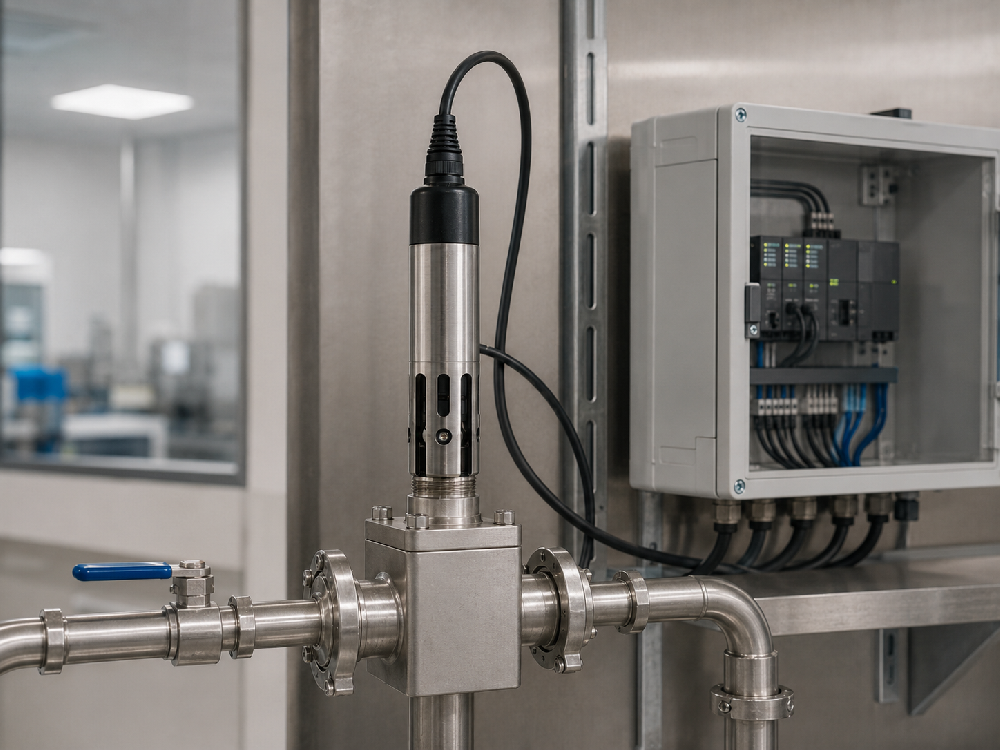
Direct Answer: Why Are Residual Chlorine Readings Unstable?
Unstable residual chlorine readings usually come from sample-flow changes, bubbles, pH and temperature shifts, electrode or membrane fouling, exhausted consumables, poor mixing, calibration mismatch or an error in the signal chain. Diagnose the water, installation, sensor and PLC/SCADA value separately before adjusting dosing.
First compare the local sensor value with the controller value and a suitable same-point reference. Then confirm sample flow, pressure, bubbles, chemical mixing, pH, temperature, visible deposits, service history, Modbus unit and scaling. Change one condition at a time and record the result.
Buyer Risk: Correcting a Sample Problem With More Chemical
If low flow or a dirty sensor reports a false low value, automatic dosing can add unnecessary disinfectant. The design should verify sample flow, stop or limit dosing on sensor and communication faults, and define an independent check before a large corrective action.
Problem Diagnosis for Flow, pH, Fouling and Calibration
Unstable flow is a frequent cause of poor chlorine data. Many chlorine sensors consume or react with the measured species at the surface, so sample flow must be sufficient and stable.
pH can change chlorine form and disinfection efficiency. A chlorine value that looks acceptable may not provide the same control effect when pH shifts.
Surface fouling, membrane wear, air bubbles, chemical interference and incorrect scaling can all create apparent chlorine problems that are not real water quality events.
Key Parameters and Procurement Configuration
The table below summarizes the key requirements for engineering comparison, integration, commissioning and acceptance.
| Project item | Recommended configuration | Engineering value |
|---|---|---|
| Sensor output | RS-485 Modbus RTU, optional 4-20 mA where applicable | Supports PLC, RTU, DCS, recorder and gateway integration |
| Installation | Immersion, flow cell, bypass cabinet or pipe mounting according to matrix | Improves representativeness and service access |
| Data objects | Current value, unit, trend, alarm, maintenance status and fault state | Turns measurement into usable operation information |
| Verification | Portable or laboratory comparison under the same sample condition | Builds trust during commissioning and audits |
| Maintenance | Cleaning, calibration, spare parts and event records | Protects long-term data quality |
Selection Guide and Integration Notes
Start troubleshooting by checking flow, pH, sensor surface and recent maintenance events before changing dosing settings.
Compare online and manual values under the same sample condition. Different time or location can create false disagreement.
Use separate fault states for sensor maintenance, low flow and communication failure so that operators know what action to take.
Keep spare membranes, electrolyte or electrode parts according to the selected chlorine sensor type.
System Delivery, Acceptance and Lifecycle Control
For a commercial online water quality monitoring project, procurement should define a complete measurement loop rather than a loose sensor purchase. The loop includes parameter selection, sensor principle, installation method, sample condition, cable route, power supply, communication protocol, engineering unit, alarm logic, maintenance responsibility and acceptance method.
System integrators should start with the operating decision behind the value. A parameter used for dosing control, aeration control, disinfection verification, filtration inspection, corrosion review, discharge warning or compliance reporting needs a more disciplined design than a value used only for reference.
Representative sampling is the foundation of reliable data. Dead zones, air bubbles, sediment pockets, intermittent flow, oil film, strong color, biological fouling and poor mixing can create more error than the instrument itself. The site survey should document why the selected point represents the process decision.
Electrical and communication design should be confirmed before commissioning. Shielded cable, grounding, surge protection, waterproof glands, terminal labels, Modbus address, baud rate, parity, register scaling and maintenance mode all affect whether the sensor value remains useful after handover.
A professional dashboard should show current value, unit, trend, alarm state, sensor status, last maintenance date and related equipment. Operators need an operations screen that supports action, while engineers need raw values, configuration records and exportable historical data.
Acceptance should include trend observation, not only one comparison result. The team should verify response direction, repeatability, alarm output, communication recovery after power cycling, reference comparison and whether maintenance mode prevents false operating decisions.
For projects connected to PLC, RTU, DCS, SCADA or cloud platforms, communication failure must be visible. A frozen normal-looking value is more dangerous than an explicit fault. The platform should separate normal measurement, maintenance status, sensor fault and communication loss.
Maintenance planning should be included in the purchase scope. Cleaning tools, standard solutions, membranes, optical caps, spare electrodes, cable connectors, flow cells and operator training determine the life-cycle cost of online water quality monitoring.
Data quality records support both operation and audits. Calibration, cleaning, comparison checks, operator notes, abnormal trend explanations and spare part replacement history make the data defensible when managers review treatment efficiency or water safety performance.
After the first month, alarm thresholds and maintenance intervals should be reviewed with real site data. Online monitoring is strongest when the initial design is refined by actual water matrix, fouling speed, process variation and operator response time.
Procurement documents should also define the boundary between sensor supply and system integration. If the buyer only purchases sensors, the project still needs cabinet wiring, power distribution, surge protection, controller programming, gateway configuration, dashboard naming and site commissioning. If the buyer expects a turnkey monitoring package, those responsibilities should be listed in the quotation and acceptance checklist.
A mature online monitoring project should create evidence for decisions. Trend reports, alarm duration, maintenance notes, calibration comparison and operator response records help the plant prove that the measurement system is supporting treatment efficiency, water safety or discharge risk control. This evidence is often more valuable than a single isolated measurement.
| Integration checkpoint | Recommended practice | Risk if ignored |
|---|---|---|
| Low reading | Check dosing, flow, pH and sensor condition | Unnecessary chemical changes |
| High reading | Verify sample point and manual reference | Over-disinfection risk |
| Slow response | Inspect membrane, electrode or fouling | Delayed alarm |
| Manual mismatch | Align sample time and point | False dispute |
| Operator trust | Keep maintenance and comparison records | Data ignored |
Operation, Maintenance and Data Quality
Residual chlorine troubleshooting should be logged. Repeated low readings after cleaning may indicate process change rather than sensor failure.
The maintenance interval should be adjusted after several weeks of site data. Clean water and pool water do not foul sensors the same way as wastewater.
A good dashboard should show chlorine together with pH, flow and sensor status so that operators can diagnose problems quickly.
Residual Chlorine Sensor Selection and Flow-Cell Design
Review the YexSensor online residual chlorine sensor. Confirm measurement principle, range, accuracy, pH and temperature conditions, sample-flow needs, pressure, consumables, cable and protocol from the current official page or manual for the quoted model.

A representative flow cell should provide stable water contact, controlled bubbles and safe access for cleaning and reference checks. Locate the sample after adequate chemical mixing and contact time, not in an undiluted dosing plume.


Request a Residual Chlorine Recommendation
Send the water source, disinfectant, expected residual and pH conditions, temperature, sample-flow arrangement, pressure, bubbles and fouling risk, injection and sample locations, cable distance, power, Modbus RS485 or controller requirement, quantity and acceptance method.
Read the RS485 Modbus integration FAQ, then Send Your Project Requirements for model and flow-cell confirmation.
FAQ
Q1. What should be checked first when chlorine readings fluctuate?
Check sample flow, bubbles, mixing, local versus remote values and a same-point reference before recalibrating. These checks separate a hydraulic or data problem from a sensor problem.
Q2. Why does pH affect residual chlorine monitoring?
pH changes chlorine species and can affect the response expected from the selected measurement principle. Record pH with the chlorine trend and confirm the applicable conditions in the model manual.
Q3. Can bubbles cause false readings?
Yes. Bubbles can interrupt sample contact or disturb an electrochemical measurement. Improve the flow-cell hydraulics and remove air entry before adjusting calibration.
Q4. How can fouling be identified?
Look for drift, slow response, unstable baseline or a meaningful change after approved cleaning. Record the as-found value, visible condition and stabilized result to set the service interval.
Q5. Where should the sample be taken?
Use well-mixed representative water after the required contact time, with stable flow and safe access. Avoid undiluted injection zones, stagnant branches and points that trap bubbles.
Q6. Should calibration be changed whenever a reference differs?
No. First align sample time and location, reference method, flow, pH, temperature and sensor condition. Adjust only according to the current model procedure after the cause is understood.
Q7. What should stop automatic chlorine dosing?
Low or lost sample flow, communication loss, maintenance mode, implausible values and sensor faults should trigger the validated hold, limit or shutdown behavior for the site.
Q8. What must be tested in PLC or SCADA commissioning?
Verify address, baud rate, parity, register map, unit, scaling, status, alarm delay, timestamp, dosing interlocks and recovery after power or network interruption.
Q9. What belongs in a residual chlorine RFQ?
Include the probe, flow cell, fittings, cable, controller, protocol documents, consumables, cleaning and verification materials, spare parts, quantity, commissioning and acceptance method.
Q10. What evidence should be retained after handover?
Keep the sample and dosing drawing, baseline, flow condition, reference checks, pH and temperature context, Modbus mapping, alarm tests, service records and maintenance owner.
Summary
Residual chlorine problems should be diagnosed across the sample hydraulics, water chemistry, sensor condition and data chain before dosing is changed. Match the measurement principle and flow cell to the application, verify pH and same-point reference evidence, test PLC/SCADA safeguards and include consumables, maintenance and acceptance boundaries in the RFQ.



