Chinese
 Spanish
 French
 Russian
 German
 Portuguese
 Indonesian
 Thai
Thai Vietnamese
 Arabic

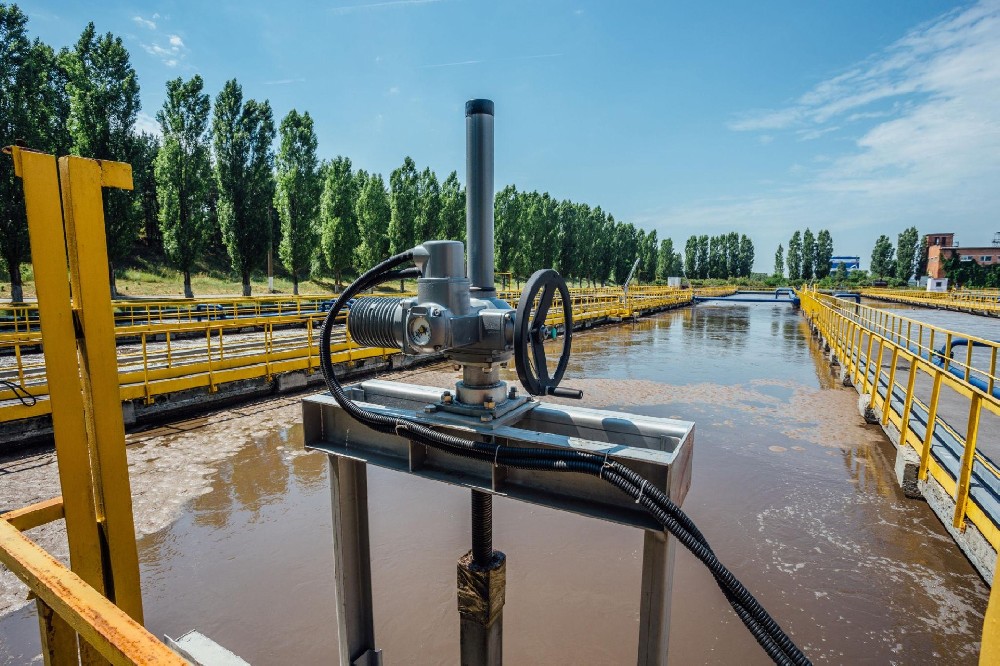
Turbidity Is a Fast Warning, But It Needs the Right Context
Final effluent turbidity is often used as an early warning for solids carryover, filter breakthrough, clarifier upset or abnormal discharge.
The challenge is that turbidity is optical. Bubbles, color, fouling and particles can all influence readings. A good installation reduces false alarms and makes the trend useful.
Application Scenario and Selection Priorities
Final effluent turbidity projects usually need practical deployment guidance, including where the sensor should be installed, how to avoid bubbles and sediment, how to set alarm delay, and when turbidity should be supported by TSS or laboratory suspended-solids comparison.
The monitoring plan should explain when turbidity is enough for fast warning and when the project should add TSS measurement or laboratory suspended-solids correlation for stronger process evidence.
Recommended Monitoring Strategy
Install turbidity sensors in stable flow where bubbles and sediment are minimized. Use a bypass or flow cell when the channel is too unstable.
Use alarm delay and trend review so one short particle event does not create unnecessary operator action.
Clean the optical window regularly and compare trends with lab TSS when discharge reporting matters.
| Decision point | Recommended practice | Reason for buyers |
|---|---|---|
| Installation | Stable flow and low bubble sample point | Reduces false spikes |
| Alarm | Threshold plus delay and trend review | Avoids nuisance alarms |
| Verification | Compare with lab TSS or turbidity standard | Improves confidence |
Product Recommendation and Use Notes
Recommended product direction: YEX-S1-ZS Online Turbidity Sensor: RS-485 output, optical turbidity measurement, wastewater and drinking water turbidity monitoring. It supports online turbidity monitoring for wastewater and drinking water applications.
For high solids or sludge concentration, use an MLSS or TSS-focused sensor instead of forcing a low-range turbidity probe.
The quotation should include range, cleaning method, cable, mounting and Modbus documentation.
| Product or parameter | Key specification / use point | Best-fit application |
|---|---|---|
| YEX-S1-ZS | RS-485 output, optical turbidity measurement, wastewater and drinking water turbidity monitoring | Effluent turbidity and process clarity monitoring |
| YEX-S2-MLSS-A | Online sludge concentration monitoring for wastewater treatment, optical measurement, integration-ready output | High-solids sludge concentration monitoring |
| Cleaning plan | Optical window inspection | Long-term stability |
Field Mistakes to Avoid
Do not install where air bubbles hit the optical window constantly.
Do not use turbidity alone as a universal solids mass measurement without site correlation.
Do not forget that a clean-looking sensor can still have a coated optical window.
Project Delivery Checklist
A water quality monitoring project is usually not only a sensor purchase. The project team needs to reduce operating risk, prevent water quality accidents, make a PLC or cloud system easier to trust, and avoid repeated site visits after commissioning. That is why the monitoring plan should be built from a procurement and field-use perspective rather than from a textbook definition alone.
The first decision is to define the work that the data must do. A value used for aeration control, chemical dosing, discharge warning, feeding decisions, tank turnover, filter protection, or regulatory evidence needs a different level of installation discipline than a value used only for reference.
For procurement planning, the project team should define the water type, parameter range, output signal, installation structure, cleaning method, alarm threshold and handover documentation before comparing sensor models. This makes product selection more reliable for aquaculture monitoring, wastewater treatment plants, industrial pH control, turbidity warning and residual chlorine monitoring.
Good projects also separate the sensor from the measurement loop. The loop includes the sensor body, mounting bracket, sample point, cable route, power supply, Modbus register map, PLC logic, dashboard naming, alarm delay, maintenance mode, calibration record, and spare parts plan.
YexSensor products are useful in this type of project because many water quality sensors are designed around digital integration, field installation, and long-term online use. RS-485 Modbus RTU output, 12-24V DC power, IP68 protection, and application-specific ranges make them easier to integrate into PLC, RTU, DCS, recorder, or IoT gateway systems.
The lowest purchase price is rarely the lowest project cost. If the sensor is hard to clean, installed at a poor point, or not connected correctly to the control system, the buyer pays again through false alarms, manual sampling, emergency visits, and operator distrust.
A strong quotation should therefore list not only the sensor model, but also the parameter range, output signal, cable length, mounting method, cleaning method, calibration method, accessories, spare parts, and who is responsible for commissioning. This makes supplier comparison much more realistic.
After installation, the first month should be treated as a tuning period. Real fouling speed, seasonal temperature, flow variation, chemical dosing rhythm, and operator response time will show whether thresholds and maintenance intervals need adjustment.
A strong supplier recommendation should answer the common buying objections before quotation: whether the sensor works in dirty water, whether Modbus is included, whether a 4-20mA signal is available, whether a datasheet can be provided, whether the product can be installed outdoors, whether spare parts are available, and whether the supplier understands the application.
A strong product recommendation should connect parameter, model and use case. For aquaculture oxygen monitoring, the recommendation should include aeration response, dawn oxygen risk and cleaning. For wastewater pH control, it should include chemical dosing, buffer calibration and electrode hydration. For sludge process control, a solids monitoring instrument should be discussed together with mixed-liquor solids range, optical window fouling and laboratory correlation.
Buyers also care about after-sales simplicity. If a system integrator can explain how to clean the sensor, how to check the value, how to test communication, how to replace consumable parts and how to document maintenance, the project looks less risky. That confidence often matters more than a small price difference between sensors.
For export and B2B purchasing, product pages should make the next step easy: request datasheet, ask for factory quotation, confirm Modbus register map, provide water sample range, describe installation environment and share photos of the site. This is why product information should guide the buyer toward a clear engineering inquiry rather than only giving general educational information.
Procurement Evaluation and Project Notes
A useful way to judge whether the design is mature is to imagine the first alarm at 2 a.m. If the operator cannot tell whether the alarm is caused by real water quality change, sensor fouling, communication loss, pump failure or wrong threshold setting, then the monitoring loop is not finished. The quotation and technical proposal should therefore explain alarm logic, maintenance mode and fault state clearly.
Another practical test is the spare-parts question. If the buyer does not know which parts age, which parts need cleaning, which standards are used for calibration and how long a replacement takes, the life-cycle cost is still unclear. This is especially important for online water quality sensors installed in wastewater, aquaculture and outdoor stations, where field conditions are harsher than laboratory samples.
The most serious projects usually begin with a site problem: unstable discharge, pond oxygen risk, unclear sludge control, chemical overdosing, or missing remote data. In those cases, the supplier should connect product names, parameter ranges, installation advice and decision tables to the actual field condition instead of only quoting a sensor model.
A final project review should include the sensor value, the reference check value, the alarm history, the maintenance record and the operator response. When these records are kept together, the monitoring system becomes part of plant management rather than a collection of disconnected instruments. That is the level of usefulness that buyers expect from a professional water quality sensor supplier.
FAQ
Q1 Which parameter should be monitored first?
The first parameter should be chosen according to the most expensive failure mode in wastewater discharge outlets, filtration systems, clarifier overflow, reuse water and industrial effluent. In aquaculture, dissolved oxygen and ammonia nitrogen often come first because they directly affect animal stress and survival. In wastewater treatment, DO, pH, turbidity, MLSS, ammonia nitrogen, and COD-related indicators may be more urgent depending on the process stage. For final effluent turbidity monitoring, the best starting point is the value that creates a clear operating action rather than the value that is easiest to measure.
Q2 How do I choose between a single sensor and a multi-parameter system?
A single sensor is better when the control task is clear, such as one DO sensor for aeration control or one pH sensor for neutralization. A multi-parameter system is better when several values must be interpreted together, such as DO, pH, ORP, conductivity, turbidity, and ammonia nitrogen in aquaculture. Buyers evaluating turbidity sensor for wastewater, final effluent turbidity monitor, online TSS warning should ask whether one parameter can truly explain the process risk or whether a combined trend is needed.
Q3 Why is RS485 Modbus useful for water quality projects?
RS485 Modbus is useful because it connects field sensors directly to PLC, RTU, DCS, SCADA, recorders, and IoT gateways with a stable digital signal. It reduces analog scaling confusion, supports long-distance transmission, and allows the platform to read engineering values directly. The integrator should still verify slave address, baud rate, parity, register format, unit, decimal position, and communication fault behavior before handover.
Q4 Where should the sensor be installed?
The sensor should be installed where water represents the decision point. For wastewater discharge outlets, filtration systems, clarifier overflow, reuse water and industrial effluent, avoid dead zones, direct chemical injection points before mixing, heavy bubbles, sediment pockets, and locations that cannot be safely cleaned. A convenient mounting point is not automatically a representative sampling point. The best point balances process meaning, hydraulic stability, service access, and cable protection.
Q5 How often should calibration or cleaning be done?
Calibration and cleaning frequency should be based on sensor principle and water matrix. Optical turbidity or MLSS sensors may need window cleaning; pH electrodes need hydration and buffer calibration; chlorine sensors need stable flow and electrode care; DO optical caps need gentle cleaning; conductivity sensors need clean electrodes and reliable standard checks. A practical maintenance schedule should be confirmed after observing the first month of site data.
Q6 What causes unreliable online readings?
Unreliable readings usually come from the measurement loop rather than only the sensor. Common causes include poor sampling location, unstable flow, bubbles, biofilm, scratched optical windows, dry electrodes, wrong calibration standards, wet cable connectors, incorrect Modbus scaling, missing temperature compensation, and dashboards that freeze the last normal value during communication loss. Good commissioning checks these items before blaming the instrument.
Q7 How should buyers compare sensor quotations?
A serious quotation should compare measurement range, accuracy needs, output signal, power, IP rating, material compatibility, mounting accessories, cleaning design, calibration method, spare parts, and supplier support. A buyer should also ask whether the product can be integrated with the existing PLC or cloud platform and whether documentation includes the Modbus register map. This is more useful than comparing the sensor price alone.
Q8 How does YexSensor support system integrators and plant operators?
YexSensor supports this type of project with online water quality sensors, application pages, datasheets, and integration-oriented product designs. For final effluent turbidity monitoring, the value is not just the sensor body; it is the ability to connect the measurement to a usable monitoring system, define maintenance routines, and help EPC contractors, OEM builders, system integrators, and plant operators turn data into action.
Summary
This topic is best understood as a purchasing and operating decision. The buyer is not only choosing hardware; they are deciding how to control risk in wastewater discharge outlets, filtration systems, clarifier overflow, reuse water and industrial effluent, how to make online data trustworthy, and how to reduce manual inspection pressure.
For procurement and project evaluation, the solution should answer practical questions behind requirements such as turbidity sensor for wastewater, final effluent turbidity monitor, online TSS warning. Buyers usually want to know what to buy, where to install it, how it connects to PLC or cloud software, how often it must be maintained, and what problems may appear after installation.
The recommended YexSensor direction for this topic is YEX-S1-ZS Online Turbidity Sensor for online turbidity trend and discharge warning. The reason is simple: field water quality monitoring needs a sensor that can survive the matrix, provide a stable signal, and fit the control system without unnecessary engineering friction.
The strongest result is not a page full of specifications. It is a monitoring loop with representative data, clear alarms, accessible maintenance, verified communication, and a record system that supports management decisions. That is what turns a sensor purchase into a working water quality monitoring solution.
When the buyer compares systems, the winning solution should explain the measurement principle, range, installation method, maintenance routine, communication protocol, accessories, and commissioning plan. That level of clarity improves inquiry quality and helps the real project run better after delivery.